Comparing sizes Extra Challenge Measurement Worksheets for Ages 3-7
5 filtered results
-
From - To
Unlock the world of measurement with our "Comparing Sizes Extra Challenge Measurement Worksheets" designed for children aged 3-7! These engaging and interactive worksheets provide young learners a unique opportunity to explore and compare various sizes while enhancing their math skills. Featuring colorful visuals and age-appropriate exercises, kids will enjoy identifying larger and smaller objects, fostering critical thinking and observational skills. Ideal for both classroom settings and home learning, these worksheets support early learners in grasping fundamental concepts of measurement through fun challenges. Get ready for engaging activities that lay the groundwork for future math success, making learning about size a delightful experience!
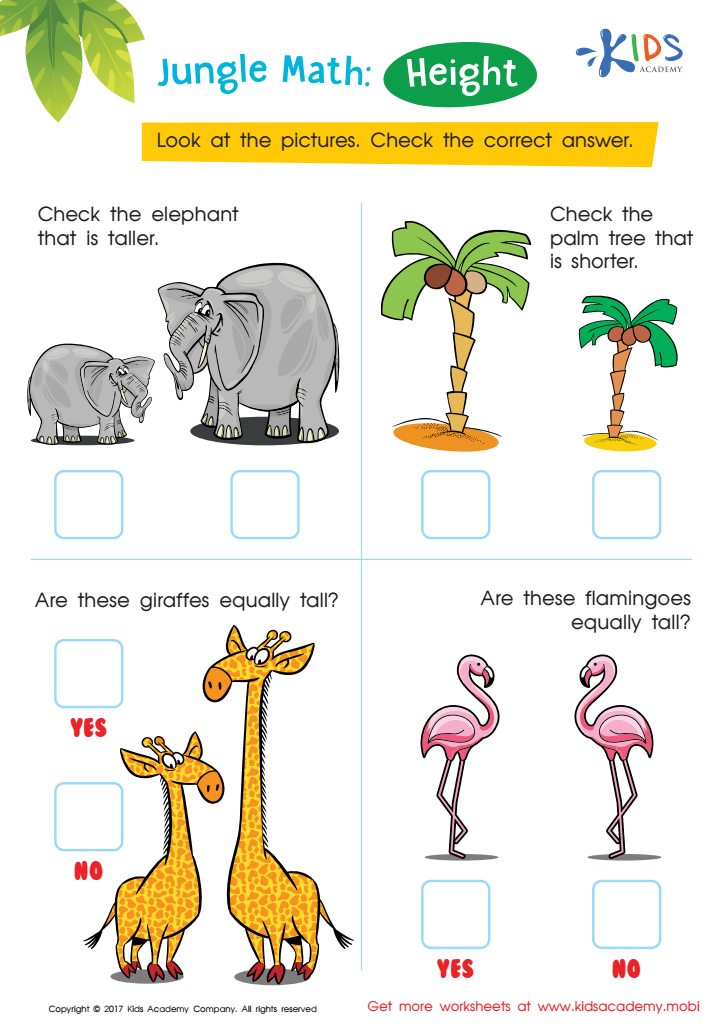
Which Is Taller Worksheet
 Assign to My Students
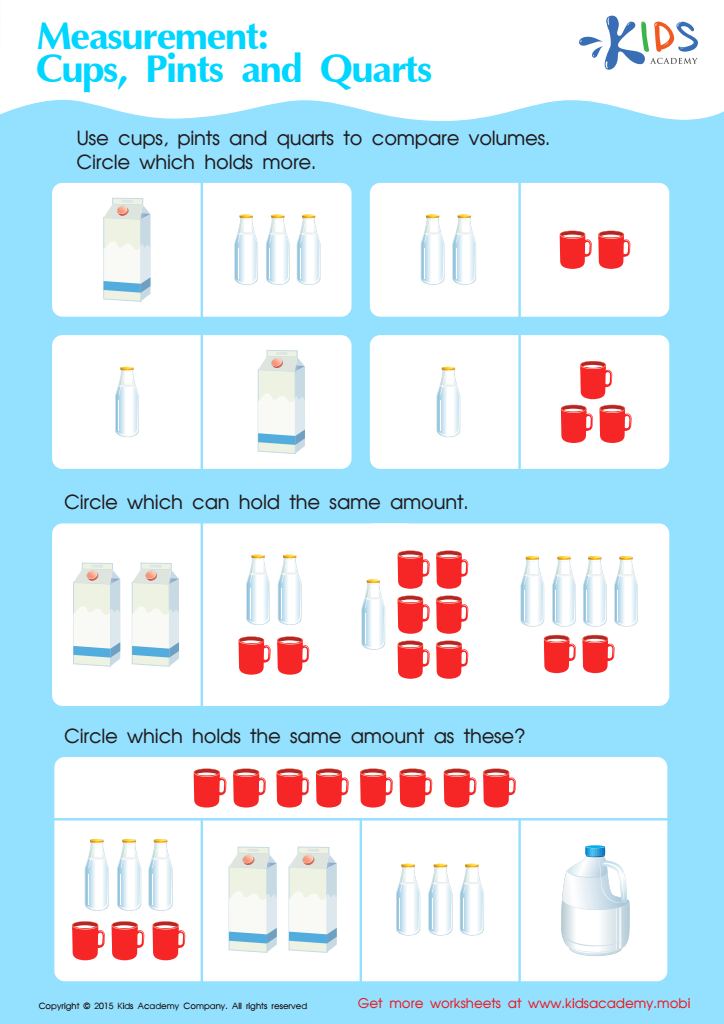
Measurement: Compare Volumes Worksheet
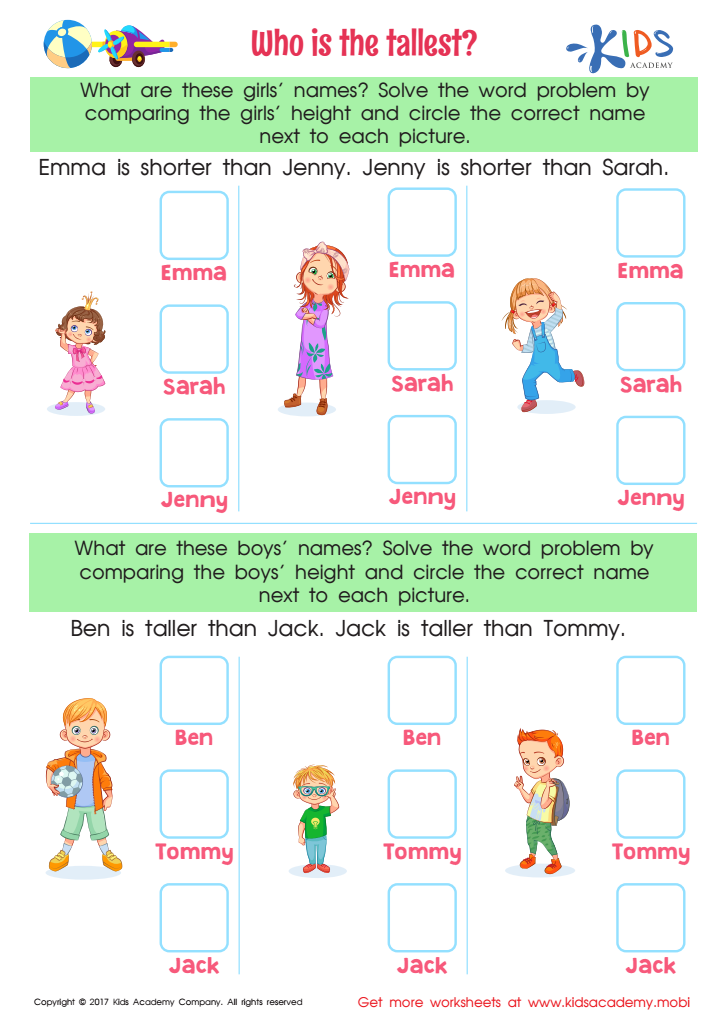
Who Tallest Printable
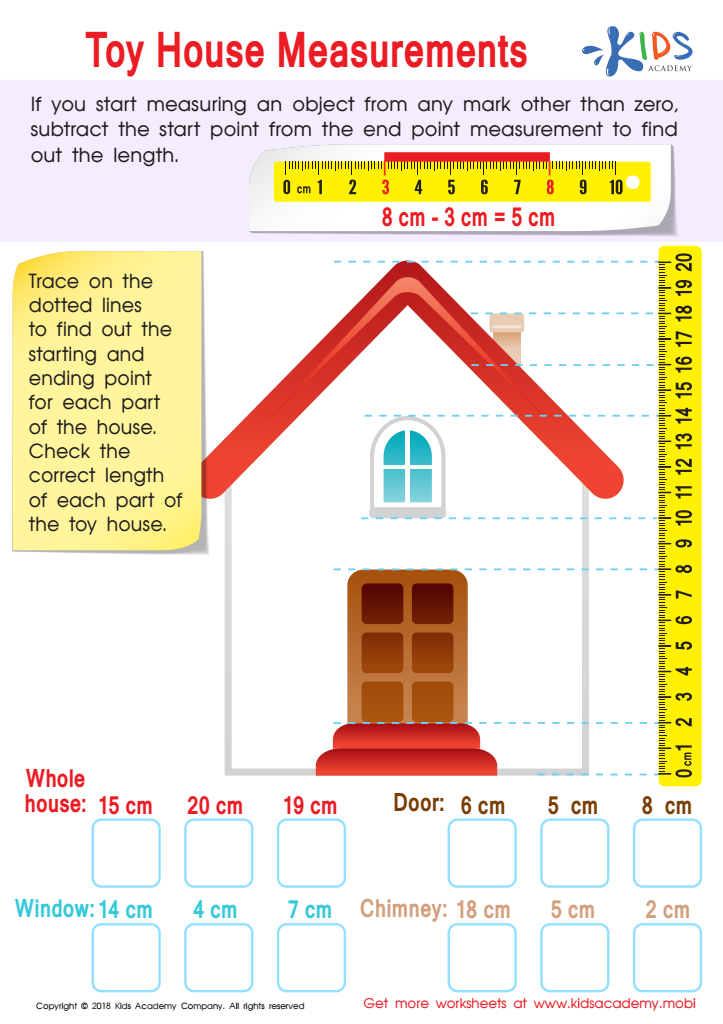
Toy House Measurements Worksheet
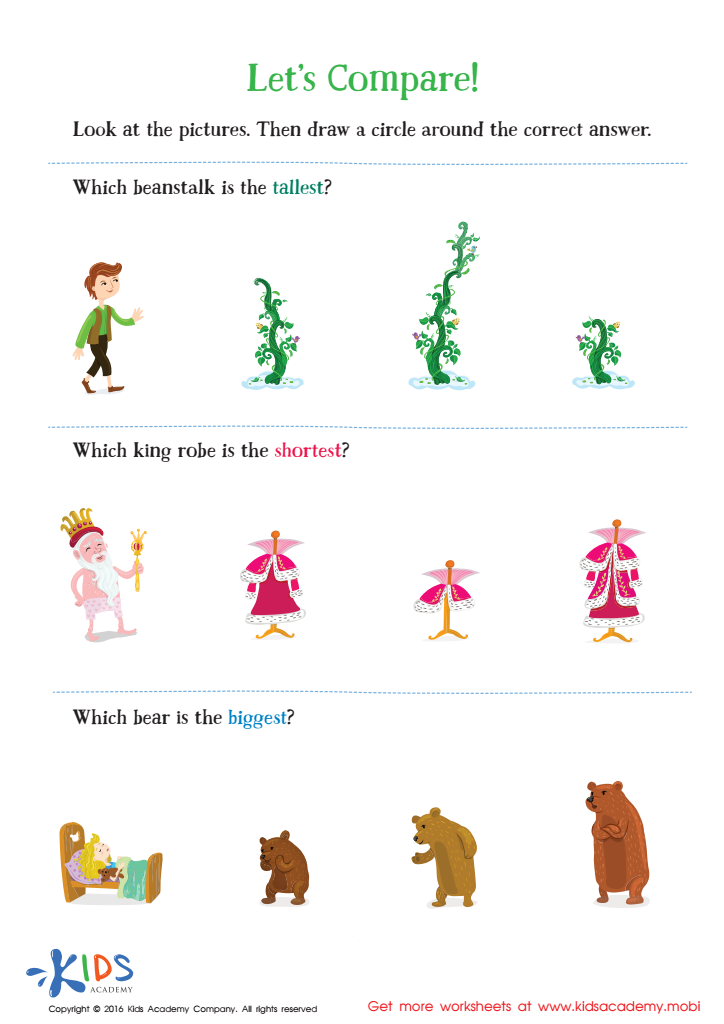
Fairy Tale Worksheet: Let's Compare








Understanding comparing sizes is fundamental, especially for children aged 3-7, as it lays the groundwork for essential math skills and critical thinking. When parents and teachers engage children in activities related to comparing sizes, they help them develop spatial awareness and vocabulary related to measurement—terms like “bigger,” “smaller,” “taller,” and “shorter.” These concepts are pivotal as they engage children in problem-solving and observational skills, giving them tools to interpret the world around them.
Moreover, measuring and comparing sizes infuses play with learning, making it enjoyable and interactive. It fosters curiosity, allowing children to explore concepts hands-on, enhancing retention through real-life contexts. These activities promote social skills as children often work in groups, learning to communicate their thoughts and insights while respecting others' opinions.
Beyond mathematics, these comparisons can boost self-confidence in decision-making and reasoning. As children evaluate different sizes and make comparisons, they cultivate a sense of independence and ownership over their learning. Thus, investing time in measuring and comparing sizes not only supports early mathematical development but also nurtures essential cognitive and social skills that are vital for a child’s overall growth. Parents and teachers should, therefore, recognize this critical opportunity for fostering holistic development.