
Time reading skills Extra Challenge Time Worksheets for Ages 3-7
5 filtered results
Difficulty Level
Grade
Age
-
From - To
Subject
Activity
Standards
Looking to challenge your child’s time-telling abilities? Our "Time Reading Skills Extra Challenge Time Worksheets" are perfect for ages 3-7! These engaging worksheets are designed to enhance and test kids' understanding of analog clock reading in an enjoyable way. Each worksheet presents fun and interactive exercises that make learning to tell time a breeze, helping young learners sharpen their skills to confidently read hours and minutes. Ideal for both school and home practice, these resources ensure your child masters one of the fundamental math skills early on – making learning time both fun and educational!
Favorites
With answer key
Interactive
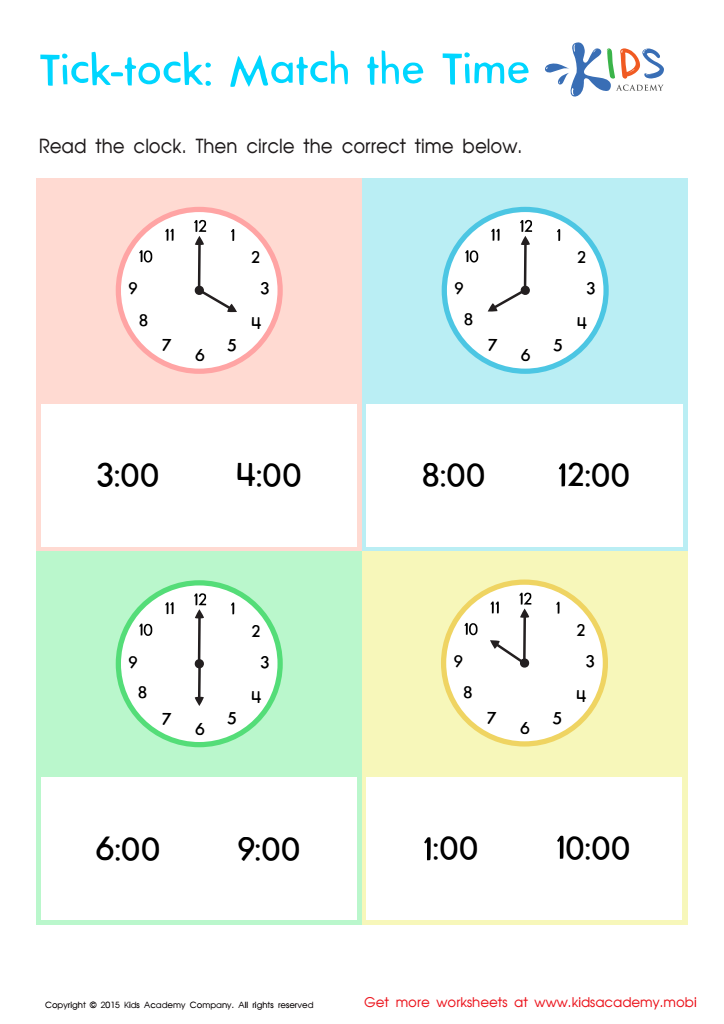
Telling The Time Worksheet: Part 4
Test your skills in telling the time! Circle the right time on 4 analog clock faces.
 Assign to My Students
Telling The Time Worksheet: Part 4
Worksheet
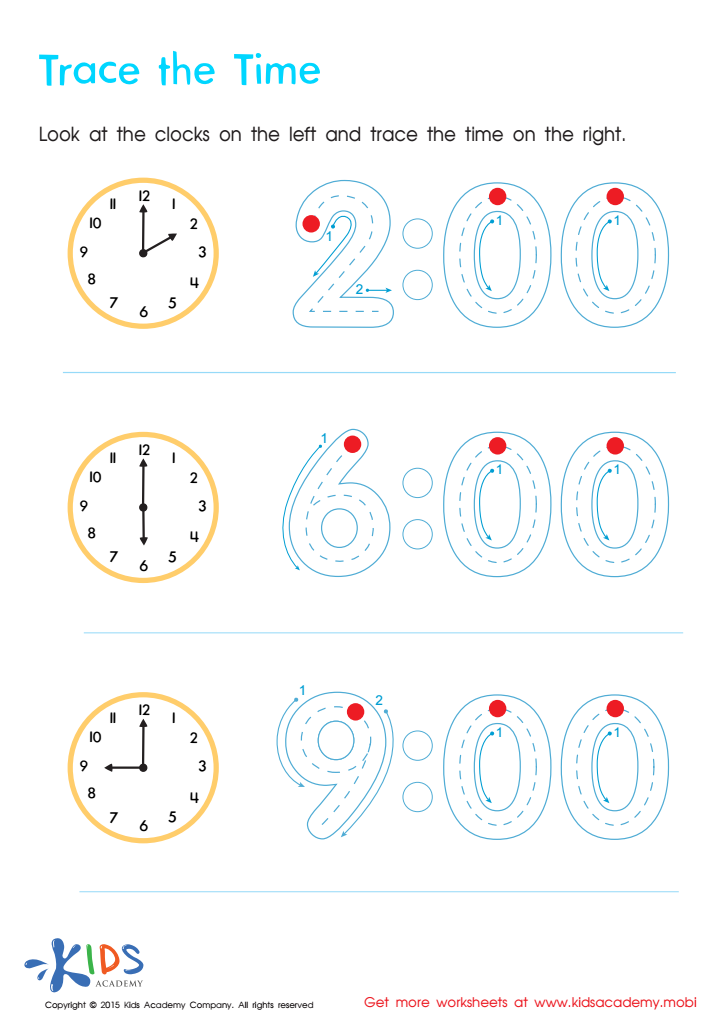
Telling The Time Worksheet: Part 2
Help your kids learn to tell the time with this free math worksheet from Kids Academy. Have them look at the clock faces and trace the time on the right - is it a full hour or half an hour? Get more practice with our wide selection of math worksheets for kindergarten.
Telling The Time Worksheet: Part 2
Worksheet
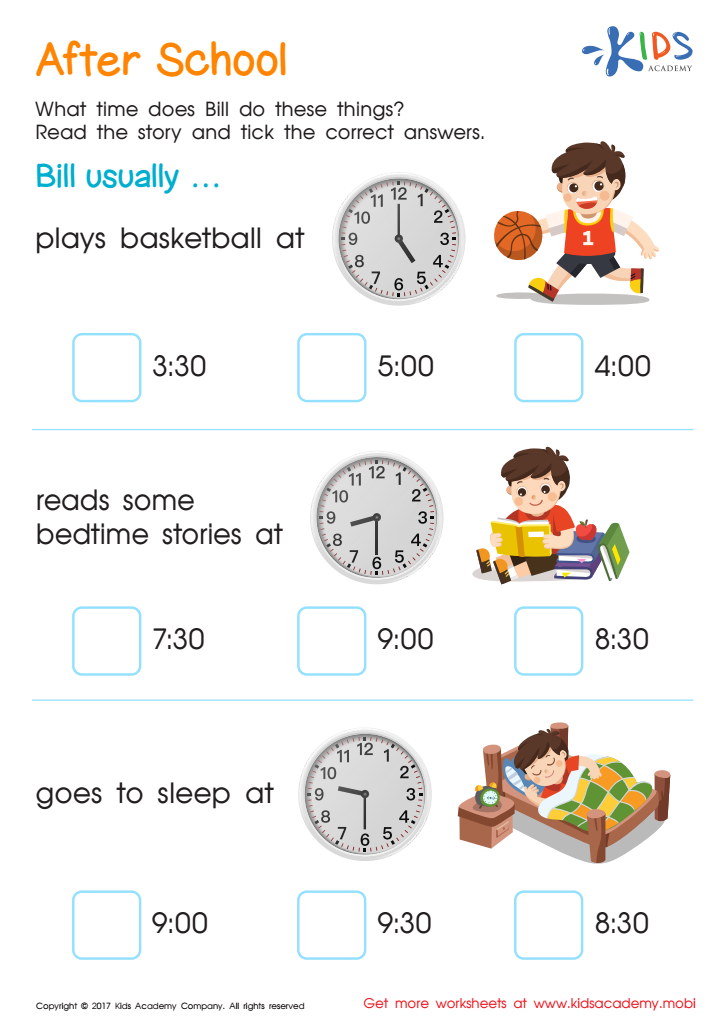
After School Time Printable
Meet Bill, a fun character who does the same things as all of us! This time-telling printable worksheet, 'After School', is an enjoyable way for your child to get familiar with Bill. It's a quick and cute activity to help understand the clocks and learn more about this new friend.
After School Time Printable
Worksheet
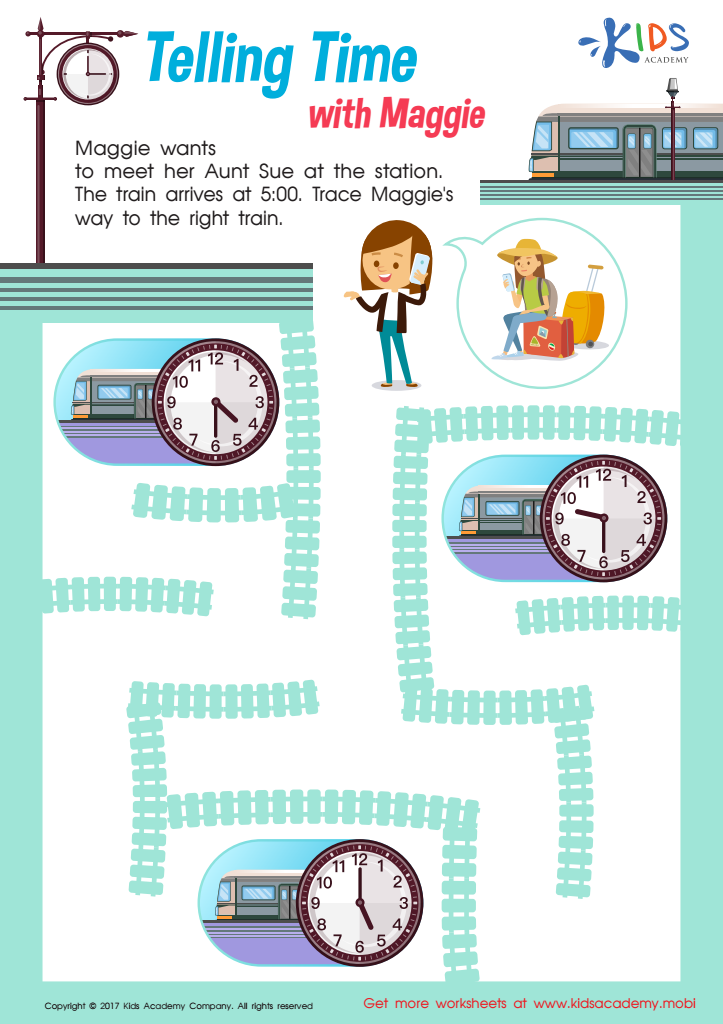
Telling Time With Maggie Time Worksheet
Help Maggie catch her train! Navigate the maze and read clocks to get her to her destination. Join her on a fun time-telling adventure with this puzzling worksheet. Your child will love it!
Telling Time With Maggie Time Worksheet
Worksheet
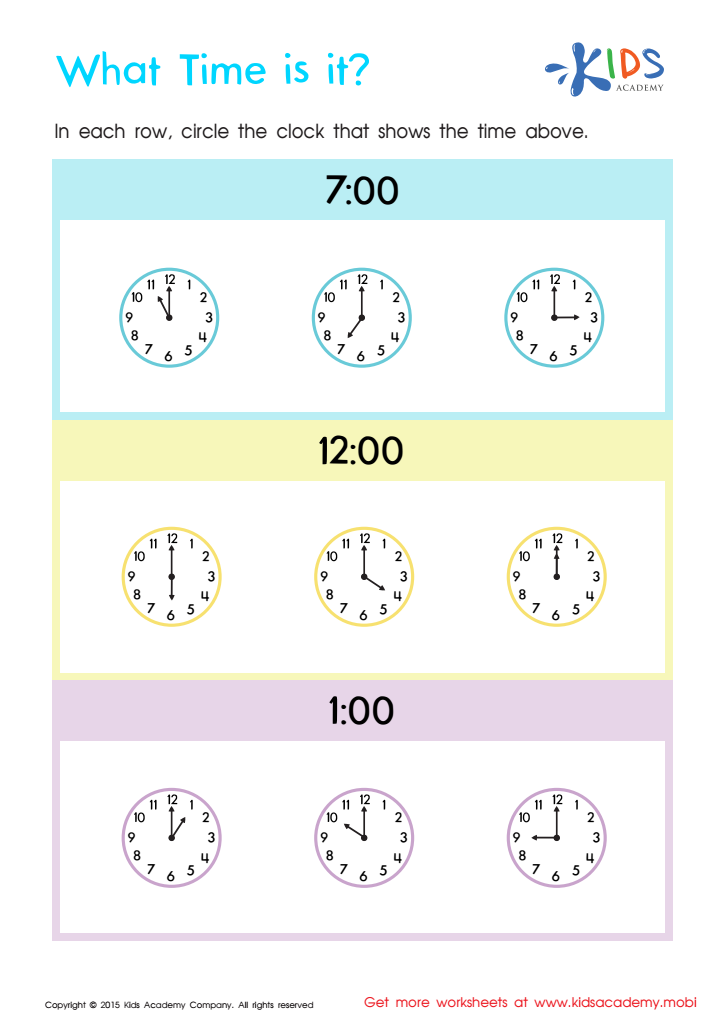
Telling The Time Worksheet: Part 3
Make learning to read clocks fun with our free printable worksheets! Have kids circle the clocks that show the time, remembering that the short hand is for hours and the long one is for minutes. For more worksheets, visit Kids Academy and explore the wonderful world of math with your little learners.
Telling The Time Worksheet: Part 3
Worksheet
Join Kids Academy for Free
Who is primarily going to use this learning content?


.jpg)





Building strong reading skills at an early age is pivotal for a child's future academic success and overall development. Time reading skills and providing extra challenges for ages 3-7 are particularly important for several reasons.
Firstly, early exposure to reading can significantly enhance a child's language acquisition. This foundational period is critical as children's brains are exceptionally receptive to learning new words and concepts. Parents and teachers play key roles in leveraging this period by providing appropriate reading materials and encouraging regular reading habits.
Secondly, early reading fosters a love for books and learning. When children are exposed to enjoyable and engaging books, they develop a positive attitude towards reading, which translates to a lifelong passion for knowledge and education.
Extra challenges in reading, such as more complex stories or comprehension questions, also stimulate cognitive development. These challenges promote critical thinking, problem-solving skills, and a deeper understanding of the material. Moreover, they keep gifted or advanced readers engaged and help prevent boredom.
Additionally, reading together strengthens emotional bonds and supports social-emotional growth. Children feel more secure and valued when parents or teachers take the time to read with them, fostering a nurturing environment that promotes learning.
Overall, prioritizing time for reading and incorporating extra challenges are vital steps in equipping children with the essential skills needed for academic and personal growth.








