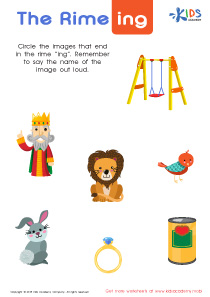
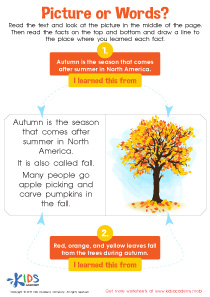
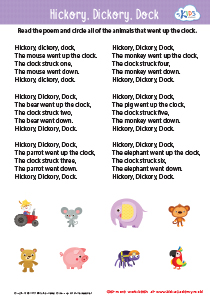
Letter recognition Extra Challenge Reading Worksheets for Ages 3-7
3 filtered results
-
From - To
Unlock the next level of learning with our "Letter Recognition Extra Challenge Reading Worksheets" for ages 3-7! Perfect for young readers who have mastered basic letter identification, these worksheets focus on enhancing recognition skills further. Through engaging activities, children will encounter advanced matching, hidden letters, and fun puzzles designed to fortify their letter knowledge. Each worksheet presents a delightful challenge that blends play with education, keeping kids excited and motivated to learn more. Tailored for eager minds ready to advance, our worksheets foster deeper learning and confidence in young readers. Boost their reading journey today with Kids Academy!
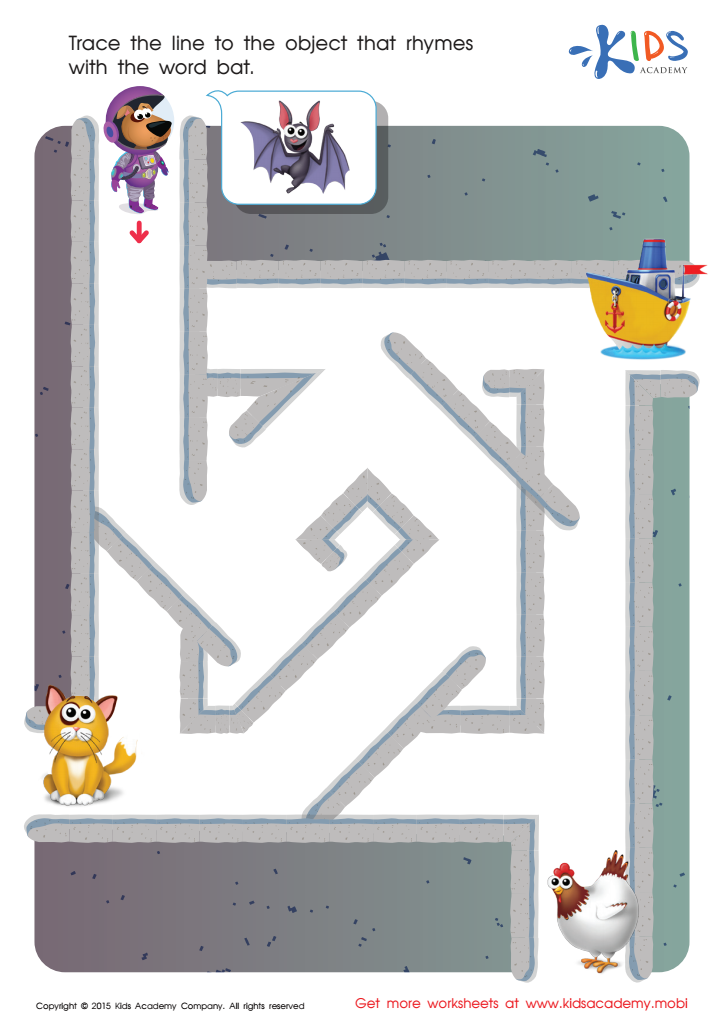
Bat Rhyming Words Worksheet
 Assign to My Students
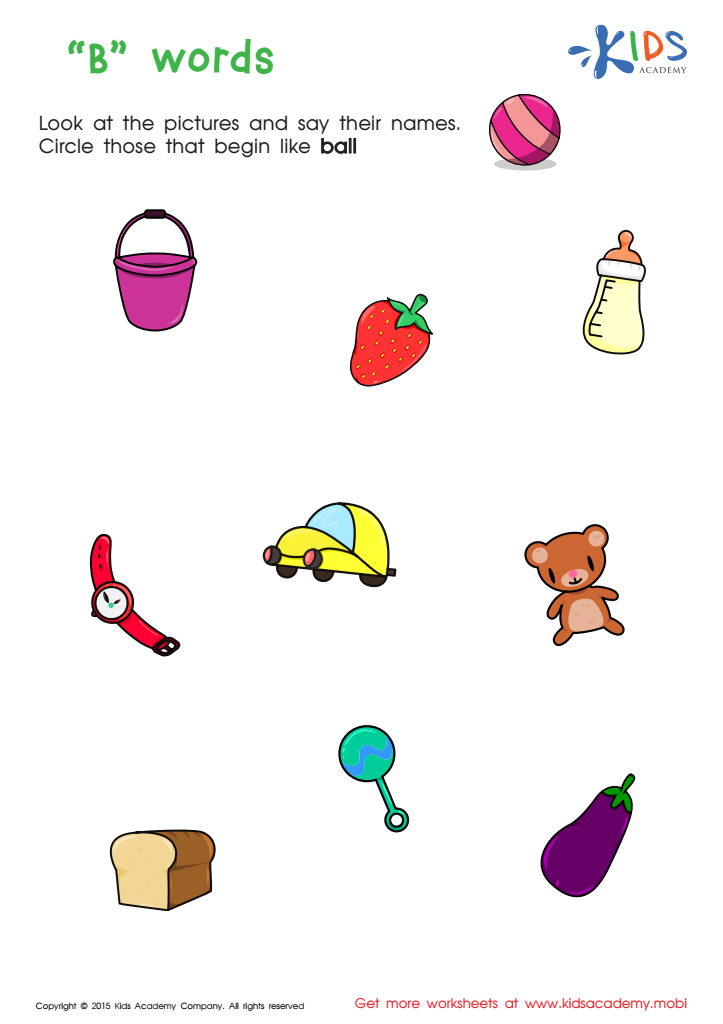
First Words Worksheet
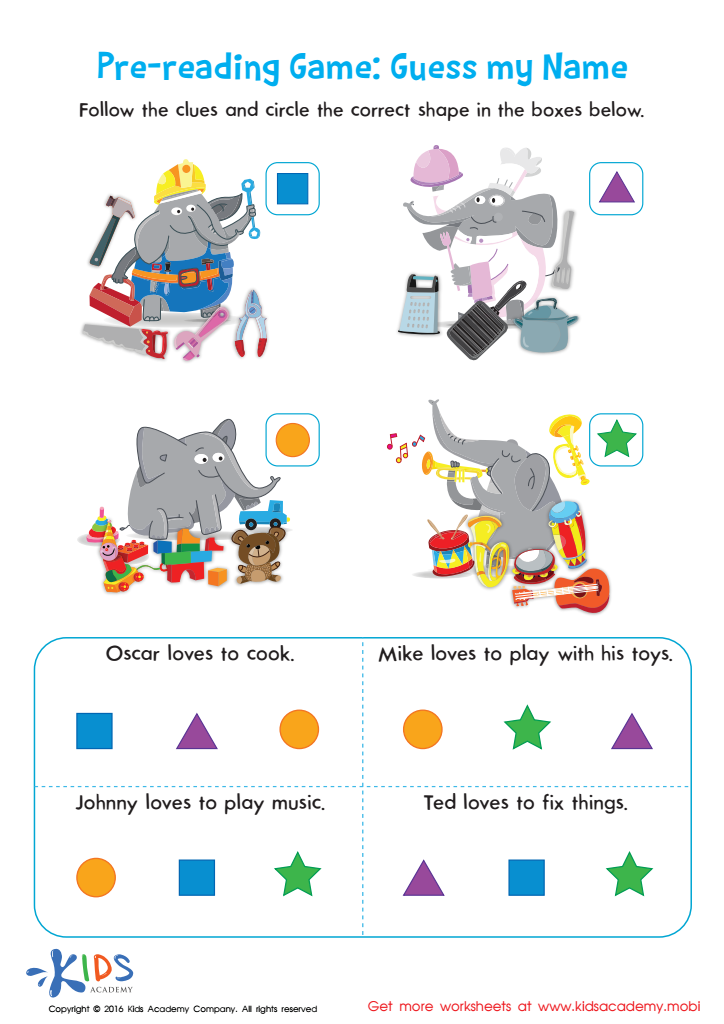
Pre Reading Worksheet Guess My Name







Letter recognition is a foundational skill for children aged 3-7 and is vital for early reading development. Parents and teachers should prioritize Letter recognition Extra Challenge Reading activities because they bolster a child's ability to identify letters effortlessly, a critical step toward reading fluency. By recognizing letters individually and within the context of words, children build the groundwork for understanding phonics, which links letters to their corresponding sounds.
Improved letter recognition aids in the development of other essential literacy skills, such as spelling and vocabulary. When children can quickly identify letters, they are better equipped to decode new words efficiently, enriching their reading experience and fostering a lifelong love of reading. Moreover, mastering letter recognition boosts a child's confidence, as they feel more capable and successful in their learning endeavors.
Early intervention with these challenges ensures that children are well-prepared when they begin more formalized reading instruction in school. This proactive approach can prevent future academic struggles and support a smoother transition into more sophisticated literacy skills. Thus, sustained attention to letter recognition through fun and extra challenging activities can make a significant positive impact on a child's educational trajectory and overall cognitive development.