Spelling practice Extra Challenge Missing Vowels Worksheets for Ages 3-9
3 filtered results
Difficulty Level
Grade
Age
-
From - To
Subject
Activity
Standards
Enhance your child's spelling skills with our "Spelling Practice Extra Challenge: Missing Vowels Worksheets" designed for ages 3-9. These engaging worksheets help young learners identify and fill in missing vowels, reinforcing their understanding of word formation and phonetics. Each activity is tailored to different skill levels, making it perfect for early learners and advanced spellers alike. By practicing with these fun exercises, children will improve their spelling, vocabulary, and reading abilities. These printable worksheets are excellent for both classroom use and at-home practice, ensuring that learning is always just a click away. Elevate your child’s spelling proficiency today!
Favorites
With answer key
Interactive
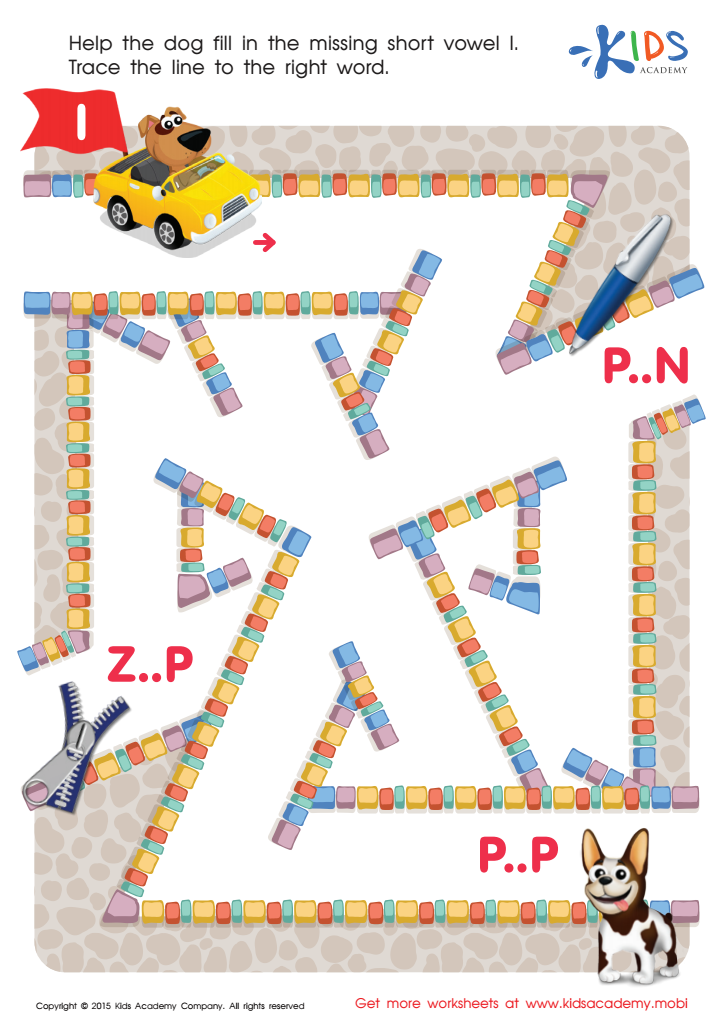
Short Vowel Sound I Worksheet
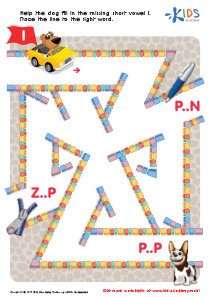
This free printable phonics worksheet will get your kid prepped for reading! It's a maze to help the dog complete the word “zip” with the missing letter I. Have your kid say the word aloud to learn the I sound. It's a great way to practice reading, writing and spelling skills. Check out here for more phonics worksheets!
 Assign to My Students
Short Vowel Sound I Worksheet
Worksheet
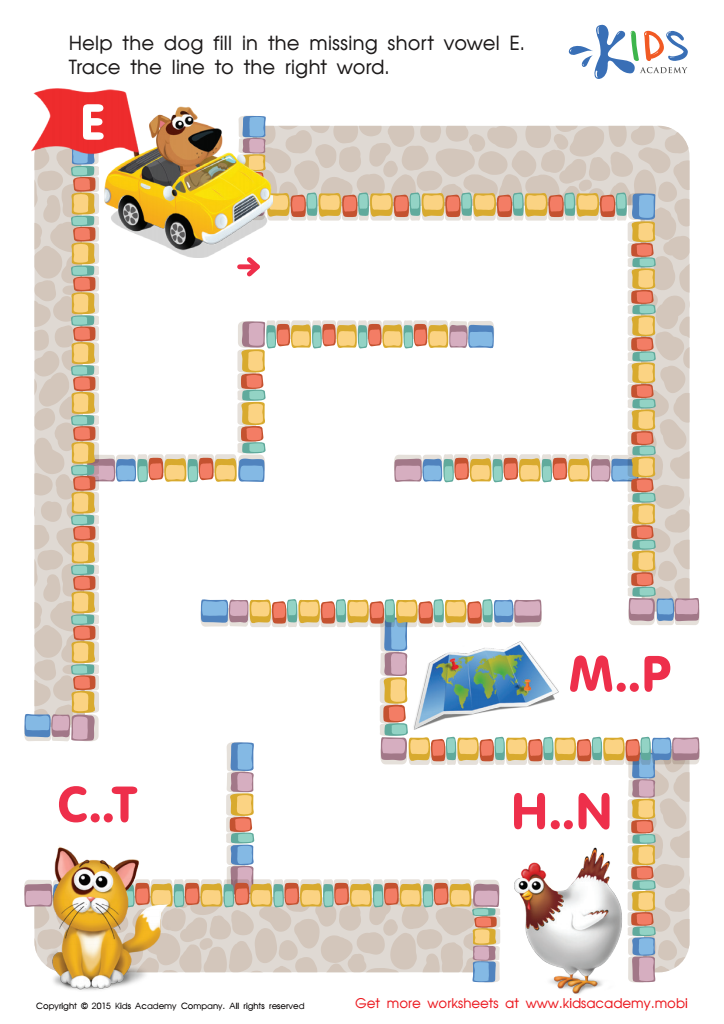
Short Vowel Sound E Worksheet
This free printable phonics worksheet helps kids learn the short vowel sound E. Kids need to help the dog complete the word “hen” by finding their way through a maze. It teaches kids to see the connection between letters and sounds and also strengthens their writing and spelling skills. Fun and educational, this phonics worksheet is great for kids. Want more? Check out here.
Short Vowel Sound E Worksheet
Worksheet
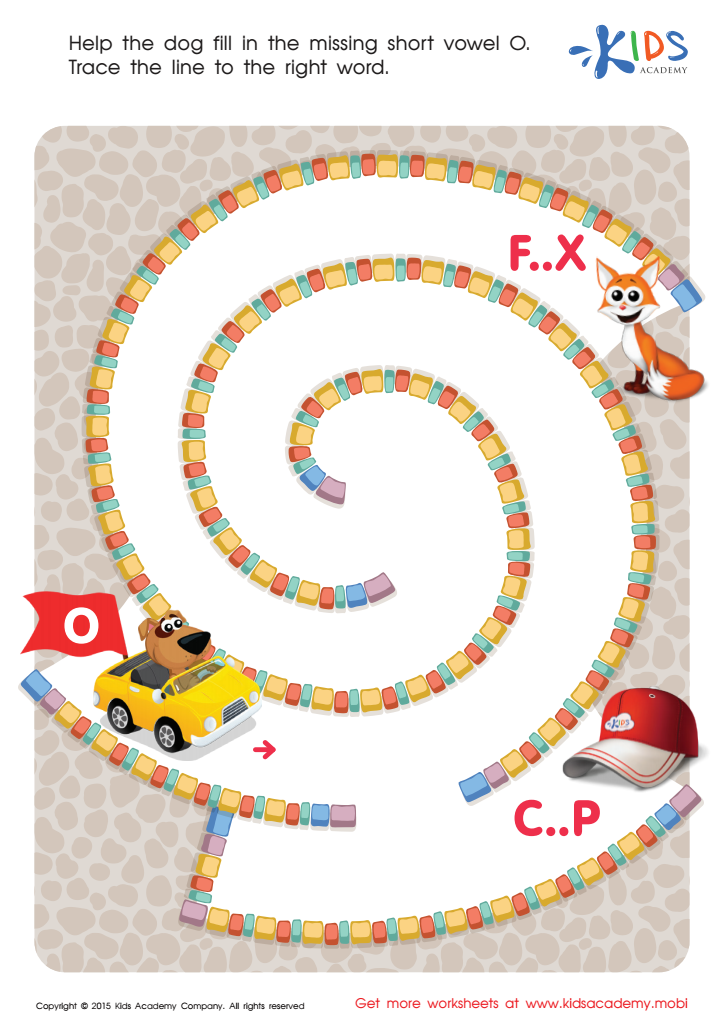
Short Vowel Sound O Worksheet
Help your child learn the short vowel sound O with this fun and free printable phonics worksheet! They'll need to complete the maze to help the dog finish the word "fox" with the missing letter O. Engage their fine motor muscles while they color or trace the maze with crayon or pencil. This educational activity is sure to bring a smile to your little learner's face! For more phonics worksheets, check here.
Short Vowel Sound O Worksheet
Worksheet
Join Kids Academy for Free
Who is primarily going to use this learning content?


Spelling practice through activities like the "Extra Challenge Missing Vowels" is vital for children aged 3-9 as it supports foundational literacy skills. At this age, children are in a pivotal stage of language development where they transition from recognizing letters to understanding how they combine to form words. Engaging in exercises that focus on missing vowels promotes critical thinking and problem-solving, encouraging them to apply their existing vocabulary knowledge creatively.
This challenge not only helps in reinforcing word structure but also boosts phonemic awareness, which is the ability to hear, identify, and manipulate phonemes. This skill is crucial for successful reading development. When children fill in missing vowels, they become more attentive to the sounds within words, improving their spelling and reading fluency.
Additionally, these exercises promote a fun and interactive learning environment, maintaining the child’s interest and motivation. They provide an enjoyable way for children to practice spelling without the process feeling tedious. This positive learning experience makes children more likely to develop a love for reading and writing early on.
For parents and teachers, incorporating such activities can significantly enhance their educational strategies, leading to well-rounded language development in young learners. By caring about such practices, they ensure children lay a solid groundwork for all future academic endeavors.