Historical Knowledge Extra Challenge Social Studies Worksheets for Ages 3-9
3 filtered results
Difficulty Level
Grade
Age
-
From - To
Subject
Activity
Standards
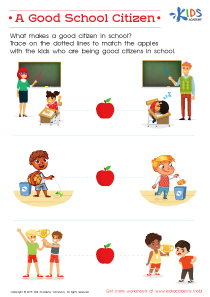
Dive into the exciting world of history with our "Historical Knowledge Extra Challenge Social Studies Worksheets" tailored for kids aged 3-9! These engaging worksheets are designed to spark curiosity and enhance critical thinking skills through fun activities related to historical events, famous figures, and cultural landmarks. Perfect for early learners, each worksheet combines age-appropriate content with stimulating challenges that encourage exploration and discovery. Boost your child's understanding of historical concepts while fostering an appreciation for the past. Whether at home or in the classroom, these worksheets provide an excellent opportunity for young minds to learn, discuss, and connect with history in a playful way!
Favorites
With answer key
Interactive
Important Years in History Worksheet
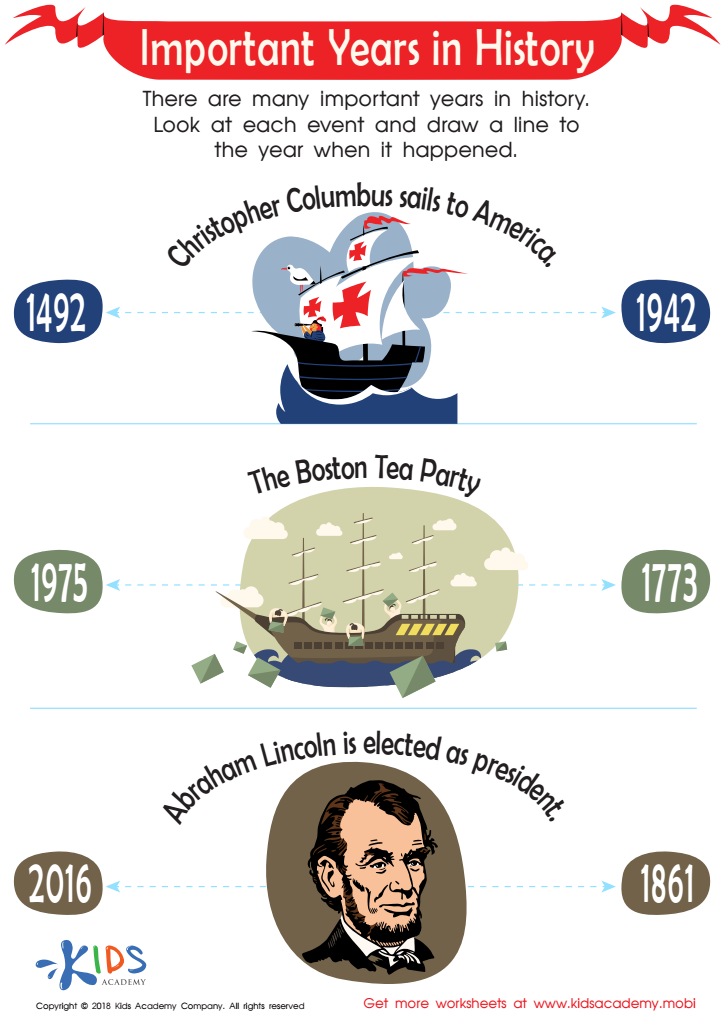
Ask your students if they can name any important dates in history. Then, look at the images in the worksheet with them. Read the sentences above each one to them and have them trace a line to the year when the event occurred.
 Assign to My Students
Important Years in History Worksheet
Worksheet
Ancient Inventions and Discoveries Worksheet
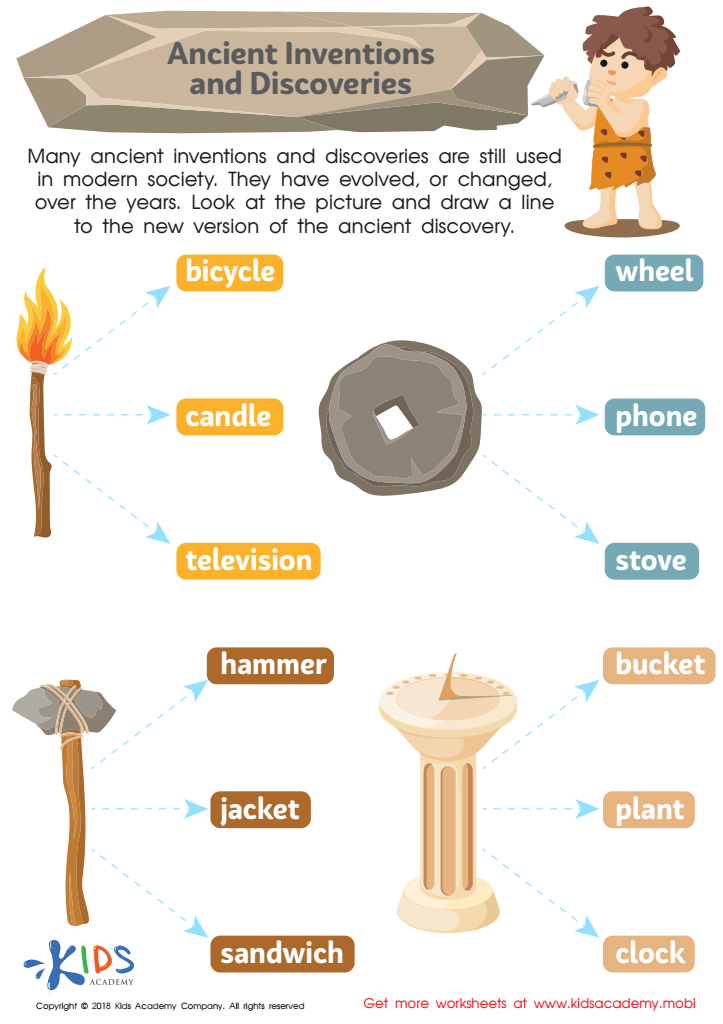
Kids may think inventions are high-tech, but many of the world's most important inventions are ancient! This Kids Academy worksheet helps kids learn about the wheel, clock, tools and candles - inventions that changed the world! Kids will simply review the pictures and trace the dotted lines to the right answers. Great for social studies!
Ancient Inventions and Discoveries Worksheet
Worksheet
George Washington Timeline Worksheet
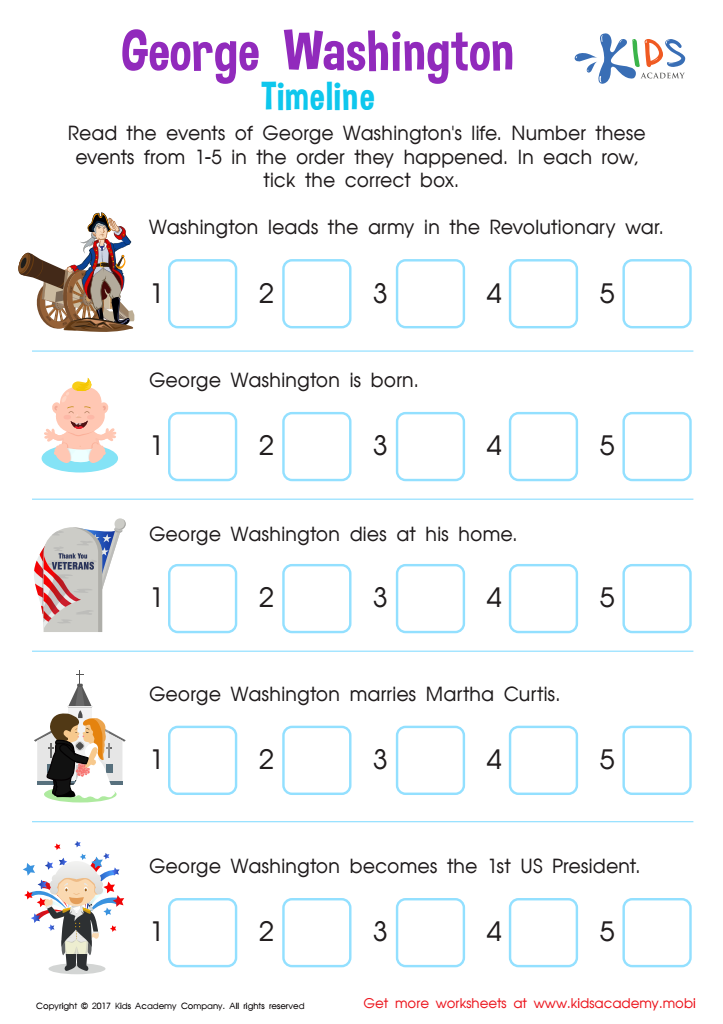
Help your child learn about George Washington and practice sequencing events! This printable worksheet will boost their reading and comprehension skills while they review historical facts. It's a great challenge to keep them engaged and learning.
George Washington Timeline Worksheet
Worksheet
Join Kids Academy for Free
Who is primarily going to use this learning content?








Parents and teachers should care about Historical Knowledge Extra Challenge Social Studies for ages 3-9 because early exposure to history fosters critical thinking skills, empathy, and a sense of identity in young children. During these formative years, children develop foundational cognitive and social abilities, making it an ideal time to introduce them to historical narratives and cultural heritage.
Understanding history helps children grasp the complexities of societal change, the significance of historical figures, and the values that shape their communities and world. By learning about diverse cultures and events, children cultivate respect and appreciation for others, fostering inclusivity and reducing biases.
Moreover, engaging with social studies content strengthens literacy and comprehension skills. Activities designed to challenge young learners, such as storytelling, role-playing, and interactive projects, promote active learning and empower children to ask questions about their environment.
Investing in this educational area can ignite a lifelong curiosity about the world. It sets the stage for informed and active citizenship as children grow into adults. Ultimately, nurturing historical knowledge in young learners shapes their ability to understand the past and participate meaningfully in the future, making it a crucial aspect of early education.