Vocabulary development Extra Challenge Grammar Worksheets for Ages 3-9
3 filtered results
-
From - To
Unlock your child's potential with our Vocabulary Development Extra Challenge Grammar Worksheets designed for ages 3-9! These engaging worksheets are perfect for parents and educators seeking to elevate young learners' language skills. With fun activities that encourage critical thinking and creativity, kids will enhance their vocabulary, reinforce grammar concepts, and boost their writing proficiency. Each worksheet is tailored to different learning levels, making it easy to find the perfect challenge for your child. Foster a love for language and lifelong learning as they explore new words and grammar rules. Dive into our collection and watch your child's confidence soar!
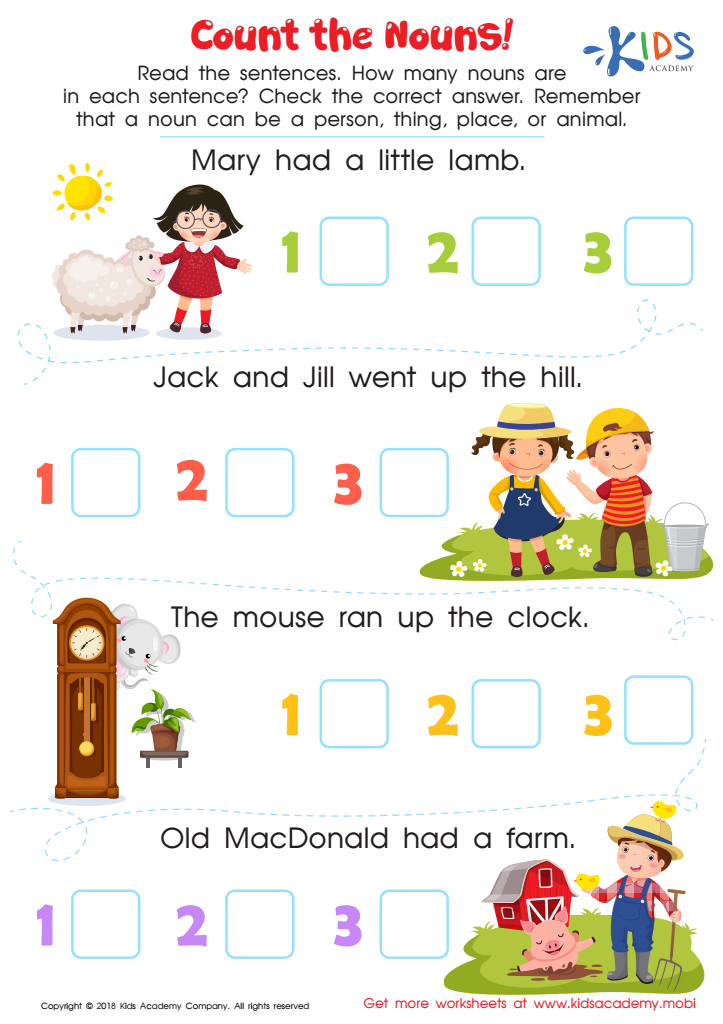
Count the Nouns Worksheet
 Assign to My Students
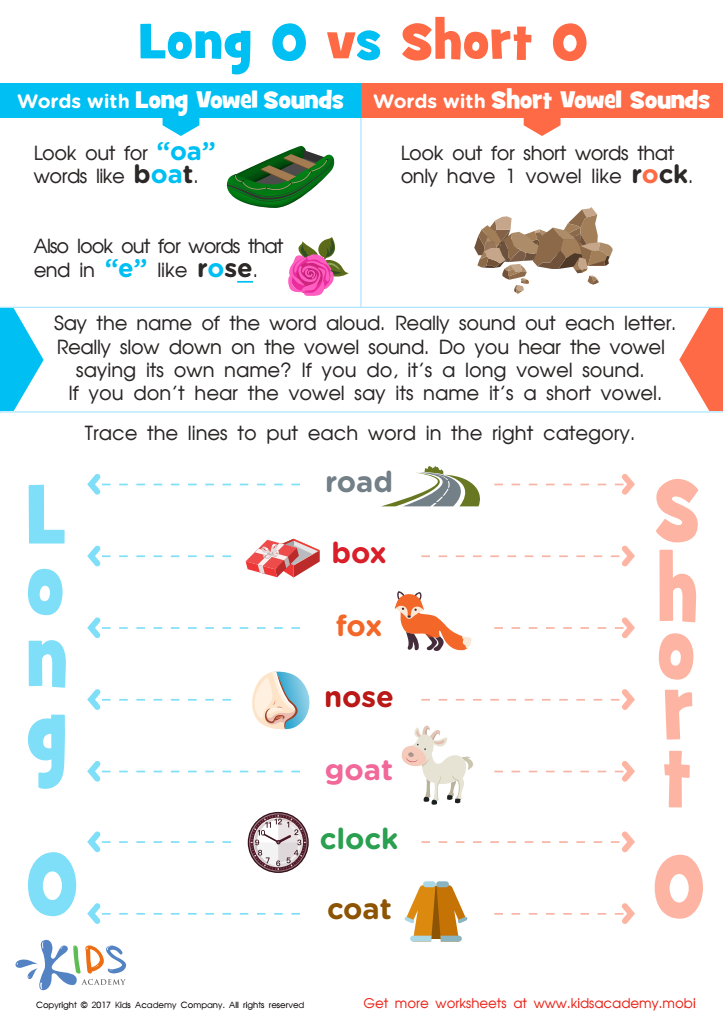
Long and Short Vowel O Spelling Worksheet
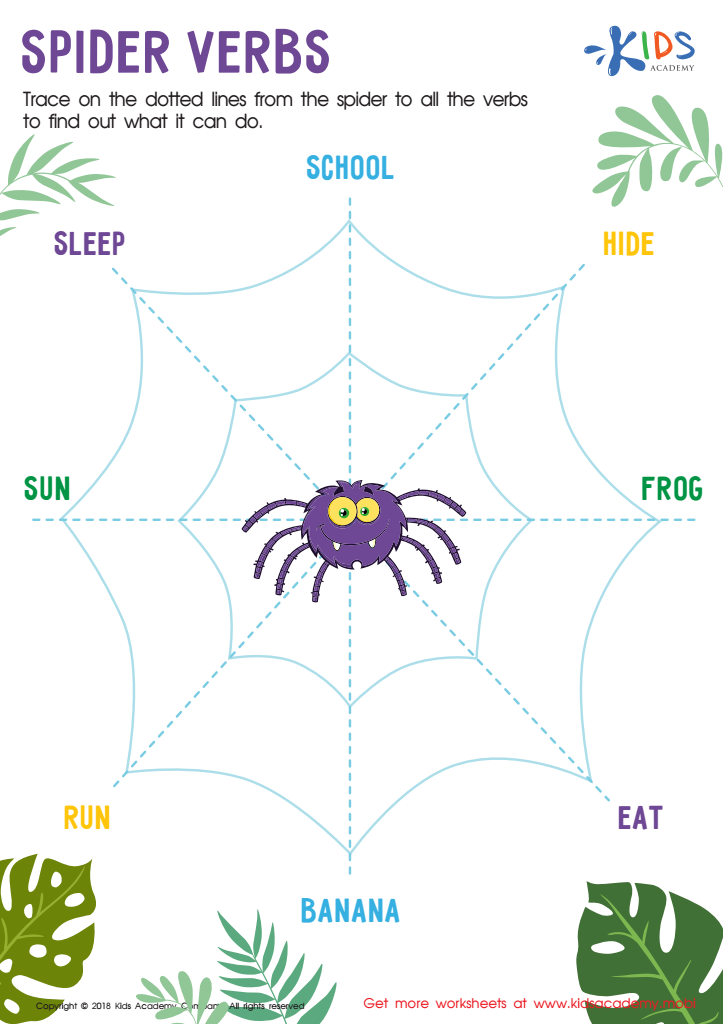
Spider Verbs Worksheet



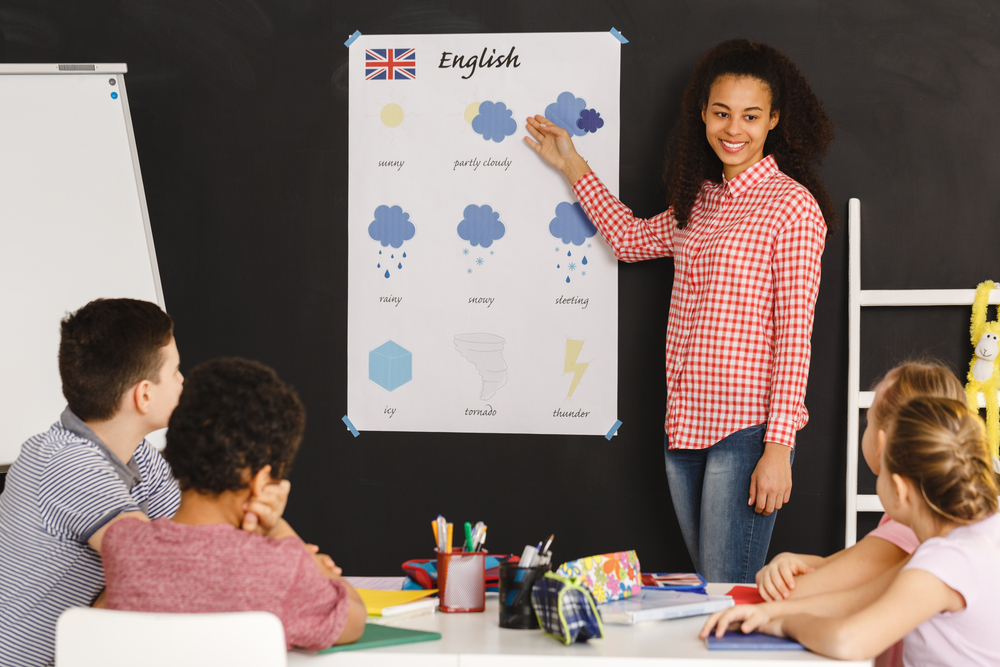



Vocabulary development is crucial for children ages 3-9 as it lays the foundation for effective communication, critical thinking, and academic success. At this age, children are rapidly absorbing language, and a rich vocabulary helps them express their thoughts and feelings more clearly. Parents and teachers play a pivotal role in enriching a child's language exposure through daily conversations, reading, and interactive activities.
A robust vocabulary enhances literacy skills, enabling children to decode words and understand texts better, which boosts reading comprehension. It also fuels confidence in verbal communication, encouraging children to engage more actively in discussions and presentations. Moreover, a diverse vocabulary aids in building relationships as children learn to articulate their ideas and emotions, promoting social skills.
Furthermore, vocabulary development supports cognitive growth, enabling children to categorize and relate concepts. This skill is essential for problem-solving and analytical thinking, which are foundational to later academic achievements in science, math, and beyond. By fostering a rich vocabulary through targeted activities, discussions, and play, parents and teachers can empower children to navigate their world more effectively, setting them up for lifelong learning and success. Ultimately, prioritizing vocabulary development is an investment in a child’s future.