Alphabet Recognition Extra Challenge Tracing Letters Worksheets for Ages 4-5
3 filtered results
-
From - To
Looking to enhance your child's alphabet recognition skills? Our "Alphabet Recognition Extra Challenge Tracing Letters Worksheets" are perfect for children aged 4-5! These engaging worksheets offer a fun and interactive way for young learners to trace letters and reinforce their understanding of the alphabet. Designed to challenge and inspire, each worksheet focuses on different letters, promoting fine motor skills and early literacy. Your child will gain confidence as they practice recognizing and writing letters, setting the foundation for future reading and writing success. Perfect for at-home learning or classroom activities, these worksheets make mastering the alphabet enjoyable and effective!

Letter A Tracing Page
 Assign to My Students
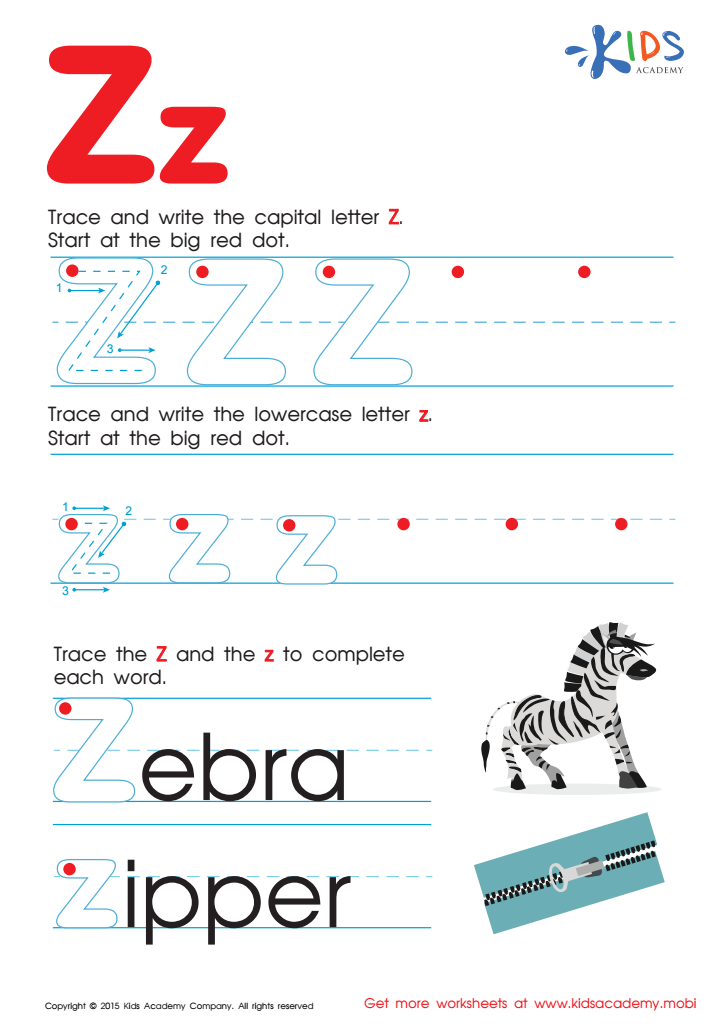
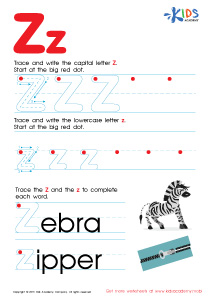
Letter Z Tracing Page
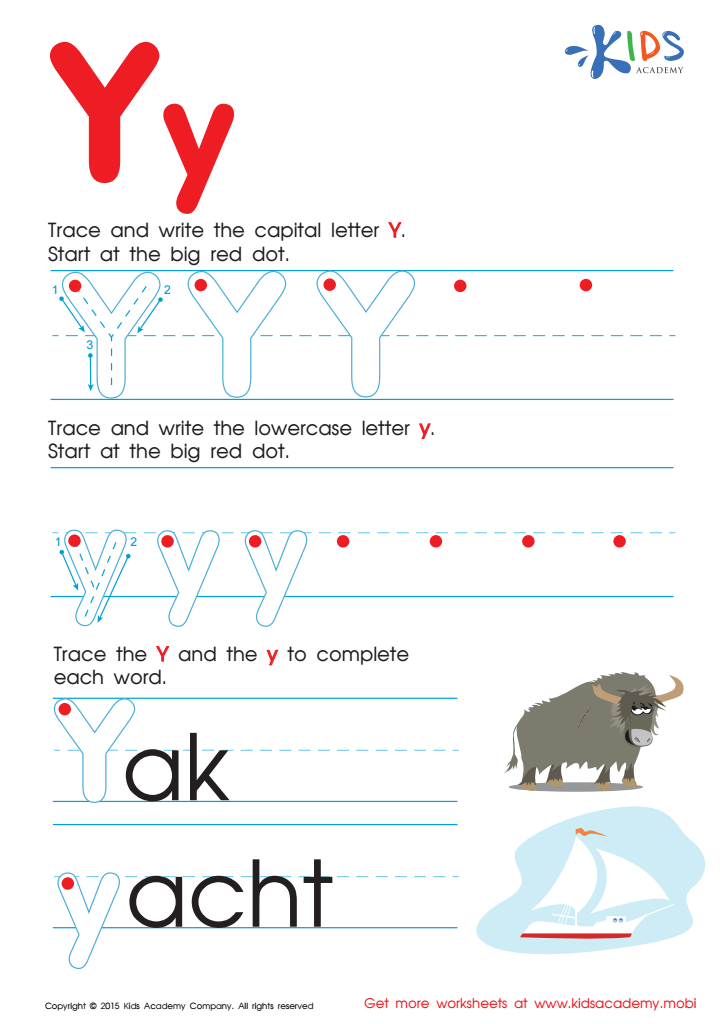
Letter Y Tracing Page








Alphabet recognition is a crucial foundational skill for preschoolers, fostering literacy and communication development. The Alphabet Recognition Extra Challenge Tracing Letters activity engages children aged 4-5 in interactive learning, helping them effectively identify and write letters. This skill is essential as it correlates directly with their reading readiness and future academic success.
Teachers and parents should prioritize activities like this because they promote fine motor skill development through tracing, enhancing hand-eye coordination and pencil grasp. Furthermore, tracing letters allows children to internalize letter shapes and sounds, reinforcing their understanding of the alphabet. By offering a challenge, it stimulates cognitive growth and establishes a love for learning.
This activity also encourages self-confidence and perseverance, as children can take pride in mastering each letter. Engaging in tracing letters can create opportunities for positive interactions between parents and children, reinforcing the parent-child bond crucial for emotional and social development.
By focusing on alphabet recognition and tracing at this early age, parents and teachers are laying a sturdy foundation that will support children's literacy skills, academic success, and lifelong love for learning. Overall, Alphabet Recognition Extra Challenge Tracing Letters is a valuable tool for nurturing well-rounded, skilled learners.