
Emotional identification Extra Challenge Worksheets for Ages 4-5
3 filtered results
Difficulty Level
Grade
Age
-
From - To
Subject
Activity
Standards
Enhance your child's emotional intelligence with our Emotional Identification Extra Challenge Worksheets for Ages 4-5! Designed to engage young learners, these worksheets help children recognize, understand, and express their emotions through fun activities. Each worksheet emphasizes key feelings like happiness, sadness, anger, and surprise, encouraging kids to identify emotions in themselves and others. With vibrant illustrations and age-appropriate challenges, your child will enjoy exploring emotions while developing essential social skills. Perfect for parents and educators, these resources foster emotional awareness and empathy, setting the groundwork for healthy emotional development. Unlock your child's potential with our engaging extra challenge worksheets today!
Favorites
With answer key
Interactive
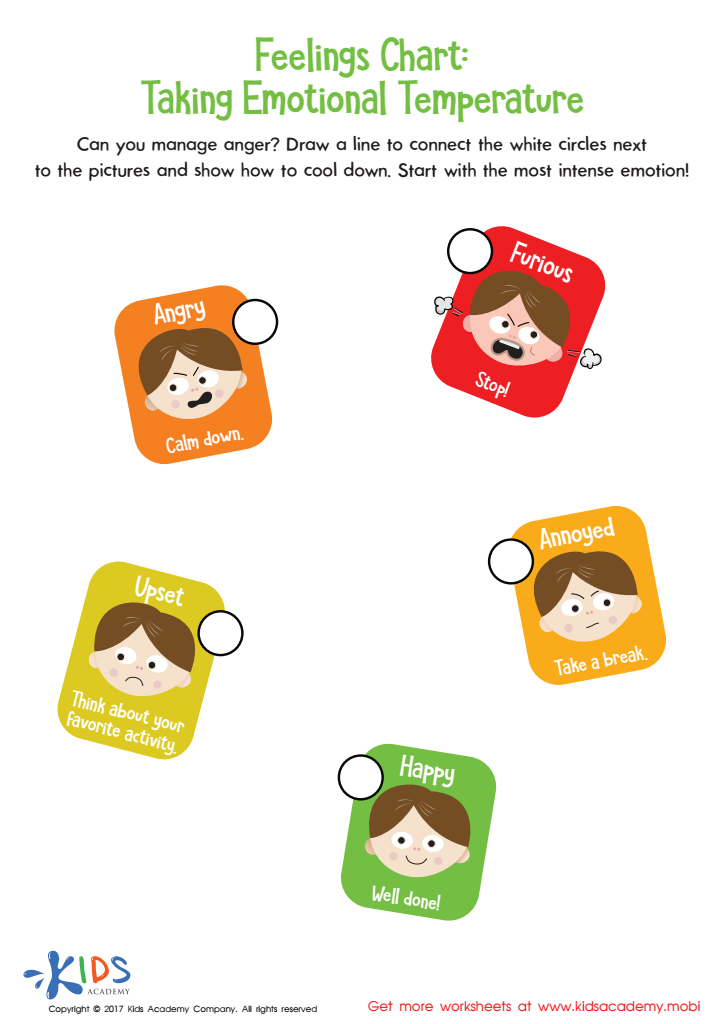
Feelings Chart Worksheet
Anger can be tricky to manage, so help your child learn techniques for coping. Use this feelings chart worksheet which leads them through identifying the most intense face and connecting the dots to help them calm down.
 Assign to My Students
Feelings Chart Worksheet
Worksheet
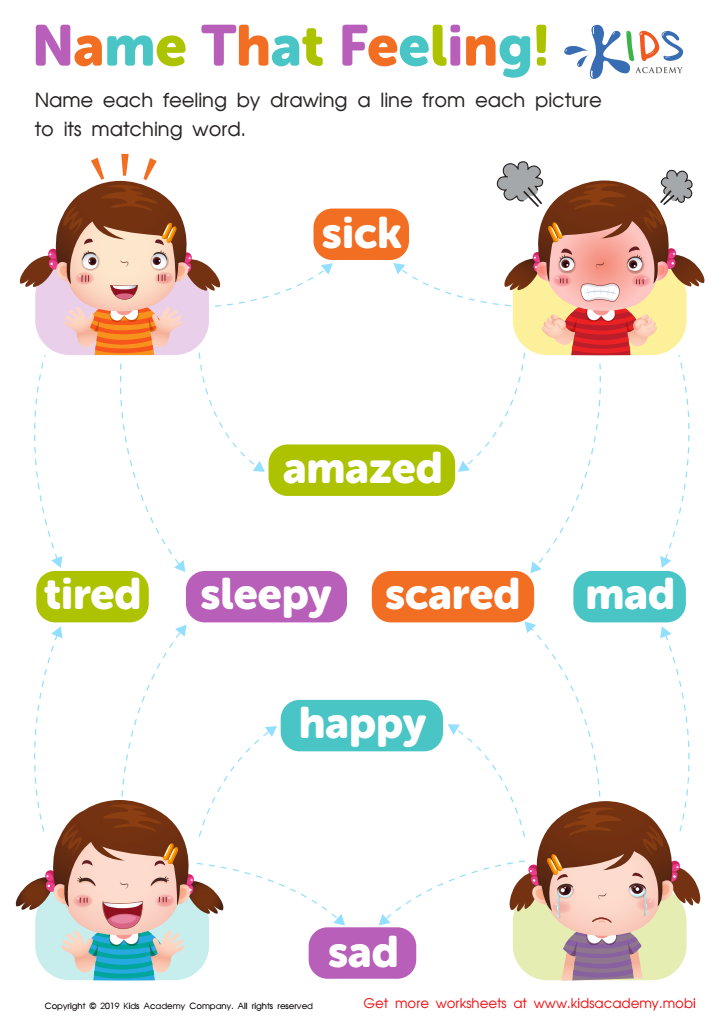
Name that Feeling Worksheet
Fostering your child's emotional intelligence is essential for their development. This worksheet helps them associate feelings with words, improving their social skills and fine motor coordination. They'll trace pictures and words to learn the feeling vocabulary.
Name that Feeling Worksheet
Worksheet
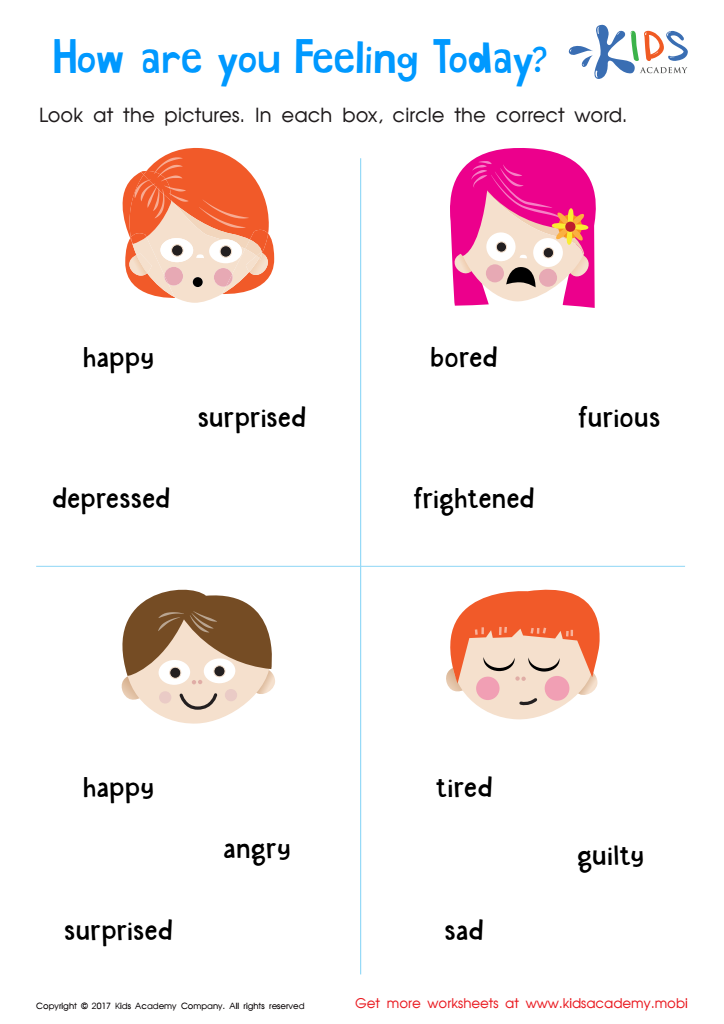
Understanding Feelings Worksheet
It helps them learn to empathize with others and regulate their own emotions. Try it today!
Develop your child's understanding of empathy and emotional regulation with this worksheet! It is a great way to help them acquire important life skills beyond academic knowledge. Print it and start using it to take their social and emotional skills to the next level. Try it now!
Understanding Feelings Worksheet
Worksheet
Join Kids Academy for Free
Who is primarily going to use this learning content?



.jpg)




Emotional identification is crucial for children aged 4-5, as it lays the foundation for their social-emotional development. At this stage, children are beginning to explore their own feelings and the emotions of others. Understanding emotions helps them navigate interactions effectively in both classroom and home settings. When parents and teachers focus on emotional identification, they empower children to articulate their feelings, which promotes communication skills and reduces frustration.
Moreover, recognizing emotions fosters empathy. When children can identify how peers feel, they become more compassionate and responsive, paving the way for healthy relationships and conflict resolution skills. This crucial emotional literacy can also improve behavior, as children who understand their emotions are less likely to act out, leading to a more harmonious classroom environment.
Additionally, parents modeling emotional identification helps reinforce these skills at home, creating a consistent learning experience. When both teachers and parents prioritize emotional awareness, they nurture resilient learners who are equipped to handle challenges, thus enhancing academic and social success. In conclusion, emotional identification is essential not just for individual growth, but for cultivating a supportive community, making it imperative for both parents and teachers to emphasize this aspect of early education.








