Time reading skills Extra Challenge Worksheets for Ages 4-5
3 filtered results
-
From - To
Enhance your child's time reading skills with our Extra Challenge Worksheets designed specifically for ages 4-5! These engaging and interactive worksheets provide fun opportunities for young learners to understand the concept of time. With colorful visuals and age-appropriate exercises, children will practice reading clocks, recognizing hours and half-hours, and developing essential time-telling abilities. Ideal for reinforcing classroom learning or as a supplemental home activity, our worksheets make mastering time skills exciting. Give your child the confidence they need to succeed in this vital reading skill today! Explore our collection and watch their understanding of time flourish!
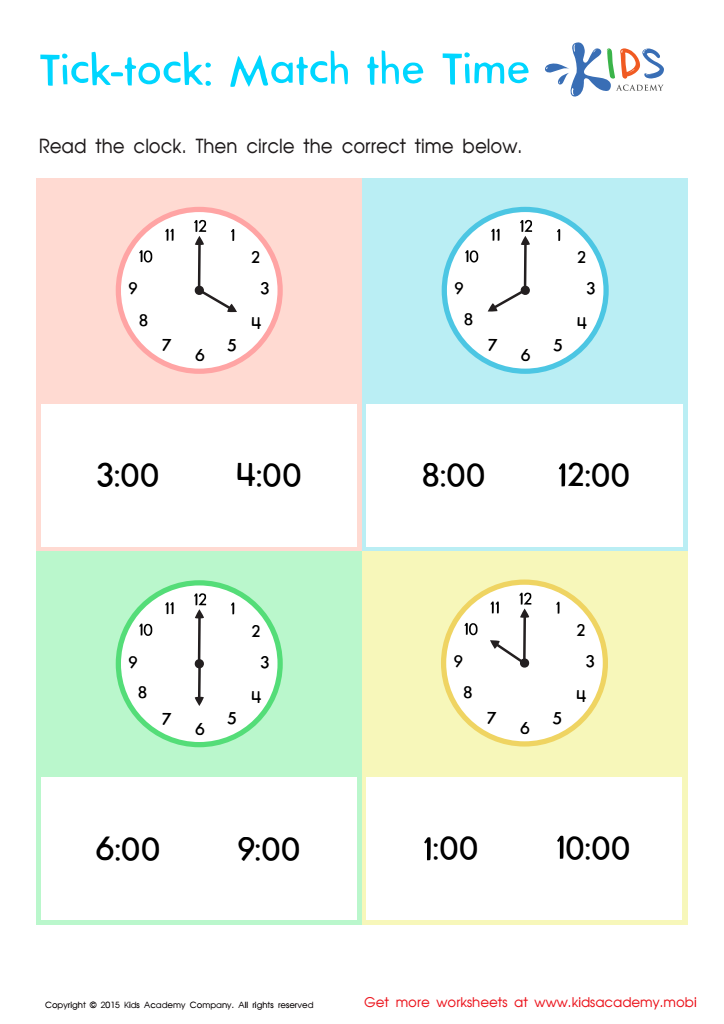
Telling The Time Worksheet: Part 4
 Assign to My Students
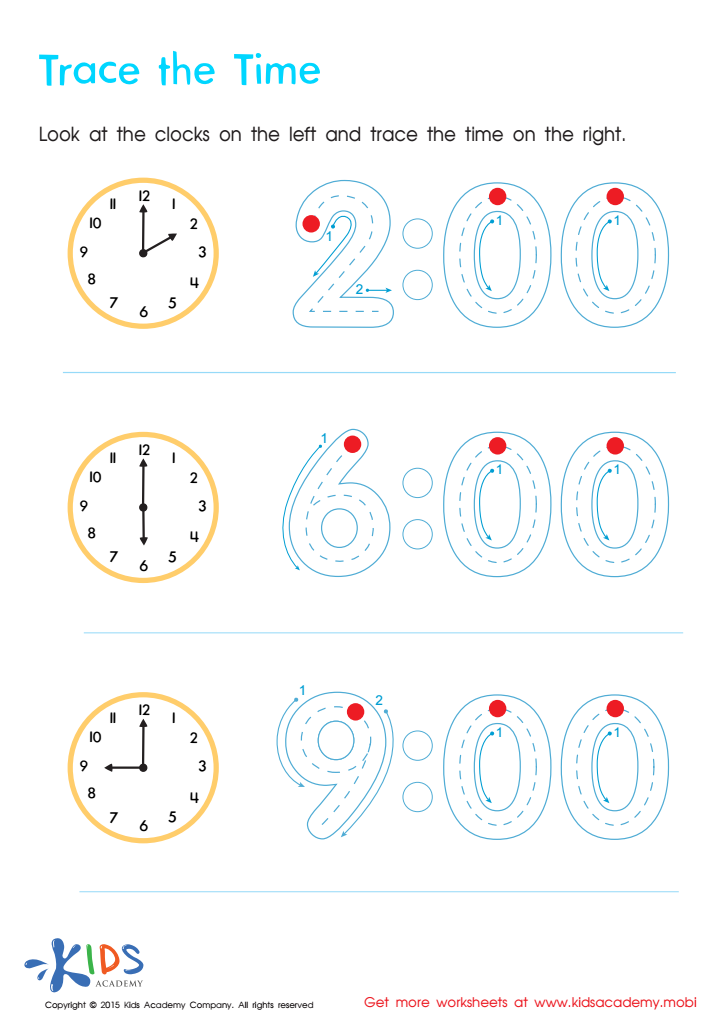
Telling The Time Worksheet: Part 2
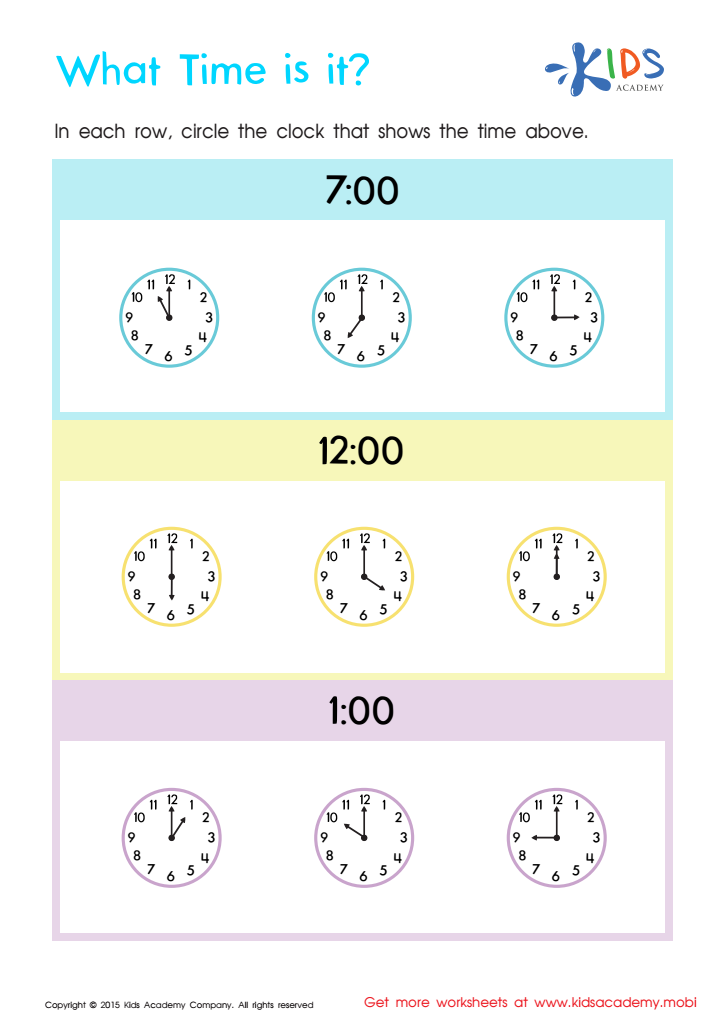
Telling The Time Worksheet: Part 3








Time reading skills are essential for children aged 4-5 as they lay the foundation for various academic and life skills. At this stage, children are developing their cognitive abilities, and understanding time helps enhance their comprehension and reasoning skills. Mastering time concepts allows kids to better understand sequences of events and routines, giving them a greater sense of control and security in their daily lives.
When parents and teachers focus on developing time reading skills, they help children learn fundamental concepts like past, present, and future, which are crucial for storytelling and personal experiences. It also nurtures specific skills like counting and number recognition, which are vital for mathematics readiness.
Moreover, in a world increasingly ruled by schedules, teaching children how to read time helps them become more independent, enabling them to follow routines and manage their own time effectively as they grow. This understanding of time contributes to better organizational skills and promotes responsibility from a young age.
Ultimately, investing in time-reading skills nurtures critical thinking and problem-solving abilities—feats that will benefit children not only in school but throughout their lives. Therefore, cultivating these skills is an invaluable gift for parents and teachers to provide.








