Fine Motor Skills Extra Challenge Geometry Worksheets for Ages 4-5
3 filtered results
-
From - To
Enhance your child’s learning journey with our Fine Motor Skills Extra Challenge Geometry Worksheets designed specifically for ages 4-5. These engaging worksheets focus on developing essential fine motor skills through fun, geometric activities that promote both creativity and dexterity. Children will enjoy tracing shapes, connecting lines, and color-matching, all while learning the fundamentals of geometry. Ideal for preschoolers and kindergarteners, these worksheets provide a perfect blend of education and entertainment, ensuring your little ones develop confidence as they master shape recognition and hand-eye coordination. Download and print today to inspire a love for learning in your young mathematicians!
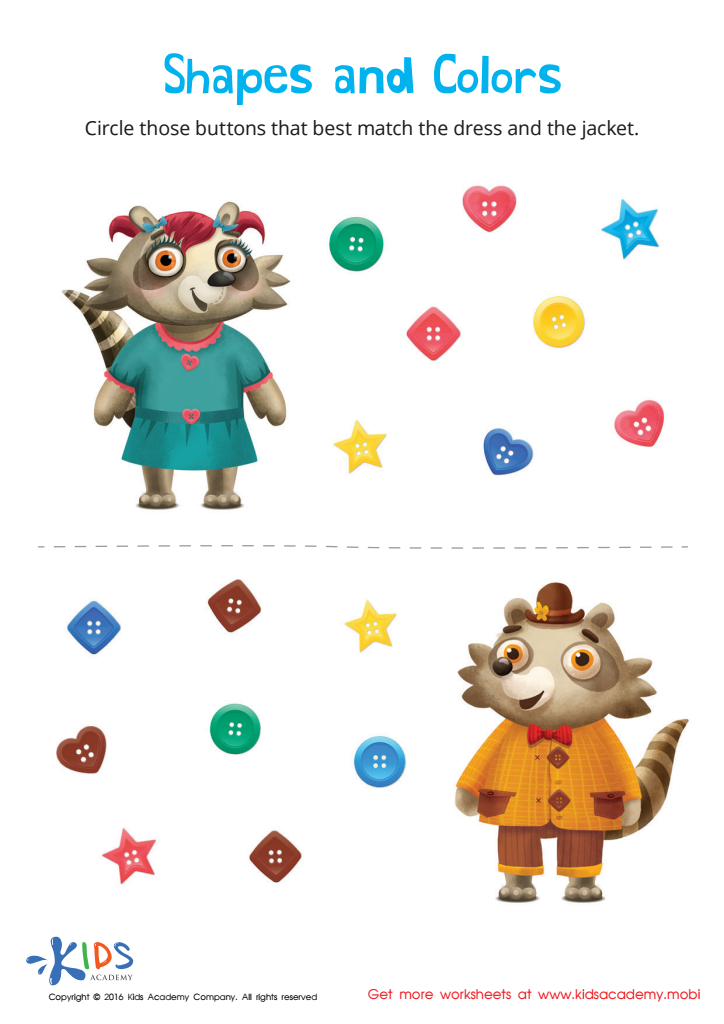
Matching: Shapes and Colors Worksheet
 Assign to My Students











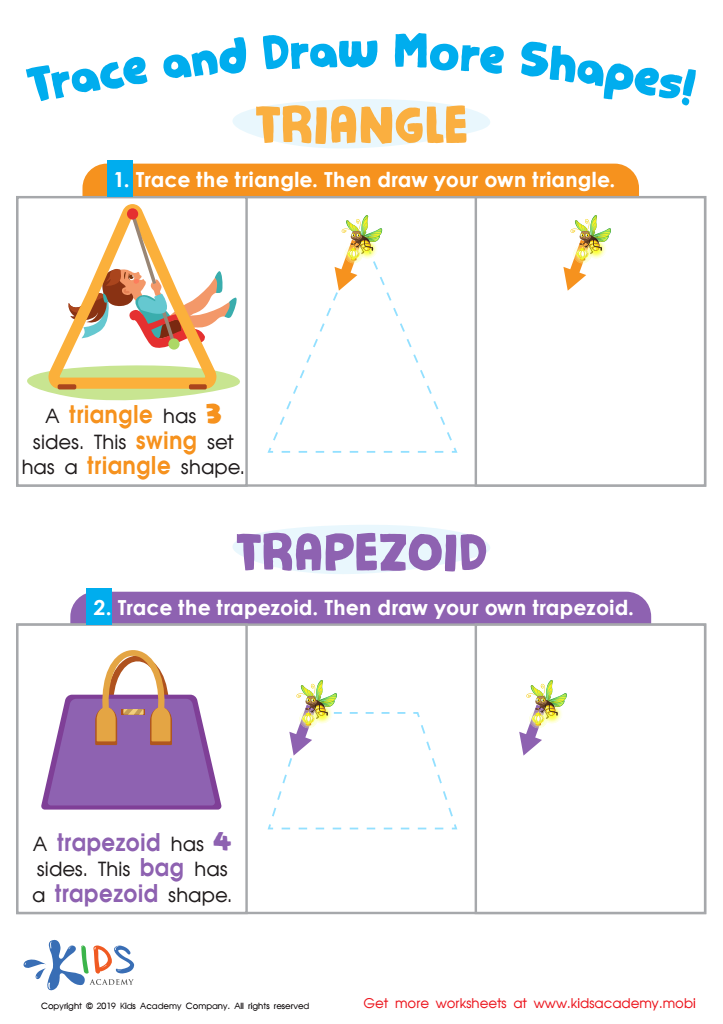
Trace and Draw More Shapes Worksheet
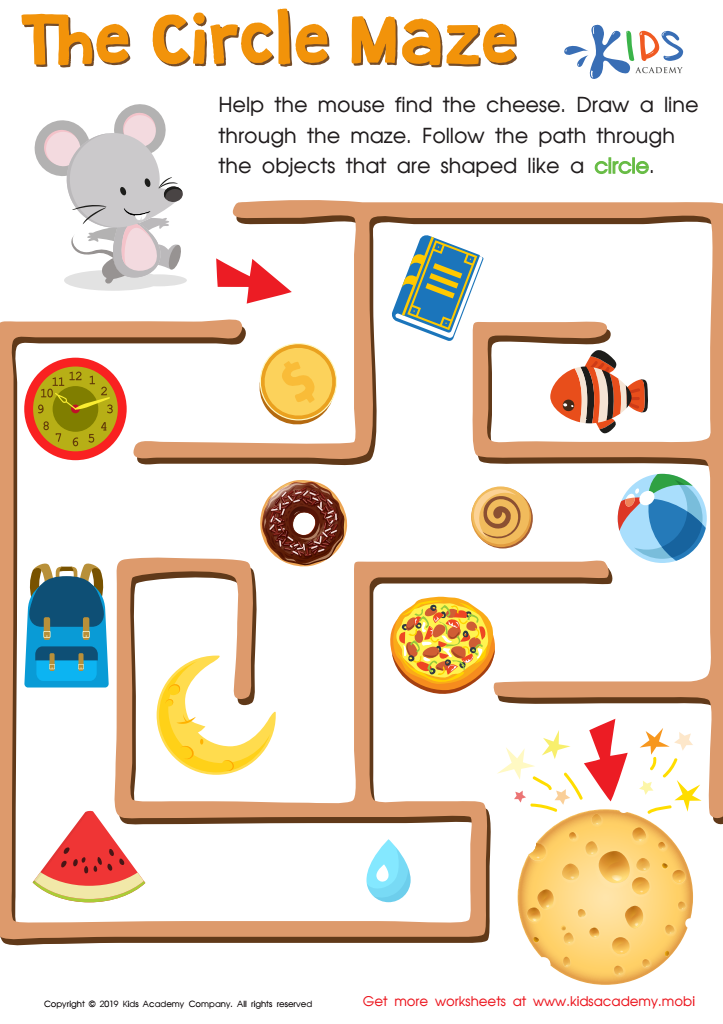
The Circle Maze Worksheet








Fine motor skills are crucial for young children's overall development and success in learning experiences, especially in the context of geometry and spatial reasoning. For ages 4-5, engaging in Fine Motor Skills Extra Challenge Geometry activities helps children enhance their hand-eye coordination, dexterity, and control over small movements using their hands and fingers. These skills are foundational for tasks such as writing, drawing, and manipulating objects, which are vital for academic readiness.
Geometry introduces children to essential concepts like shapes, sizes, and spatial relationships, fostering cognitive development. By combining geometry with fine motor activities, children engage in playful learning that promotes critical thinking and problem-solving abilities. Activities like tracing shapes, building with blocks, or cutting out geometric figures encourage exploration and creativity, making math fun at an early age.
Moreover, parents and teachers who prioritize these activities can observe improvements in children's concentration, patience, and perseverance. They also build self-confidence as children successfully complete challenges. By investing in Fine Motor Skills Extra Challenge Geometry, adults can help lay a strong foundation for children's mathematical literacy and broader academic skills, ultimately preparing them for future learning and everyday tasks.