Comparing sizes Extra Challenge Measurement Worksheets for Ages 4-5
3 filtered results
-
From - To
Boost your child's understanding of size comparisons with our "Comparing Sizes Extra Challenge Measurement Worksheets" tailored for ages 4-5. These engaging and educational worksheets are designed to enhance your little one's math skills by encouraging them to compare and measure lengths, heights, and more. Through fun activities and colorful illustrations, children will enjoy hands-on learning while developing critical thinking and problem-solving abilities. Perfectly curated by educators, these worksheets ensure a balanced mix of challenge and enjoyment, fostering confidence in young learners. Discover a delightful way to enrich early math experiences, available at Kids Academy.
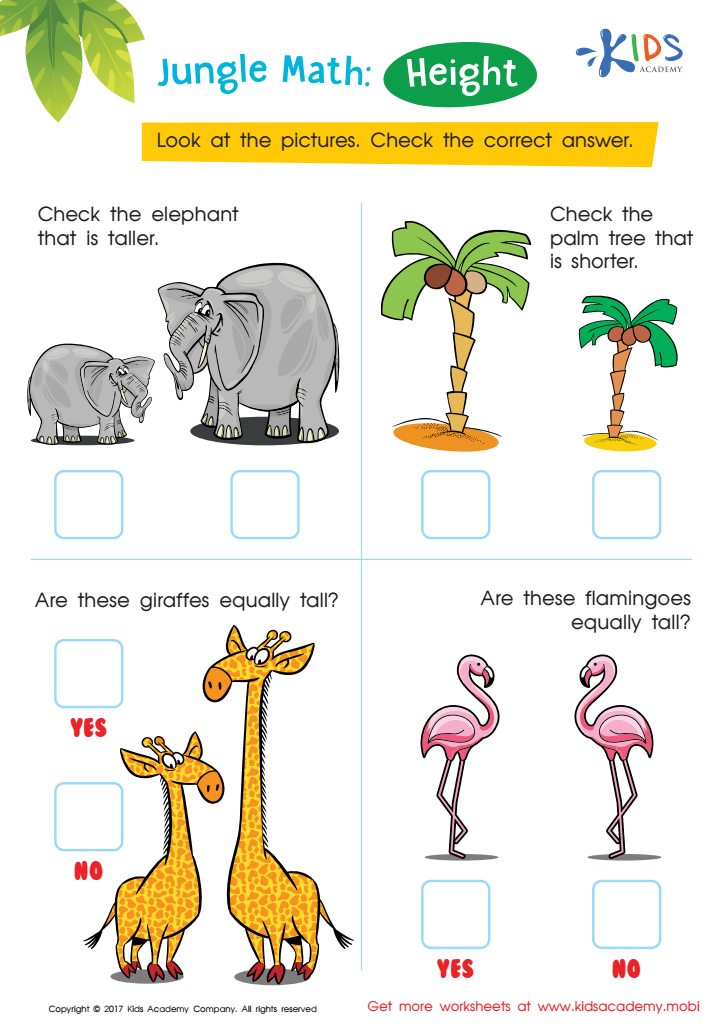
Which Is Taller Worksheet
 Assign to My Students
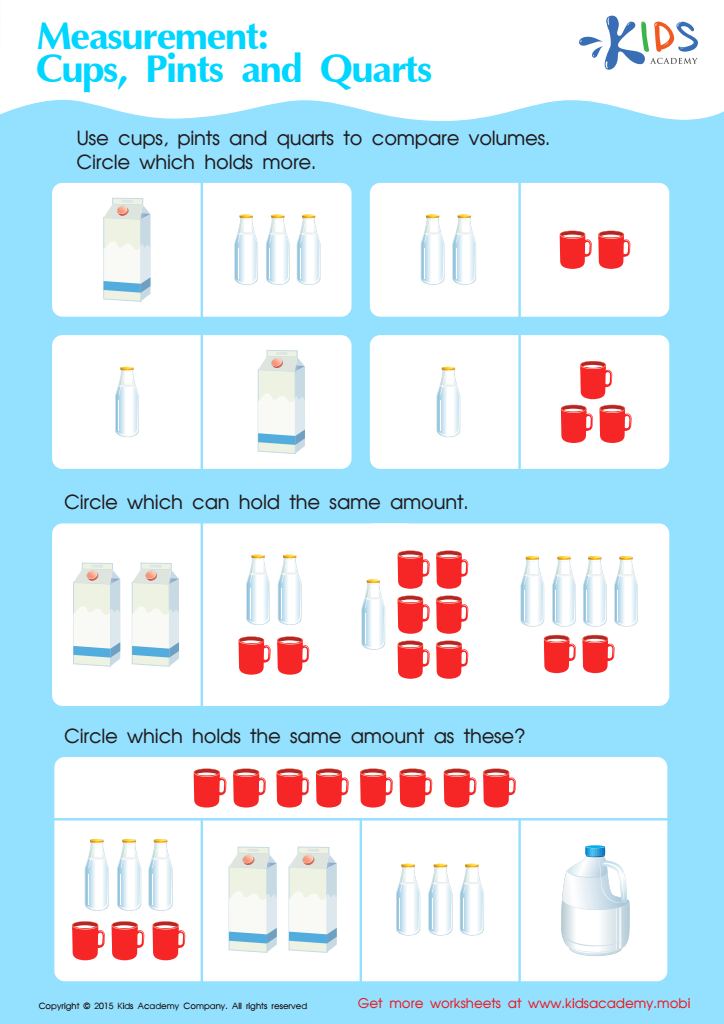
Measurement: Compare Volumes Worksheet
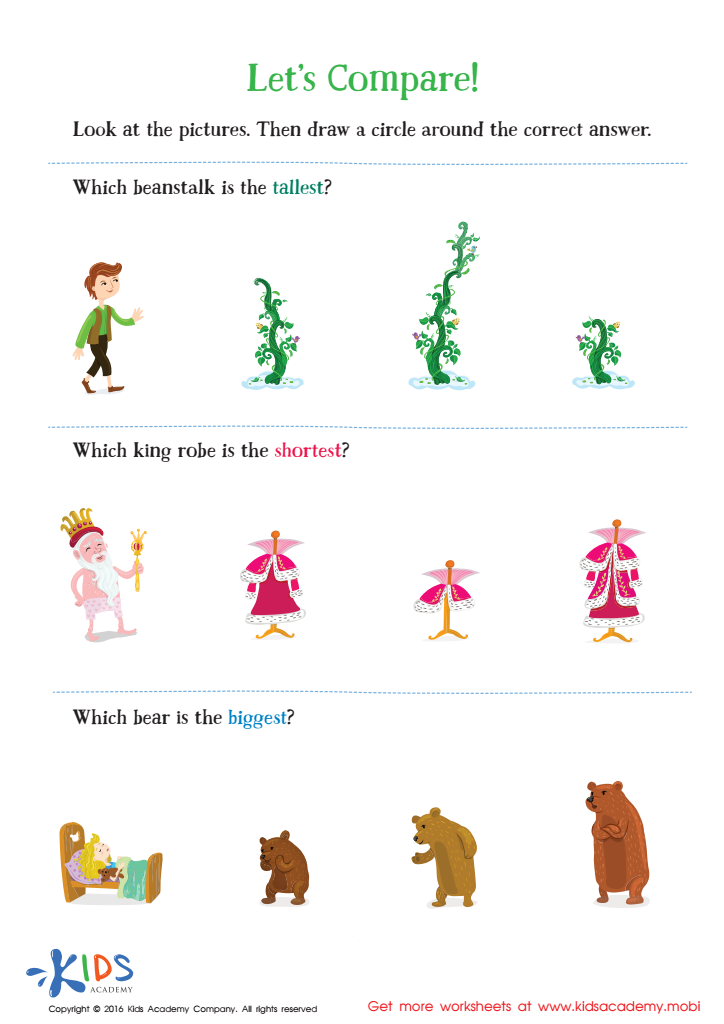
Fairy Tale Worksheet: Let's Compare








Comparing sizes through extra challenge measurement activities is vital for children ages 4-5 because it lays the foundation for their future mathematical understanding and critical thinking skills. At this developmental stage, young children naturally explore the world around them and are curious about differences and similarities in their environment. Engaging in measurement tasks such as comparing sizes helps them develop their cognitive abilities and fosters a hands-on understanding of concepts of big, small, tall, short, and so on.
These activities also encourage the understanding of spatial awareness and fine motor skills. When children use tools like rulers or blocks to compare sizes, they are practicing precise hand-eye coordination and control, which are essential for writing and other tasks. Additionally, size comparison exercises promote language development, as kids learn to describe objects using comparative language, boosting their vocabulary.
Moreover, tackling extra challenges beyond simple comparisons nurtures a growth mindset, encouraging children to stretch their capabilities and strive for more complex reasoning. They learn to make predictions, practice problem-solving, and think critically—all key elements in their overall cognitive development. Early exposure to these concepts ensures that children are better prepared for more advanced mathematical subjects in later schooling. By fostering these skills early on, parents and teachers equip children with the confidence and competence to excel academically and in their everyday lives.