Letter recognition Extra Challenge ABC Letters Worksheets for Ages 4-6
7 filtered results
Difficulty Level
Grade
Age
-
From - To
Subject
Activity
Standards
Welcome to our "Letter Recognition Extra Challenge ABC Letters Worksheets" designed specifically for children aged 4-6! These engaging worksheets are crafted to enhance your child's early literacy skills through fun and interactive activities. Each worksheet encourages letter identification, matching, and tracing, providing a comprehensive approach to mastering the alphabet. With colorful illustrations and varied tasks, your child will stay motivated and excited about learning. Perfect for preschoolers and kindergartners, these resources will strengthen their letter recognition and foster a love for reading. Get ready to embark on an alphabet adventure that makes learning an enjoyable experience for your little one!
Favorites
With answer key
Interactive
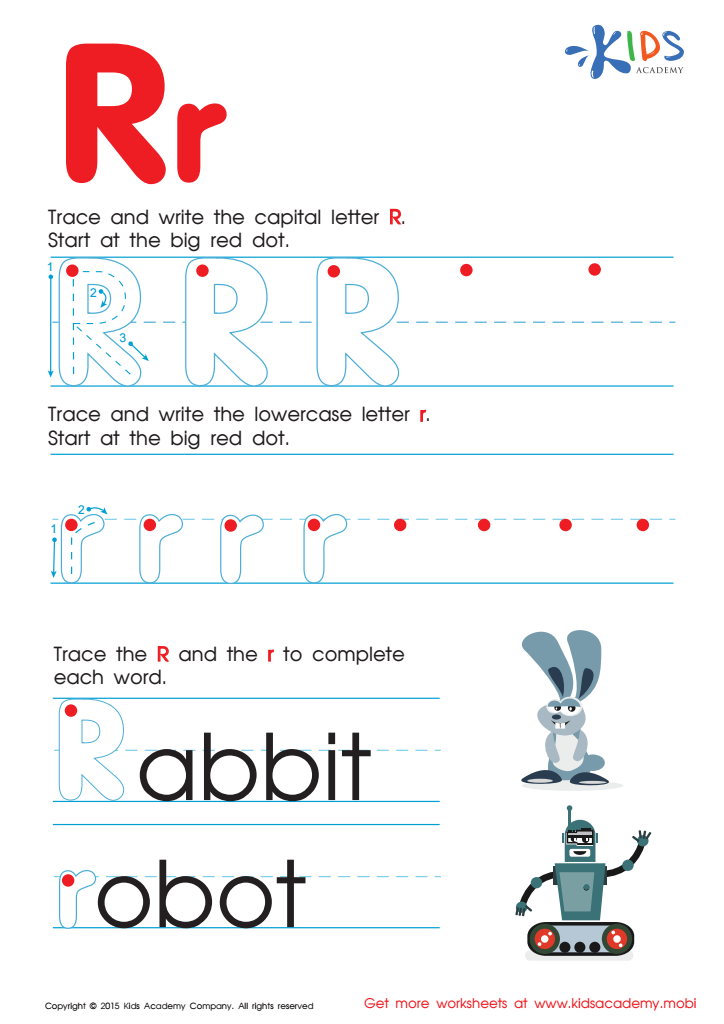
Letter R Tracing Page
Trace and write the letter "R" with this worksheet for kindergarten. Start with the uppercase, then move on to the lowercase. Write the letters several times for practice. Then help complete the words for the rabbit and robot, spelling carefully. More ABC worksheets can be found at Kids Academy.
 Assign to My Students
Letter R Tracing Page
Worksheet

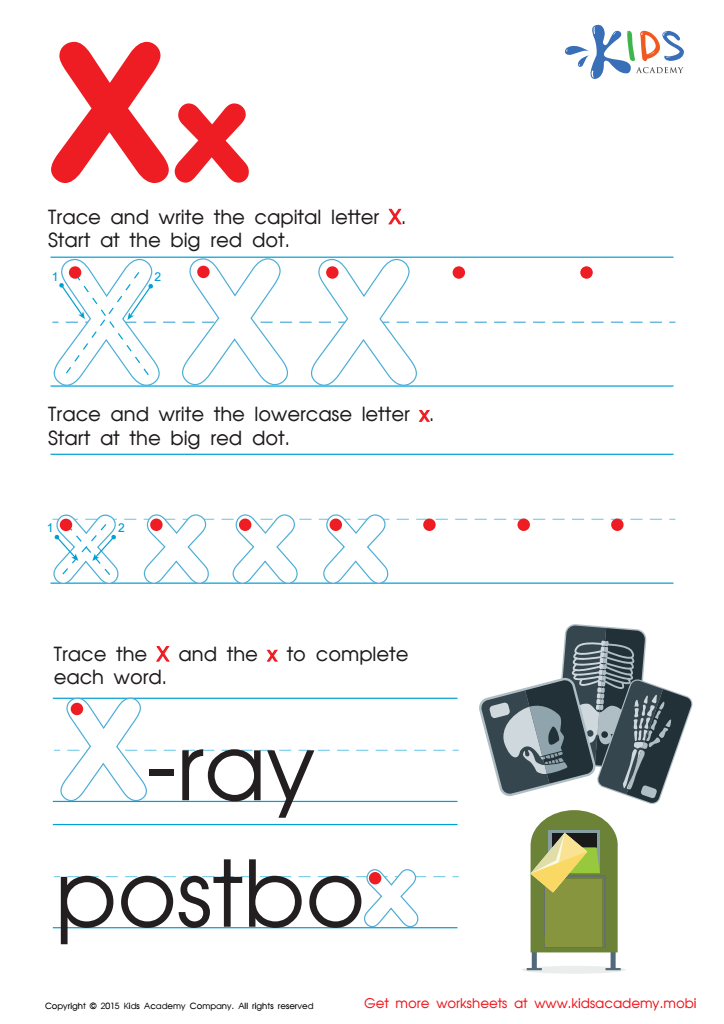
Letter X Tracing Page
Trace the uppercase letter "X" to learn, then write it yourself and practice. Then do the same with the lowercase "x" before completing the words "X-ray" and "postbox". Enjoy our alphabet printables!
Letter X Tracing Page
Worksheet
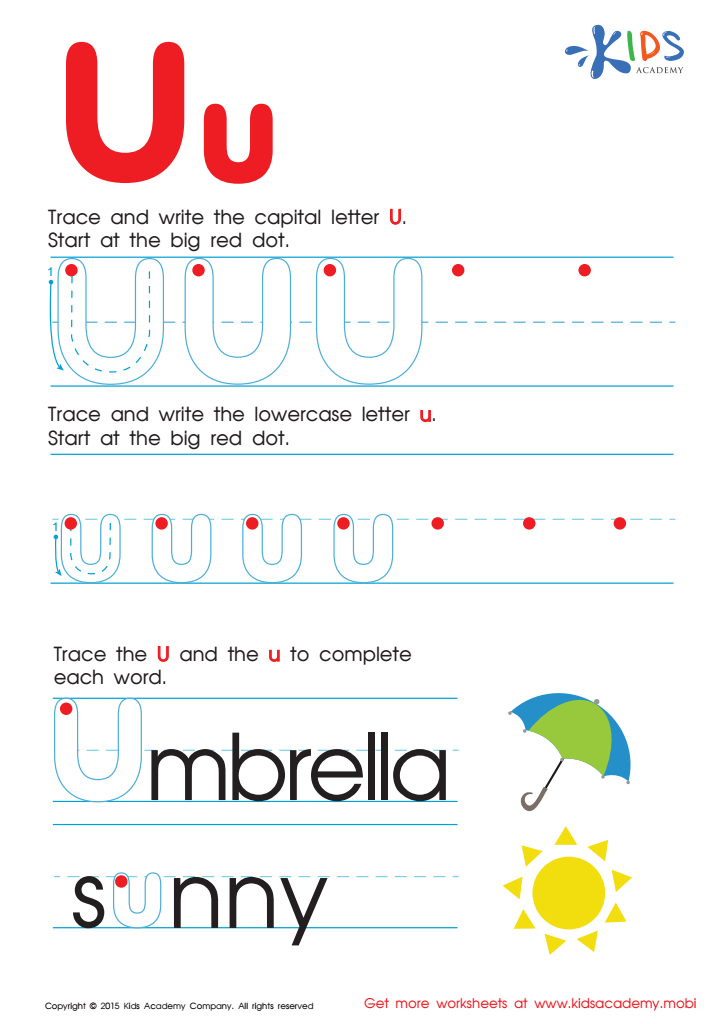
Letter U Tracing Page
Ready to trace and write the letter "U"? Use our worksheet and practice tracing both uppercase and lowercase letters. Complete the words "umbrella" and "sunny" with a capital "U". Check our full collection of alphabet printables for more activities.
Letter U Tracing Page
Worksheet
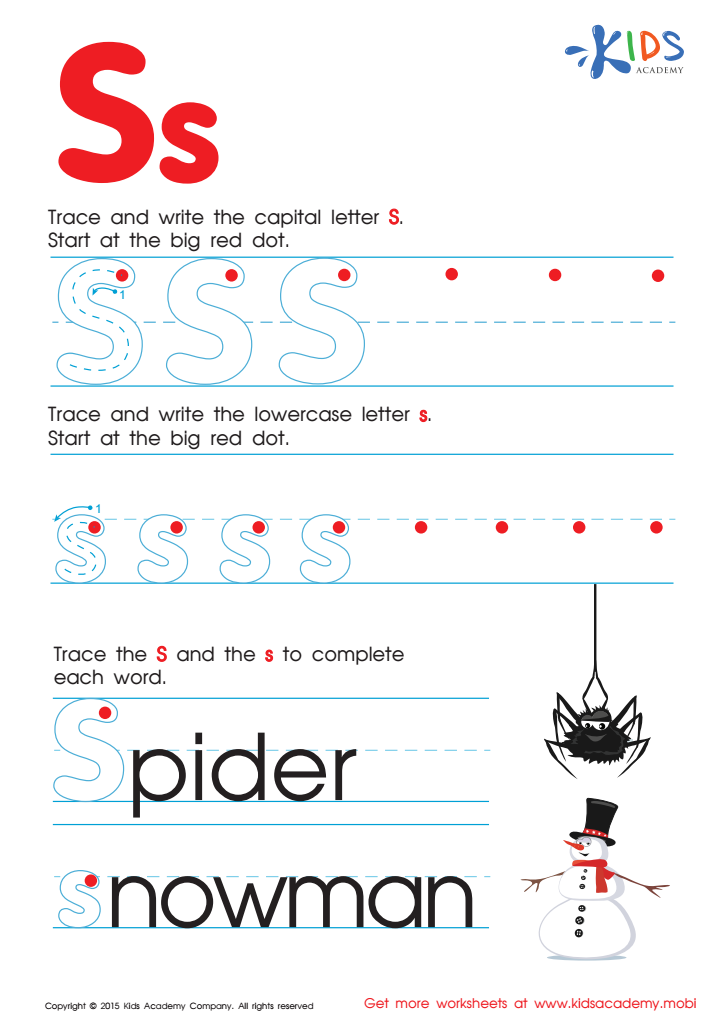
Letter S Tracing Page
Trace and write the capital and lowercase "S" on this ABC worksheet for kindergarten. Start with the big red dot and be careful. When you finish, help the spider and snowman in the pictures restore their words with the capital and lowercase letters. Continue learning the alphabet with Kids Academy.
Letter S Tracing Page
Worksheet
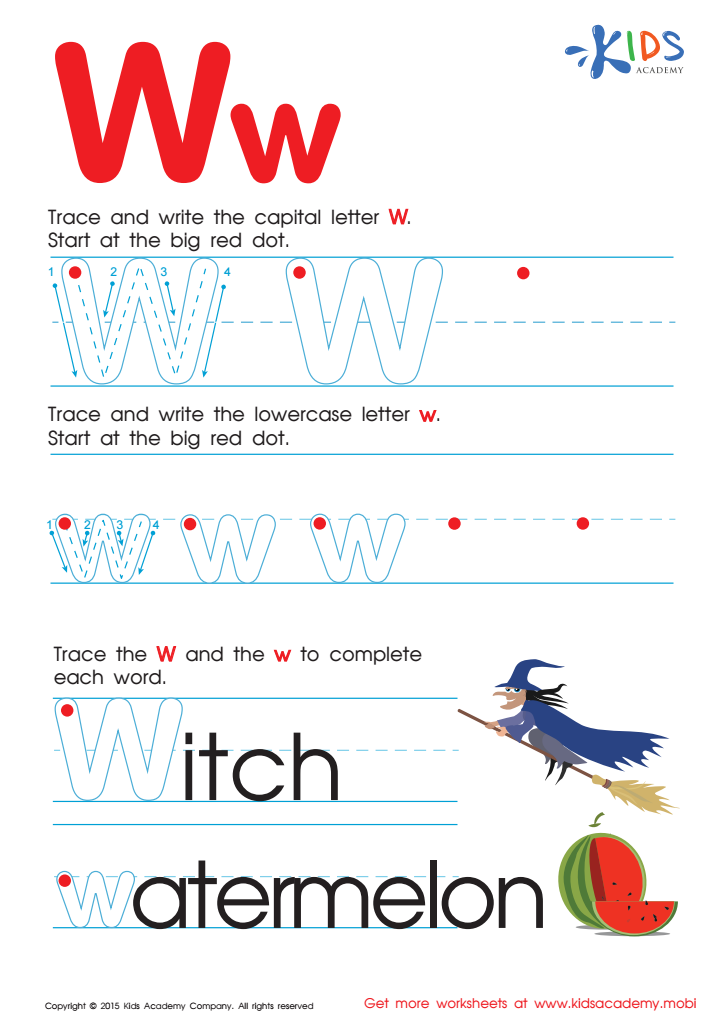
Letter W Tracing Page
Trace and write the capital and lowercase letter W with this free letter tracing worksheet by Kids Academy. Complete the words "Witch" (capital) and "watermelon" (lowercase). Check out our other kindergarten alphabet worksheets!
Letter W Tracing Page
Worksheet
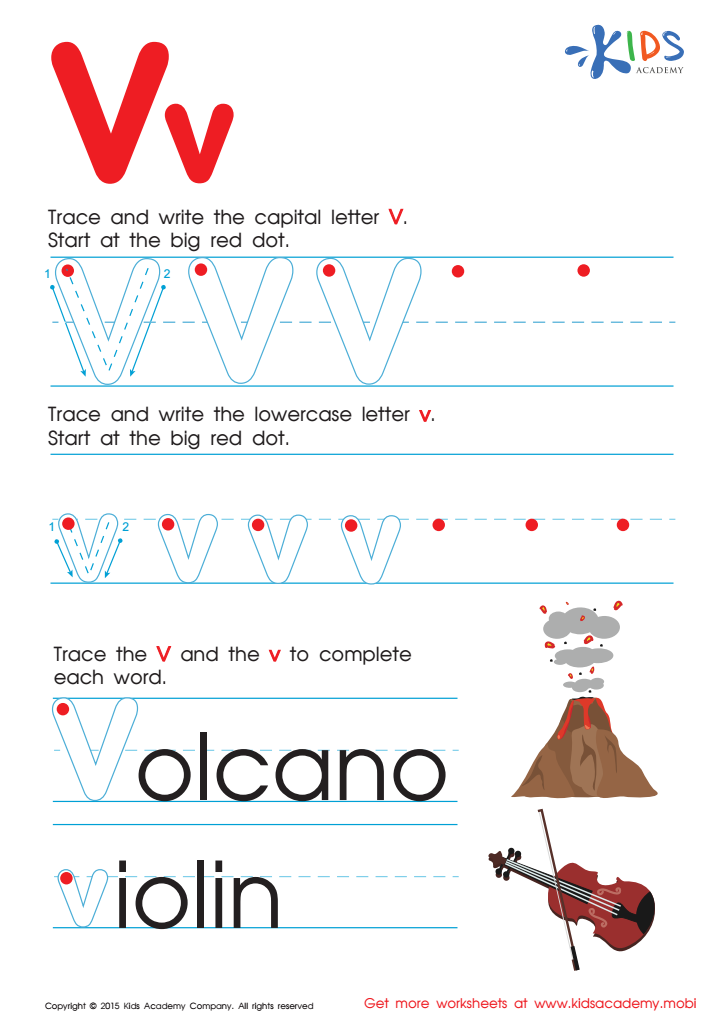
Letter V Tracing Page
Trace the uppercase and lowercase letter "V" with our kindergarten tracing worksheet. Begin at the red dot and follow the lines. Write it several times. Complete the words "Volcano" and "violin". Get more alphabet activities at Kids Academy.
Letter V Tracing Page
Worksheet
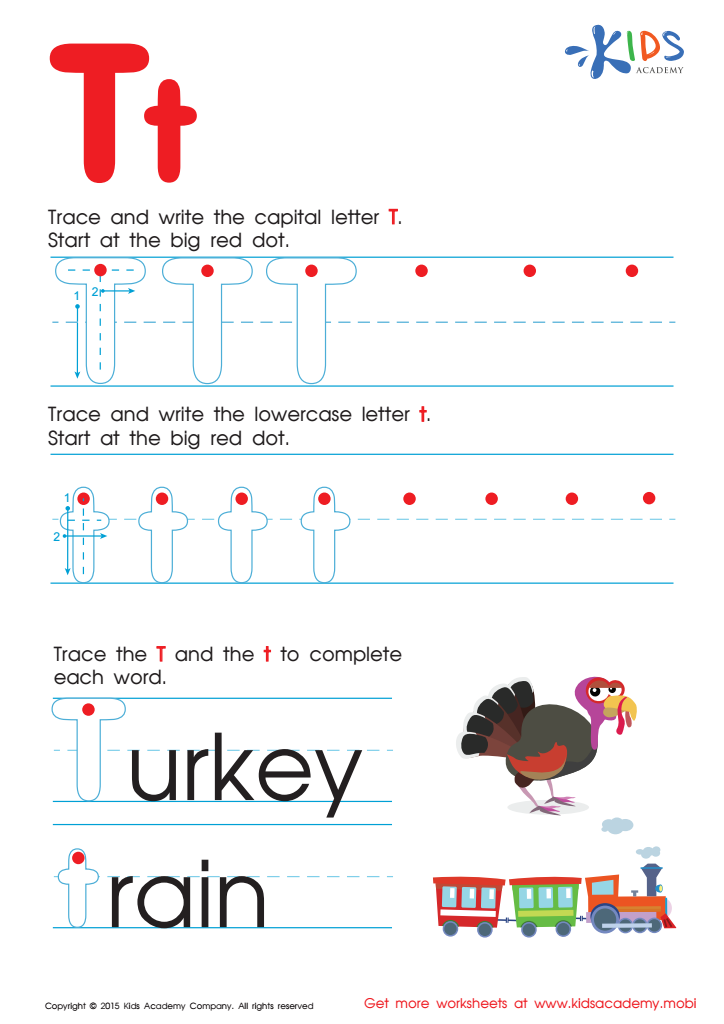
Letter T Tracing Page
Trace letters, complete words, draw pictures and see your kids having fun!
Kids Academy offers alphabet tracing worksheets to learn to write letters. Start with the big red dot, trace the letter, then write it. Practice uppercase and lowercase. Have fun completing words with a Turkey or a rain-train and draw pictures. Get more printable worksheets to make learning enjoyable.
Letter T Tracing Page
Worksheet
Join Kids Academy for Free
Who is primarily going to use this learning content?







Letter recognition is a foundational skill essential for early literacy, making programs like "Extra Challenge ABC Letters" vital for children aged 4-6. Parents and teachers should prioritize this developmental milestone as it unlocks the door to reading and writing. Recognizing letters fosters phonemic awareness, enabling children to connect sounds with letter symbols, which is crucial for language development.
Moreover, engaging activities in these programs create a playful yet educational environment, making the learning experience enjoyable. When children identify letters in diverse contexts—from print on signs to words in books—they develop stronger vocabulary and comprehension skills that will support their academic journey.
Encouraging proficiency in letter recognition early on can lead to greater confidence in later reading and writing tasks. Additionally, children who master these skills are more likely to thrive in school, reducing the risk of future learning challenges. Involving parents in the process provides opportunities for bonding and reinforces a consistent approach to teaching. Overall, early letter recognition stems from an understanding of language that sets the stage for lifelong literacy, making it a valuable investment in a child's future. Engaging with these resources not only equips children but also empowers caregivers, allowing them to support learning effectively.