Vocabulary enhancement Extra Challenge Phonics Worksheets for Ages 4-6
4 filtered results
-
From - To
Elevate your child's language skills with our Vocabulary Enhancement Extra Challenge Phonics Worksheets tailored for ages 4-6. These engaging and challenging worksheets are designed to expand young learners' vocabulary while reinforcing essential phonics concepts. Our expertly crafted activities not only make learning fun but also provide the extra challenge needed to keep eager minds stimulated. Perfect for both classroom and home use, these worksheets focus on enhancing word recognition, pronunciation, and spelling through interactive exercises. Give your child the boost they need to excel in reading and communication by exploring our comprehensive collection today.
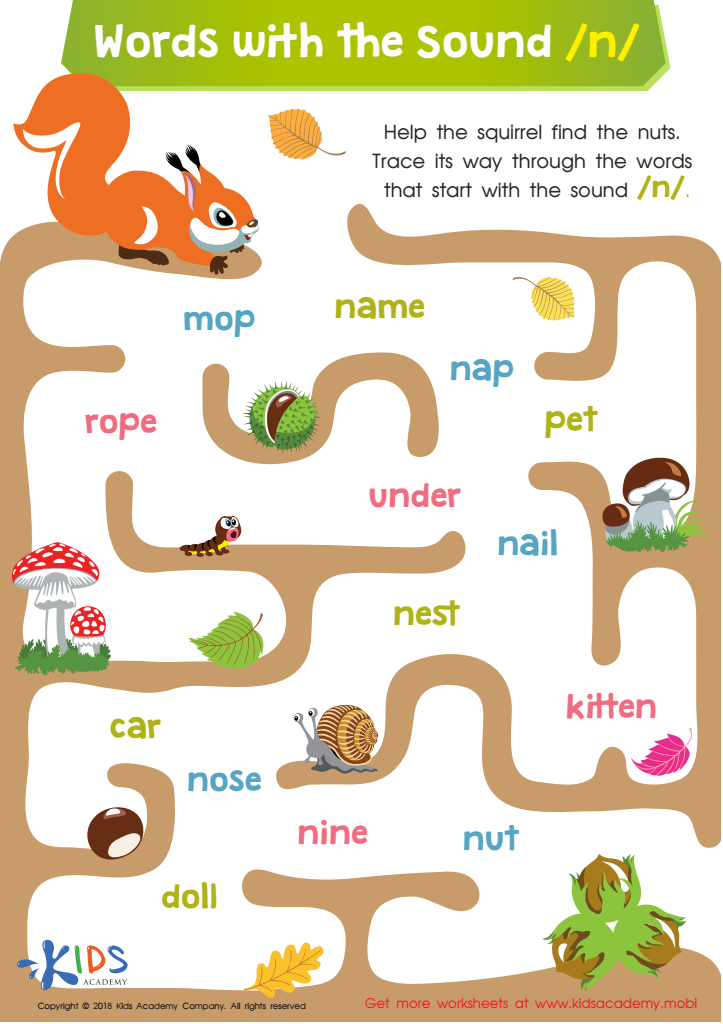
Words with Sound N Reading Worksheet
 Assign to My Students
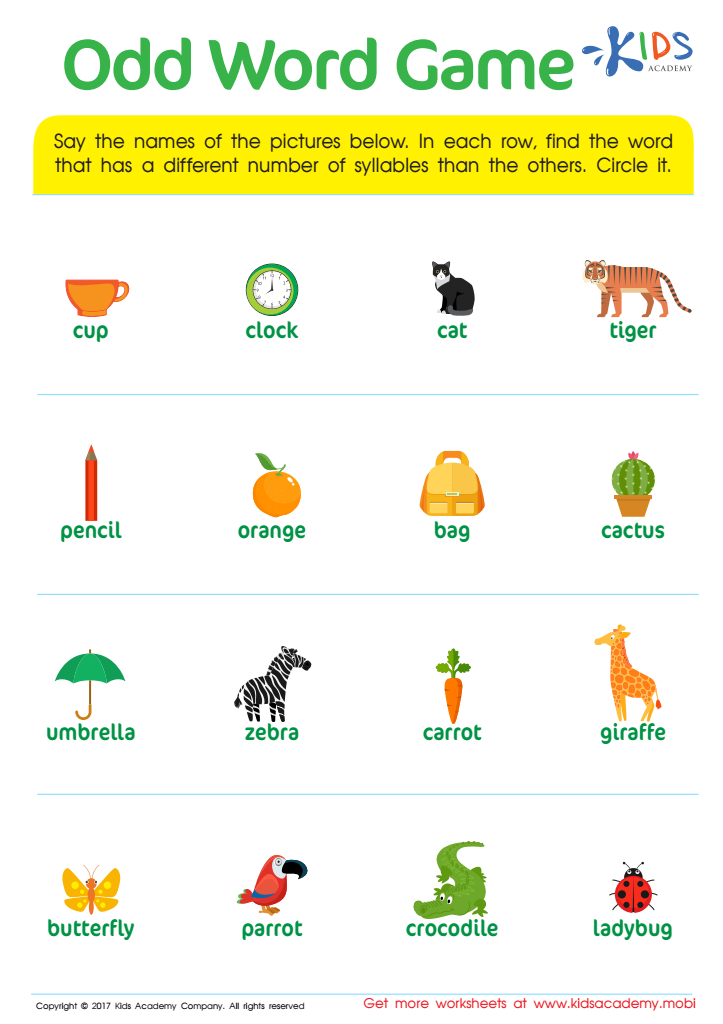
Count Syllables: Odd Word Game Worksheet
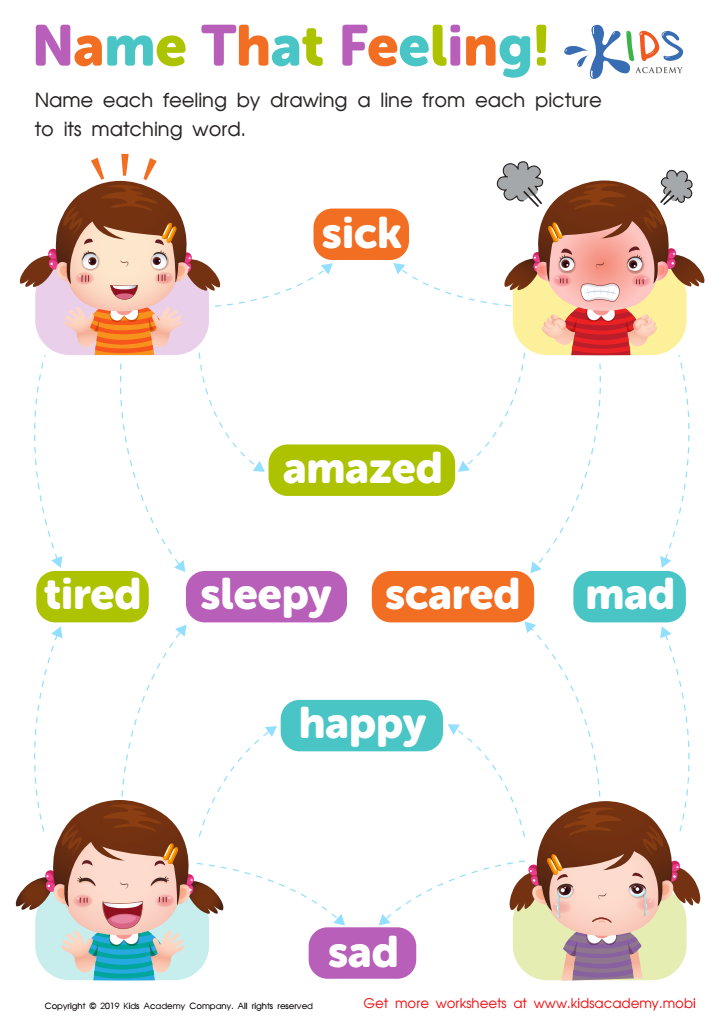
Name that Feeling Worksheet
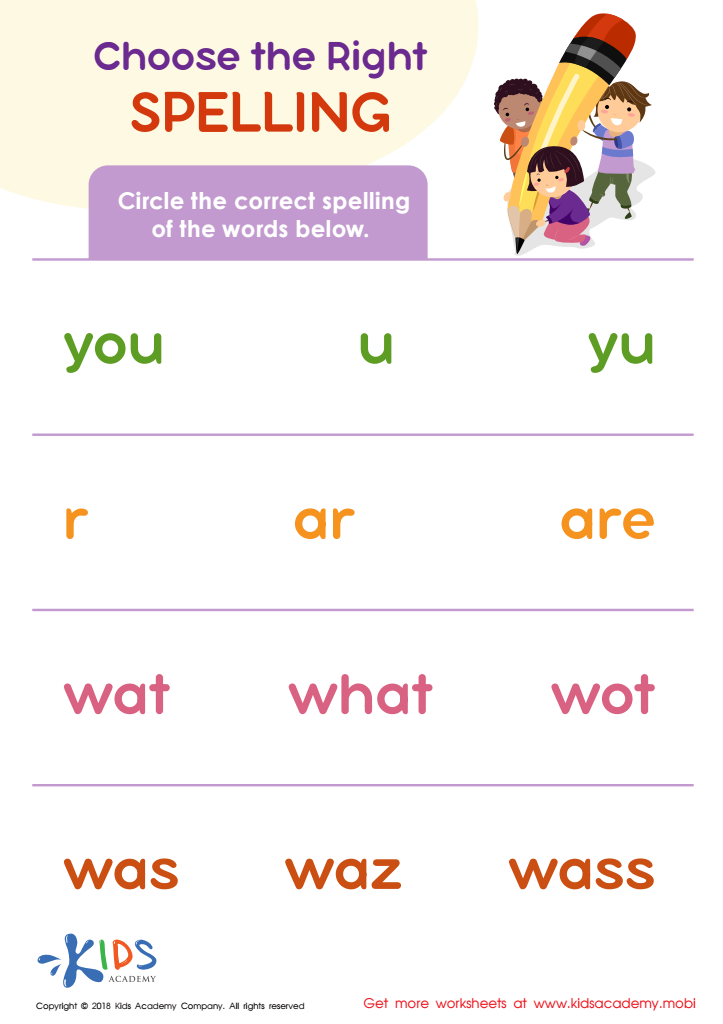
Choose the Right Spelling Worksheet








Vocabulary enhancement and Extra Challenge Phonics play pivotal roles in the foundational learning years for children aged 4-6. At this stage, young minds are exceptionally impressionable and capable of absorbing new language skills rapidly. When teachers and parents focus on expanding vocabulary and robust phonics instruction, they are equipping children with essential tools for literacy.
A rich vocabulary increases reading comprehension and expressive language skills, allowing kids to articulate thoughts, emotions, and complex ideas more effectively. It supports cognitive development by enhancing their ability to process information and engage in critical thinking. Moreover, a broad lexicon lays a solid groundwork for future academic success across subjects.
Extra Challenge Phonics empowers children to decode words independently by understanding the relationships between letters and sounds. This systematic approach encourages accurate reading and spelling, making the transition to independent reading smoother and more confident.
When adults prioritize these areas, they foster a love for reading and language learning early on, setting the stage for lifelong academic achievements and effective communication skills. These benefits underscore why vocabulary and phonics are indispensable components of early childhood education, urging parents and teachers to integrate such practices actively into their daily routines and curricula.