Comparing lengths Extra Challenge Worksheets for Ages 4-6
5 filtered results
-
From - To
Enhance your child's understanding of measurement with our "Comparing Lengths Extra Challenge Worksheets" designed for ages 4-6. These engaging worksheets provide young learners with exciting activities to compare various lengths, helping them develop essential skills in measurement and math. Through hands-on exercises, children will identify which objects are longer or shorter, reinforcing their critical thinking and analytical skills. Ideal for both homeschooling and classroom settings, these resources promote interactive learning while ensuring fun and educational moments. Boost your child's confidence in math with these vibrant, easy-to-use worksheets that seamlessly blend fun with fundamental learning concepts. Start exploring now!
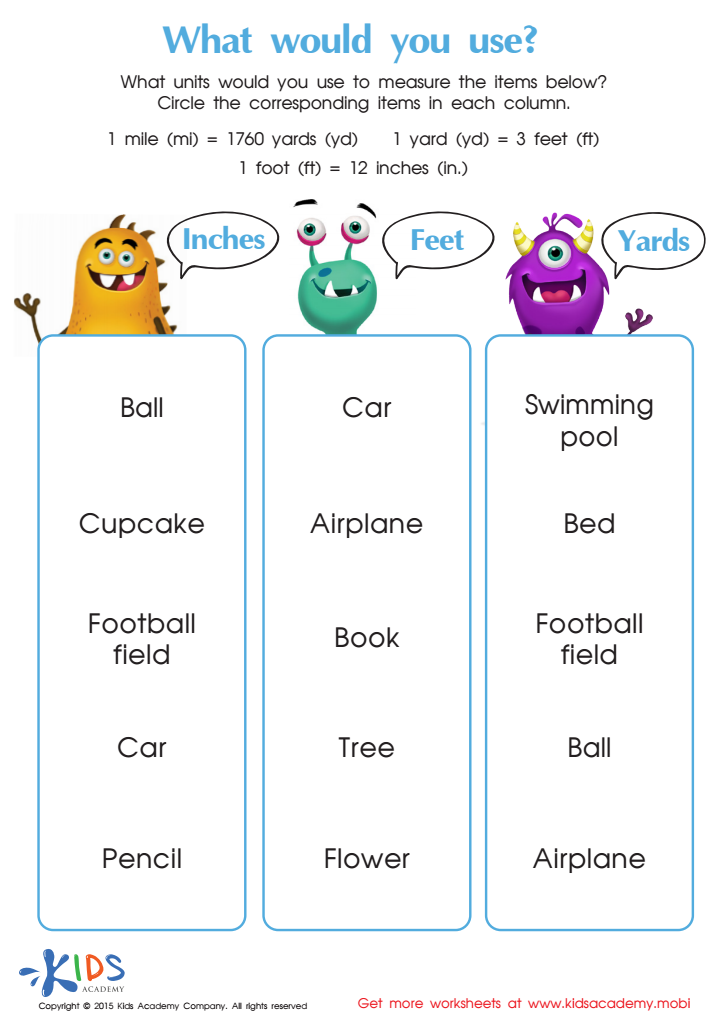
Learning about measuring objects in inches, feet and yards Worksheet
 Assign to My Students
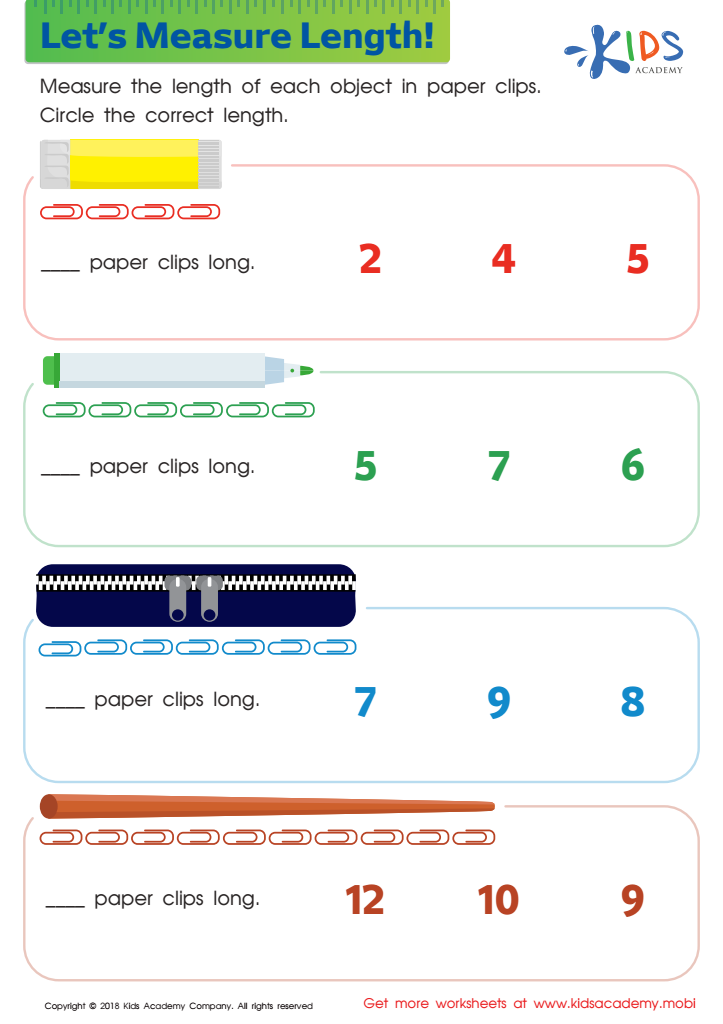
Lets Measure Length Worksheet
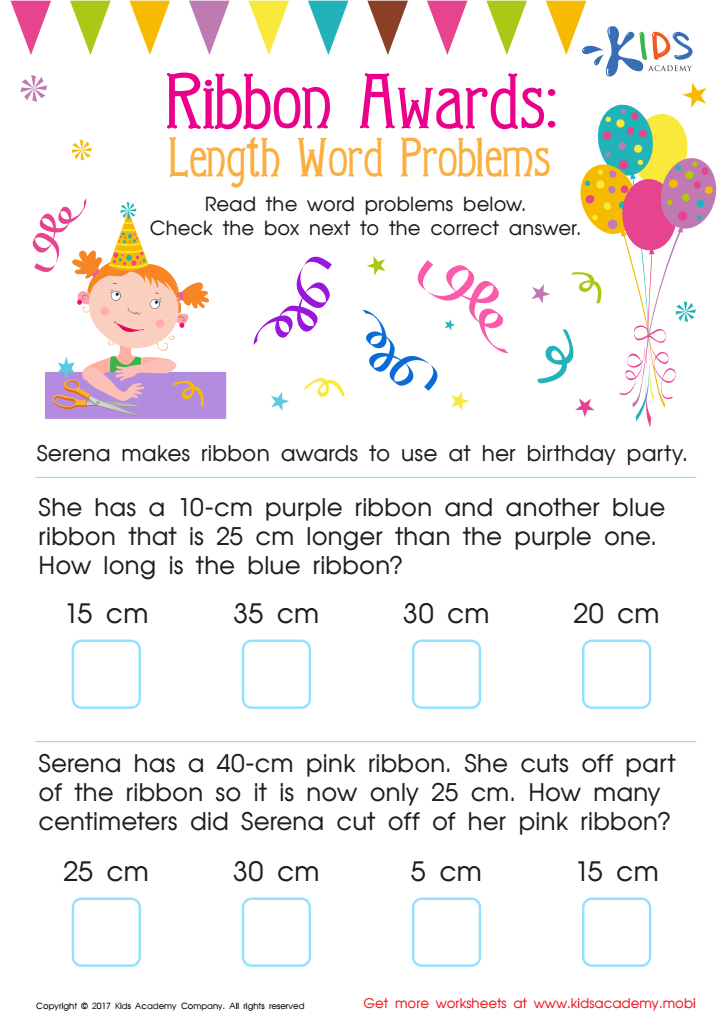
Length Word Problems Worksheet
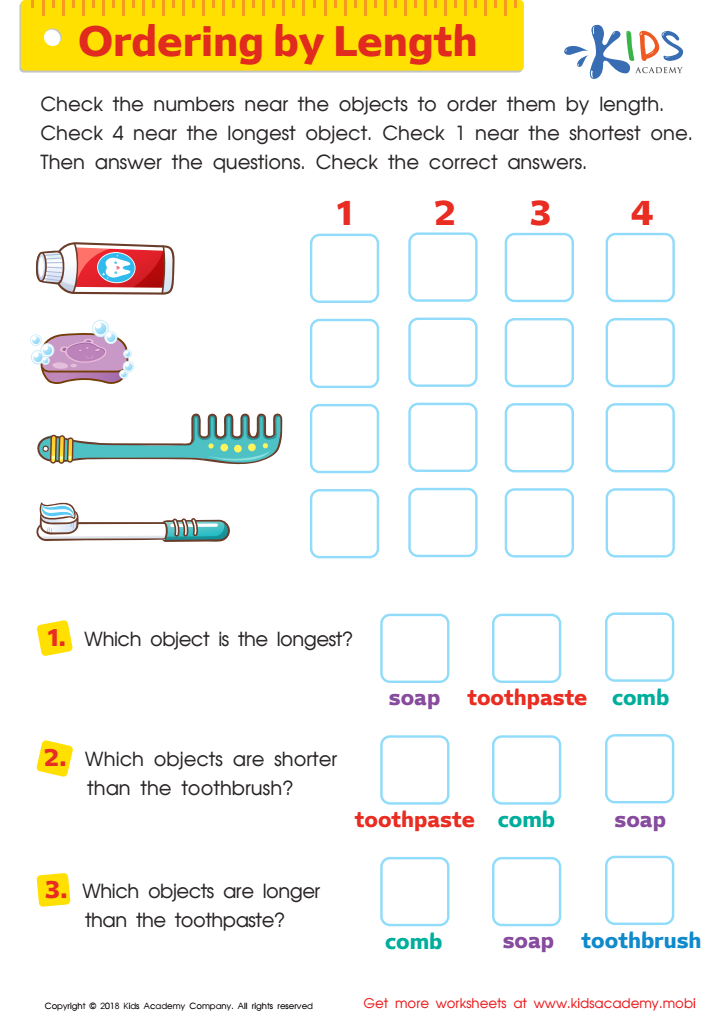
Ordering by Length Worksheet
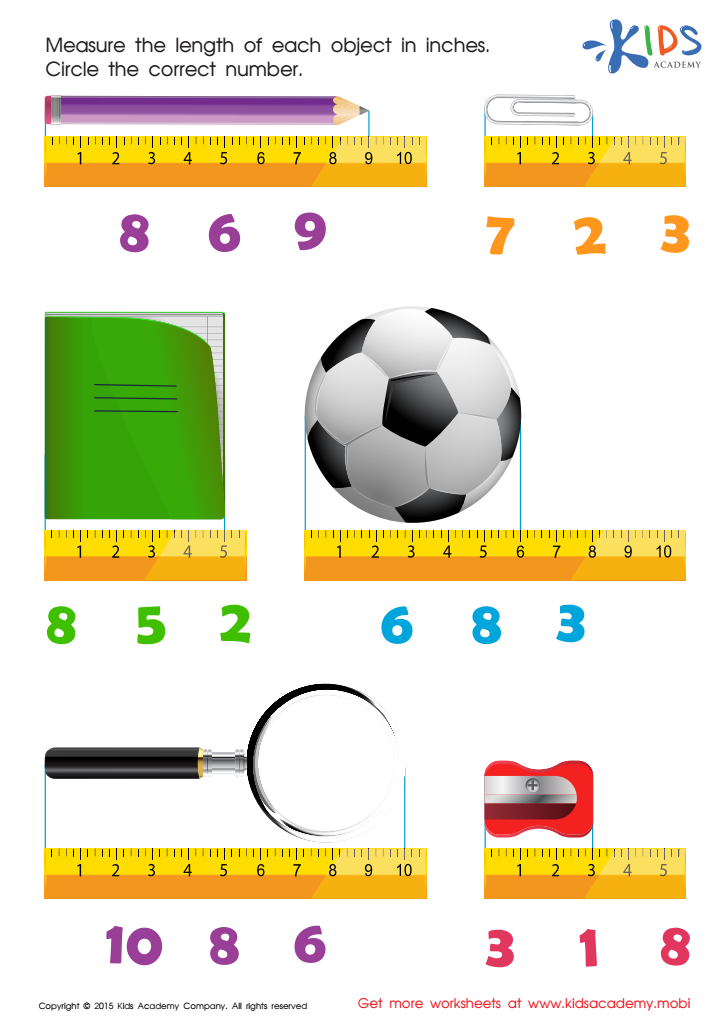
Learning measuring objects in inches Worksheet






Comparing lengths is a crucial skill for children aged 4-6, forming the foundation for their mathematical understanding and reasoning. Parents and teachers should care about this skill because it encourages critical thinking, enhances spatial awareness, and fosters problem-solving abilities. At this age, children are naturally curious; engaging them in comparing lengths through play and hands-on activities can make learning enjoyable and meaningful.
When children compare lengths, they develop language skills as they learn new vocabulary associated with size, such as "longer," "shorter," and "equal." This promotes effective communication and lays the groundwork for more complex mathematical concepts. Additionally, comparing lengths helps children understand measurement as a critical aspect of everyday activities, from cooking to building, supporting their ability to relate math to real-life situations.
Engaging in length comparison activities also boosts fine motor skills, as children manipulate objects to measure and compare. Artistic and creative tasks can incorporate measurement, making learning cross-disciplinary and holistic. By emphasizing the importance of comparing lengths, parents and teachers can nurture an environment where young learners feel empowered, developing a positive attitude towards math that will benefit them in their future education. In essence, fostering these skills early on helps equip children for lifelong learning and development.








