Mathematical thinking Extra Challenge Worksheets for Ages 4-6
4 filtered results
-
From - To
Discover our "Mathematical Thinking Extra Challenge Worksheets for Ages 4-6," designed to elevate young learners’ critical thinking and problem-solving skills. These engaging worksheets provide interesting activities that encourage children to explore fundamental math concepts, including number recognition, counting, and simple addition and subtraction. Tailored for early learners, each worksheet features colorful illustrations and fun prompts that inspire creativity while reinforcing mathematical understanding. Perfect for both classroom use and home learning, our worksheets cultivate a love for math and provide an extra layer of challenge to keep your budding mathematicians motivated. Foster a strong foundation in mathematics with our expertly crafted resources!
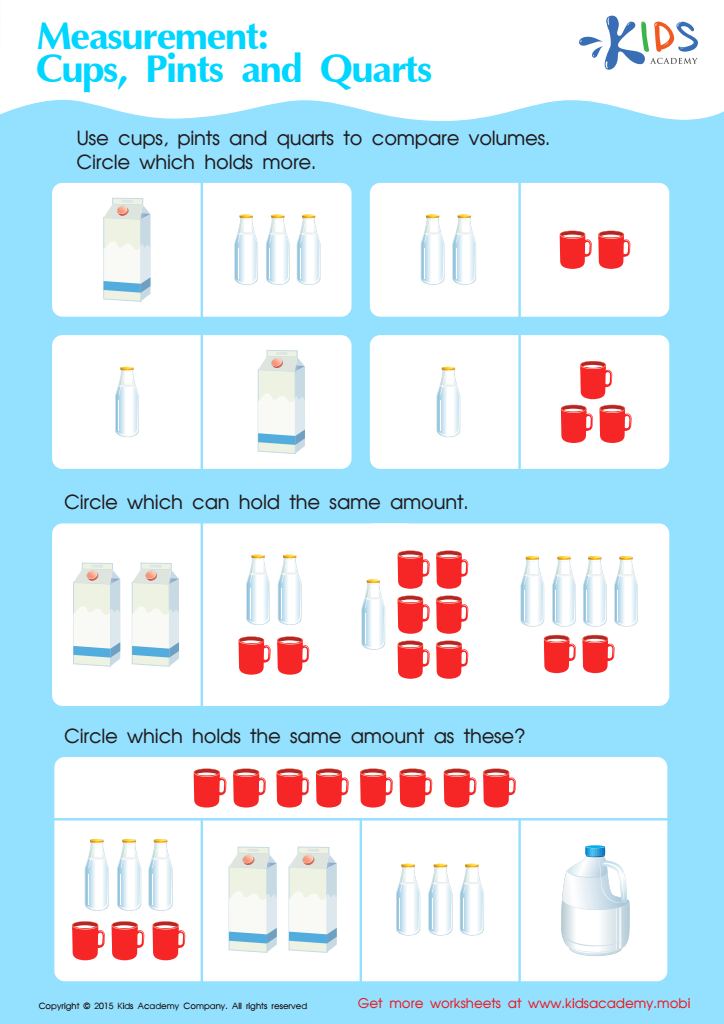
Measurement: Compare Volumes Worksheet
 Assign to My Students
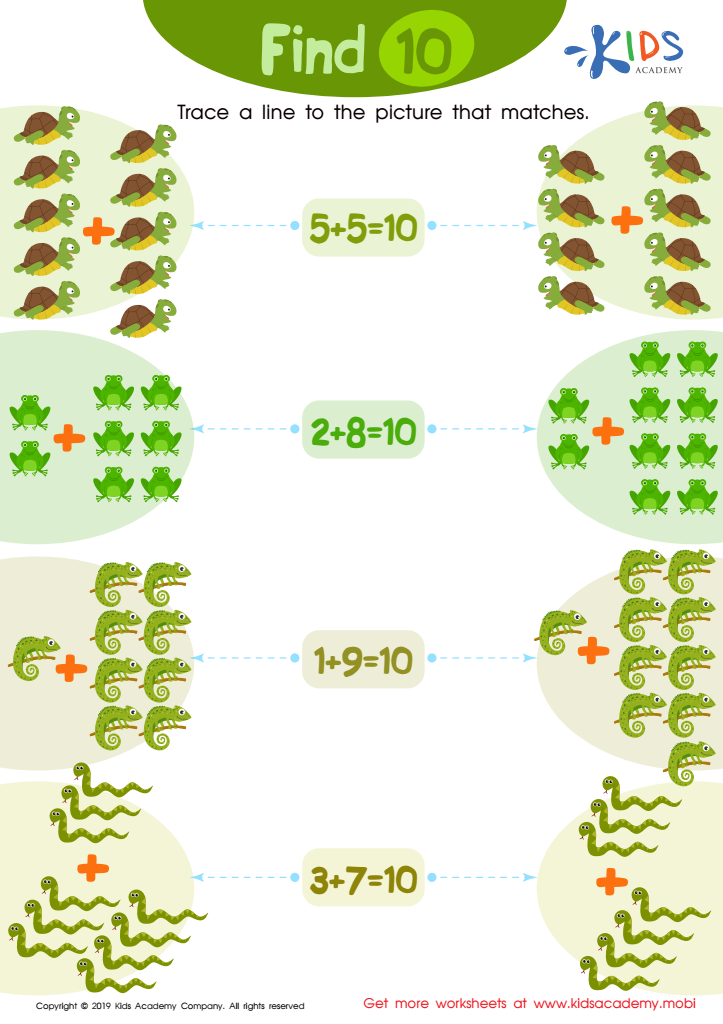
Find 10 Worksheet
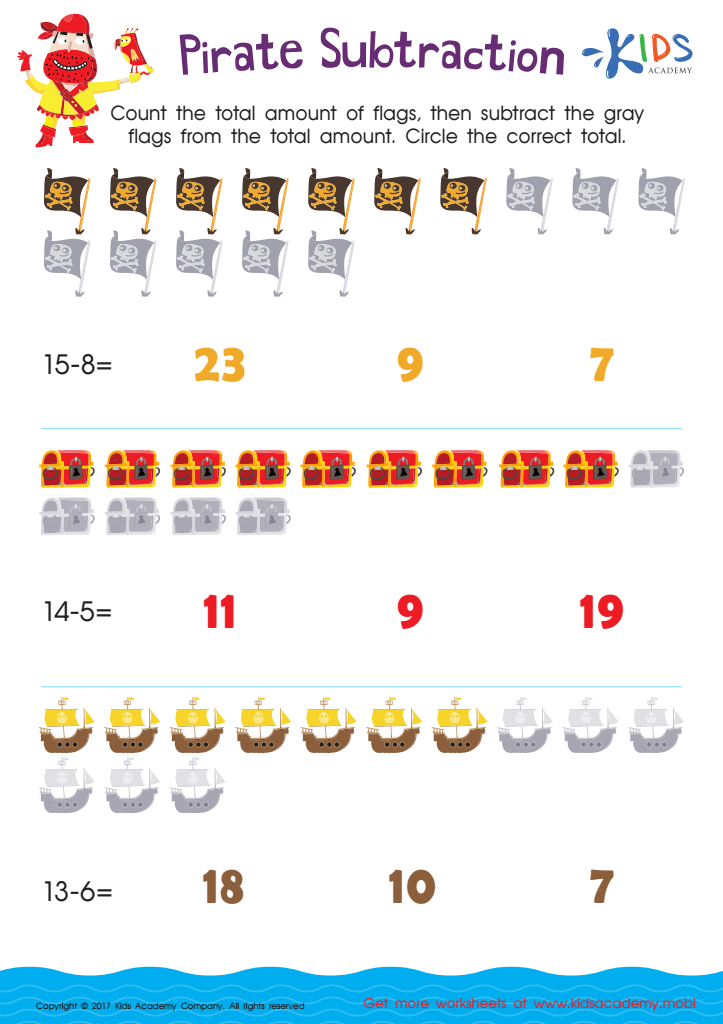
Pirate Subtraction Substraction Worksheet
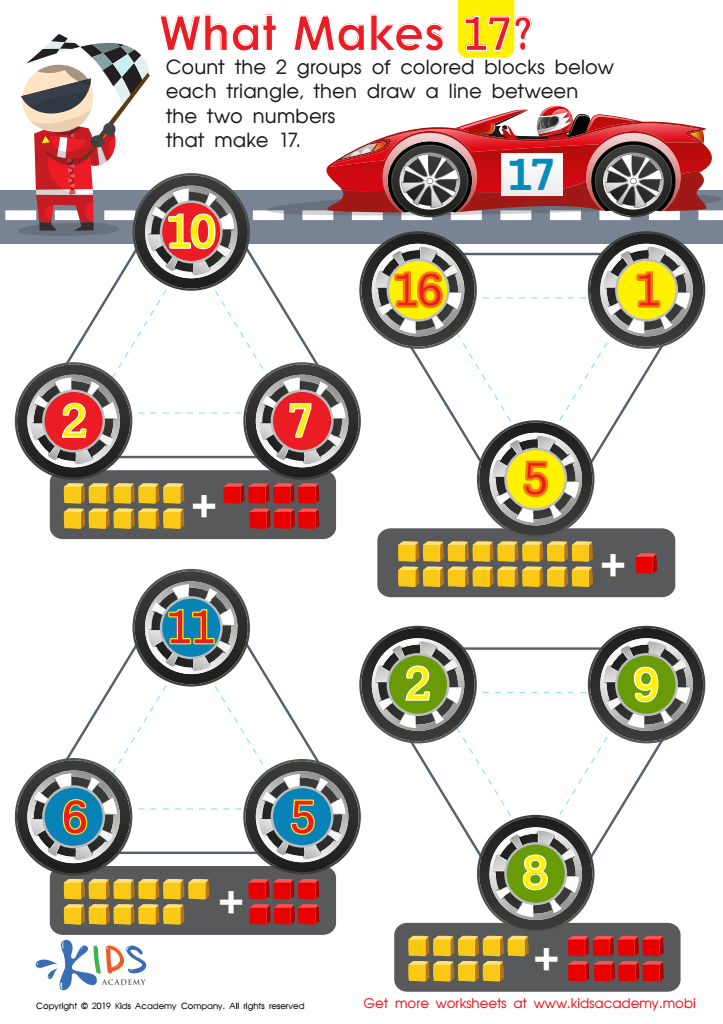
What Makes 17 Worksheet







Mathematical thinking is a critical skill that lays the foundation for future learning and development in young children, particularly those aged 4-6. Engaging in mathematical thinking encourages children to explore concepts such as numbers, patterns, shapes, and problem-solving, fostering a sense of curiosity and inquiry. Parents and teachers should prioritize this early exposure because it shapes cognitive abilities and promotes logical reasoning, which are essential for success in various subjects beyond math.
Additionally, activities that encourage mathematical thinking support essential life skills, such as critical thinking, decision-making, and analytical reasoning. By providing children with realistic problem-solving scenarios, they learn to approach challenges with confidence and creativity. Such skills open doors to diverse learning experiences, boosting academic performance as they progress through school.
Moreover, an early focus on mathematics creates a positive attitude towards the subject, helping to combat math anxiety that some students may develop later on. Encouraging a fun and supportive environment will help children build self-esteem and resilience. In summary, early engagement in mathematical thinking promotes a comprehensive skill set, ensuring that children are well-prepared for future academic challenges and equipped to tackle real-world problems with ease.








