Time reading skills Extra Challenge Worksheets for Ages 4-6
5 filtered results
-
From - To
Enhance your child’s ability to tell time with our Time Reading Skills Extra Challenge Worksheets, designed for ages 4-6. These engaging and educational worksheets are crafted to make learning fun and interactive. They focus on building foundational skills in reading both digital and analog clocks through various hands-on activities. Our worksheets are perfect for reinforcing classroom lessons or as additional practice at home. Give your child the confidence and skills they need to master telling time effectively. Visit Kids Academy to download these expertly designed printables that will challenge and inspire young learners. Unlock the joys of learning time today!
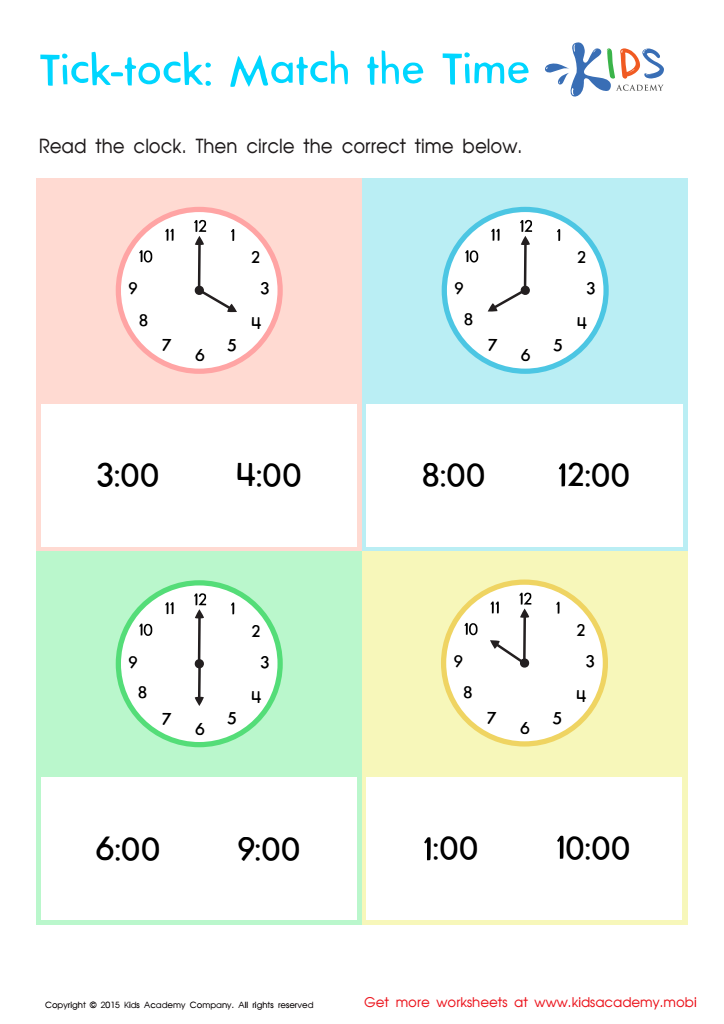
Telling The Time Worksheet: Part 4
 Assign to My Students
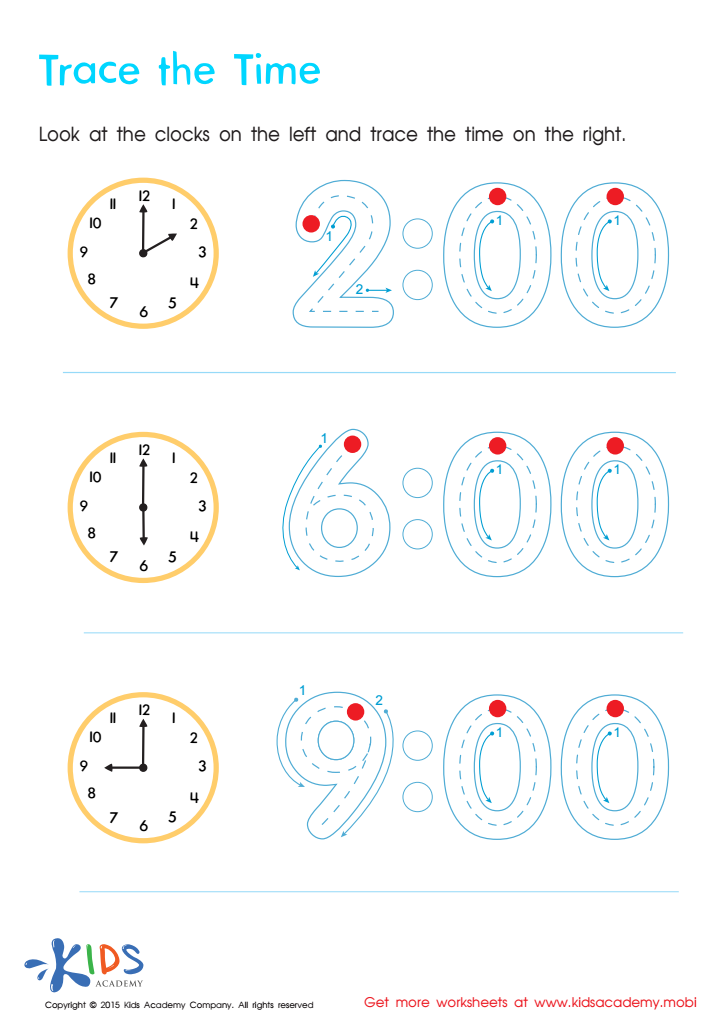
Telling The Time Worksheet: Part 2
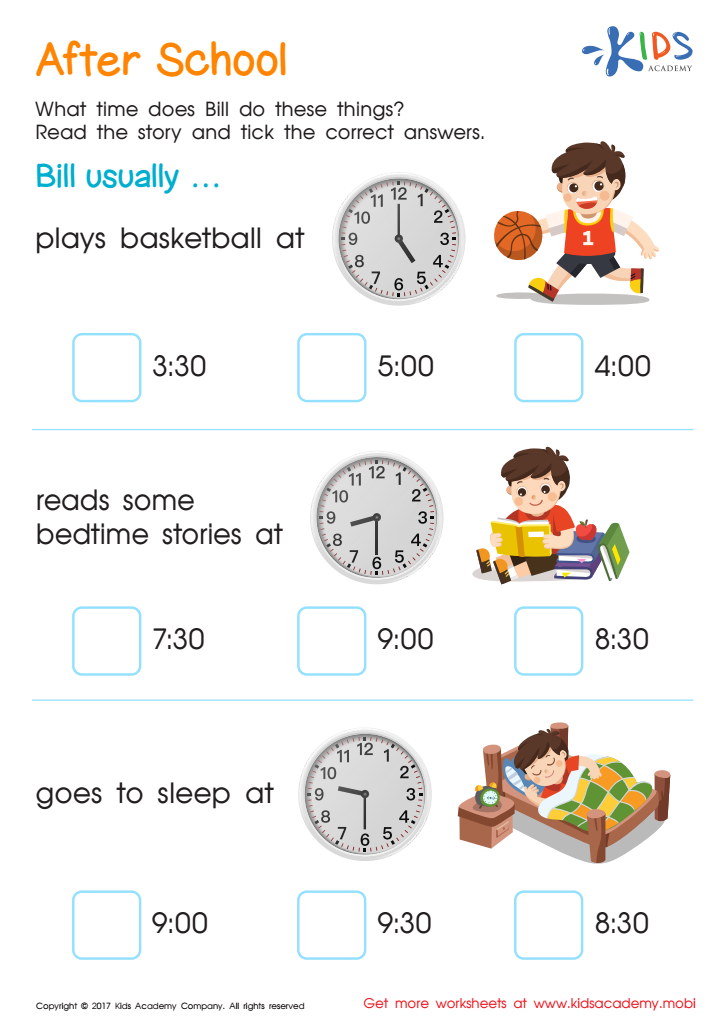
After School Time Printable
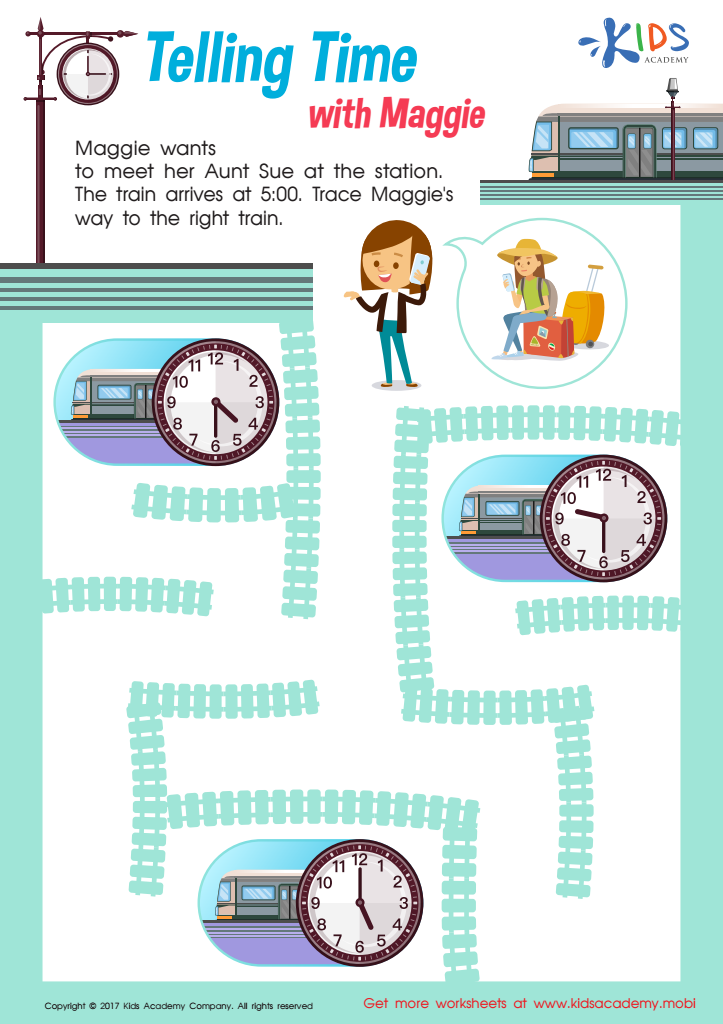
Telling Time With Maggie Time Worksheet
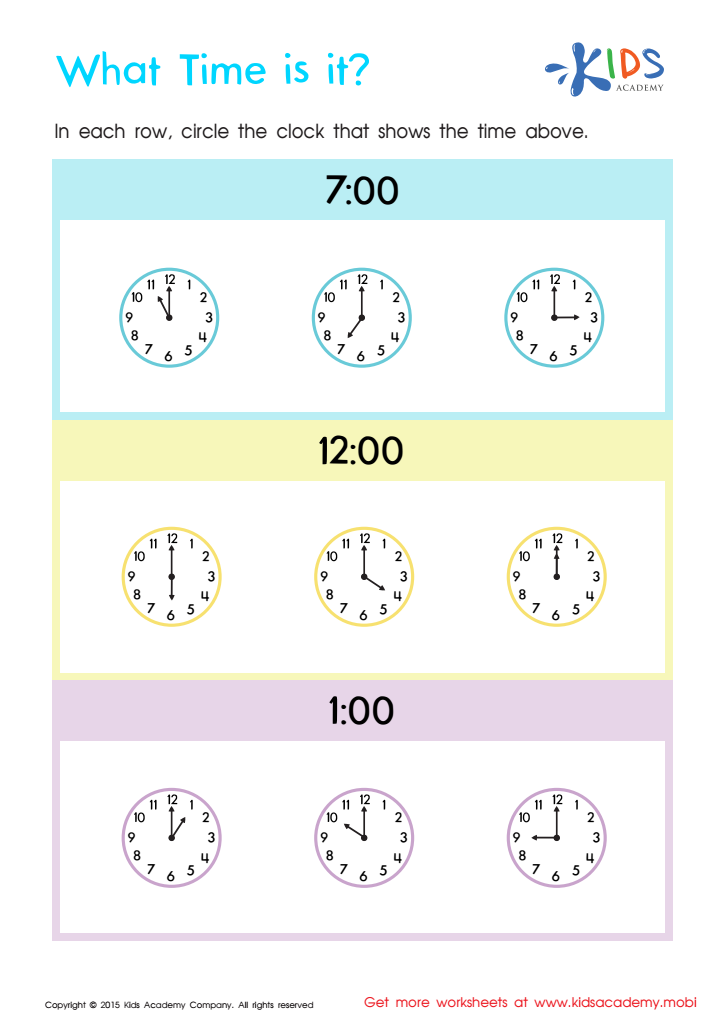
Telling The Time Worksheet: Part 3








Developing reading skills through activities like Time reading skills Extra Challenge is crucial for children ages 4-6 because these early years are foundational for cognitive and language development. During this period, children are in a critical window for acquiring the basic building blocks of reading, such as vocabulary, phonemic awareness, and comprehension. Introducing them to structured reading exercises helps to cultivate a love for reading, which is a gateway to lifelong learning and curiosity.
Parents and teachers should prioritize these activities because they support the development of essential literacy skills that are directly linked to future academic and personal success. Time reading challenges provide structured and engaging text that not only hones reading proficiency but also encourages critical thinking and attention to detail. This immersive experience is an excellent way to foster motivation and confidence in young learners, offering them early wins that build self-esteem.
Moreover, reading skills are foundational to nearly all other subjects, from math and science to social studies, making them a cornerstone of education. By investing in high-quality reading activities, parents and teachers are setting the stage for a strong, well-rounded academic future, ensuring children are better prepared for the complexities of later grade levels.








