Money recognition Extra Challenge Money Worksheets for Ages 4-6
4 filtered results
-
From - To
Boost your child's financial literacy with our "Money Recognition Extra Challenge Worksheets for Ages 4-6." Specially designed for young learners, these engaging and fun worksheets introduce kids to different coins and their values, helping them identify, count, and manage money. Aligned with early math skills, these exercises provide an extra challenge for young minds, nurturing their problem-solving abilities. Perfect for enhancing classroom learning or homeschooling activities, these printable worksheets ensure that kids not only recognize money but also grasp its basic concepts vital for everyday transactions. Equip your child today for a smarter, financially aware future!
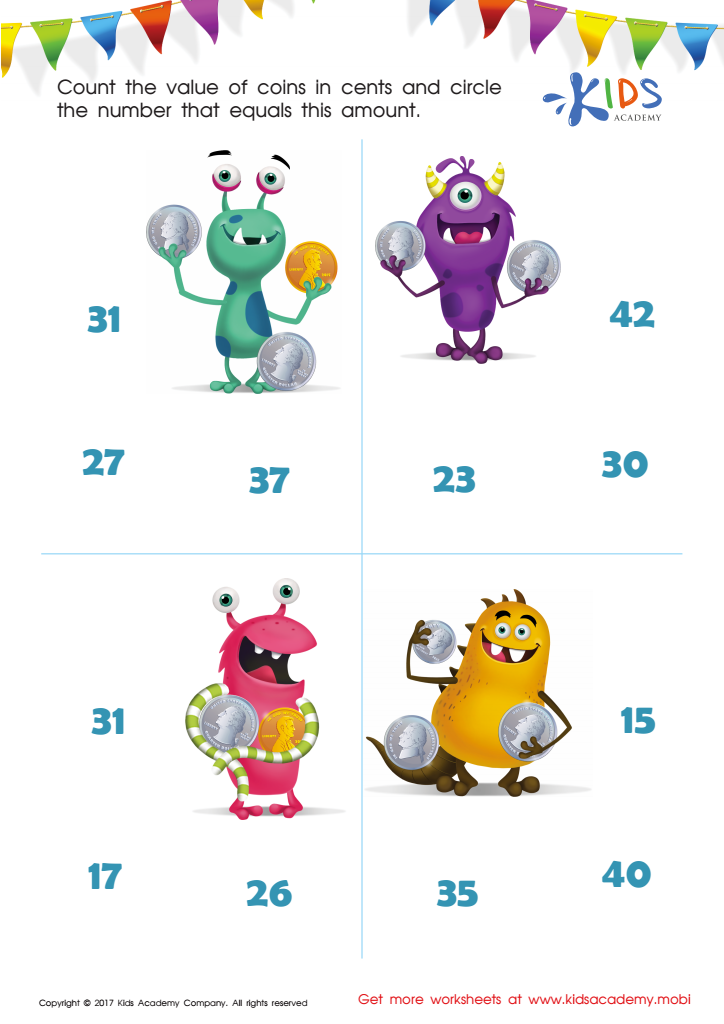
How Many Coins Money Worksheet
 Assign to My Students
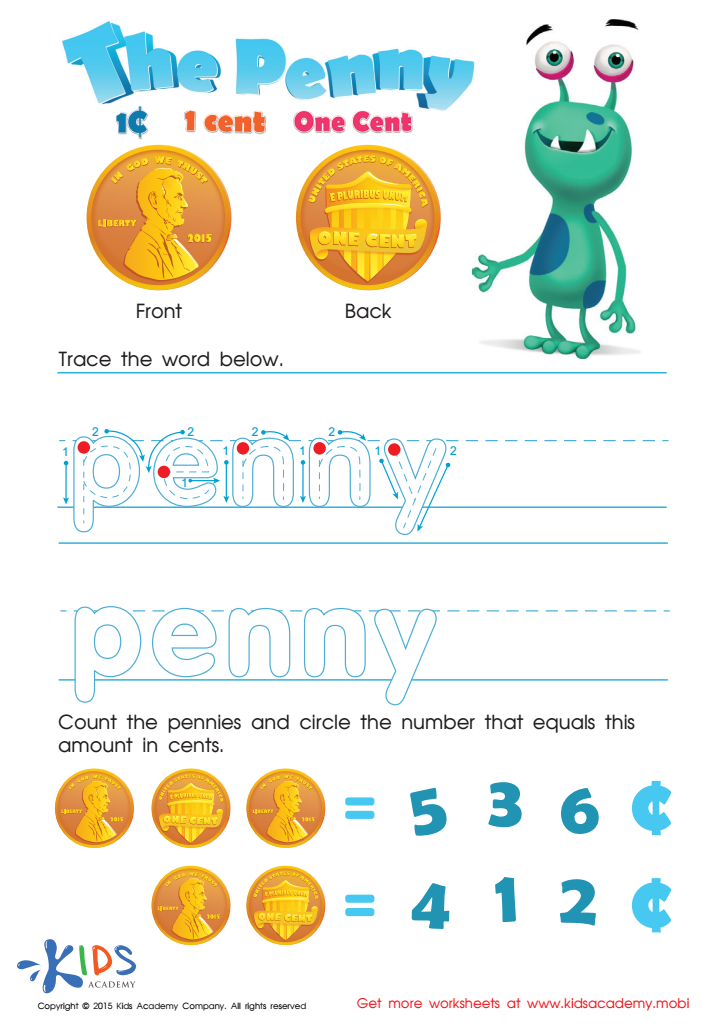
One Cent or the Penny Money Worksheet
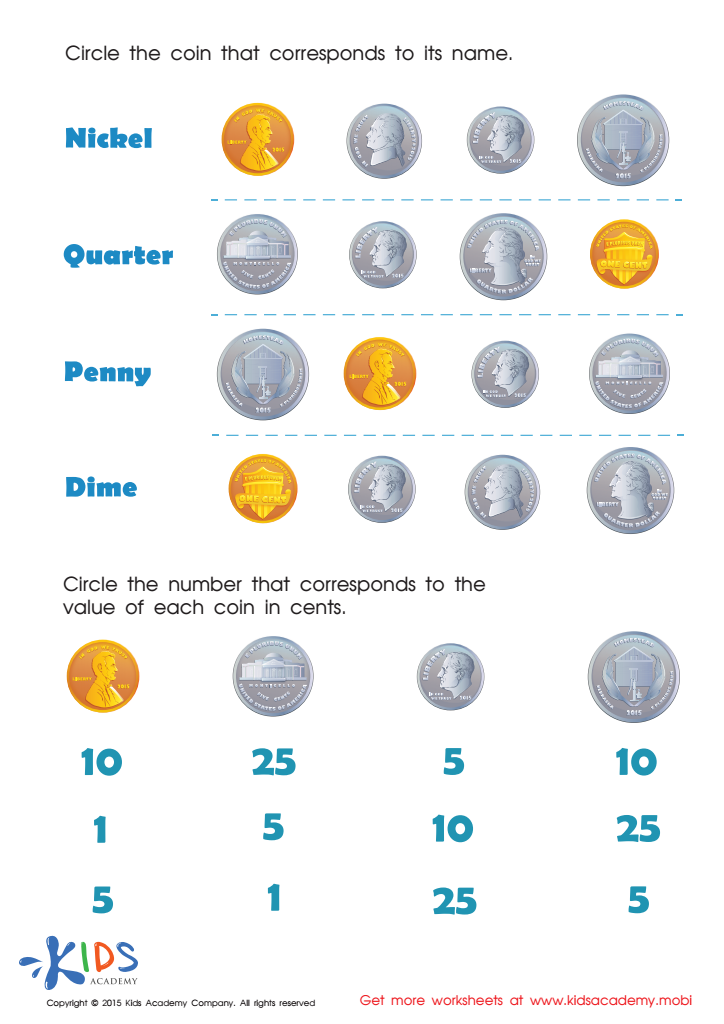
Coin Names and Values Money Worksheet
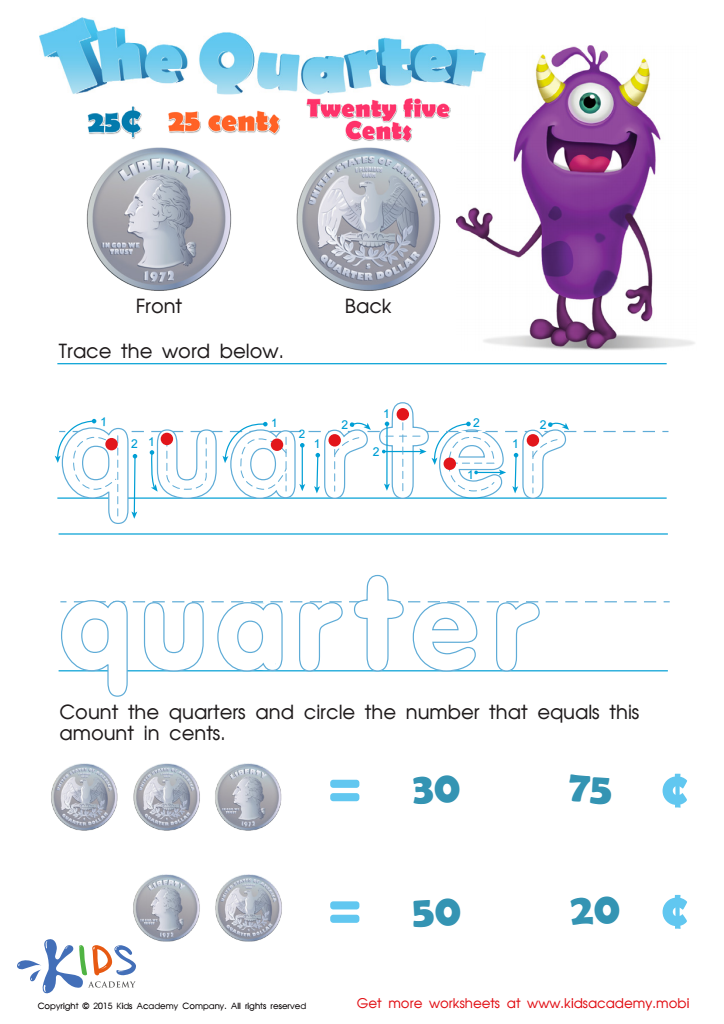
Twenty Five Cents or the Quarter Money Worksheet








Parents and teachers should care about the Money Recognition Extra Challenge for ages 4-6 because it instills foundational financial literacy at a crucial developmental stage. During early childhood, kids are especially receptive to learning new skills, and understanding money is an essential life skill. Introducing money concepts at this age helps children recognize different coins and bills, understand their values, and begin to grasp the basic concepts of saving and spending.
Furthermore, activities related to money recognition improve cognitive skills such as numeracy, pattern recognition, and categorization. These exercises also foster fine motor skills when children handle and manipulate coins and bills. By engaging in money recognition challenges, children learn to follow instructions, practice problem-solving, and enhance their attention to detail.
Moreover, teaching money recognition early lays the groundwork for responsible financial behaviors in the future. Children who recognize the importance of money and its value are more likely to develop healthy financial habits, such as budgeting and saving. For parents, engaging children with these constructive activities creates opportunities for meaningful interaction and learning. For teachers, incorporating money recognition into the curriculum makes mathematical concepts more tangible and relatable, ensuring students build a strong foundation for future academic success in mathematics and everyday life.








