Multiplication practice Extra Challenge Math Worksheets for Ages 4-6
3 filtered results
-
From - To
Explore our "Multiplication Practice Extra Challenge Math Worksheets" tailored for young learners aged 4-6! These engaging worksheets are designed to introduce foundational multiplication concepts through fun and interactive exercises. With vibrant illustrations and age-appropriate challenges, children will enjoy developing their math skills while boosting confidence. Our worksheets promote problem-solving abilities and critical thinking, making math a delightful adventure. Perfect for both classroom and home learning, our resources facilitate guided practice and independent learning, ensuring kids grasp multiplication effectively. Equip your child with the tools they need to succeed in math with our exciting and educational extra challenges!
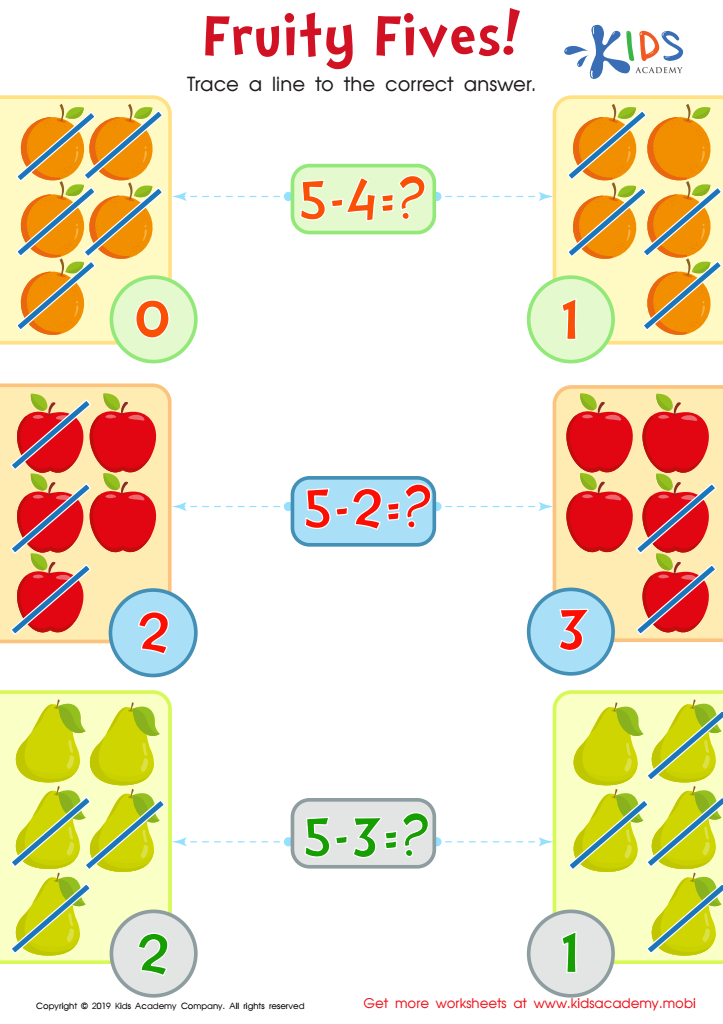
Fruity Fives! Worksheet
 Assign to My Students
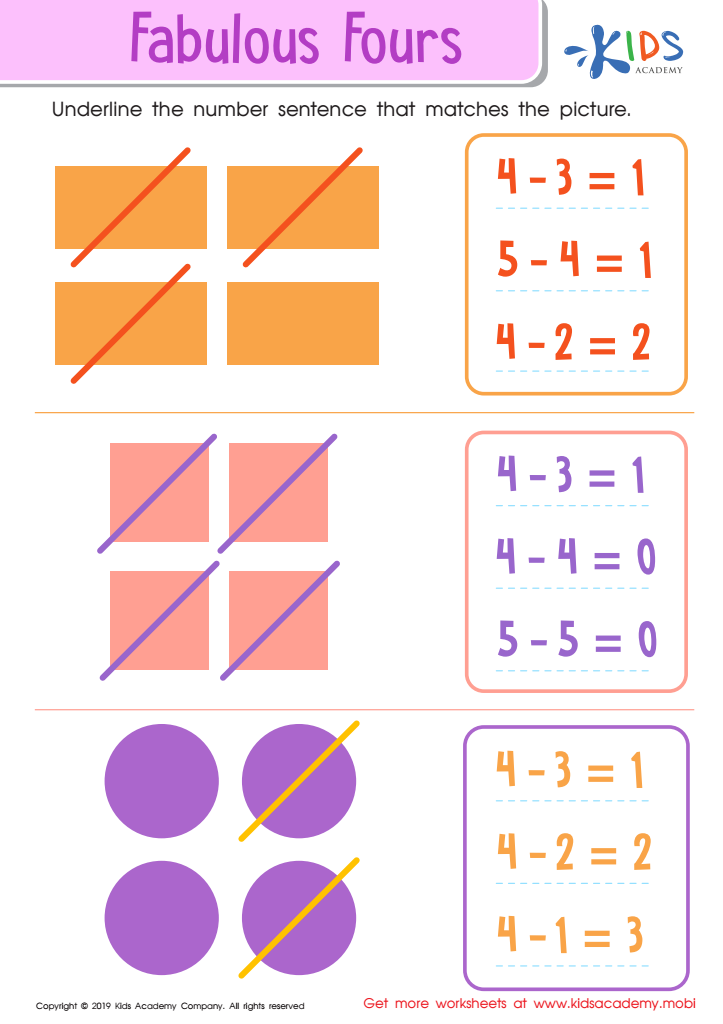
Fabulous Fours Worksheet
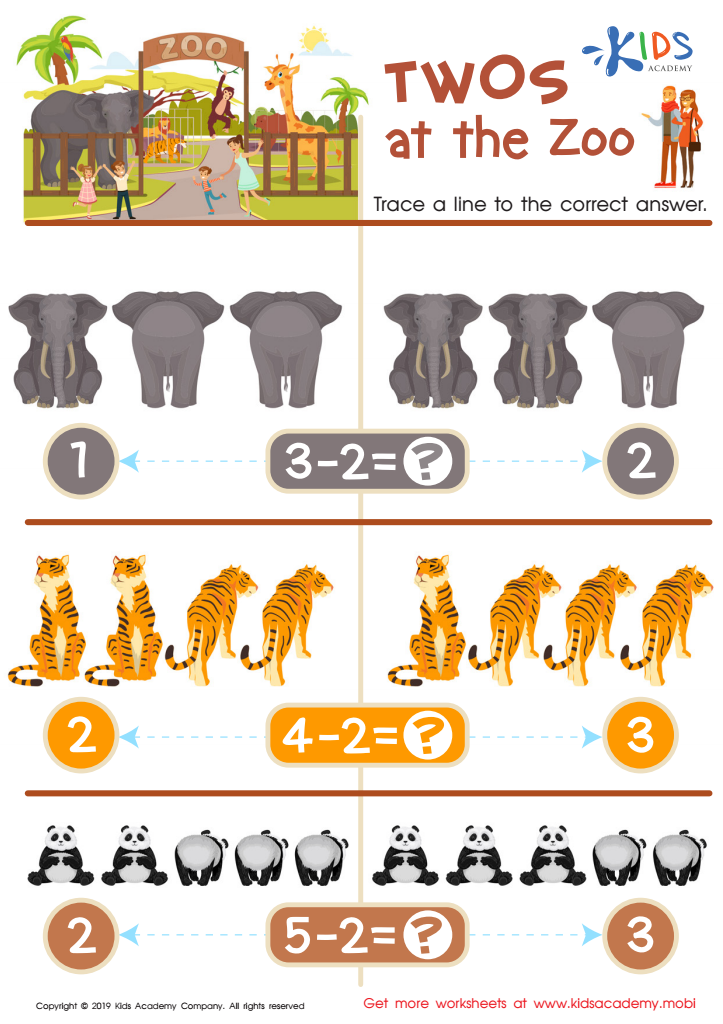
Twos at the Zoo Worksheet




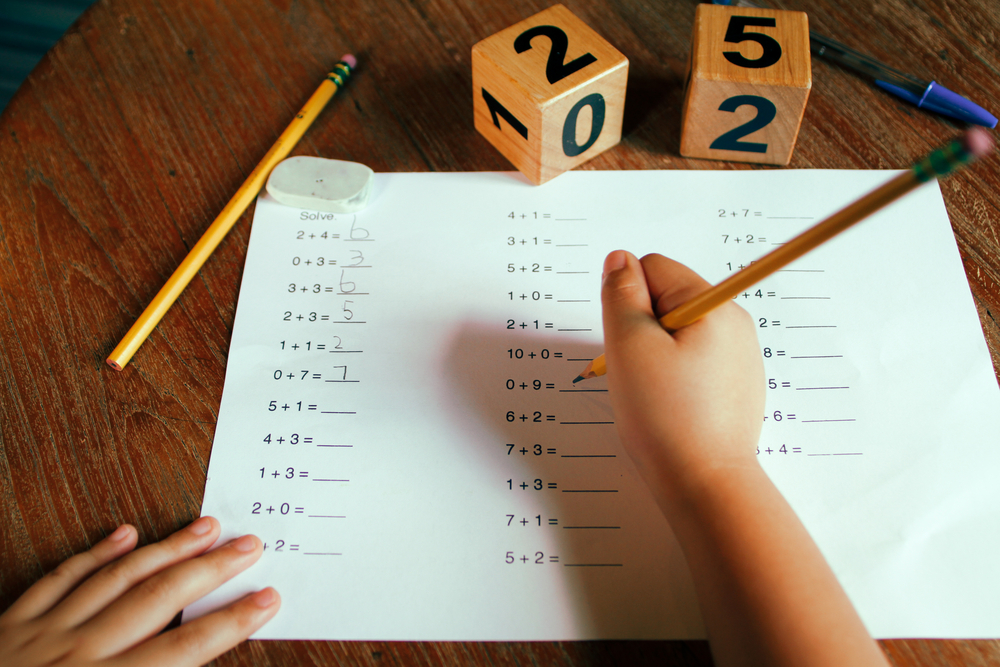


Parents and teachers should prioritize multiplication practice through programs like Extra Challenge Math for young learners aged 4-6 because early mathematical skills lay the foundation for future academic success. At this age, children exhibit heightened brain plasticity; their ability to grasp new concepts is remarkable. Engaging them in multiplication practice helps nurture a positive attitude toward math, demystifying the subject and making it accessible.
Moreover, multiplication is a fundamental building block in mathematics that supports a range of concepts—such as addition, division, and problem-solving—taught later in their educational journey. Introducing multiplication early promotes number fluency, empowering children to tackle more complex mathematical challenges as they progress.
Additionally, structured programs like Extra Challenge Math incorporate games and interactive activities, making learning enjoyable and fostering teamwork through cooperative play. This nourishes social skills whilst reinforcing mathematical concepts.
As children gain confidence in their abilities, they become more motivated and open to exploring advanced topics later in school. By participating in multiplication practice now, parents and teachers are equipping children with essential skills, enhancing cognitive development, and fostering a lifetime of learning and enthusiasm for math. Investing time in these foundational skills today leads to empowered, competent mathematicians tomorrow.








