Sorting skills Extra Challenge Math Worksheets for Ages 4-6
3 filtered results
-
From - To
Boost your child's sorting skills with our engaging Extra Challenge Math Worksheets designed for ages 4-6! Perfect for young learners, these worksheets offer fun and interactive activities that promote critical thinking and categorization abilities. Children will enjoy sorting shapes, colors, and objects, enhancing their cognitive development in a playful way. Each worksheet is crafted to align with early learning standards, making it an excellent resource for both classroom settings and at-home learning. Visit our website to explore these worksheets and give your child the opportunity to develop foundational math skills while having fun! Ideal for homeschoolers, educators, and parents alike!
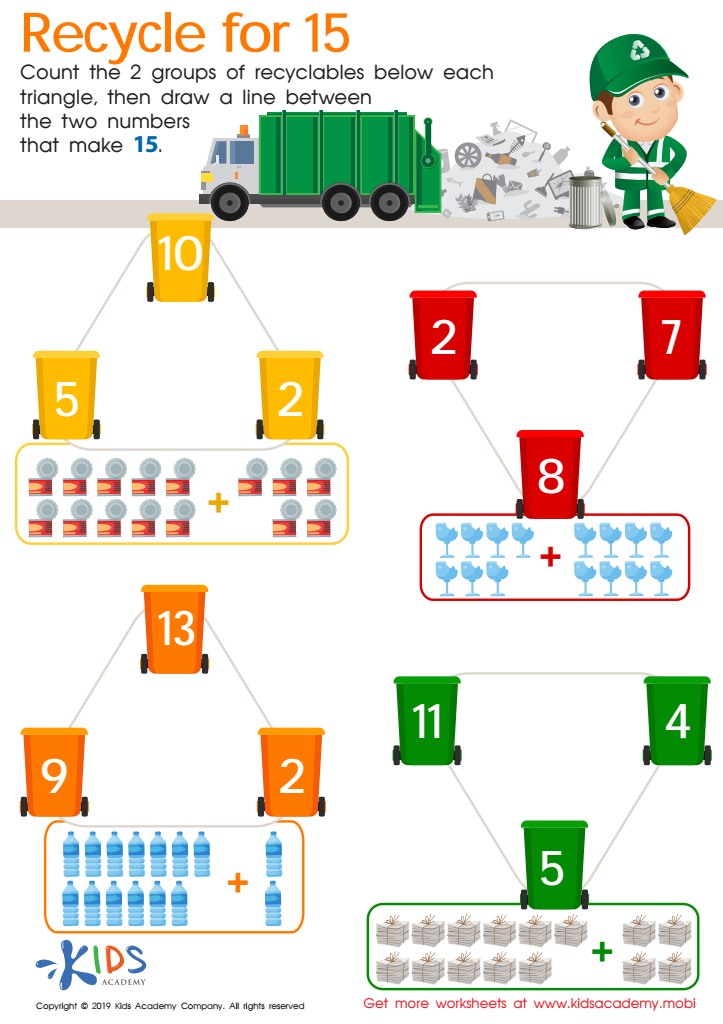
Recycle for 15 Worksheet
 Assign to My Students
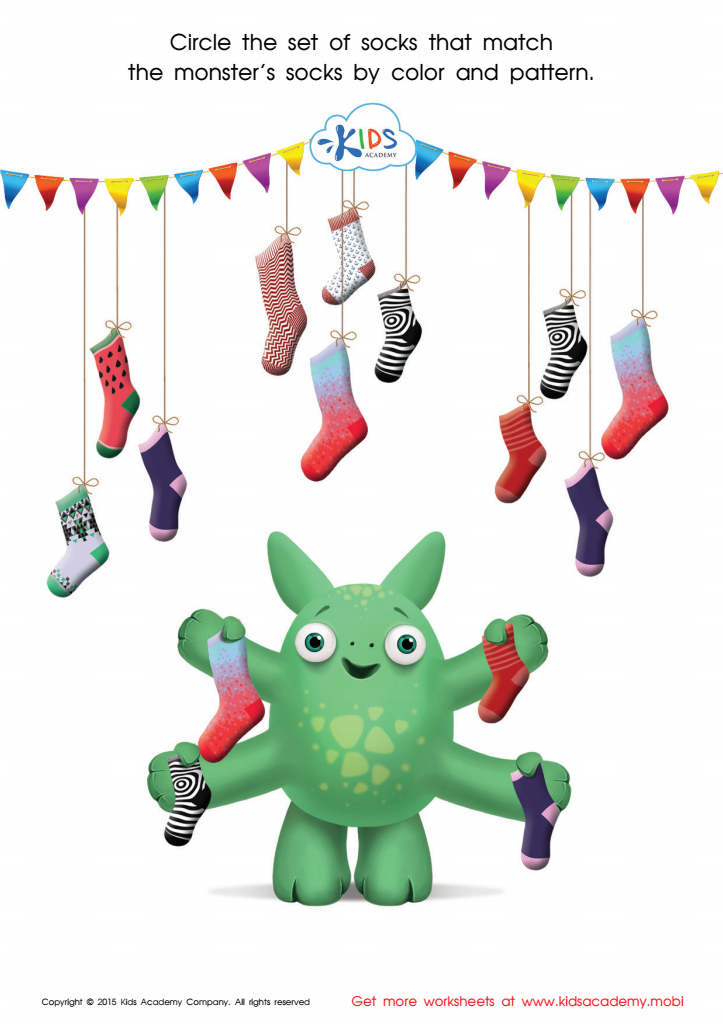
Sort the Monster's Socks Worksheet
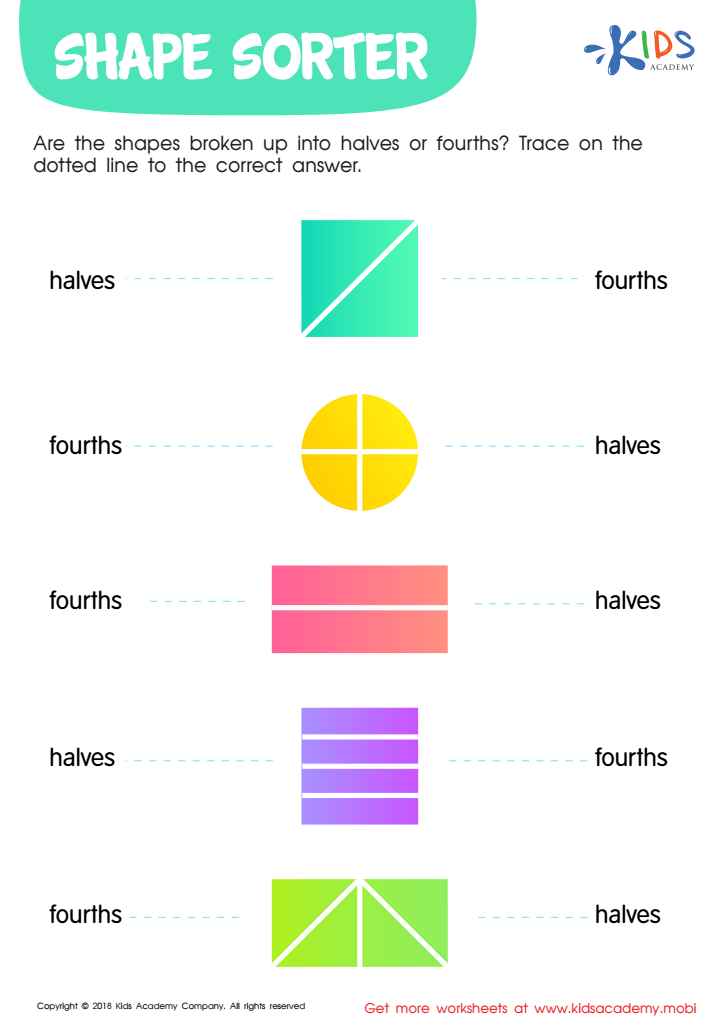
Shape Sorter Worksheet








Sorting skills are foundational for young children, and the Extra Challenge Math program for ages 4-6 emphasizes this crucial element of early education. Understanding sorting helps children recognize patterns, categorize objects, and develop critical thinking skills. In everyday life, sorting introduces concepts of organization and classification—skills they will use in math, science, and literacy.
When children sort objects, they enhance their ability to compare and contrast, laying the groundwork for more complex mathematical concepts like addition, subtraction, and data analysis later on. Parents and teachers should care about fostering these skills because they contribute not only to academic success but also to cognitive development. Sorting experiences also encourage collaboration and communication, essential skills for social interaction.
Moreover, engaging in sorting activities can make learning enjoyable and interactive, promoting a positive attitude toward mathematics from a young age. This approach paves the way for children to see math as a fun and natural part of their environment. By prioritizing sorting skills through programs like Extra Challenge Math, parents and teachers can significantly impact their children's future learning capabilities and foster a lifelong appreciation for problem-solving and logical reasoning. In essence, sorting is not just an activity; it's an integral part of early developmental growth.