Reading comprehension Extra Challenge Grammar Worksheets for Ages 4-6
9 filtered results
Difficulty Level
Grade
Age
-
From - To
Subject
Activity
Standards
Enhance your child's reading skills with our "Reading Comprehension Extra Challenge Grammar Worksheets for Ages 4-6". These engaging worksheets are expertly designed to boost young learners' grammar and comprehension abilities through playful activities and exercises. Each worksheet combines colorful images and simple sentences to keep kids motivated while they practice identifying nouns, verbs, and basic syntax structures. Perfect for reinforcing classroom learning or extra practice at home, these tools encourage a love of reading at an early age, providing a strong foundation for future literacy success. Unlock your child's potential with our age-appropriate, expertly crafted reading comprehension challenges.
Favorites
With answer key
Interactive
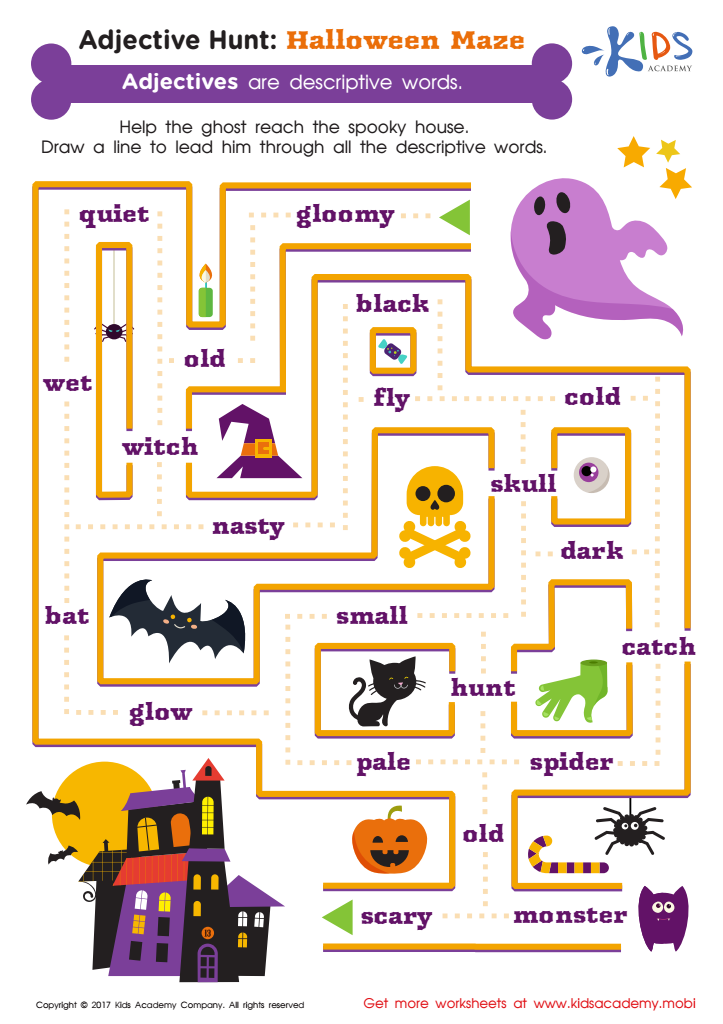
Adjective Hunt Printable
This spooky maze is perfect for Halloween! Kids will be both haunted and delighted while they figure out which words are descriptive or not. Get them excited for learning grammar with this fun and frightful worksheet!
 Assign to My Students
Adjective Hunt Printable
Worksheet
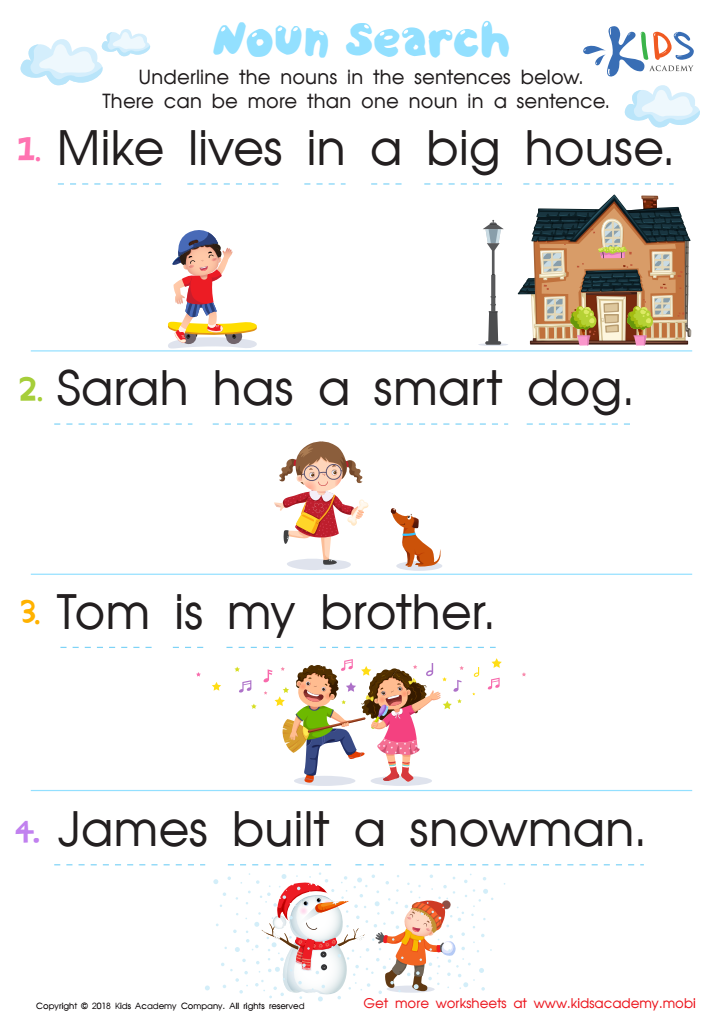
Noun Search Worksheet
To help your children learn the basics of grammar, start with nouns, verbs, adverbs and adjectives. This noun search worksheet will help your child understand the most common part of speech - the noun. Ask them to underline the nouns in each sentence. This is a great way to start learning proper grammar.
Noun Search Worksheet
Worksheet
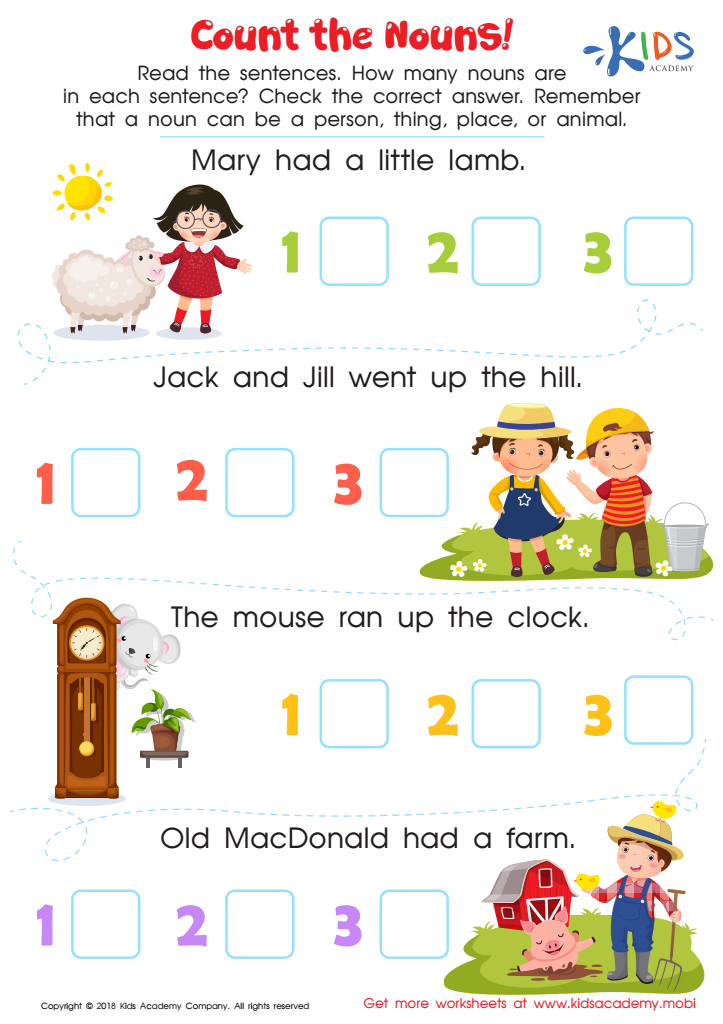
Count the Nouns Worksheet
Read the sentences with your children and ask them to find the nouns. Explain that nouns are names of people, animals, places or things. Point out the boxes with the answers to check.
Count the Nouns Worksheet
Worksheet
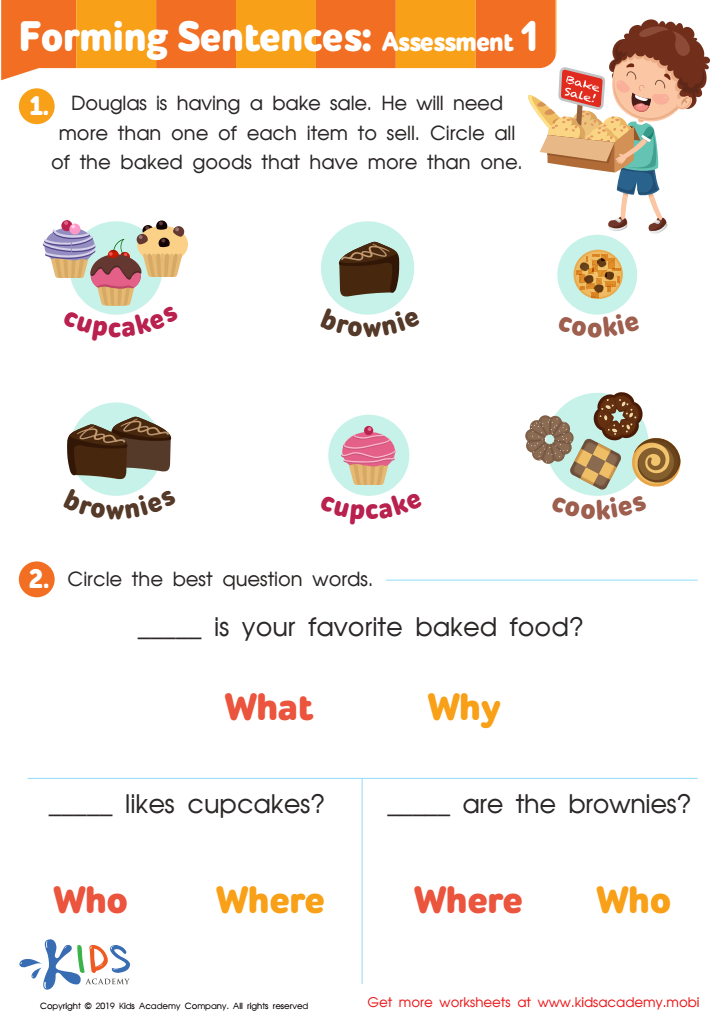
Forming Sentences: Assessment 1 Worksheet
Bake sales are great fun, offering a variety of goodies and treats! Kids also have a chance to make a bit of money. Help your students circle all the yummy baked goods with more than one in this worksheet - Douglas is hosting a bake sale and needs items in bulk!
Forming Sentences: Assessment 1 Worksheet
Worksheet
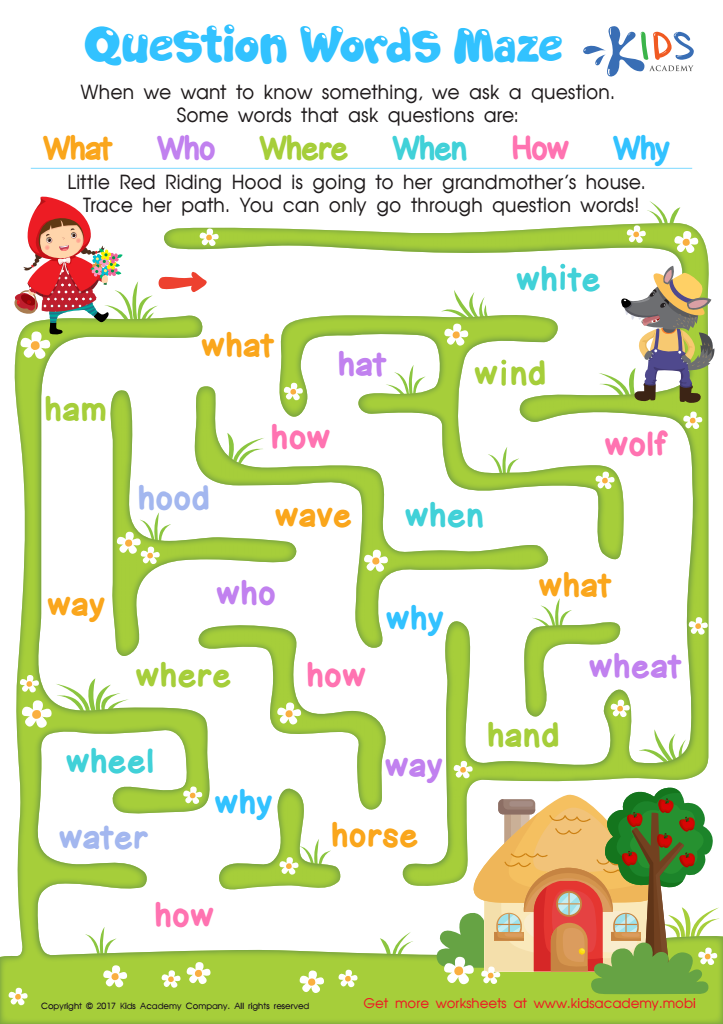
Question Words Maze Worksheet
Start each query with the right words: practice using the "who", "what", "where", "when" and "how" of questions in this fun maze. Guide Little Red Riding Hood away from the wolf and to her grandmother's house with a pencil, tracing a path through the question words only, leaving the wolf and other words behind.
Question Words Maze Worksheet
Worksheet
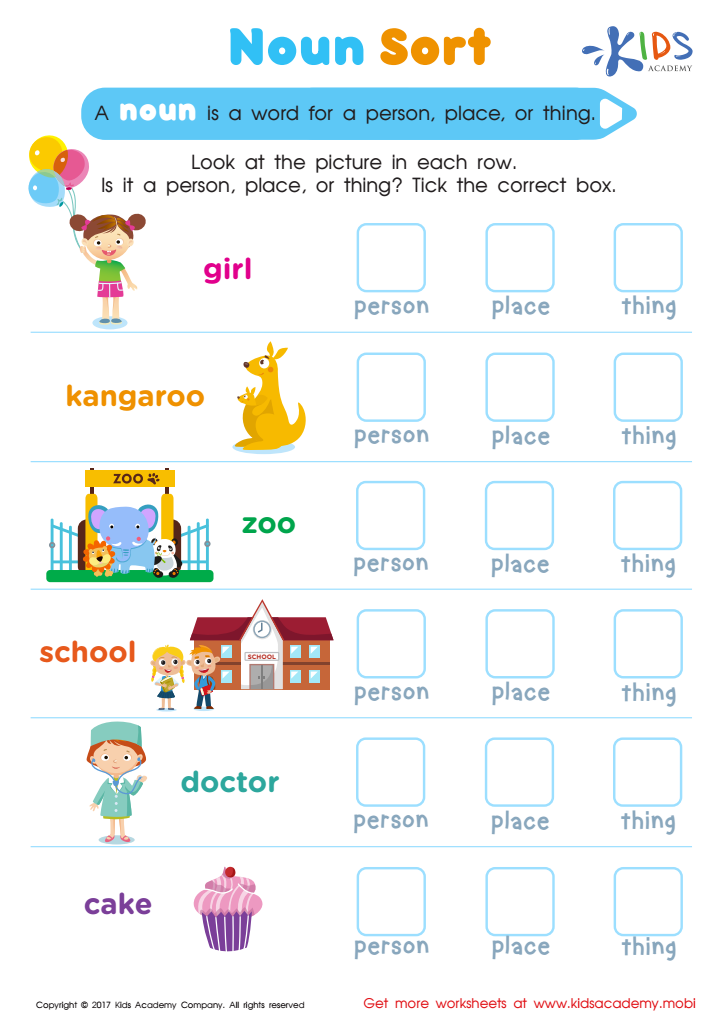
Noun Sort Printable
This printable worksheet helps kids sort nouns into person, place, or thing categories. Perfect for learning the basics of grammar!
This printable worksheet helps kids learn parts of speech by sorting nouns into person, place, or thing categories using familiar images. Perfect for mastering basic grammar!
Noun Sort Printable
Worksheet
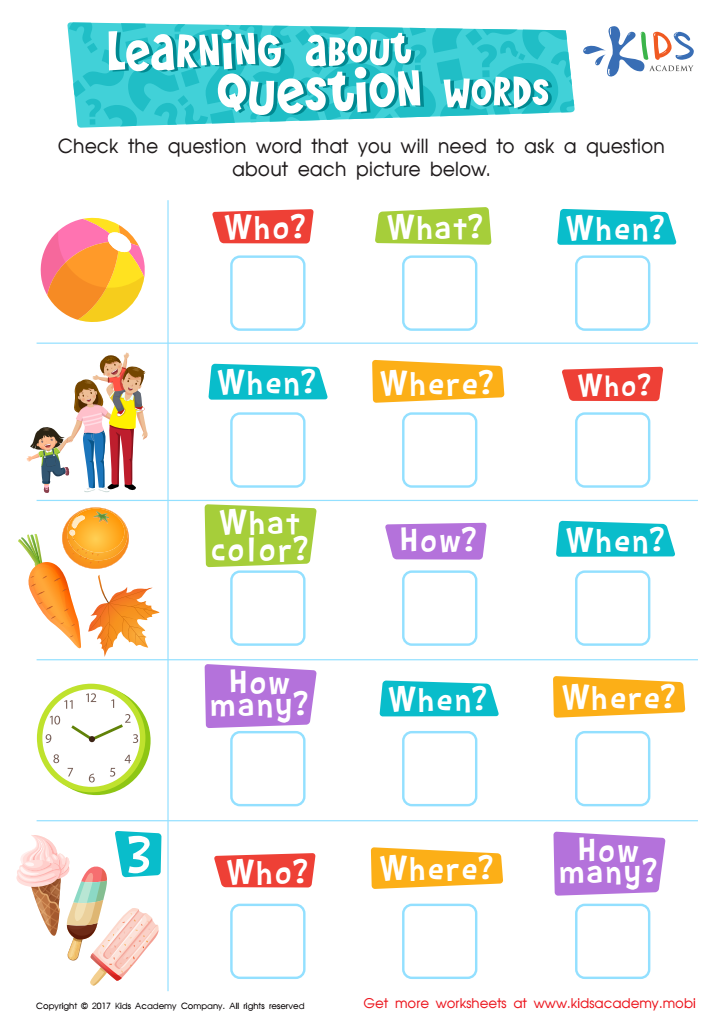
Learning about Question Words Worksheet
Learning language can be difficult, but this free printable worksheet will help! Have your child look at the picture and name it. Then help them choose the right question word to ask something about it. For example, when looking at a beach ball, you can't ask "Who?" Instead, look through the list to select the right word. It's a great way to learn language basics!
Learning about Question Words Worksheet
Worksheet
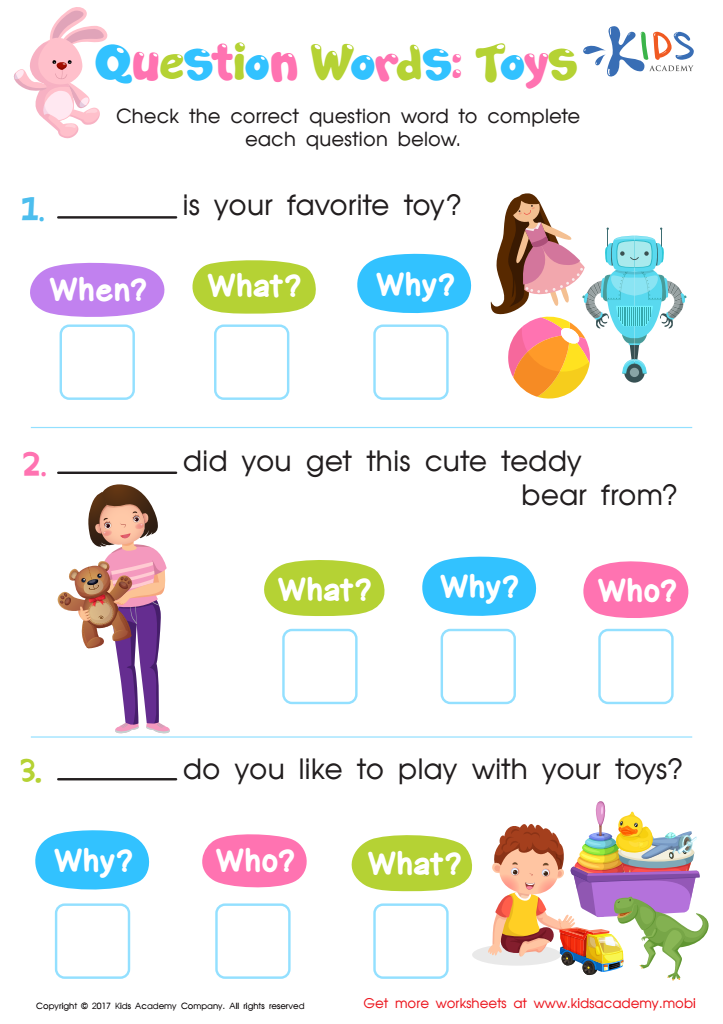
Question Words: Toys Worksheet
Let your kids enjoy learning to ask precise questions with this fun worksheet! Read each sentence fragment and look at the word bank, picking the correct word to complete the sentence. Check the box next to the correct word to use. It's that easy and lots of fun!
Question Words: Toys Worksheet
Worksheet
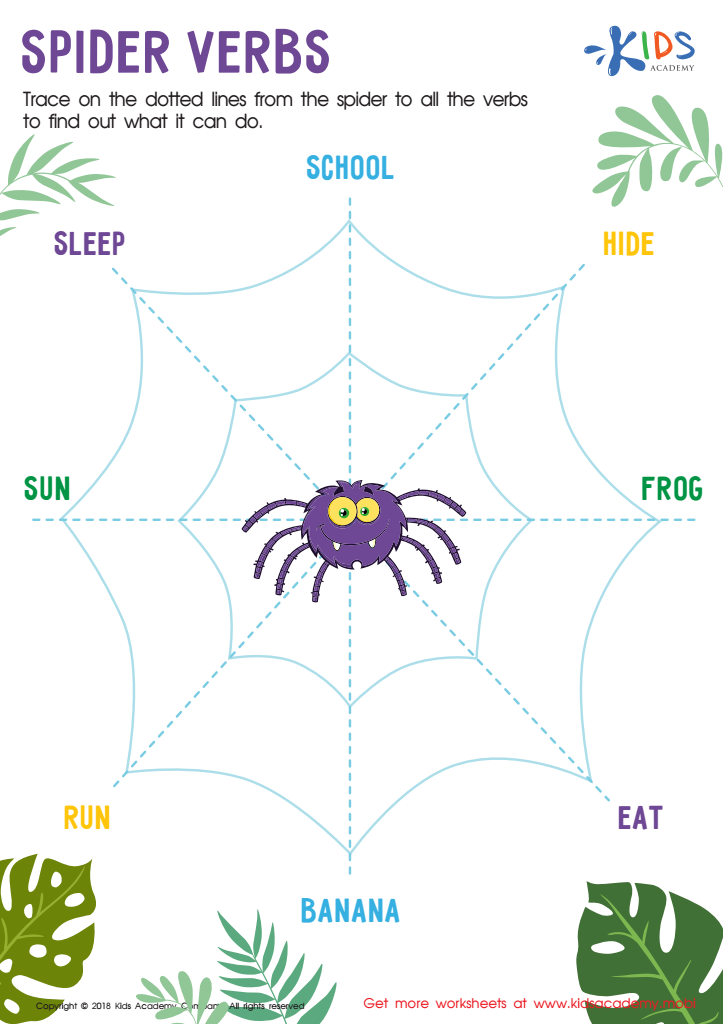
Spider Verbs Worksheet
Verbs are action words. Examples: run, play, talk. Show your child this tracing sheet for them to learn about verbs. Ask them to trace the dotted lines from the spider to the words that are verbs. These words are what the spider can do.
Spider Verbs Worksheet
Worksheet
Join Kids Academy for Free
Who is primarily going to use this learning content?


.jpg)
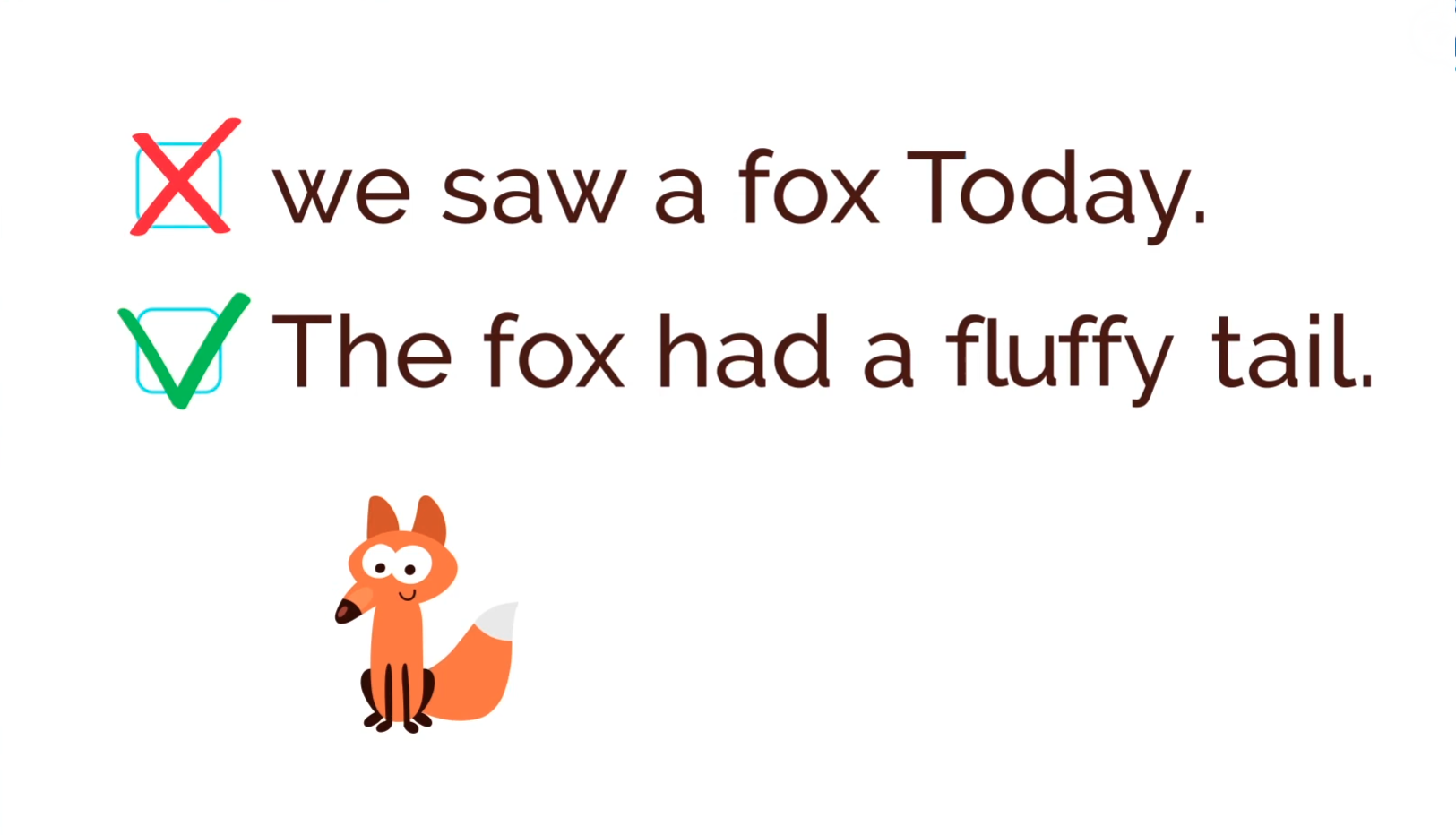


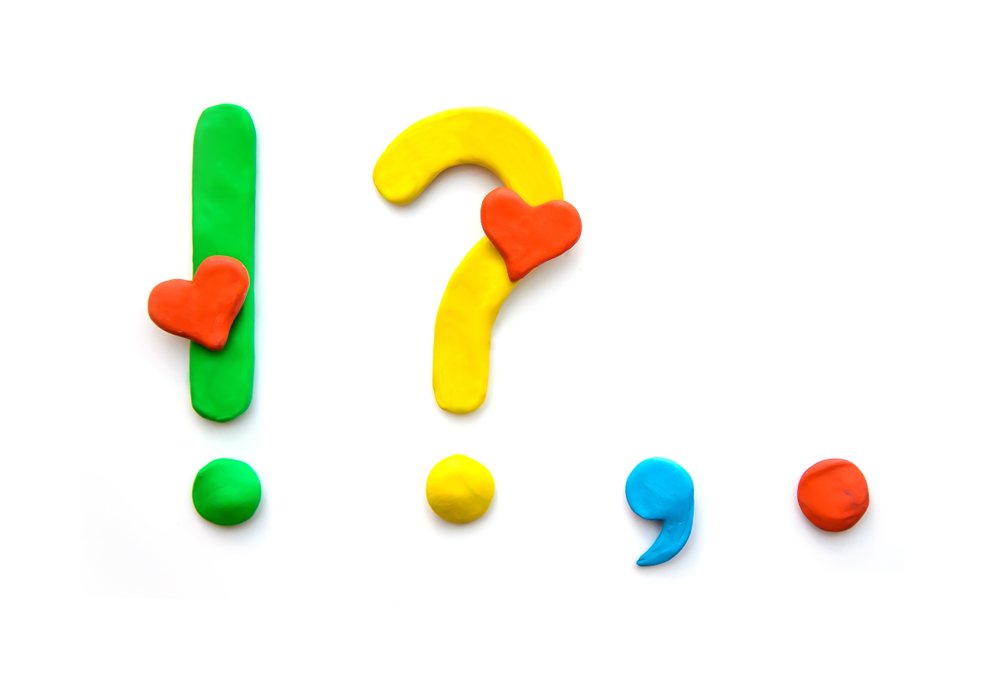
Parents and teachers should emphasize reading comprehension and grammar challenges for children aged 4-6 because these foundational skills are critical for cognitive development and academic success. At this age, children are in a crucial developmental stage where their brains are particularly receptive to learning new languages and concepts. Engaging in reading comprehension exercises helps boost their vocabulary, fosters imagination, and enhances the ability to understand and process information. These skills are not just essential for reading; they also influence writing, listening, and even mathematical problem-solving.
Introducing grammar at an early age helps children understand the structure and rules of language, which is crucial for effective communication. Proper grammar knowledge enables children to express themselves clearly and improves their ability to follow and construct narratives, a skill vital for academic achievements and daily interactions.
Moreover, early challenges in reading comprehension and grammar encourage a love for learning and reading, develop critical thinking skills, and help children gain confidence in their abilities. Activities tailored for this age group, such as storytelling, interactive reading sessions, and playful grammar exercises, make learning enjoyable while ensuring that these young learners are well-prepared for the more complex academic tasks ahead. Ultimately, these early educational interventions can set the stage for a lifelong journey of successful learning and communication.