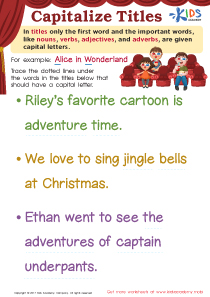
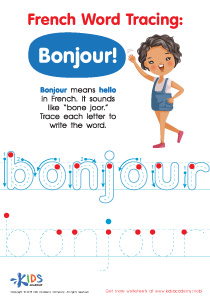
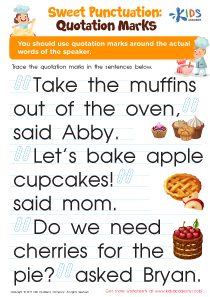
Spelling improvement Extra Challenge Writing Worksheets for Ages 4-6
3 filtered results
-
From - To
Boost your child's spelling skills with our Spelling Improvement Extra Challenge Writing Worksheets for Ages 4-6. Tailored specifically for early learners, these worksheets are designed to make improving spelling fun and engaging. Each activity focuses on enhancing vocabulary, reinforcing phonics, and practicing letter formation, ensuring comprehensive skill development. With vibrant illustrations and interactive writing exercises, children will stay motivated while mastering essential spelling techniques. Perfect for classroom use or home learning, these worksheets provide a solid foundation for your child’s future literacy success. Foster your young learner’s confidence and proficiency in spelling with our expertly crafted worksheets.
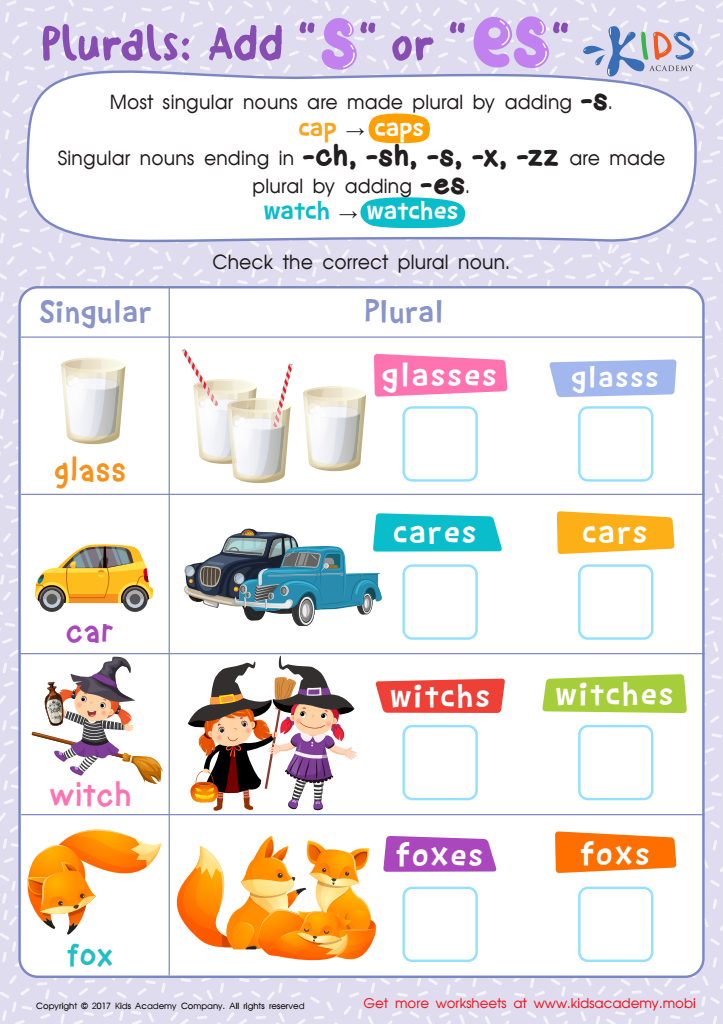
Plurals: "–es" or "–es"? Worksheet
 Assign to My Students
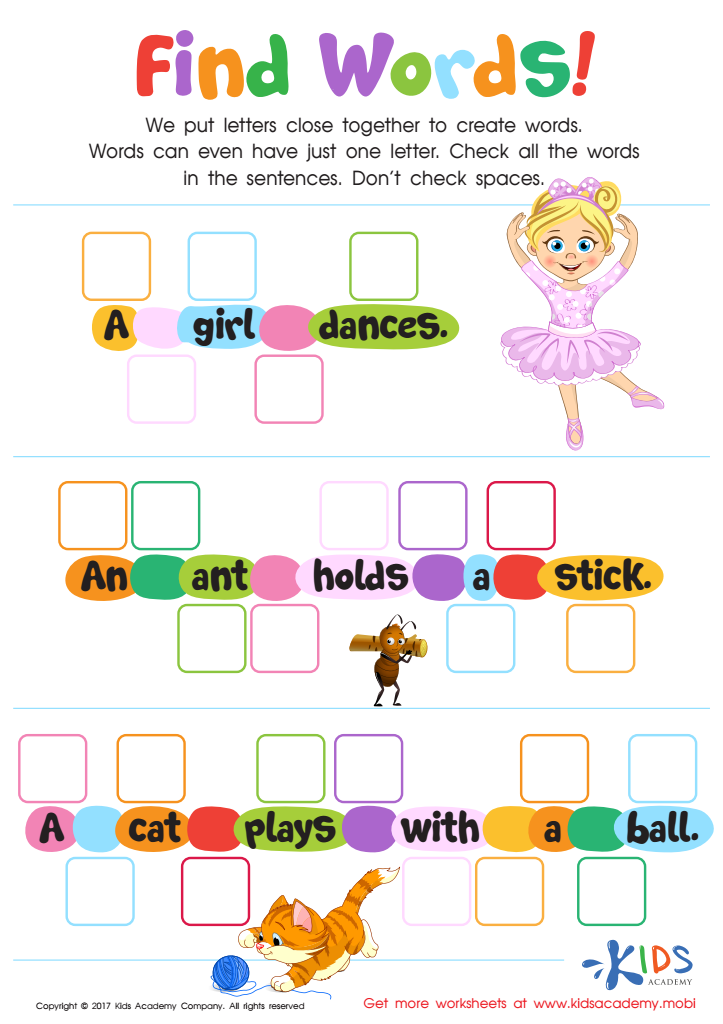
Find Words Worksheet
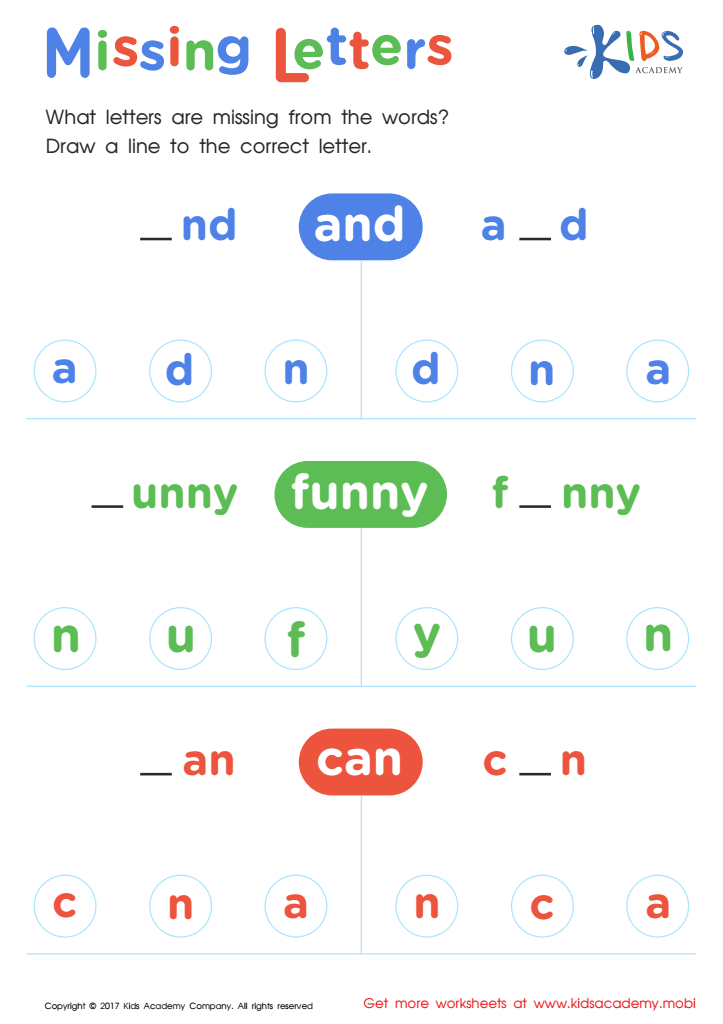
Missing Letters Worksheet






.jpg)

Caring about spelling improvement in early childhood through activities like the Extra Challenge Writing for ages 4 to 6 is essential for several reasons.
Firstly, this period is crucial for language development. Children in this age group are highly receptive to learning new skills, and spelling is foundational for both reading and writing proficiency. By focusing on spelling improvements early on, parents and teachers can bolster a child's overall literacy skills. This provides a solid base for future academic success and fosters a love for learning.
Secondly, mastering spelling helps build children's confidence. When young learners see themselves making progress, such as spelling out simple words correctly, they feel a sense of achievement. This boosts their self-esteem and motivation to tackle more complex tasks, both in academics and beyond.
Thirdly, engaging in structured yet creative activities like the Extra Challenge Writing offers rich opportunities for children to enhance their fine motor skills. Writing out letters and words requires hand-eye coordination and dexterity, which are crucial in early childhood development.
Finally, parents and teachers who prioritize spelling improvement through fun and challenging activities enable cognitive development. These exercises support critical thinking and problem-solving skills as children learn to recognize patterns, understand phonetics, and establish associations between sounds and letters. Ultimately, this early investment pays off academically and develops lifelong learning habits.