Fine Motor Skills Extra Challenge ABC Letters Worksheets for Ages 4-7
7 filtered results
Difficulty Level
Grade
Age
-
From - To
Subject
Activity
Standards
Our "Fine Motor Skills Extra Challenge ABC Letters Worksheets for Ages 4-7" are perfect for young learners looking to enhance their alphabet knowledge while simultaneously developing fine motor skills. These printable worksheets feature engaging activities, such as tracing, cutting, and matching, designed to improve hand-eye coordination, pencil control, and dexterity. Ideal for preschool and early elementary students, these worksheets make learning fun and interactive, preparing your child for successful academic development. The extra challenges in each worksheet ensure that kids stay motivated and proud of their progress. Unlock a world of learning and skill-building today!
Favorites
With answer key
Interactive
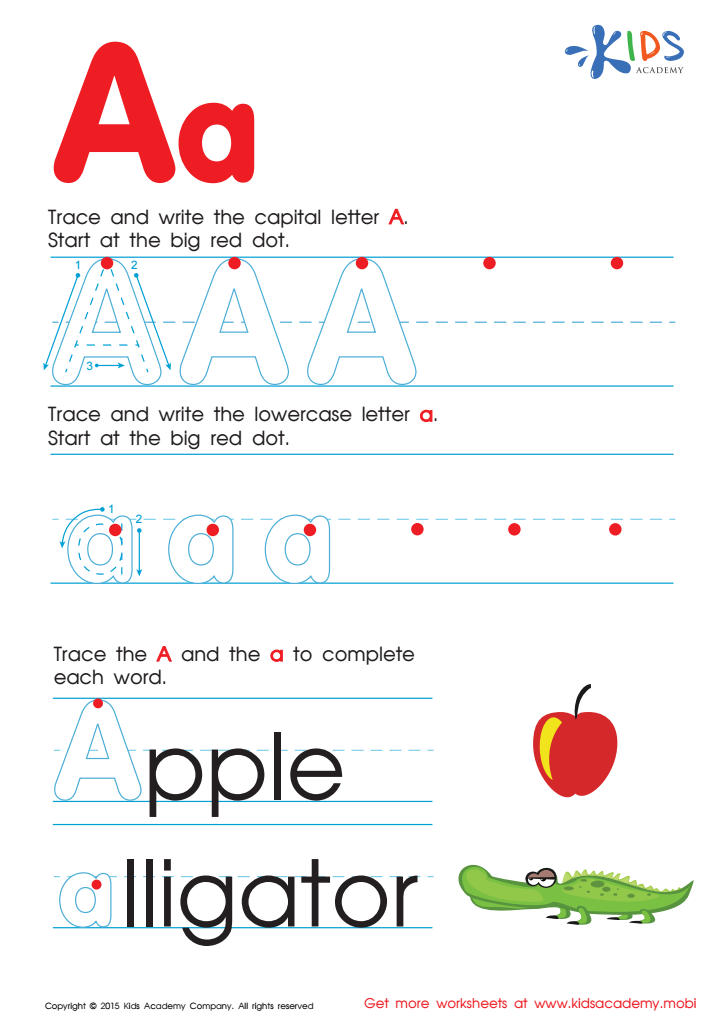
Letter A Tracing Page
Trace and write the letter "A"! Start with the big red dot, then do the capital and lowercase versions. Then write it again with two words - apple and alligator. Download more tracing worksheets at Kids Academy.
 Assign to My Students
Letter A Tracing Page
Worksheet







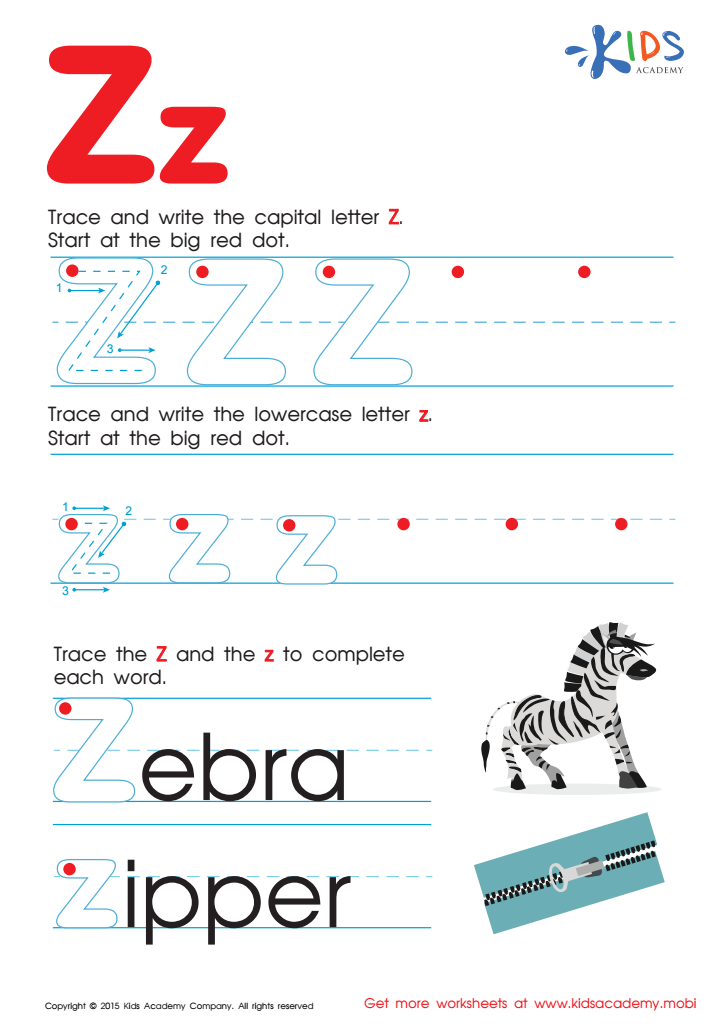
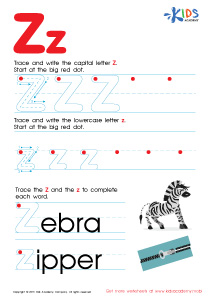
Letter Z Tracing Page
Trace and write capital "Z" and lowercase "z". Complete words "zebra" and "zipper". Be attentive and have fun! (80 words)
Letter Z Tracing Page
Worksheet
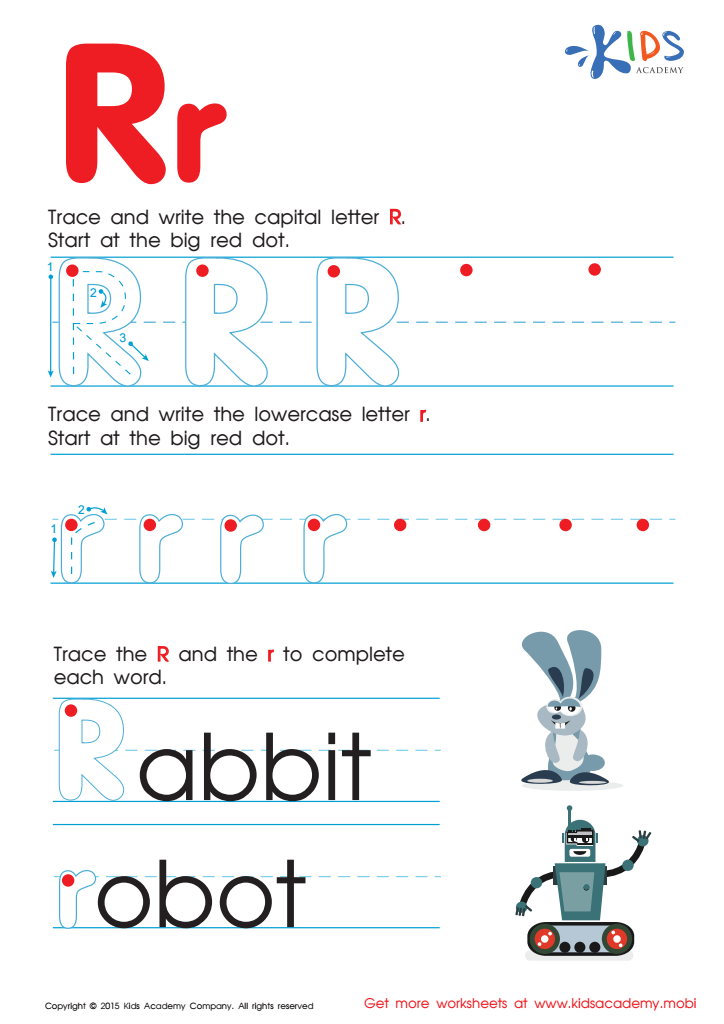
Letter R Tracing Page
Trace and write the letter "R" with this worksheet for kindergarten. Start with the uppercase, then move on to the lowercase. Write the letters several times for practice. Then help complete the words for the rabbit and robot, spelling carefully. More ABC worksheets can be found at Kids Academy.
Letter R Tracing Page
Worksheet
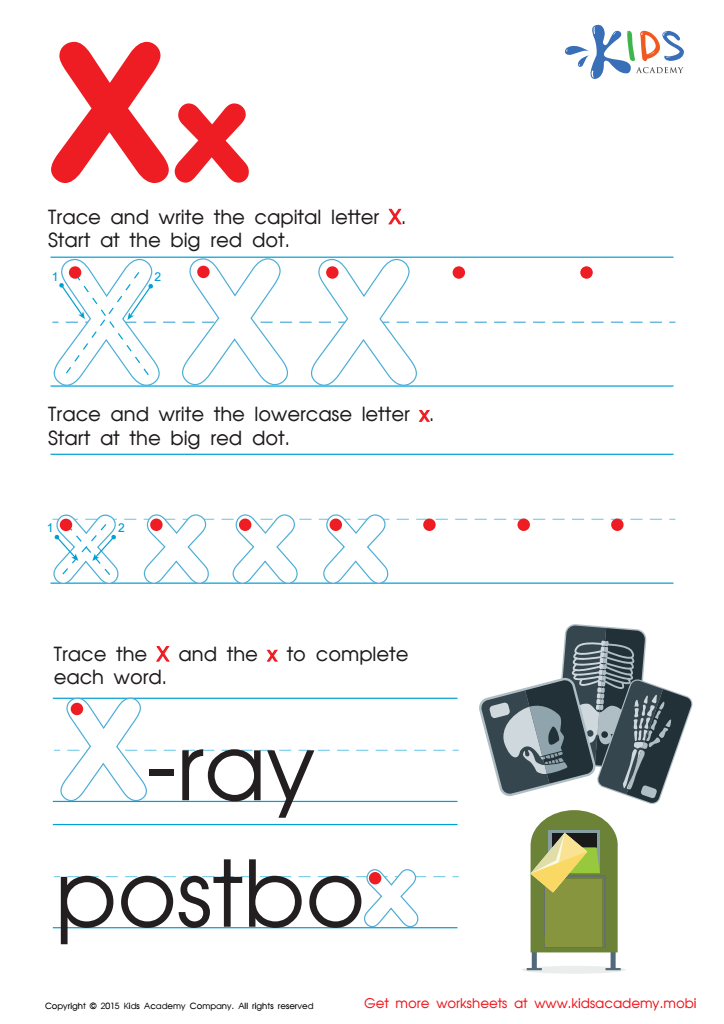
Letter X Tracing Page
Trace the uppercase letter "X" to learn, then write it yourself and practice. Then do the same with the lowercase "x" before completing the words "X-ray" and "postbox". Enjoy our alphabet printables!
Letter X Tracing Page
Worksheet
Letter U Tracing Page
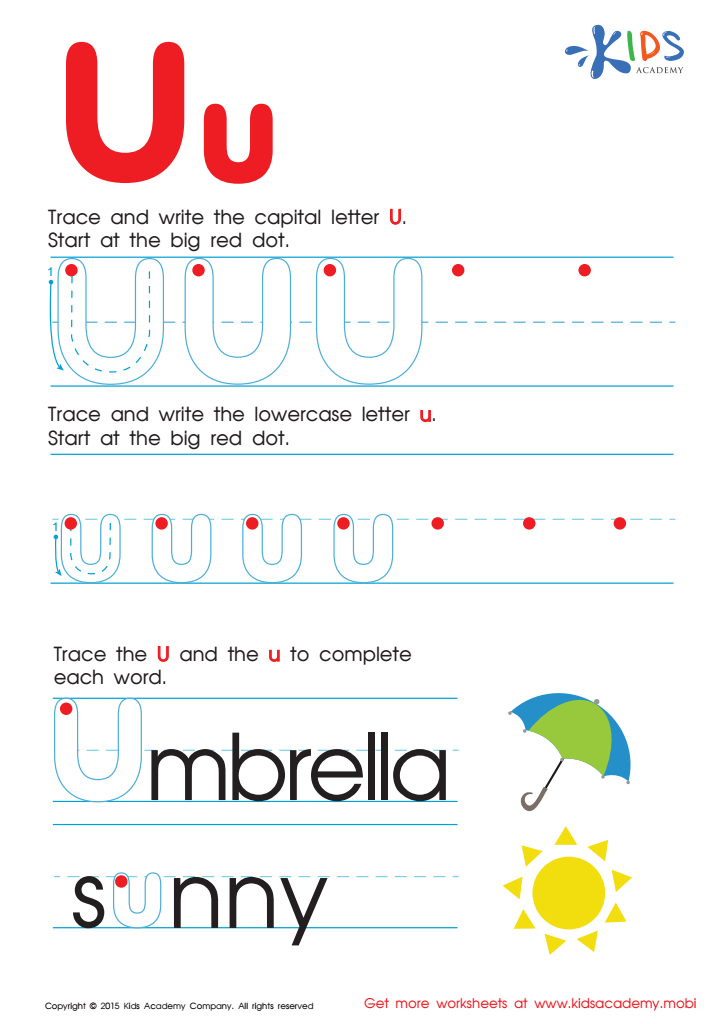
Ready to trace and write the letter "U"? Use our worksheet and practice tracing both uppercase and lowercase letters. Complete the words "umbrella" and "sunny" with a capital "U". Check our full collection of alphabet printables for more activities.
Letter U Tracing Page
Worksheet
Letter V Tracing Page
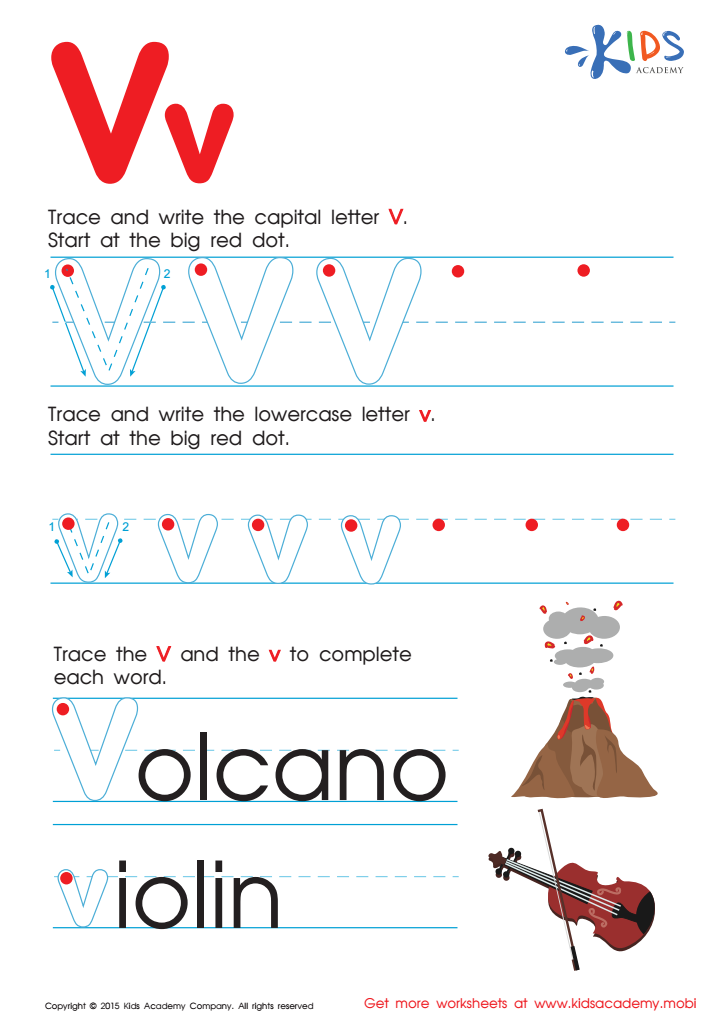
Trace the uppercase and lowercase letter "V" with our kindergarten tracing worksheet. Begin at the red dot and follow the lines. Write it several times. Complete the words "Volcano" and "violin". Get more alphabet activities at Kids Academy.
Letter V Tracing Page
Worksheet
Letter T Tracing Page
Trace letters, complete words, draw pictures and see your kids having fun!
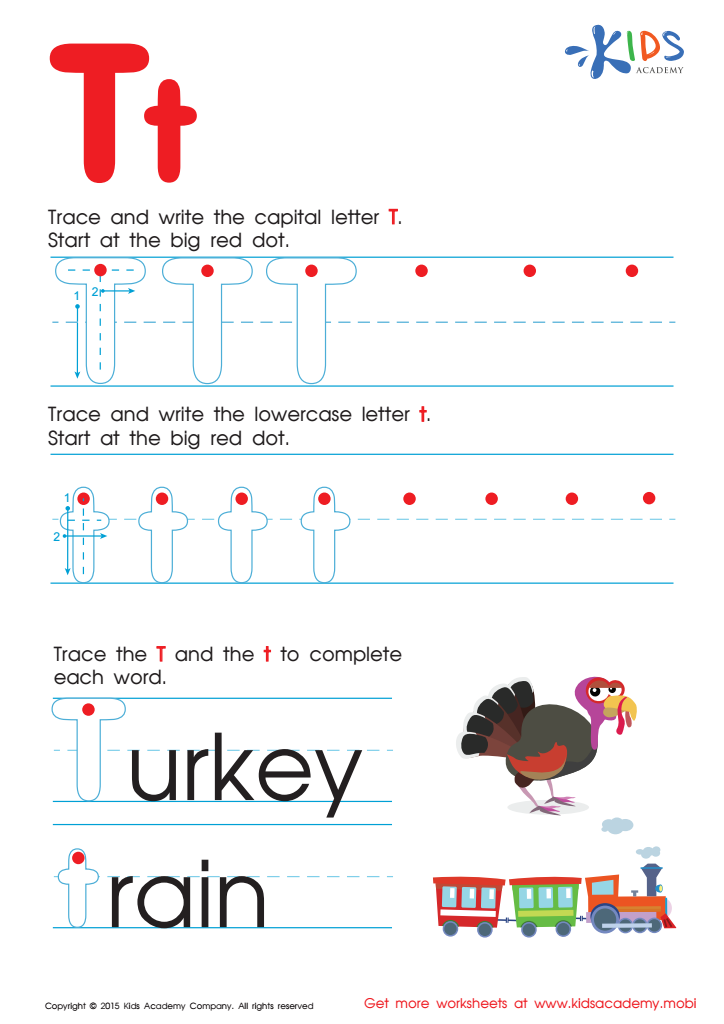
Kids Academy offers alphabet tracing worksheets to learn to write letters. Start with the big red dot, trace the letter, then write it. Practice uppercase and lowercase. Have fun completing words with a Turkey or a rain-train and draw pictures. Get more printable worksheets to make learning enjoyable.
Letter T Tracing Page
Worksheet
Join Kids Academy for Free
Who is primarily going to use this learning content?








Fine Motor Skills Extra Challenge ABC Letters are instrumental for children ages 4-7 for a variety of reasons connected to their developmental milestones. At this critical age, young children are rapidly developing their fine motor skills, which are necessary for tasks such as writing, drawing, cutting with scissors, and even buttoning shirts or tying shoelaces. By focusing on ABC letters, children simultaneously strengthen their finger muscles and hand-eye coordination needed for these important daily activities.
Fine motor skills are intricately linked to academic success. Enhancing these skills can aid in the proper formation of letters and numbers, which is directly tied to literacy and numeracy skills, cornerstones of early education. Furthermore, these activities encourage perseverance and attention to detail, as children must concentrate to correctly navigate and form each letter.
Parents and teachers who prioritize these activities provide a robust foundation for learning, setting children up for smooth transitions into more complex tasks. Moreover, mastering fine motor skills can have a positive impact on a child's self-esteem and independence. When children experience success in small motor tasks, they build confidence that motivates them to tackle more challenging endeavors, fostering an overall positive attitude towards learning and self-improvement.