Fine Motor Skills Extra Challenge Geometry Worksheets for Ages 4-7
6 filtered results
-
From - To
Enhance your child’s fine motor skills while introducing them to essential geometric concepts with our Fine Motor Skills Extra Challenge Geometry Worksheets for Ages 4-7. These engaging and thoughtfully designed worksheets offer a fun and interactive way for young learners to practice shapes, patterns, and spatial awareness. Each activity is crafted to build dexterity and coordination, ensuring that children not only grasp geometric fundamentals but also improve their writing and drawing abilities. Perfect for at-home learning or as an enrichment tool in the classroom, these worksheets provide the ideal balance of skill development and creativity! Discover the joy of learning geometry today!
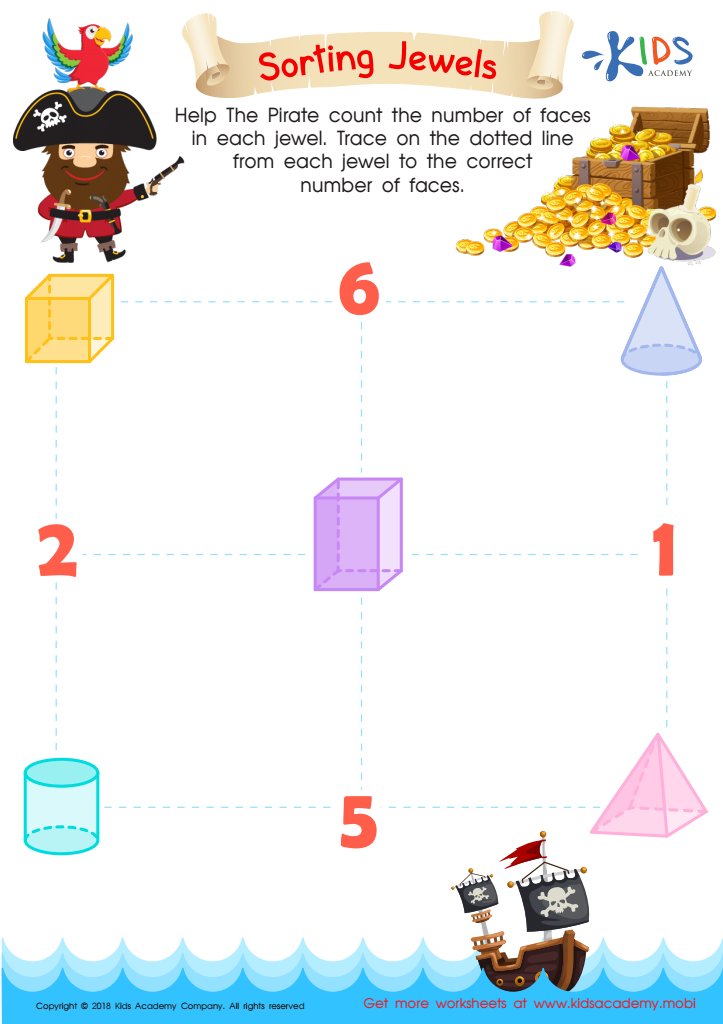
Sorting Jewels Worksheet
 Assign to My Students











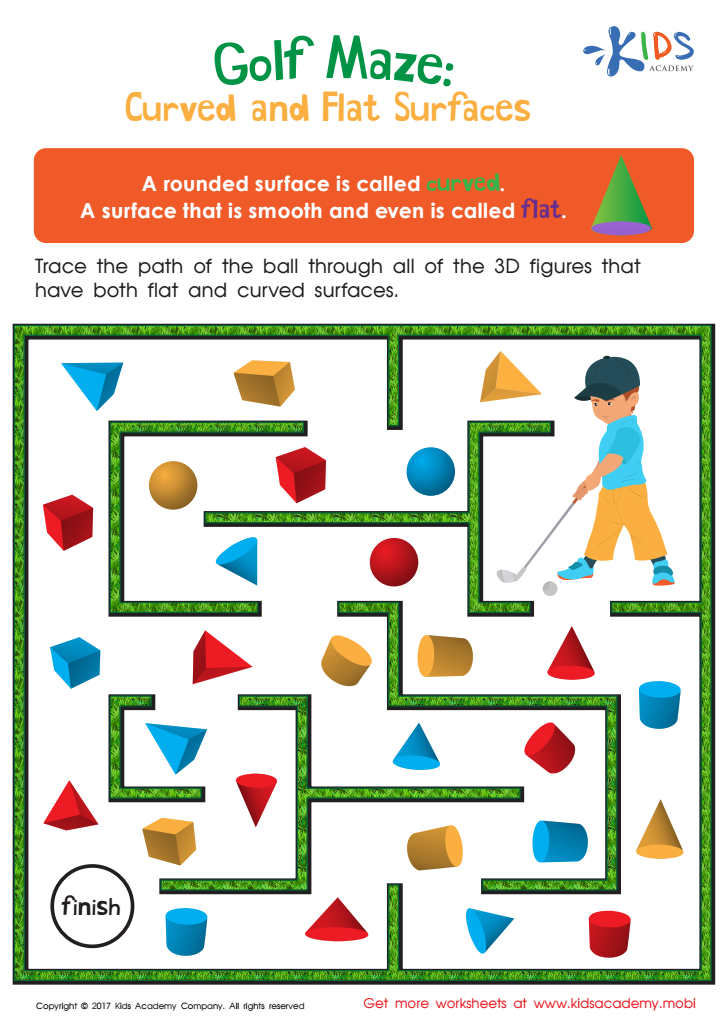
Golf Maze: Curved and Flat Surfaces Worksheet
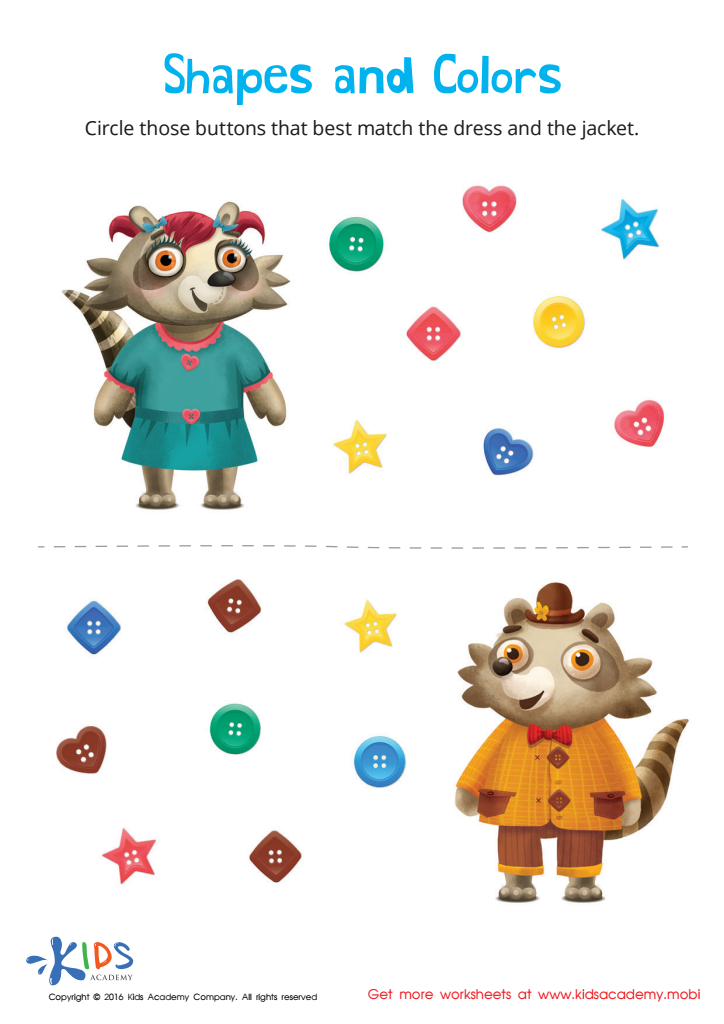
Matching: Shapes and Colors Worksheet
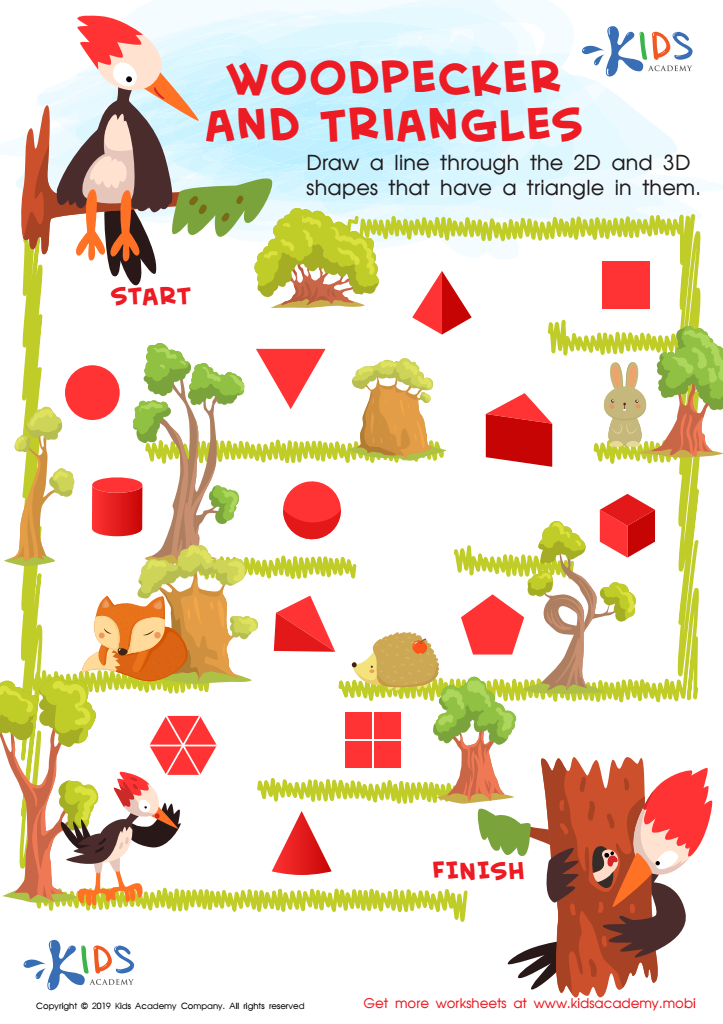
Woodpecker and Triangles Worksheet
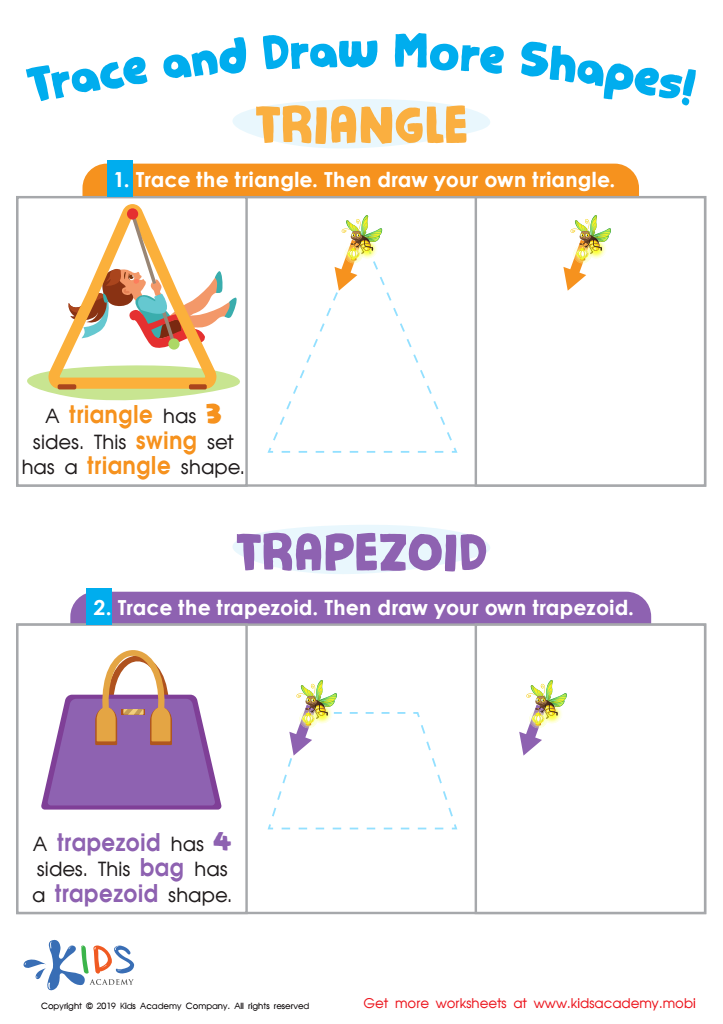
Trace and Draw More Shapes Worksheet
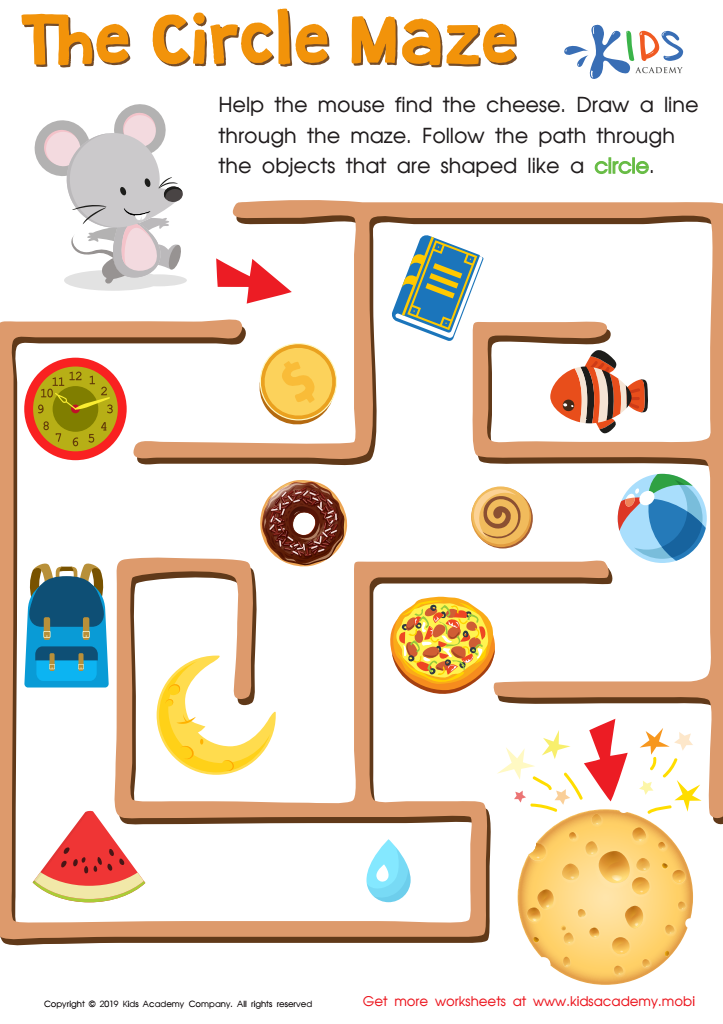
The Circle Maze Worksheet








Fine motor skills are crucial for young children's overall development, impacting their ability to engage in daily tasks, academic activities, and even social interactions. The Fine Motor Skills Extra Challenge Geometry activities for children aged 4-7 are an excellent way to enhance these essential skills while introducing foundational geometric concepts.
Engaging in these activities helps children refine their hand-eye coordination, dexterity, and precision, which are vital for tasks such as writing, drawing, and manipulating objects. By incorporating geometric shapes and concepts into fine motor activities, children also develop spatial awareness and critical thinking skills. Such challenges encourage them to visualize and manipulate shapes in their environment, laying the groundwork for more complex math skills in the future.
Parents and teachers should be proactive in offering these challenges because they not only promote fine motor development but also create opportunities for children to practice problem-solving, creativity, and persistence. In turn, this multifaceted approach fosters a love for learning while equipping children with necessary skills that will support their success in school and beyond. Through engaging geometric activities, children can thrive both academically and developmentally, leading to a well-rounded foundation for future learning.








