Comparing sizes Extra Challenge Math Worksheets for Ages 4-7
5 filtered results
-
From - To
Introducing our "Comparing Sizes Extra Challenge Math Worksheets" designed for ages 4-7! These engaging and educational worksheets help young learners practice essential math skills by comparing and contrasting different sizes. Created by educators, each worksheet offers fun and interactive activities that promote critical thinking and visual perception. Perfect for extra practice at home or in the classroom, these worksheets challenge kids to identify and analyze sizes, enhancing their understanding of measurement concepts. Give your child a head start in math with our expertly crafted Comparing Sizes Extra Challenge Math Worksheets! Suitable for all learning styles and abilities.
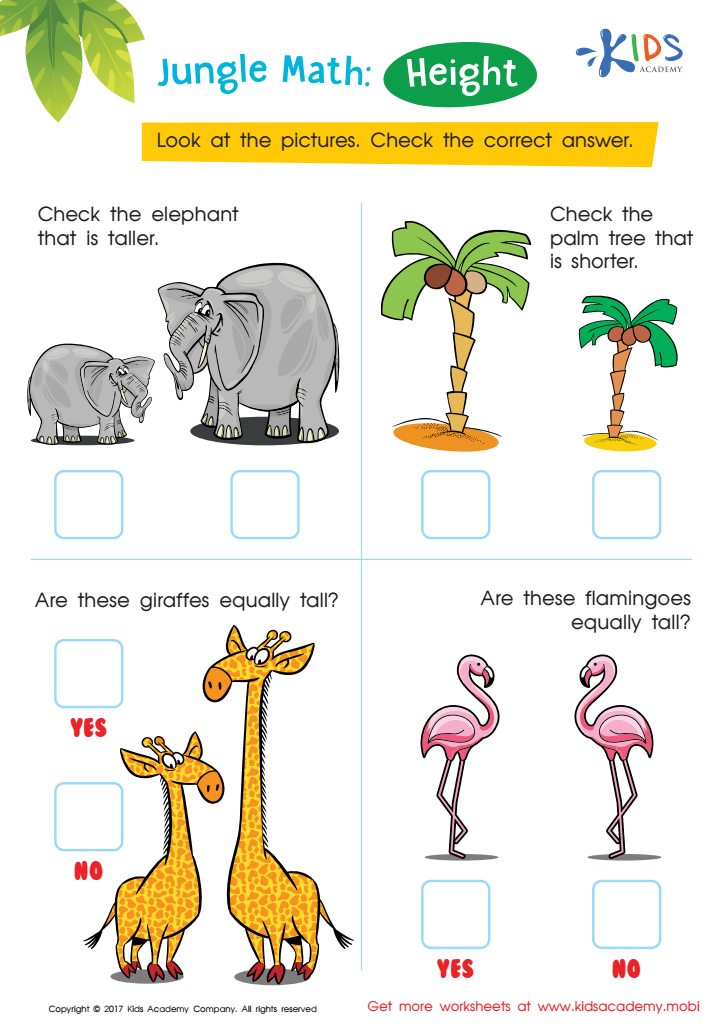
Which Is Taller Worksheet
 Assign to My Students
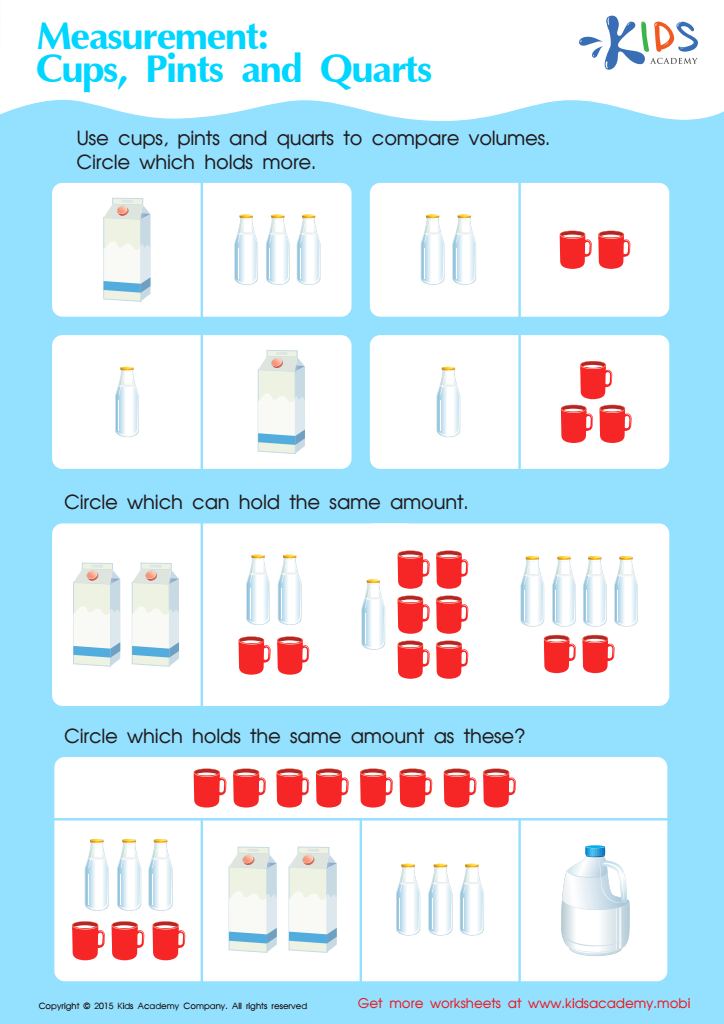
Measurement: Compare Volumes Worksheet
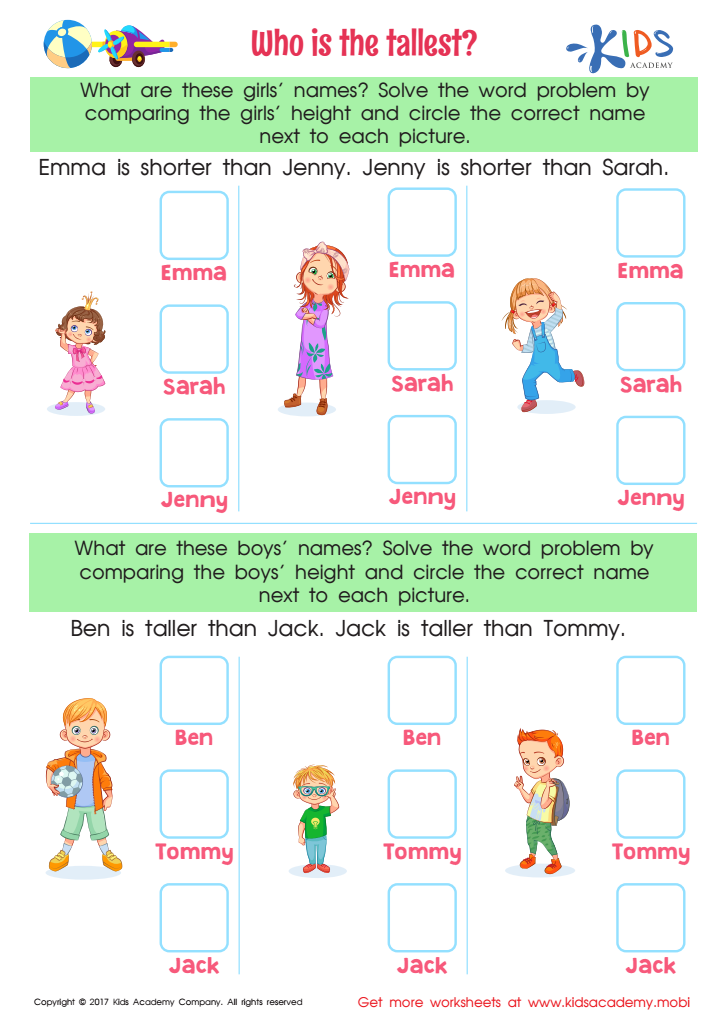
Who Tallest Printable
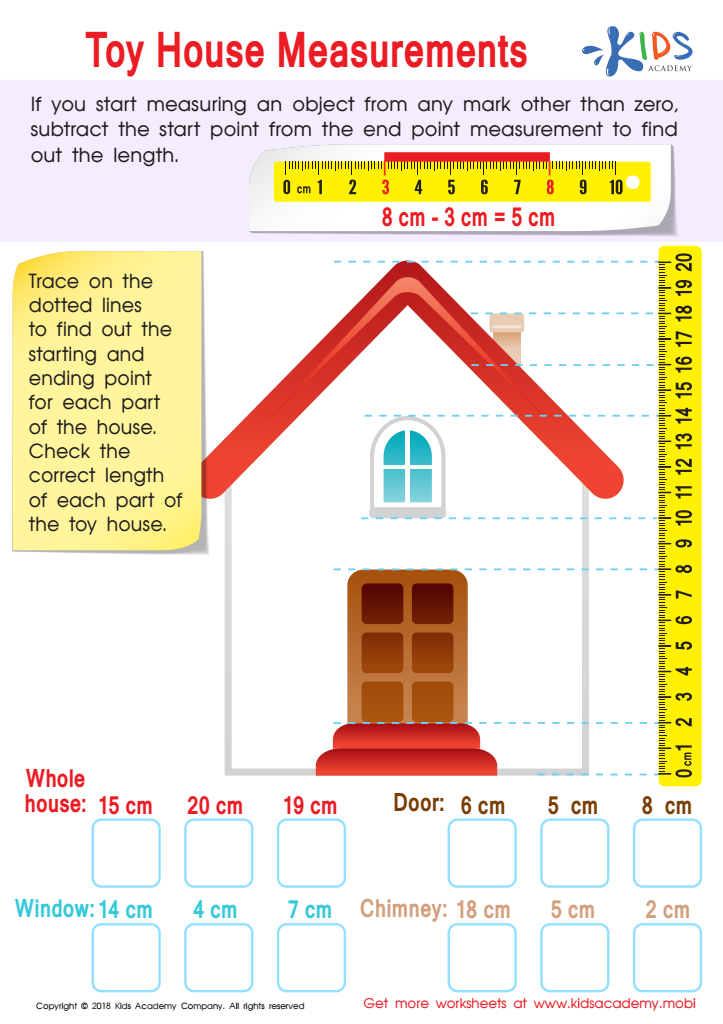
Toy House Measurements Worksheet
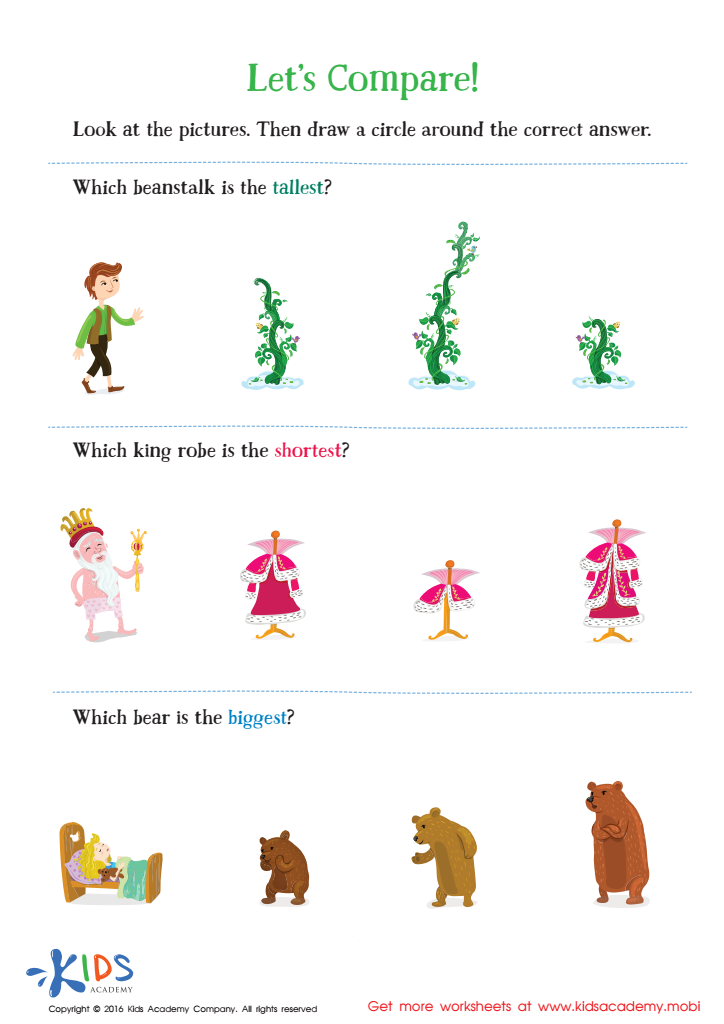
Fairy Tale Worksheet: Let's Compare







Investing time in comparing sizes extra challenges in math for children aged 4-7 holds substantial value for both parents and teachers. During these early years, children’s cognitive abilities develop rapidly, making it an ideal period to introduce foundational math concepts in a way that stimulates curiosity and critical thinking.
Firstly, size comparison activities help children develop essential skills such as measuring, evaluating, and organizing their environment. These are fundamental components of mathematical reasoning and form the basis for more complex problem-solving abilities in the future. Early exposure to these concepts can greatly enhance a child's spatial awareness and visual discernment.
Secondly, these activities improve language development. When children describe sizes, they practice using comparative vocabulary such as bigger, smaller, taller, and shorter. This dual focus on math and language enriches their descriptive abilities and strengthens their overall communication skills.
Additionally, comparing sizes encourages active engagement and hands-on learning. It turns math into a tangible and relatable experience, encouraging children to explore and make sense of the world around them. Utilizing common objects for comparisons makes learning interactive and playful, thus retaining the child’s interest.
Furthermore, these early math challenges can unveil a child’s natural inclination or potential struggles in numeracy, enabling early intervention or further enrichment. By fostering a positive attitude towards math at this formative stage, parents and teachers can lay a robust educational groundwork that gears children up for future academic success.








