Filters

7 filtered results

Clear all filters
Favorites
With answer key
Interactive

7 filtered results

Difficulty Level

Grade


Enhance your child's fine motor skills with our "Extra Challenge Tracing Letters Worksheets for 4-Year-Olds"! Designed to engage young learners, these worksheets not only facilitate letter recognition but also promote hand-eye coordination and dexterity. Each worksheet features fun, age-appropriate designs that encourage children to trace letters, helping to build confidence and proficiency in writing. By integrating playful learning, these activities support cognitive development while keeping your little ones entertained. Perfect for home or classroom use, our worksheets will make learning letters an enjoyable challenge for your preschooler. Unlock your child's potential today with our creative tracing activities!

Check out this FREE Trial Lesson on Tracing Letters for age 4!

Z

Favorites
With answer key
Interactive
  • 4
  • Fine Motor Skills
  • Tracing Letters
  • Extra Challenge
Letter a worksheets
Letter a worksheets

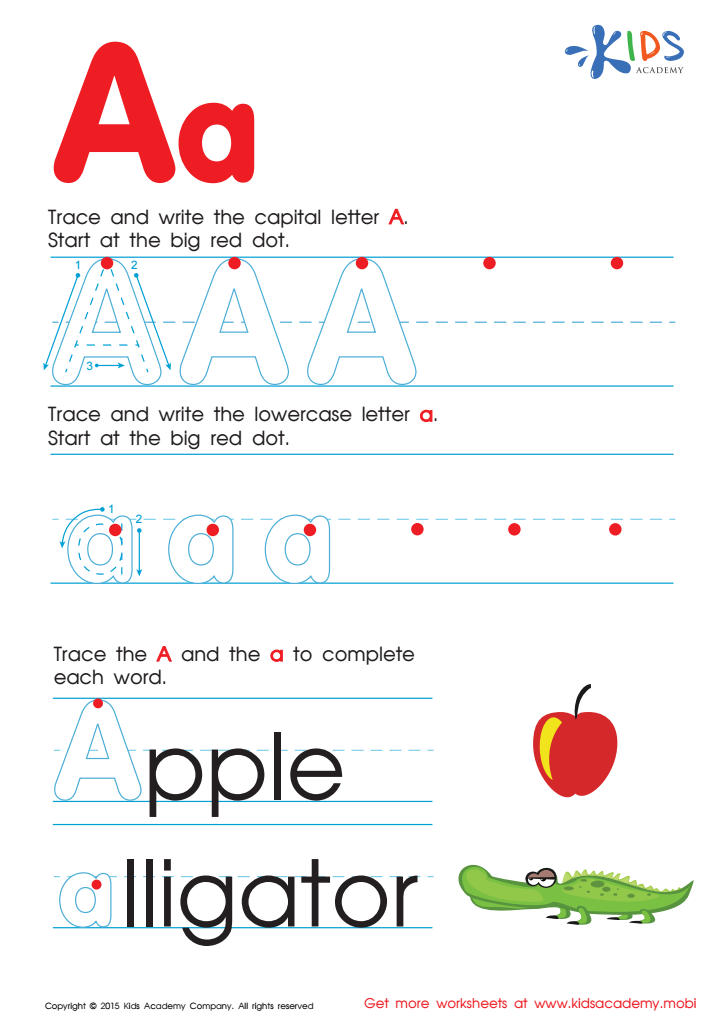
Letter A Tracing Page

Trace and write the letter "A"! Start with the big red dot, then do the capital and lowercase versions. Then write it again with two words - apple and alligator. Download more tracing worksheets at Kids Academy.
Letter A Tracing Page
Worksheet
Letter Z worksheets
Letter Z worksheets

Letter Z Tracing Page

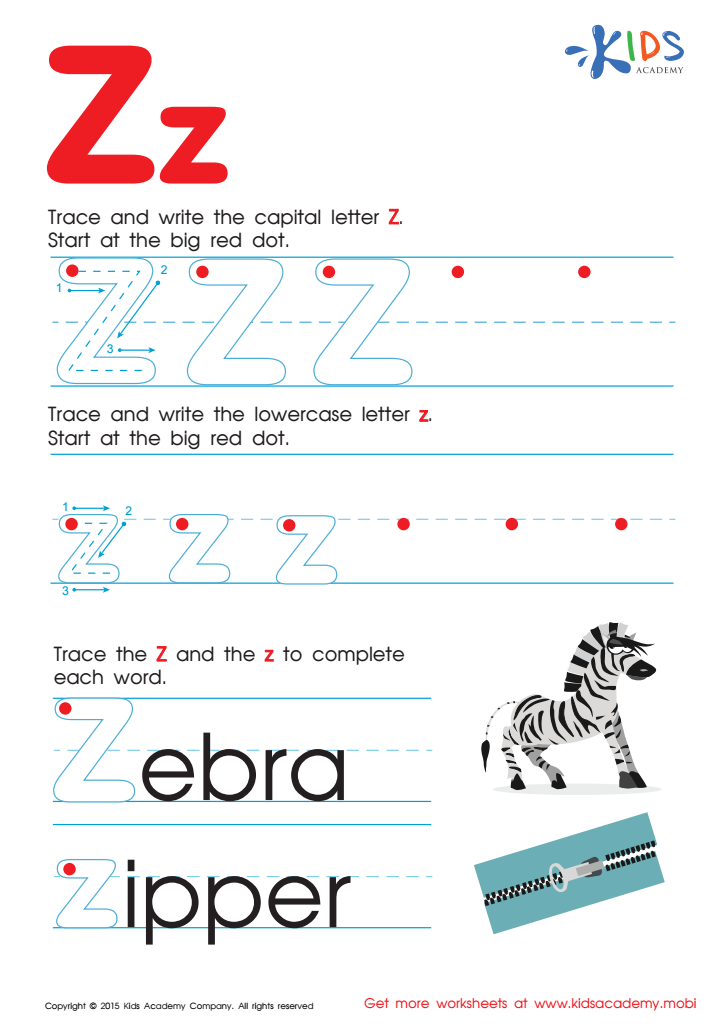
Trace and write capital "Z" and lowercase "z". Complete words "zebra" and "zipper". Be attentive and have fun! (80 words)
Letter Z Tracing Page
Worksheet
Letter R worksheets
Letter R worksheets

Letter R Tracing Page

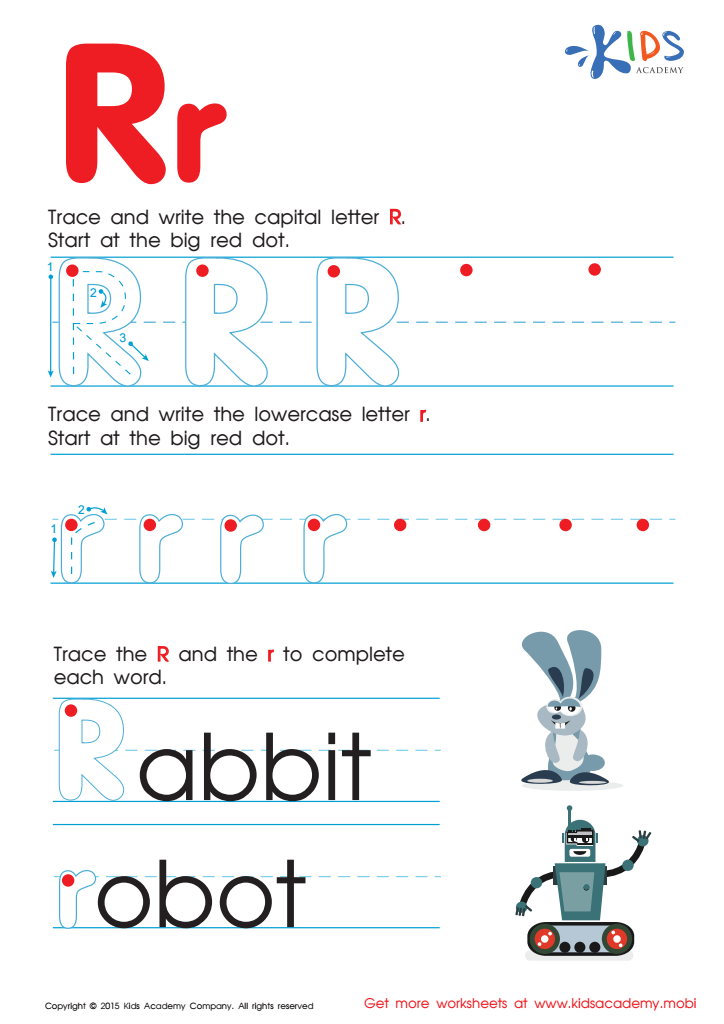
Trace and write the letter "R" with this worksheet for kindergarten. Start with the uppercase, then move on to the lowercase. Write the letters several times for practice. Then help complete the words for the rabbit and robot, spelling carefully. More ABC worksheets can be found at Kids Academy.
Letter R Tracing Page
Worksheet
Letter X worksheets
Letter X worksheets

Letter X Tracing Page

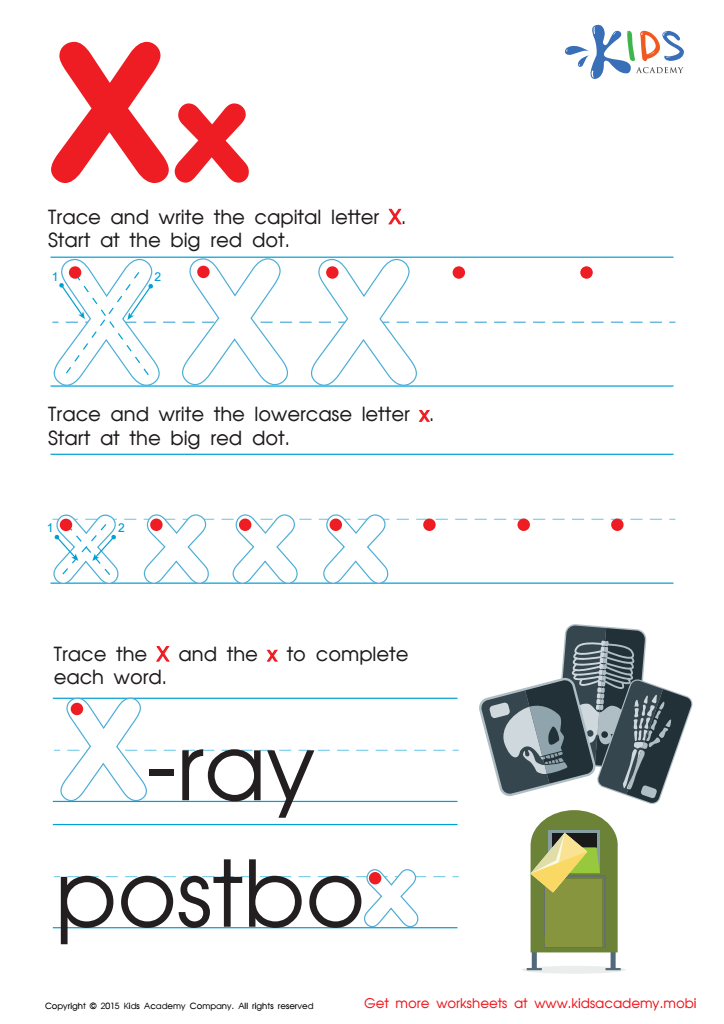
Trace the uppercase letter "X" to learn, then write it yourself and practice. Then do the same with the lowercase "x" before completing the words "X-ray" and "postbox". Enjoy our alphabet printables!
Letter X Tracing Page
Worksheet
Letter U worksheets
Letter U worksheets

Letter U Tracing Page

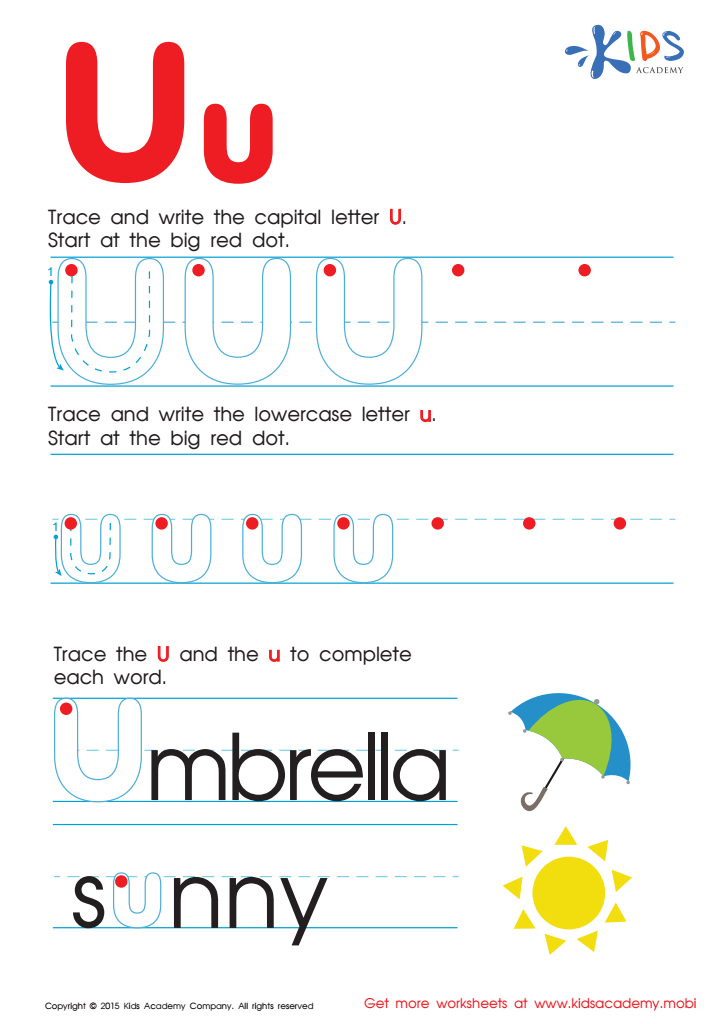
Ready to trace and write the letter "U"? Use our worksheet and practice tracing both uppercase and lowercase letters. Complete the words "umbrella" and "sunny" with a capital "U". Check our full collection of alphabet printables for more activities.
Letter U Tracing Page
Worksheet
Letter V worksheets
Letter V worksheets

Letter V Tracing Page

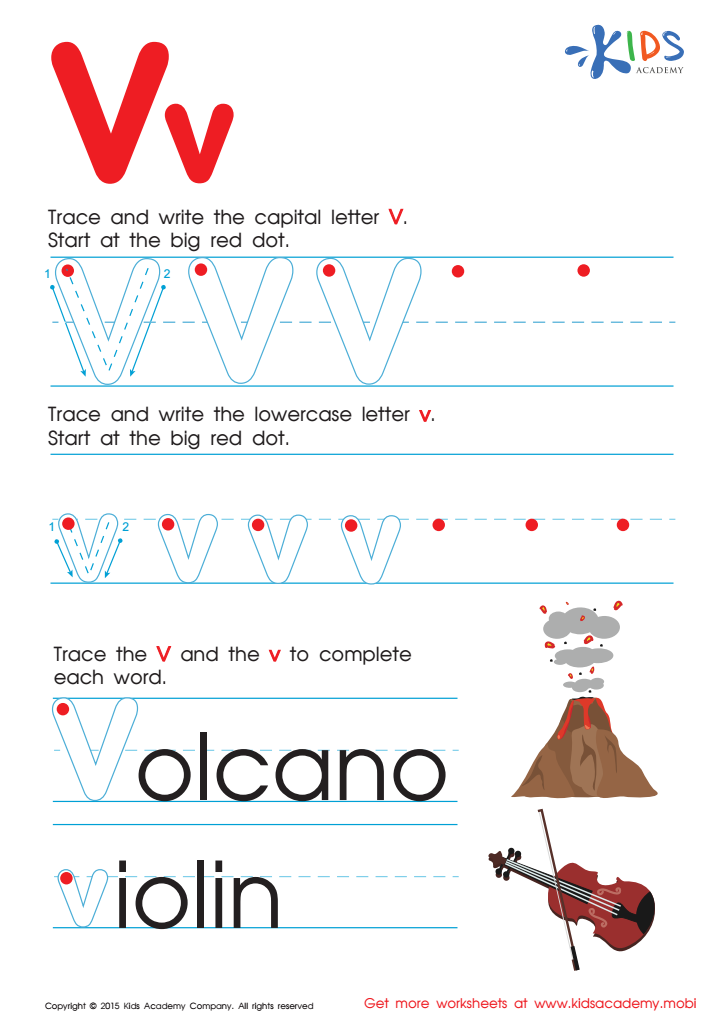
Trace the uppercase and lowercase letter "V" with our kindergarten tracing worksheet. Begin at the red dot and follow the lines. Write it several times. Complete the words "Volcano" and "violin". Get more alphabet activities at Kids Academy.
Letter V Tracing Page
Worksheet
Letter T worksheets
Letter T worksheets

Letter T Tracing Page

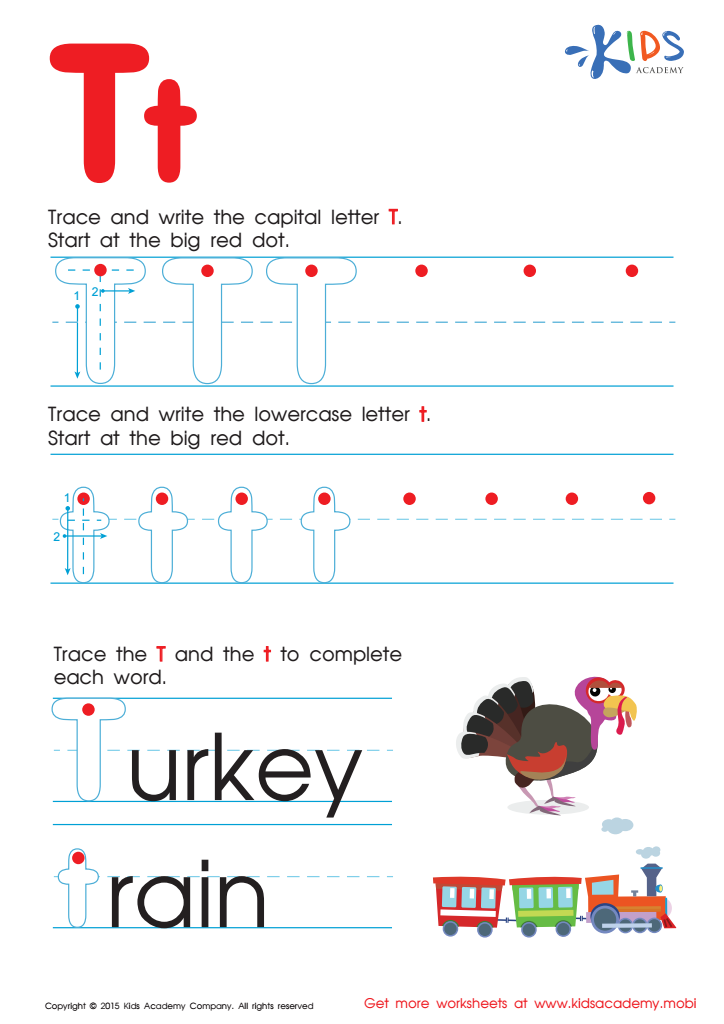
Trace letters, complete words, draw pictures and see your kids having fun! Kids Academy offers alphabet tracing worksheets to learn to write letters. Start with the big red dot, trace the letter, then write it. Practice uppercase and lowercase. Have fun completing words with a Turkey or a rain-train and draw pictures. Get more printable worksheets to make learning enjoyable.
Letter T Tracing Page
Worksheet


Fine motor skills are fundamental for a child's development, especially during preschool years. The activity of tracing letters provides an excellent extra challenge for 4-year-olds. It not only aids in letter recognition and writing readiness but also enhances coordination and control of small muscles in the hands and fingers. These skills are crucial for tasks like holding a pencil, zipping a jacket, or using scissors, which children will encounter in their everyday tasks and schooling.

Additionally, tracing offers a fun, engaging way for children to practice and build muscle memory. As they trace, they develop spatial awareness and improve their concentration, essential elements in learning. This activity also fosters independence and a sense of achievement as children see their progress over time.

For parents and teachers, prioritizing fine motor skills through tracing activities ensures children are prepared for the physical demands of later academic skills. Moreover, it promotes creativity and encourages a positive attitude towards learning. By integrating fun challenges like tracing letters into a child's routine, parents and educators can significantly contribute to holistic development, setting the foundation for a successful learning journey ahead.