Handwriting Skills Extra Challenge English for Beginners Worksheets for 4-Year-Olds
3 filtered results
-
From - To
Enhance your child's early education with our "Handwriting Skills Extra Challenge English for Beginners Worksheets for 4-Year-Olds." These printable worksheets are designed to make learning fun and engaging, helping young learners develop fine motor skills and fluency in English. Each carefully crafted worksheet offers exciting activities that balance fun and challenge, keeping kids motivated as they practice letter formation, word tracing, and basic sentence writing. Perfect for preschoolers and early learners, these worksheets support critical handwriting and language skills foundation, setting your child on the path to academic success. Explore today and watch their confidence and abilities grow!
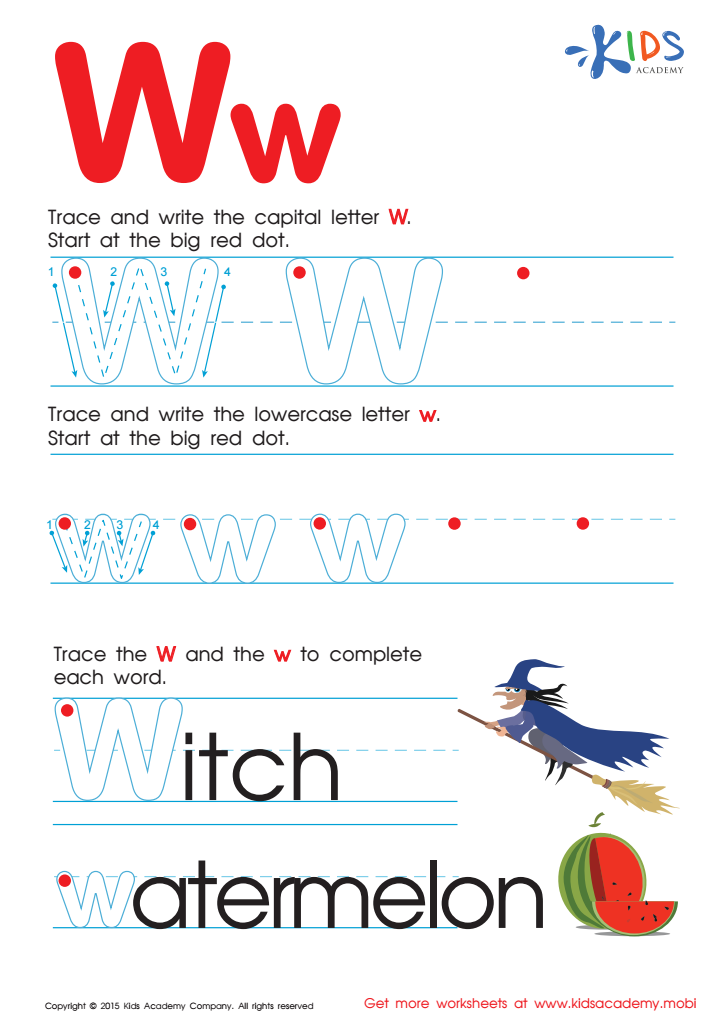
Letter W Tracing Page
 Assign to My Students
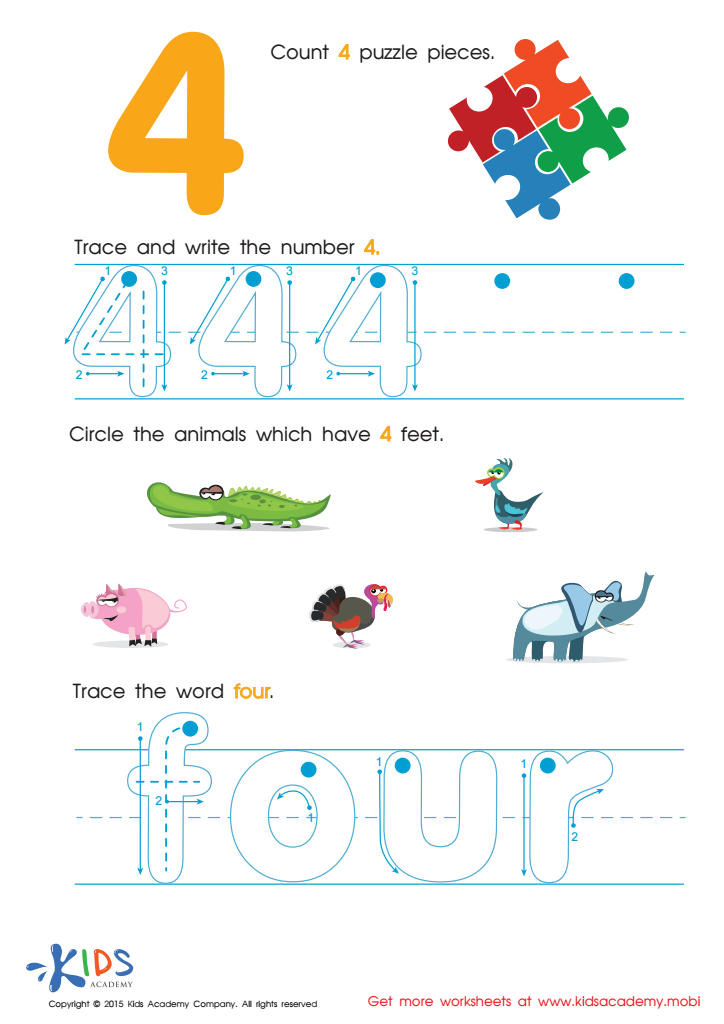
Teaching Children to Write Number 4 Worksheet
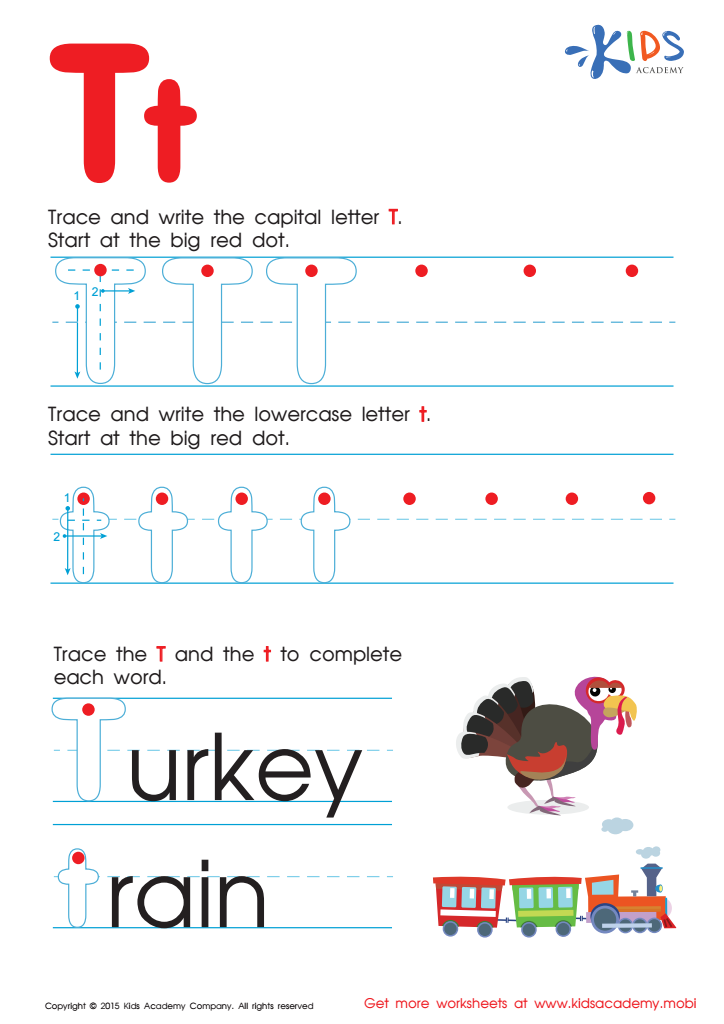
Letter T Tracing Page





Parents and teachers should care about "Handwriting Skills Extra Challenge English for Beginners for 4-Year-Olds" because developing fine motor skills and foundational literacy abilities at an early age sets the stage for a child's future academic success. Handwriting is not just about forming letters; it is crucial for cognitive development, strengthening the neural pathways between the hand and the brain, which enhances memory and learning.
At four years old, children are in a critical developmental stage where introducing them to basic handwriting challenges can foster essential skills such as pencil grip, hand-eye coordination, and spatial awareness. These exercises help them become familiar with the structure of letters and improve muscle memory, making the transition to actual writing tasks smooth and less frustrating.
Moreover, early proficiency in handwriting promotes confidence and a sense of achievement, which can foster a positive attitude towards learning in general. With increased exposure to English language basics through handwriting practice, children are better prepared for reading and writing as they progress through school. Ensuring children develop strong handwriting skills early on is a vital component of their education, benefiting their overall communication abilities and setting a solid foundation for their academic journey.
In conclusion, by prioritizing handwriting skills at a young age, parents and teachers are investing in their children's future learning experiences and providing them with tools necessary for effective communication.








