Time reading skills Extra Challenge Worksheets for 4-Year-Olds
3 filtered results
-
From - To
Enhance your child's understanding of time with our "Time Reading Skills Extra Challenge Worksheets for 4-Year-Olds." These engaging worksheets are designed to build foundational time-telling abilities through fun activities and interactive exercises. Perfect for young learners, they combine visuals and practice to help children recognize clocks, understand hours and half-hours, and grasp the basic concepts of time. Ideal for home or classroom use, these worksheets encourage independent learning while reinforcing crucial cognitive skills. Give your preschoolers the confidence to read time effectively while enjoying the process with these creative and age-appropriate challenges tailored specifically for their developmental stage.
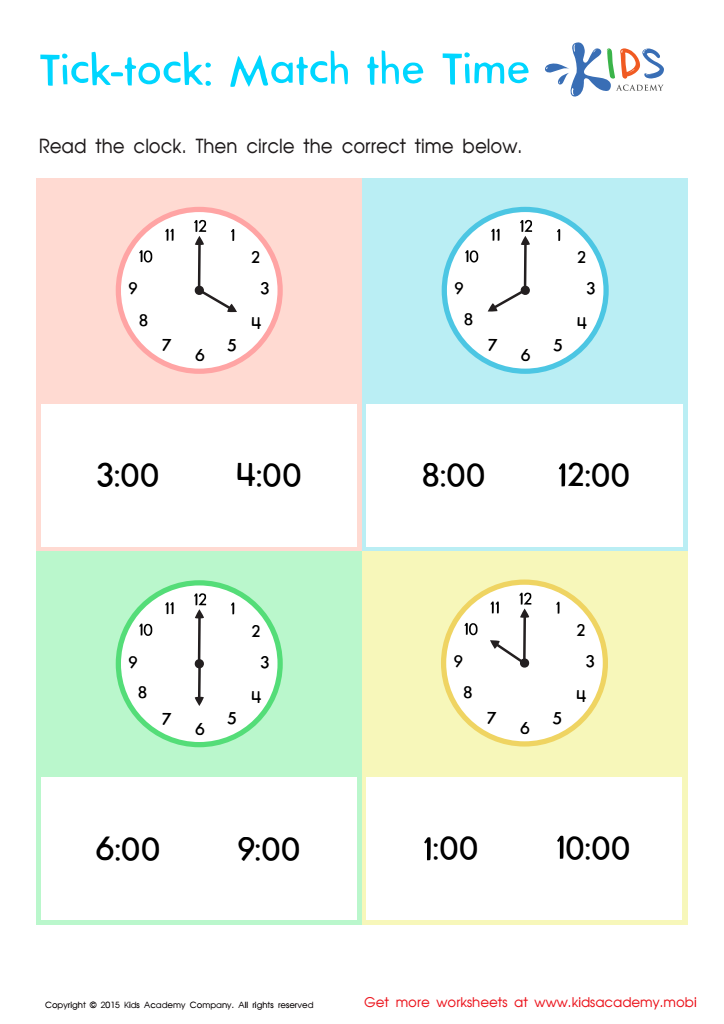
Telling The Time Worksheet: Part 4
 Assign to My Students
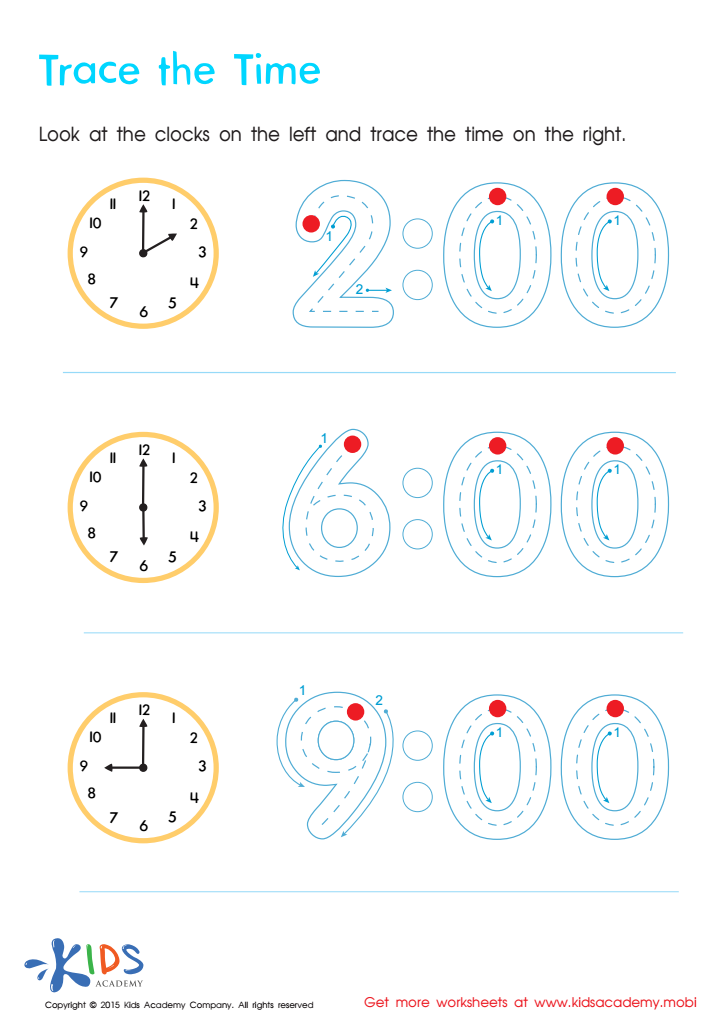
Telling The Time Worksheet: Part 2
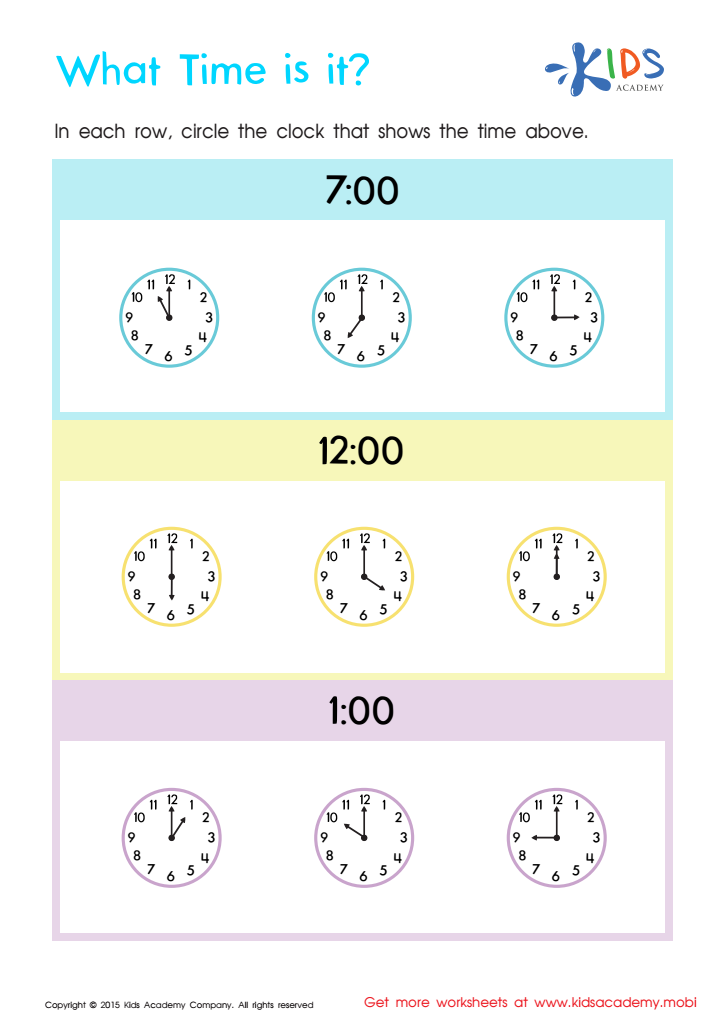
Telling The Time Worksheet: Part 3








Parents and teachers should prioritize developing time reading skills in 4-year-olds because foundational skills in telling time are crucial for children's cognitive development and everyday functioning. Mastering time concepts enhances a child's understanding of numbers, sequencing, and spatial awareness, laying the groundwork for more complex mathematical concepts in the future.
Furthermore, recognizing time fosters independence and responsibility, enabling children to manage their routines effectively. As they learn to tell time, children also develop critical thinking skills as they begin to associate time with events, such as meal times or bedtime. This helps with planning and learning the concept of duration, a skill they will use throughout life.
Incorporating time learning into everyday activities provides a practical context that engages young learners and makes abstract concepts more tangible. Playful experiences involving clocks and timing challenges can create a keen interest in numeracy while improving fine motor skills through hands-on activities.
Ultimately, caring about developing time reading skills in young learners supports not only their academic journey but also contributes to a greater sense of time management in a fast-paced world, positioning them for lifelong success.








