Understanding measurements Extra Challenge Math Worksheets for 4-Year-Olds
4 filtered results
-
From - To
Unlock a world of learning with our "Understanding Measurements Extra Challenge Math Worksheets for 4-Year-Olds!" Designed to build early math skills, these engaging activities introduce young learners to key measurement concepts in a fun and interactive way. From comparing lengths and weights to recognizing shapes and sizes, our worksheets help develop critical thinking and problem-solving abilities. Perfect for parents and teachers, each printable sheet offers creative challenges that encourage kids to explore and enjoy the world of measurements. Give your child a head start in math today with our expertly crafted resources!
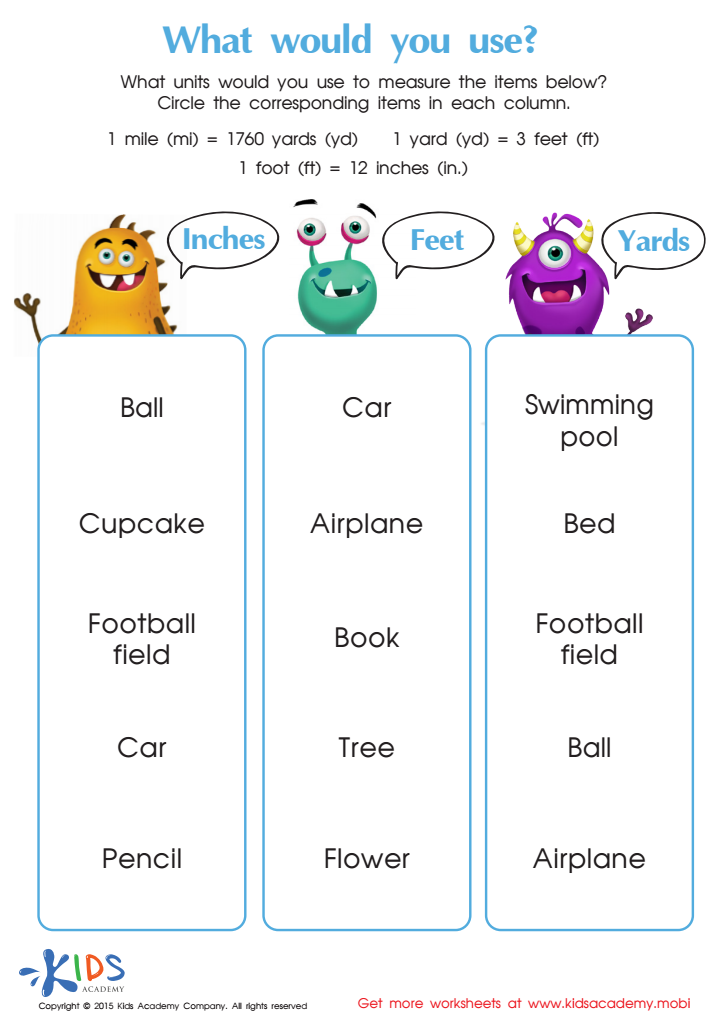
Learning about measuring objects in inches, feet and yards Worksheet
 Assign to My Students
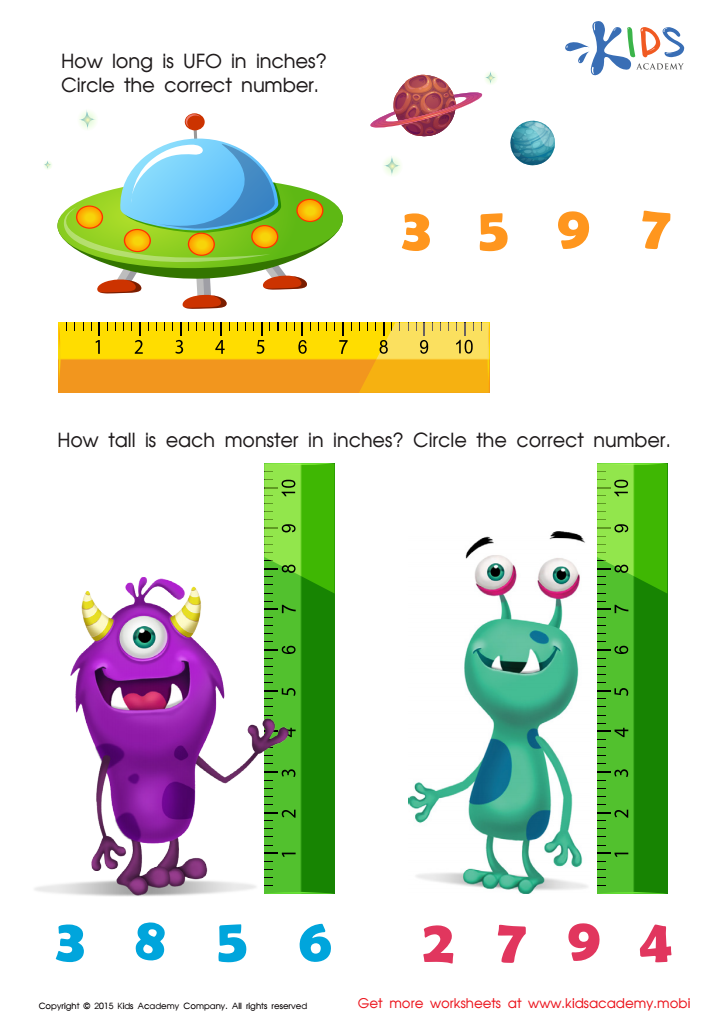
Measuring in Inches Worksheet
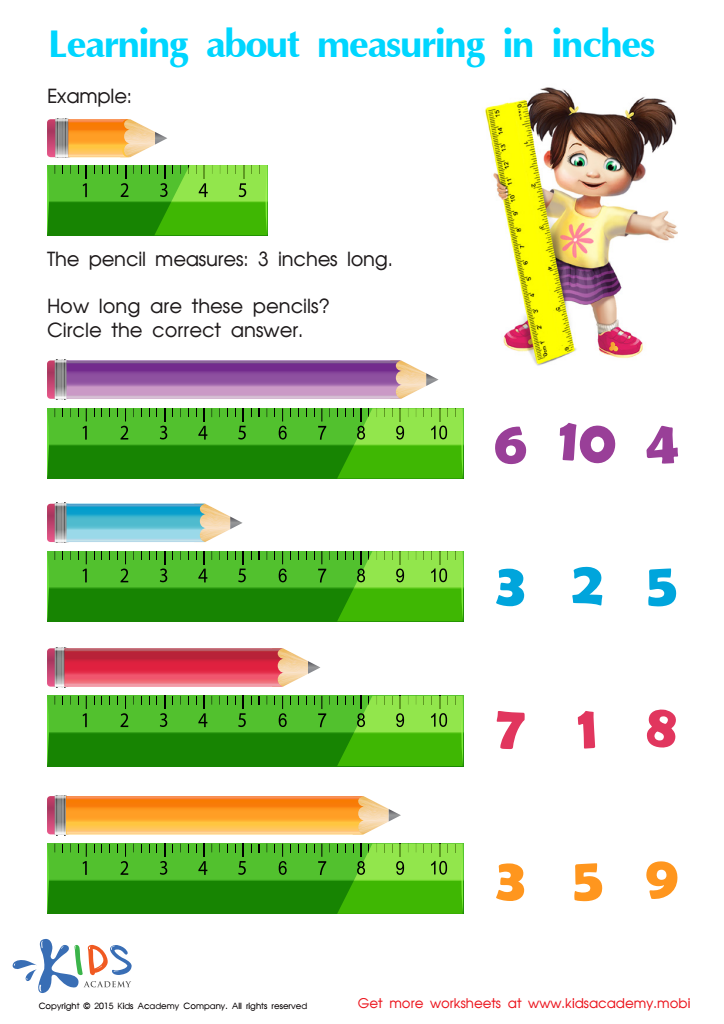
Learning About Measuring In Inches Printable
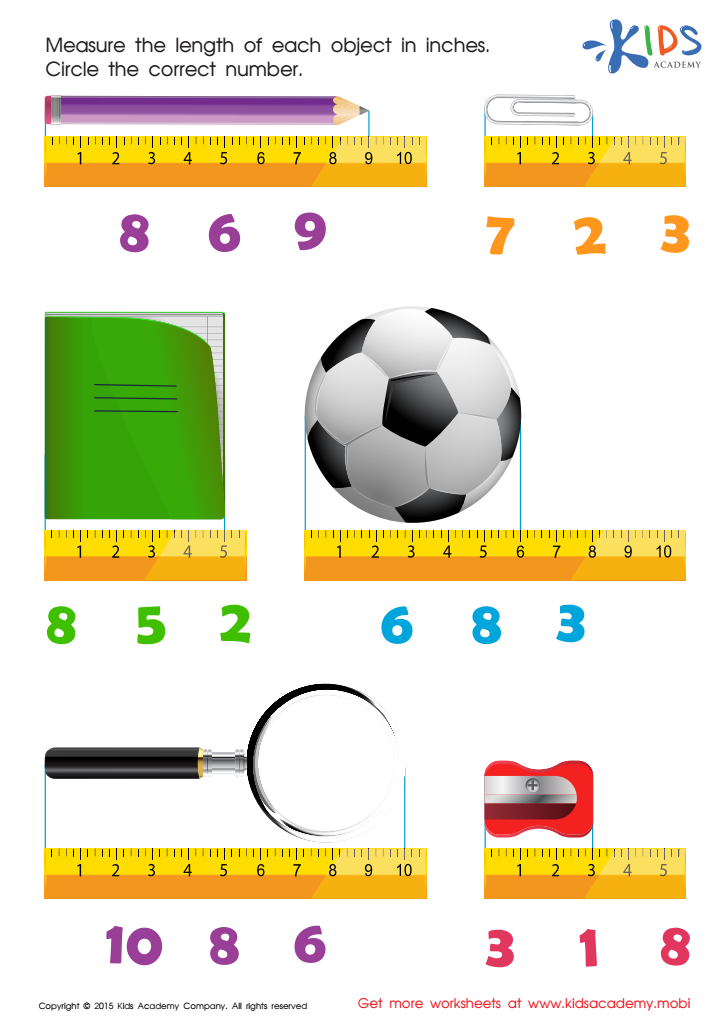
Learning measuring objects in inches Worksheet








Understanding measurements in the context of early childhood education, particularly through activities labeled as "Extra Challenge Math," holds significant value for both parents and teachers working with 4-year-olds. Measurements, a fundamental aspect of mathematics, introduce young learners to concepts of size, length, volume, and weight, fostering a foundational understanding of the world around them.
Early exposure to measurement-related challenges does more than just keep children engaged; it actively promotes their cognitive development. When children explore measurement through practical activities—such as comparing the lengths of different objects, filling various containers with water or sand, or weighing items with a simple balance—they develop critical thinking and problem-solving skills. These experiences enhance their ability to analyze and interpret information, skills essential for success in all areas of learning.
Additionally, engaging 4-year-olds in these "extra challenge" tasks helps cultivate a positive attitude toward math from an early age. When children see math as a set of intriguing problems rather than daunting tasks, their confidence and interest in the subject grow. This early positive association can lead to higher achievement in math and other STEM fields later in life.
Involving both parents and teachers in these activities creates a supportive learning environment that bridges home and school, showing children that education is a collaborative and enjoyable journey. This supportive network is crucial for nurturing well-rounded, curious, and motivated learners.








