
Vocabulary Building Extra Challenge Math Worksheets for 4-Year-Olds
4 filtered results
Difficulty Level
Grade
Age
-
From - To
Subject
Activity
Standards
Explore our engaging "Vocabulary Building Extra Challenge Math Worksheets for 4-Year-Olds"! Designed to enhance young minds, these interactive worksheets merge math concepts with vocabulary development. Each worksheet features fun and colorful visuals, making learning enjoyable and exciting. Children will boost their language skills while practicing essential math concepts, such as counting, shapes, and basic math operations. Ideal for pre-schoolers, these challenges promote critical thinking and comprehension through playful activities. Whether at home or in the classroom, these worksheets give kids the confidence to tackle vocabulary and math tasks alike. Download now to inspire joy in learning today!
Favorites
With answer key
Interactive
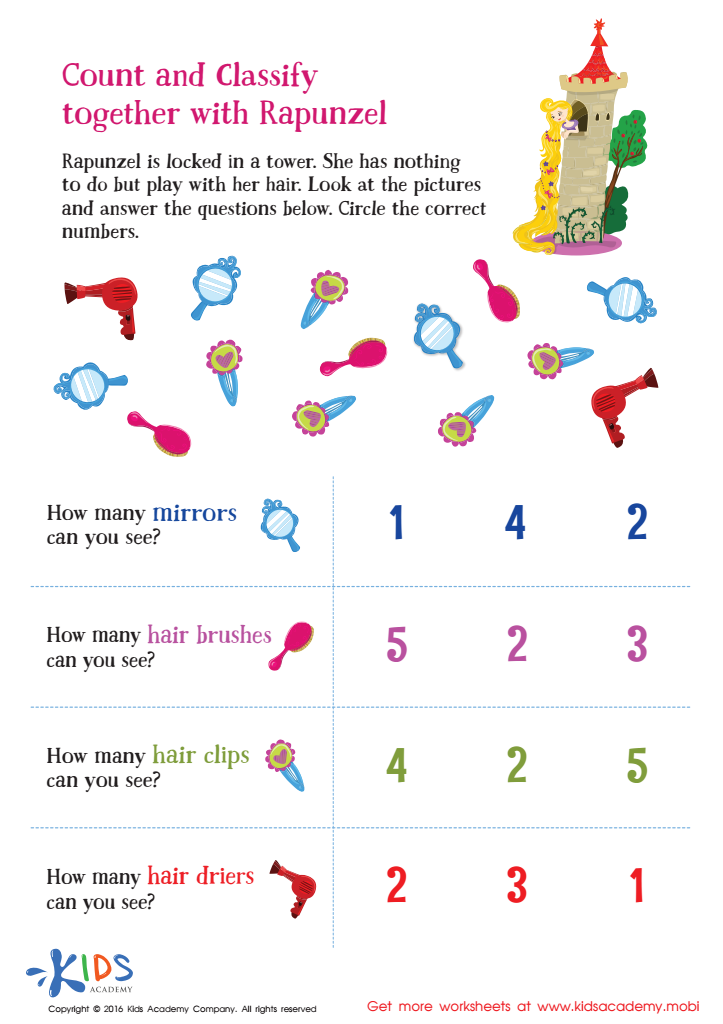
Fairy Tale Worksheet: Count and Classify with Rapunzel
Get printing and shine a light on your pre-math skills!
 Assign to My Students
Fairy Tale Worksheet: Count and Classify with Rapunzel
Worksheet
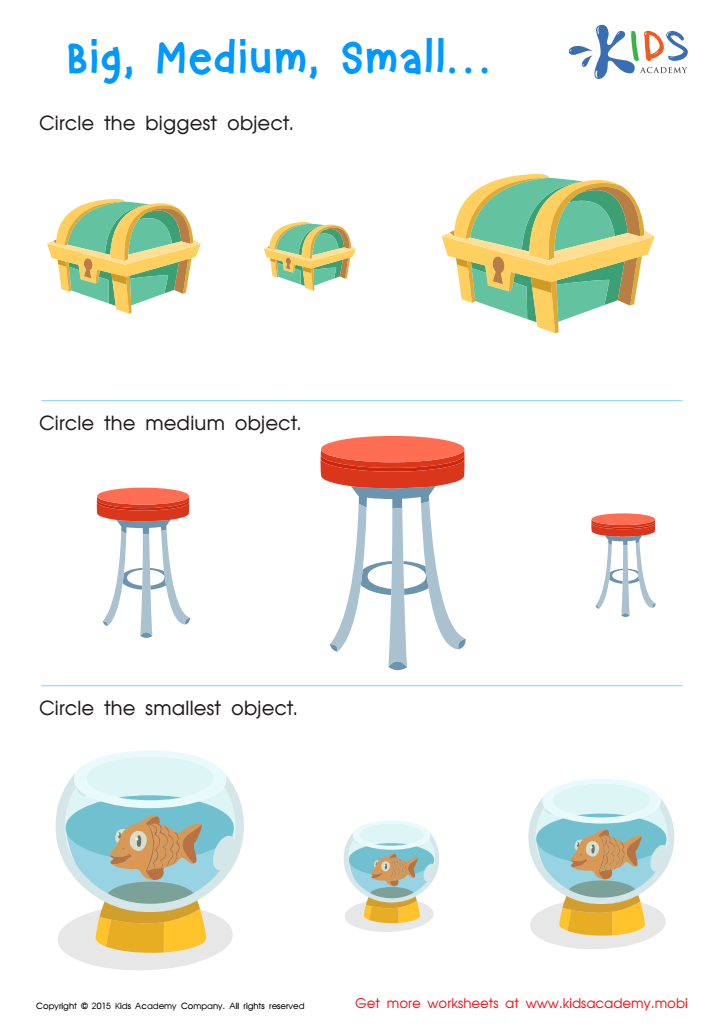
Big Medium Small Worksheet
Kids practice size words as they spot big, medium, and small objects. It's an entertaining way to help children describe the world around them.
Big Medium Small Worksheet
Worksheet
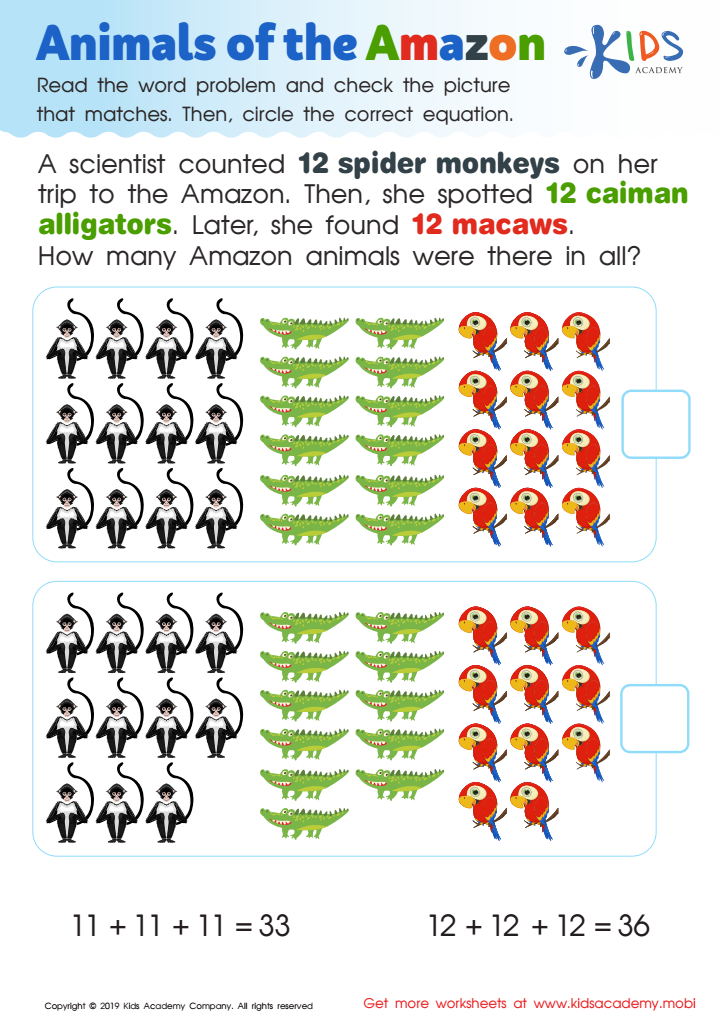
Animals of Amazon Worksheet
Kids will love exploring the Amazon while solving addition problems on this colorful PDF worksheet. They need to pay attention to the bolded info in each word problem to figure out the equation picture that matches. It's an exciting way to learn about the Amazon and practice adding multiple numbers!
Animals of Amazon Worksheet
Worksheet
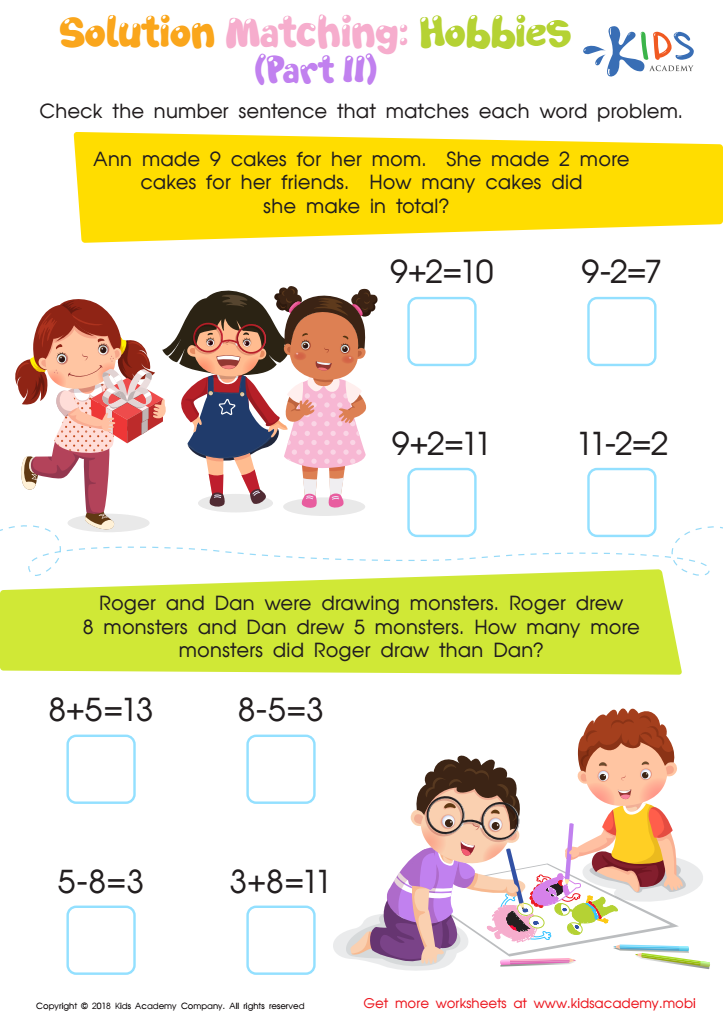
Solution Matching: Hobbies. Part 2 Worksheet
This fun printable worksheet has word problems featuring hobbies your children enjoy! With your child, read through each problem, understanding the numbers and key phrases indicating addition or subtraction. Then, match the correct equation with the solution by checking the box. Math problems are more enjoyable to solve when they’re realistic and engaging!
Solution Matching: Hobbies. Part 2 Worksheet
Worksheet
Join Kids Academy for Free
Who is primarily going to use this learning content?








Vocabulary Building Extra Challenge Math for 4-Year-Olds is essential for early childhood development as it lays a foundational framework for both language and mathematical skills. At this age, children are like sponges; they absorb and process information rapidly. By introducing math concepts alongside vocabulary enhancement, parents and teachers help children develop critical thinking and problem-solving skills that are vital throughout their educational journey.
This program encourages the integration of language and math, fostering a comprehensive understanding of both subjects. A robust vocabulary enables children to better express mathematical ideas, improving their ability to engage in discussions about numbers, shapes, and patterns. Furthermore, rich language exposure enhances comprehension, allowing children to grasp complex concepts more easily.
Incorporating vocabulary building in math activities also promotes a love for learning. Interactive and engaging challenges keep the young learners motivated and excited about new discoveries. It sets a positive tone for education, establishing a lifelong thirst for knowledge.
Ultimately, investing in Vocabulary Building Extra Challenge Math provides children with tools not only for academic success but for effective communication and social interactions, preparing them to thrive in various contexts as they grow. Thus, both parents and teachers should prioritize this critical aspect of early learning.








