Time reading skills Extra Challenge Time Worksheets for 4-Year-Olds
3 filtered results
Difficulty Level
Grade
Age
-
From - To
Subject
Activity
Standards
Enhance your child's time-reading abilities with our Extra Challenge Time Worksheets, specially designed for 4-year-olds. These engaging worksheets provide fun and educational activities to help little learners master the concepts of time-telling. Through interactive exercises, children will develop a better understanding of clocks, learn to identify hours and half-hours, and improve their overall number recognition. Our worksheets promote critical thinking and problem-solving skills while making learning enjoyable. Perfect for parents and educators alike, these resources will ensure your child is well-equipped with essential time-reading skills that lay the groundwork for future learning. Start the adventure in time education today!
Favorites
With answer key
Interactive
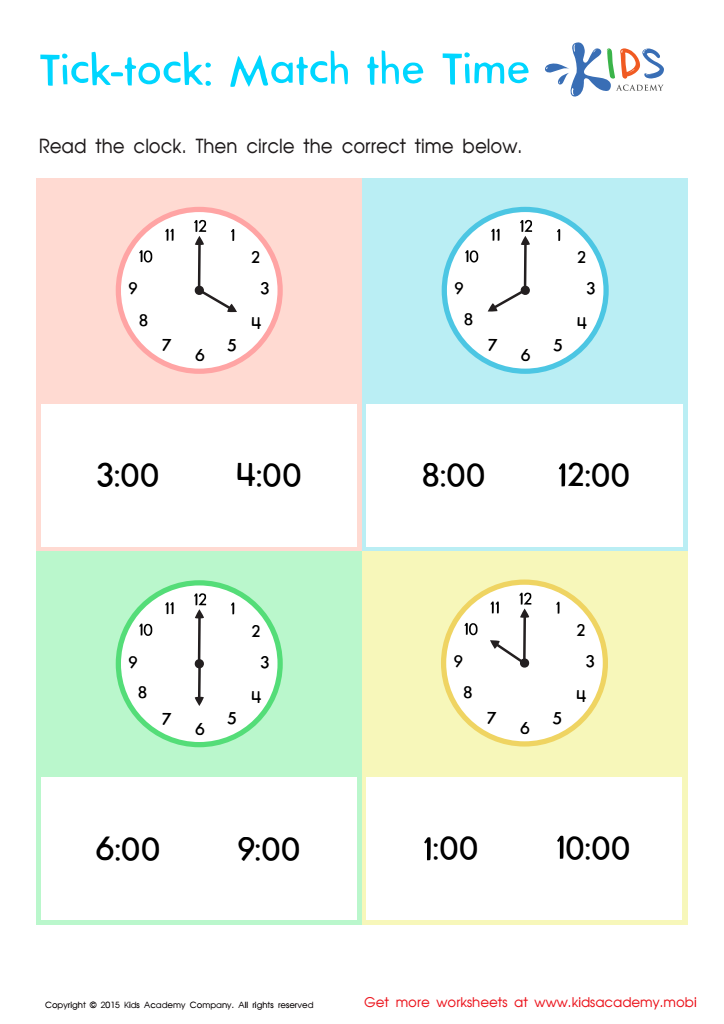
Telling The Time Worksheet: Part 4
Test your skills in telling the time! Circle the right time on 4 analog clock faces.
 Assign to My Students
Telling The Time Worksheet: Part 4
Worksheet
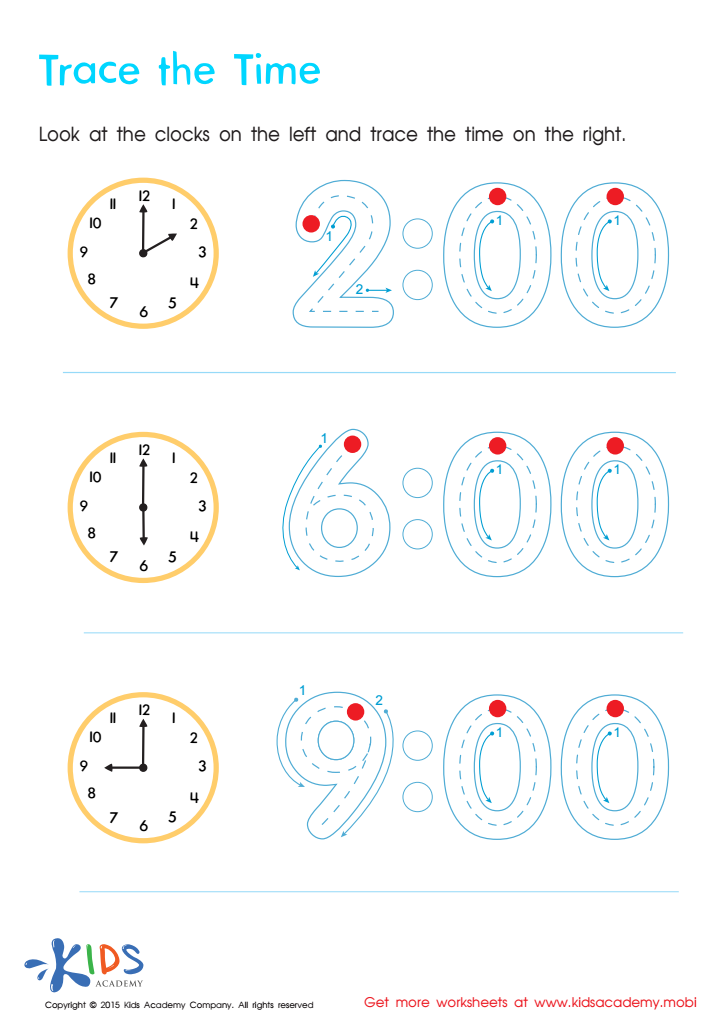
Telling The Time Worksheet: Part 2
Help your kids learn to tell the time with this free math worksheet from Kids Academy. Have them look at the clock faces and trace the time on the right - is it a full hour or half an hour? Get more practice with our wide selection of math worksheets for kindergarten.
Telling The Time Worksheet: Part 2
Worksheet
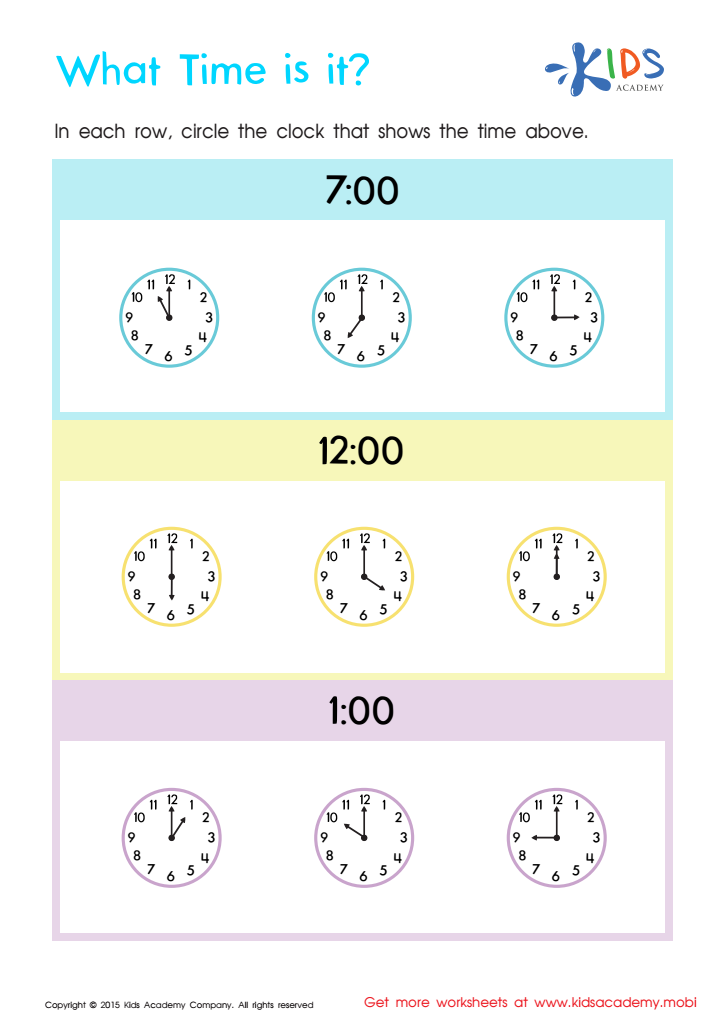
Telling The Time Worksheet: Part 3
Make learning to read clocks fun with our free printable worksheets! Have kids circle the clocks that show the time, remembering that the short hand is for hours and the long one is for minutes. For more worksheets, visit Kids Academy and explore the wonderful world of math with your little learners.
Telling The Time Worksheet: Part 3
Worksheet
Join Kids Academy for Free
Who is primarily going to use this learning content?








Developing reading skills in young children, particularly through initiatives like "Extra Challenge Time," is crucial for several reasons. First, this stage sets the foundation for future academic success. At the age of four, children's brains are remarkably receptive; detailing advanced vocabulary, phonemic awareness, and comprehension skills nurtures a love for reading that can last a lifetime.
Additionally, enhanced reading abilities contribute to better communication skills and social interactions, aiding in emotional and cognitive development. Careful time allocated to reading can cultivate critical thinking, as children learn to interpret stories and engage with content in meaningful ways.
Furthermore, involvement in reading activities fosters stronger connections between parents or teachers and children, promoting a shared experience that nurtures curiosity. This interactive environment generates a positive attitude towards learning, making education enjoyable rather than a chore.
Finally, investing time in these skills early on can help identify any learning challenges, allowing families and educators to address them proactively. Integrating reading activities and challenges specifically tailored for four-year-olds can arm them with invaluable tools for lifelong learning and development. Therefore, promoting reading at this critical stage should be a top priority for parents and teachers alike.