Understanding plurals Extra Challenge Writing Worksheets for 4-Year-Olds
3 filtered results
-
From - To
Boost your child's language skills with our "Understanding Plurals Extra Challenge Writing Worksheets for 4-Year-Olds" from Kids Academy. These engaging, kid-friendly worksheets are designed to introduce young learners to the concept of plurals. The activities encourage children to differentiate between singular and plural forms and practice writing them correctly. Perfect for at-home learning or supplemental classroom practice, these worksheets turn learning into an enjoyable journey. The colorful, interactive tasks captivate little ones, while fostering essential early writing and reading skills. Set your preschooler on the path to linguistic success with our expertly crafted resources.
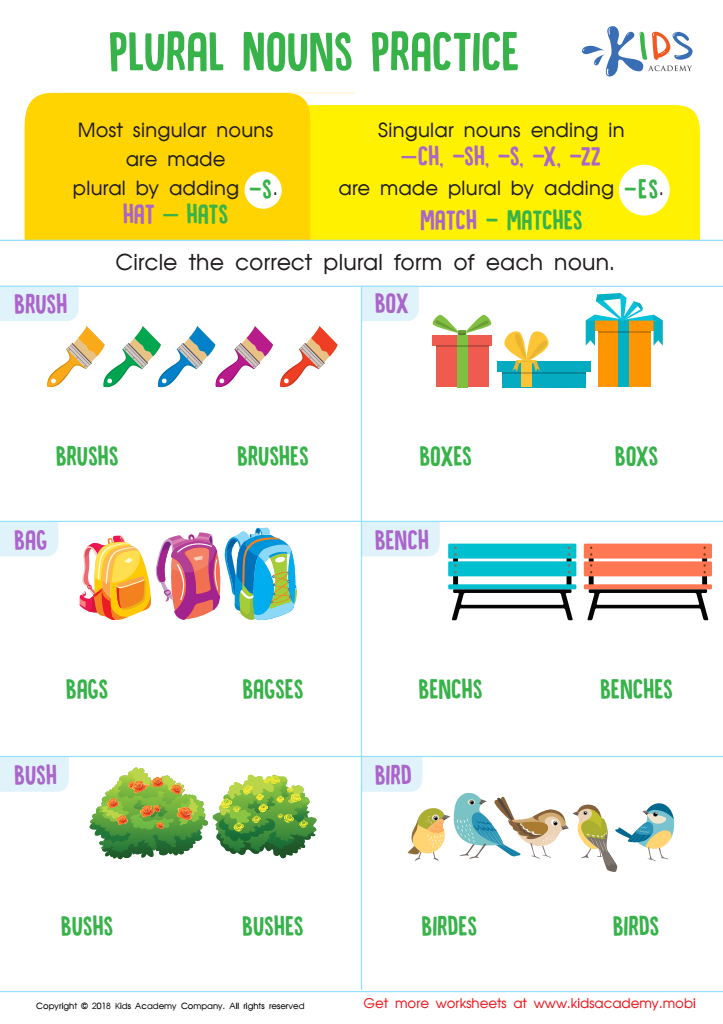
Plural Nouns Practice Worksheet
 Assign to My Students
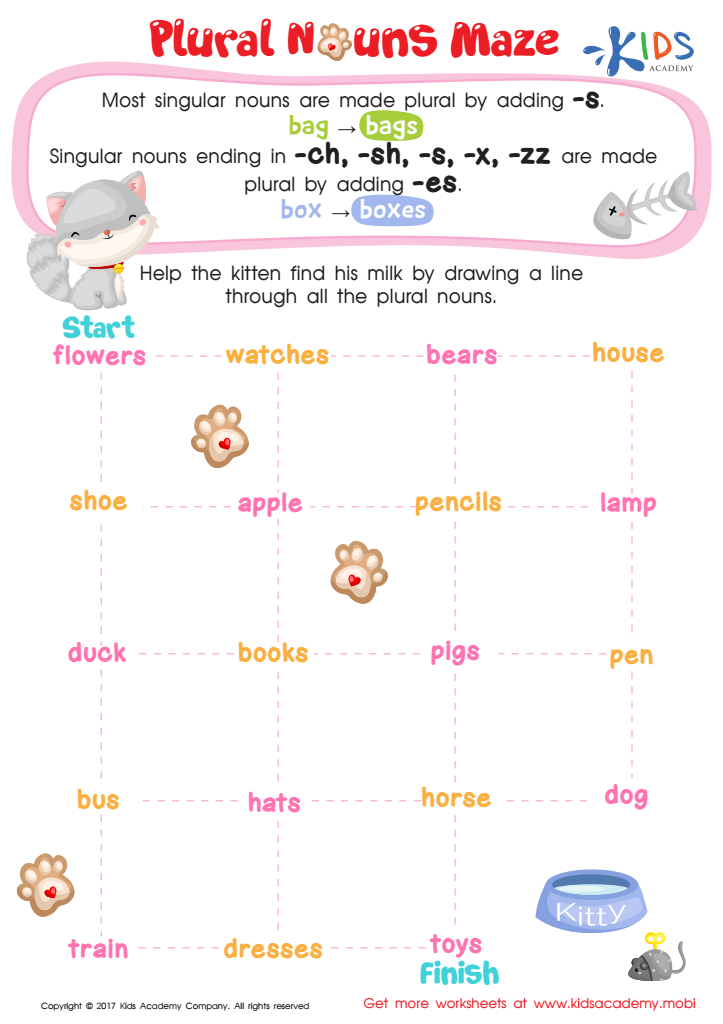
Plural Nouns Maze Worksheet
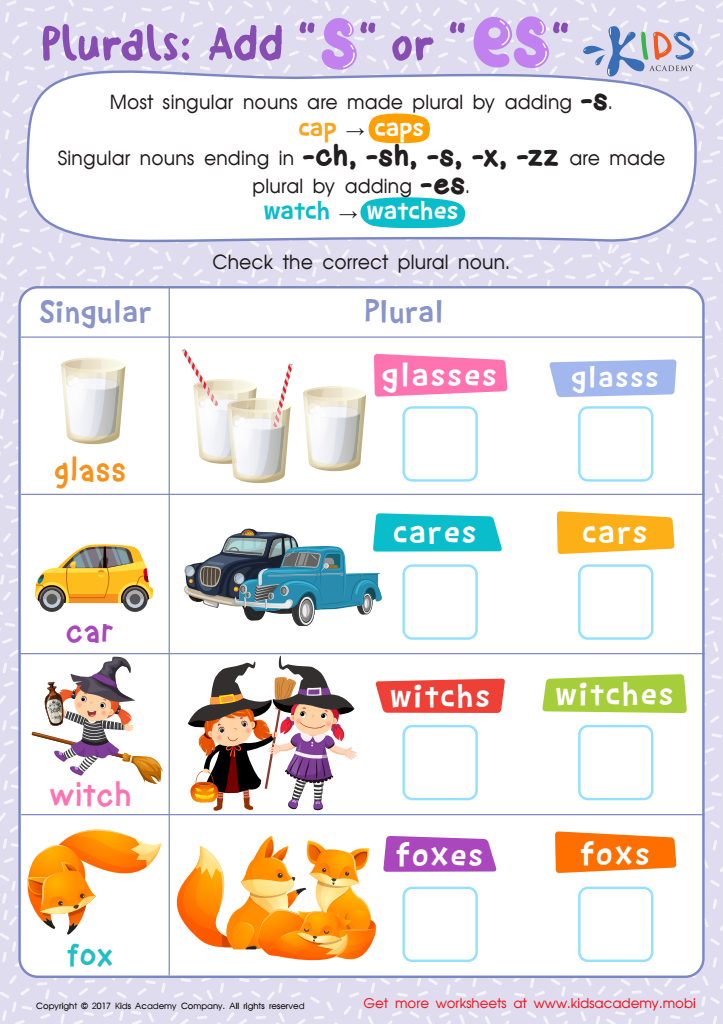
Plurals: "–es" or "–es"? Worksheet








Understanding plurals is a fundamental language skill that plays a crucial role in the early literacy development of 4-year-olds. Learning about plurals enriches a child's vocabulary and enhances their ability to communicate clearly and effectively. By grasping the differences between singular and plural forms, children can accurately express themselves and understand others, which fosters better social interactions and cognitive skills.
For parents and teachers, emphasizing plural education prepares children for future learning by establishing a strong grammatical foundation. This knowledge aids in reading comprehension, as many texts include both singular and plural nouns. Mastering plurals also supports children's writing abilities, making their storytelling and sentence construction more coherent and descriptive.
Additionally, exposing children to plural concepts at an early age can spark their curiosity and enthusiasm for learning. This boost in interest can lead to higher engagement in classroom activities and homework, ultimately promoting academic success. By integrating fun, plural-related exercises into daily routines, parents and teachers can make learning enjoyable and memorable, enhancing communication skills in a relaxed and playful manner.
Understanding plurals, therefore, is not just about linguistic accuracy but also about equipping young learners with the tools they need for effective communication and academic growth, making it a vital component of early childhood education.