Fine Motor Skills Extra Challenge Letter Recognition Worksheets for Ages 5-6
7 filtered results
-
From - To
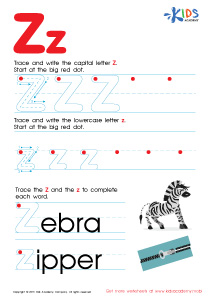
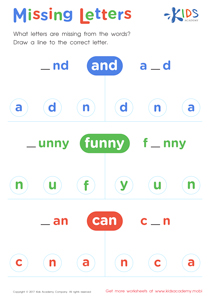
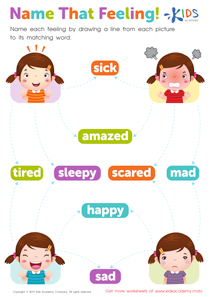
Enhance your child's learning journey with our "Fine Motor Skills Extra Challenge Letter Recognition Worksheets" designed for ages 5-6. These engaging worksheets not only promote letter recognition but also focus on developing crucial fine motor skills. Children will enjoy tracing, coloring, and manipulating letters, all while honing their hand-eye coordination and dexterity. Our thoughtfully crafted activities make learning fun and interactive, encouraging independence and confidence in young learners. Whether at home or in the classroom, these worksheets provide a comprehensive approach to early literacy skills. Dive into our collection and watch your child's knowledge and skills flourish!

Letter A Tracing Page
 Assign to My Students
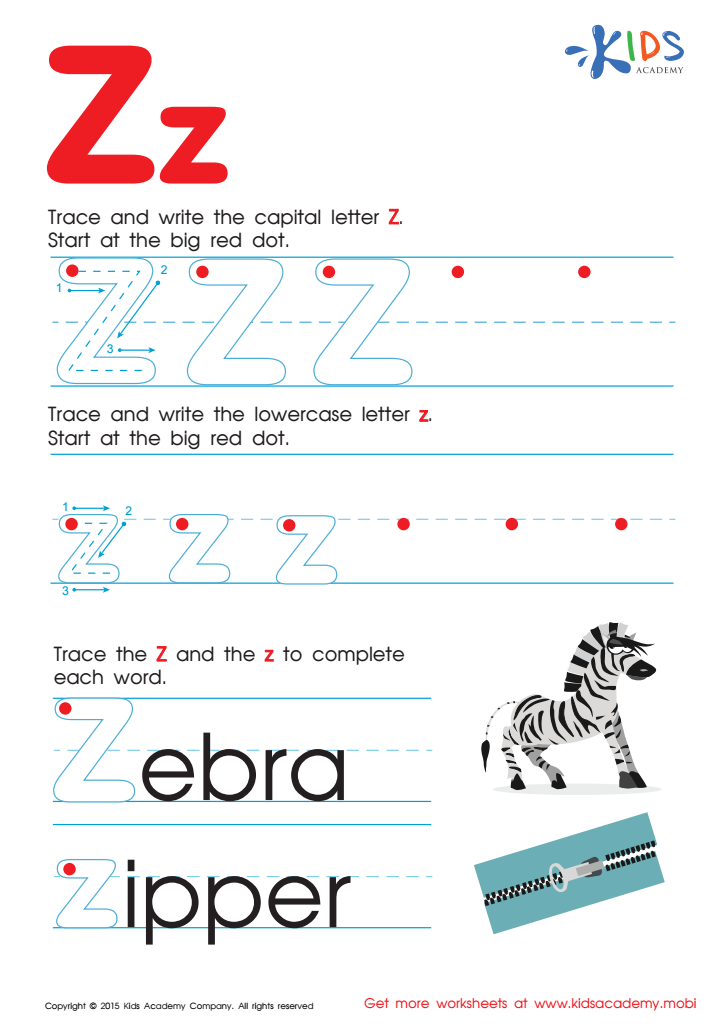
Letter Z Tracing Page
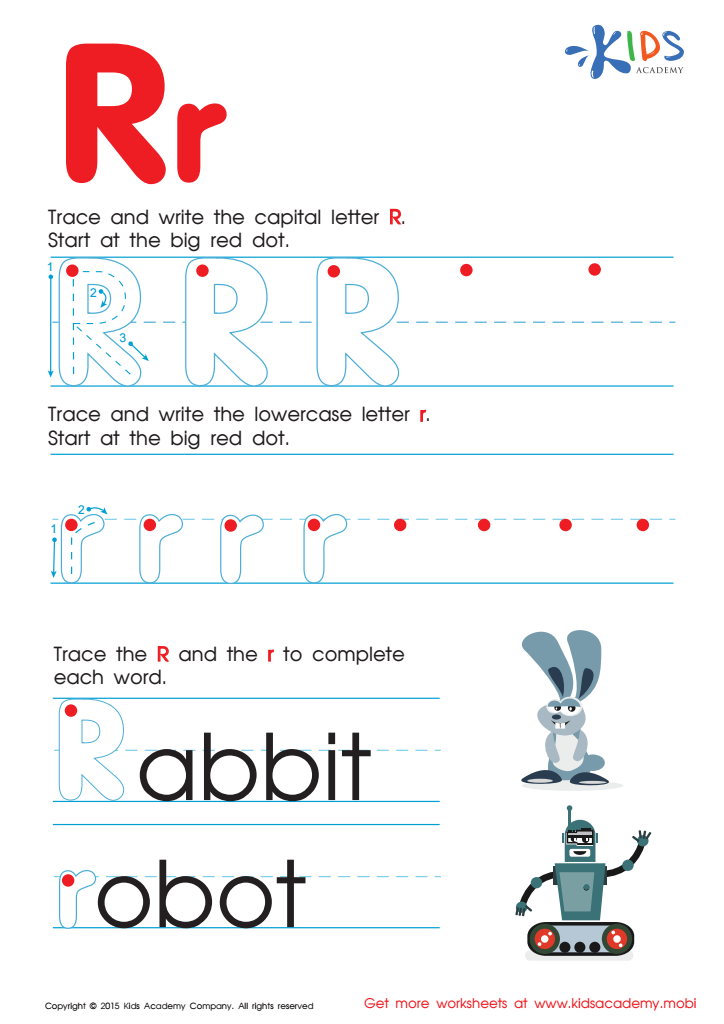
Letter R Tracing Page
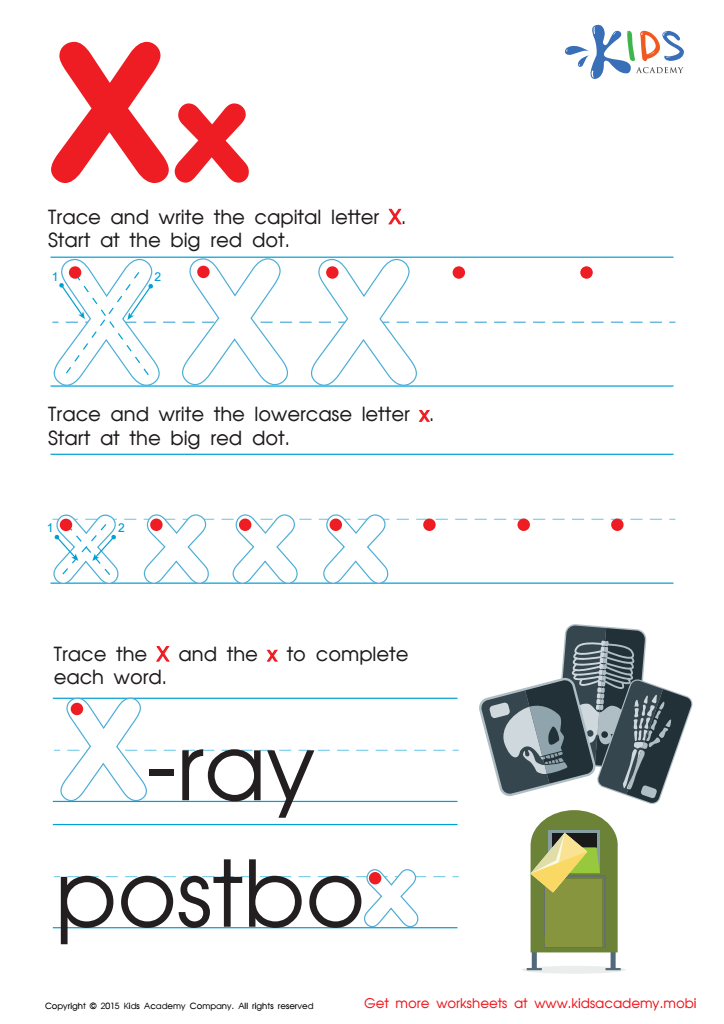
Letter X Tracing Page
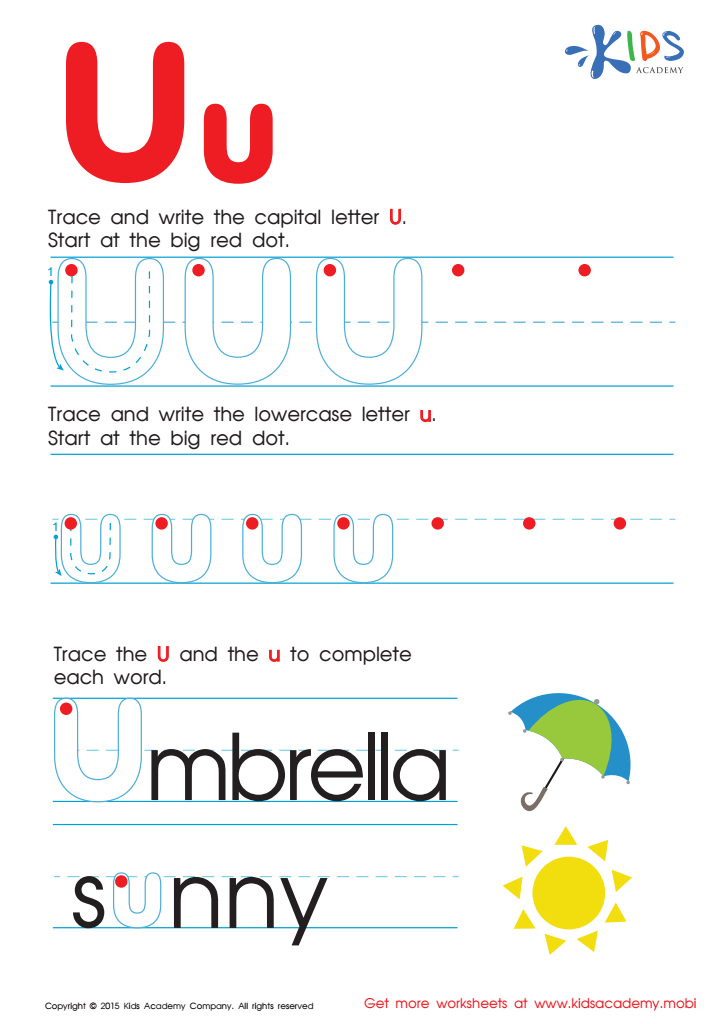
Letter U Tracing Page
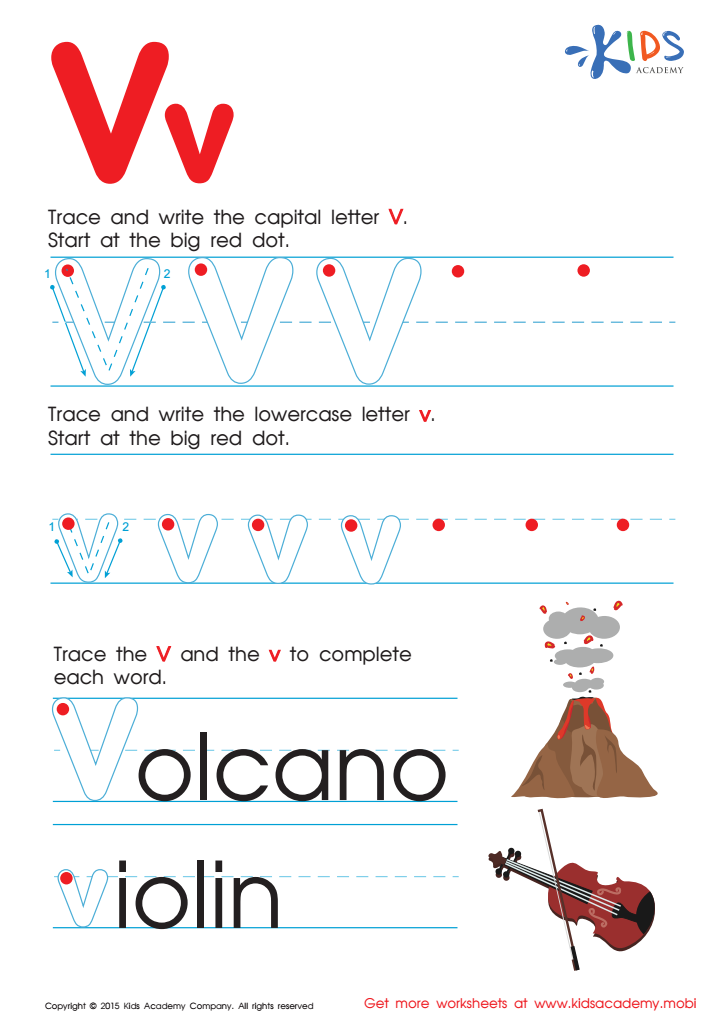
Letter V Tracing Page
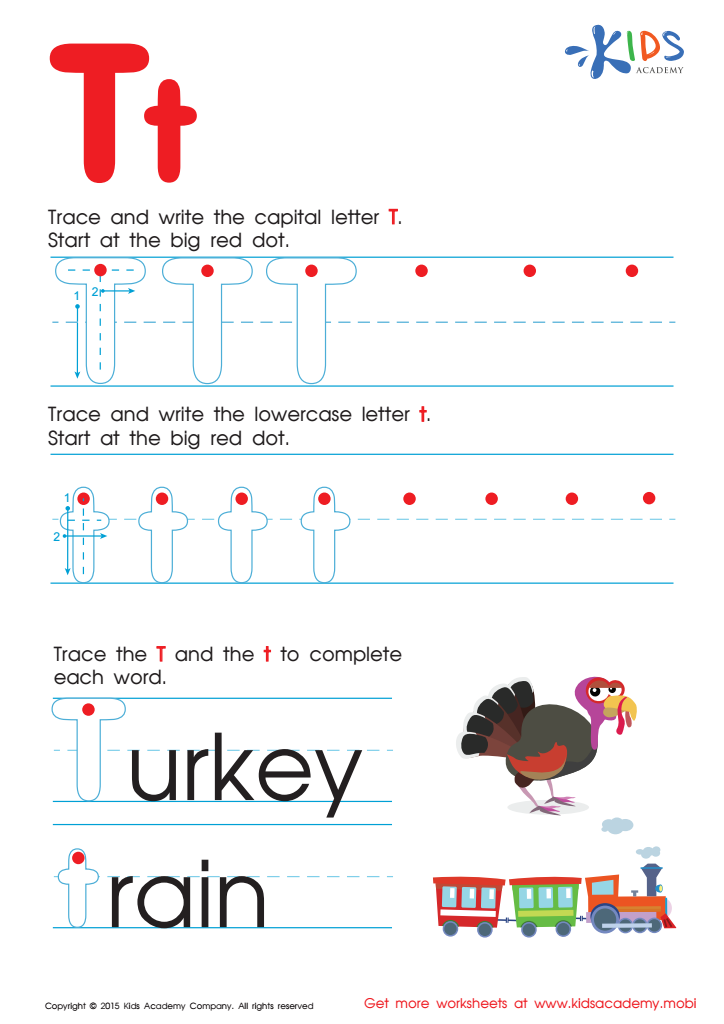
Letter T Tracing Page








Fine motor skills are crucial for young children's development, especially for those aged 5-6, as they lay the foundation for various academic and daily life activities. Extra challenge activities that focus on letter recognition can enhance these skills while also fostering cognitive growth. Fine motor tasks, such as gripping pencils, manipulating or cutting paper, and using scissors, help develop hand-eye coordination and hand strength. When these skills are combined with letter recognition activities, children not only refine their motor abilities but also enrich their understanding of language.
Parents and teachers should care about this integration because proper letter recognition is fundamental for reading and writing. Being able to recognize letters quickly aids in phonics and spelling, which are essential for literacy development. Furthermore, incorporating challenges keeps children engaged and motivated to learn, making the process enjoyable and effective. Engaging in these extra challenge activities promotes problem-solving and critical thinking, essential skills for future learning. By focusing on fine motor skills alongside letter recognition, adults support their child's overall development, paving the way for academic success and a positive attitude towards learning. Thus, ensuring children have a strong foundation in both motor skills and literacy is key to their holistic growth.