Extra Challenge Phonics Worksheets for Ages 5-6 - Page 2
25 filtered results
-
From - To
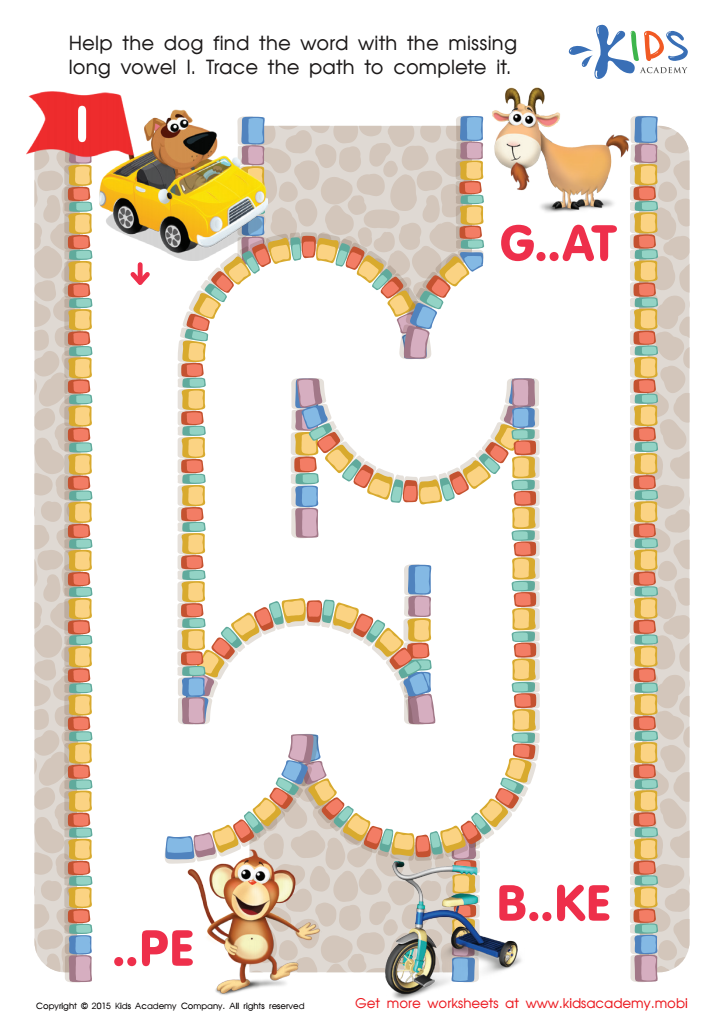
Long Vowel Sound I Worksheet
 Assign to My Students








Extra Challenge Phonics worksheets for Ages 5-6 are an invaluable resource for parents and educators aiming to bolster young learners' foundational reading skills. At this pivotal age, children are sponges for knowledge, making it the perfect time to introduce them to the complexities of phonics in an engaging and challenging manner. Extra Challenge Phonics for Ages 5-6 are meticulously designed to push students beyond the basics, encouraging them to explore the depths of sound-letter relationships, blend sounds to form words, and recognize patterns that will aid in decoding unfamiliar words in the future.
These worksheets are not just another task for children to complete; they are a gateway to building confidence in reading. By tackling more challenging phonics exercises, children can master skills that are essential for reading fluency and comprehension. The structured progression of these worksheets ensures that each child is challenged at just the right level, promoting a sense of accomplishment and a love for learning.
Moreover, Extra Challenge Phonics for Ages 5-6 are crafted to be interactive and fun, capturing the interest of young learners and keeping them engaged. Through a variety of activities, children are not only learning but also applying their knowledge in a context that makes sense to them. This hands-on approach to phonics ensures that children are not merely memorizing, but truly understanding the building blocks of reading.