Comparing lengths Extra Challenge Math Worksheets for Ages 5-6
5 filtered results
-
From - To
Introducing our "Comparing Lengths Extra Challenge Math Worksheets" designed for young learners aged 5-6! These engaging worksheets offer a fun way for children to enhance their understanding of length comparison. Through colorful illustrations and interactive tasks, kids will practice identifying longer or shorter objects, developing their measurement skills in a playful manner. Each worksheet encourages critical thinking and boosts confidence, setting a solid foundation for future math success. Perfect for use at home or in the classroom, these challenges align with early educational standards, making math exciting and approachable! Explore the world of measurement with these delightful worksheets today!
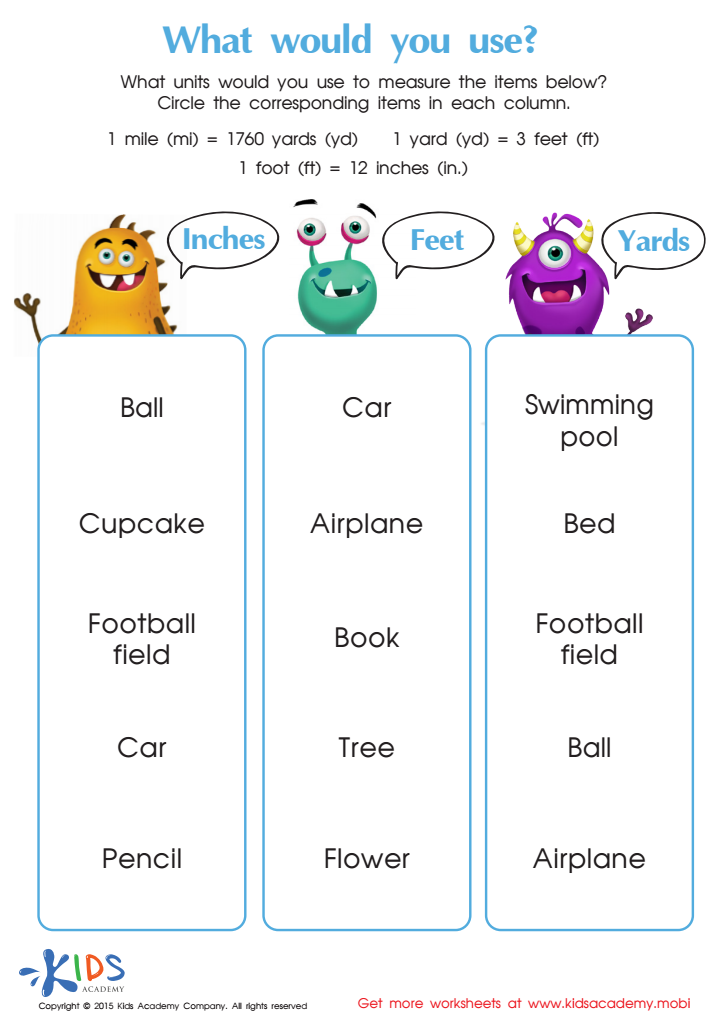
Learning about measuring objects in inches, feet and yards Worksheet
 Assign to My Students
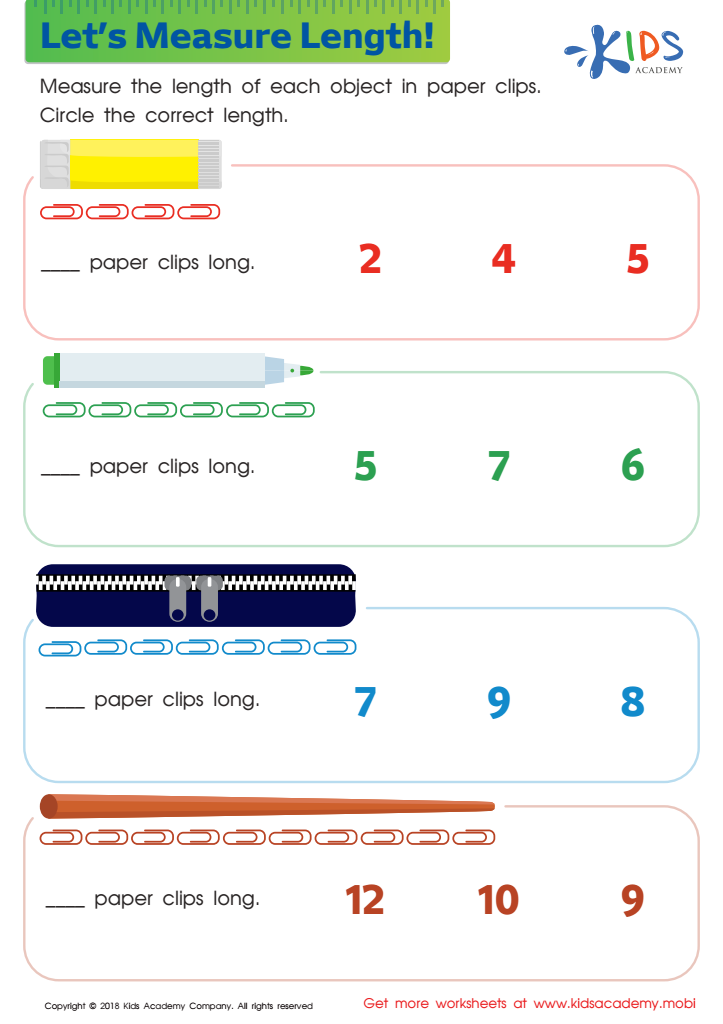
Lets Measure Length Worksheet
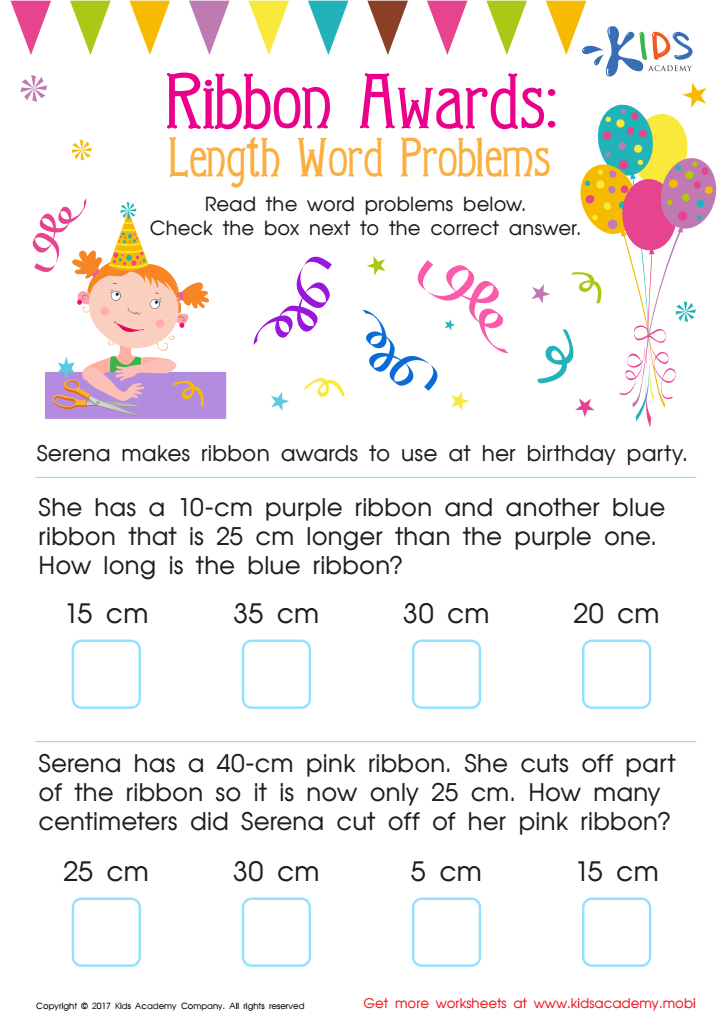
Length Word Problems Worksheet
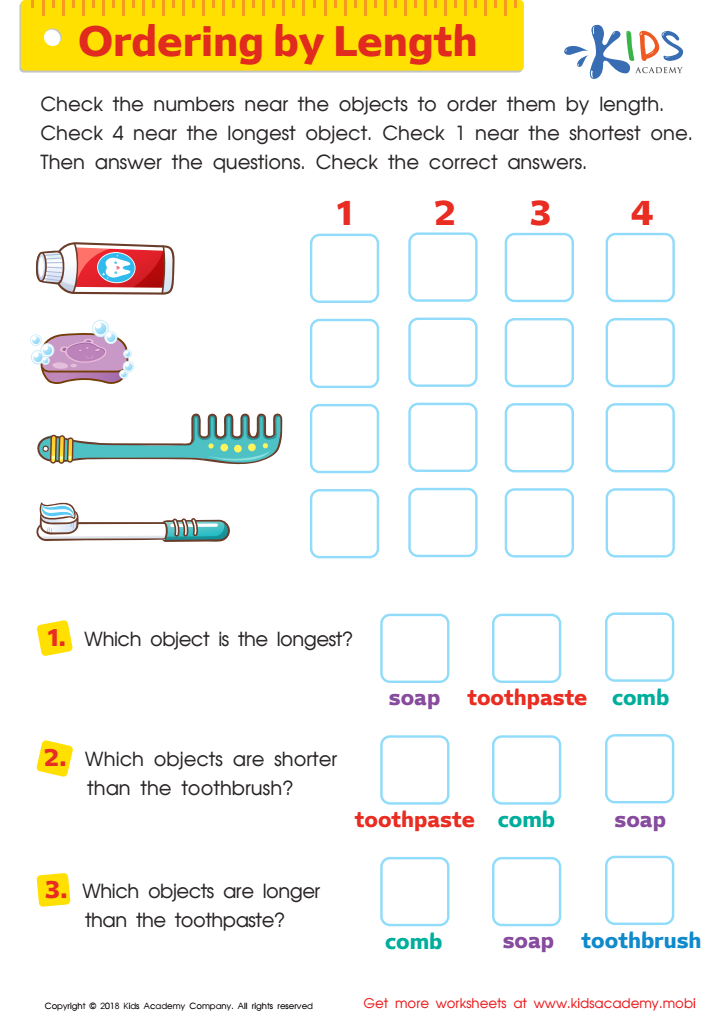
Ordering by Length Worksheet
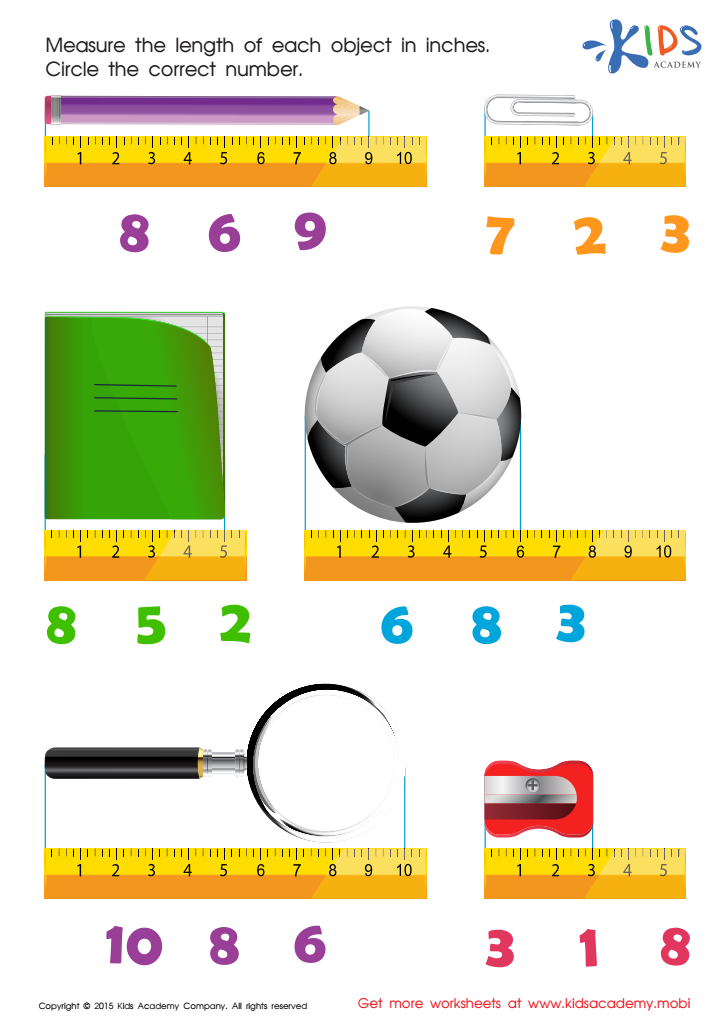
Learning measuring objects in inches Worksheet







Comparing lengths is a fundamental mathematical skill that early graders, particularly those aged 5-6, need to develop for several reasons. First, it lays the groundwork for understanding measurements and fosters strong spatial reasoning, which is essential in everyday life and future math concepts. When children engage in comparing lengths, they learn vocabulary such as "longer," "shorter," and "same length," enhancing their language skills alongside their mathematical understanding.
This skill encourages problem-solving and critical thinking, as students explore various ways to measure and compare objects using tools like rulers or even non-standard units like blocks. Teachers and parents can create enriching and hands-on experiences through playful activities, such as measuring items around the house or classroom, igniting curiosity and making learning enjoyable.
Moreover, engaging in the Comparing Lengths activities promotes social interaction and teamwork when done in groups, fostering communication skills among peers. By prioritizing this skill, both parents and teachers can help laid a strong foundation for future mathematical understanding, essential for more complex concepts such as addition, subtraction, and geometry. Ultimately, actively engaging children in comparing lengths supports their cognitive, social, and emotional development, making it an essential focus in early education.