Story sequencing Extra Challenge Reading Comprehension Worksheets for Ages 5-6
3 filtered results
-
From - To
Enhance your child's reading comprehension skills with our engaging "Story Sequencing Extra Challenge Worksheets" for ages 5-6! Designed to promote critical thinking and narrative understanding, these worksheets encourage young readers to arrange stories in the correct order, helping them grasp the sequence of events. Each worksheet is filled with colorful illustrations and interactive activities to captivate young minds and make learning fun. Ideal for reinforcing skills at home or in the classroom, these extra challenges empower students to improve their comprehension and storytelling abilities. Unlock your child's potential with our interactive story sequencing worksheets today!
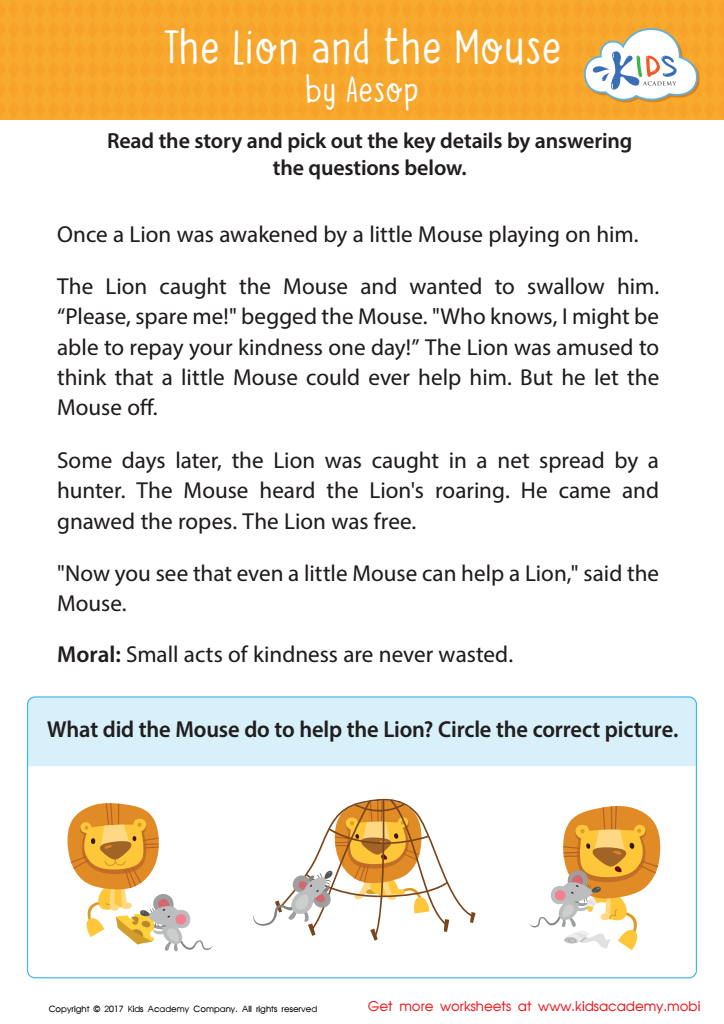
The Lion and The Mouse Sequencing Worksheet
 Assign to My Students
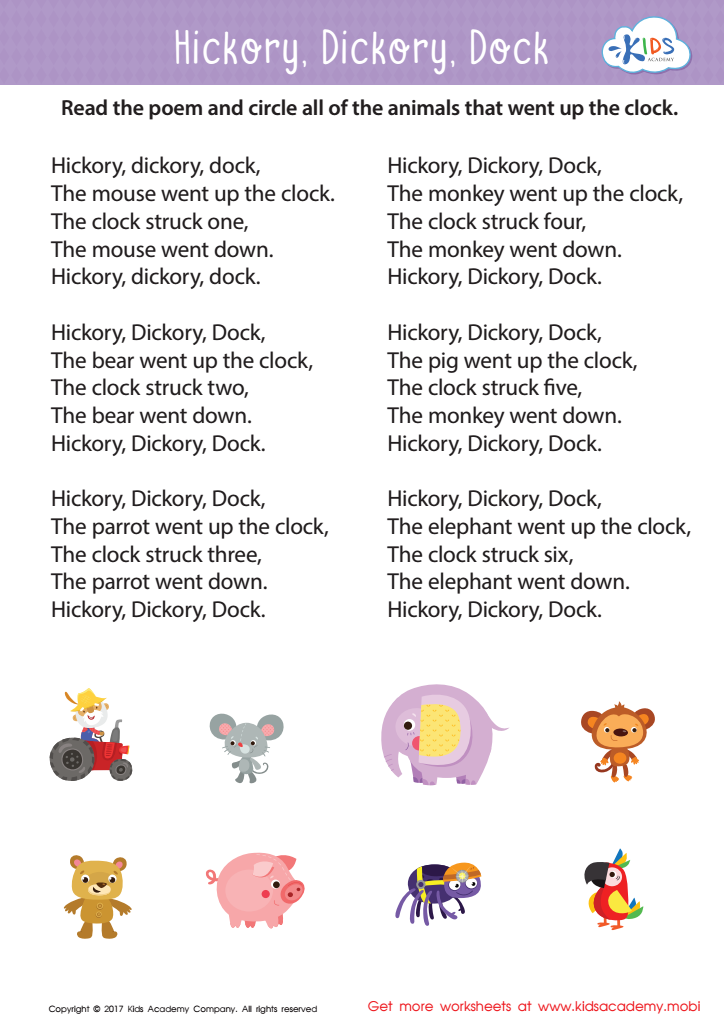
Hickory Dickory Dock Sequencing Worksheet
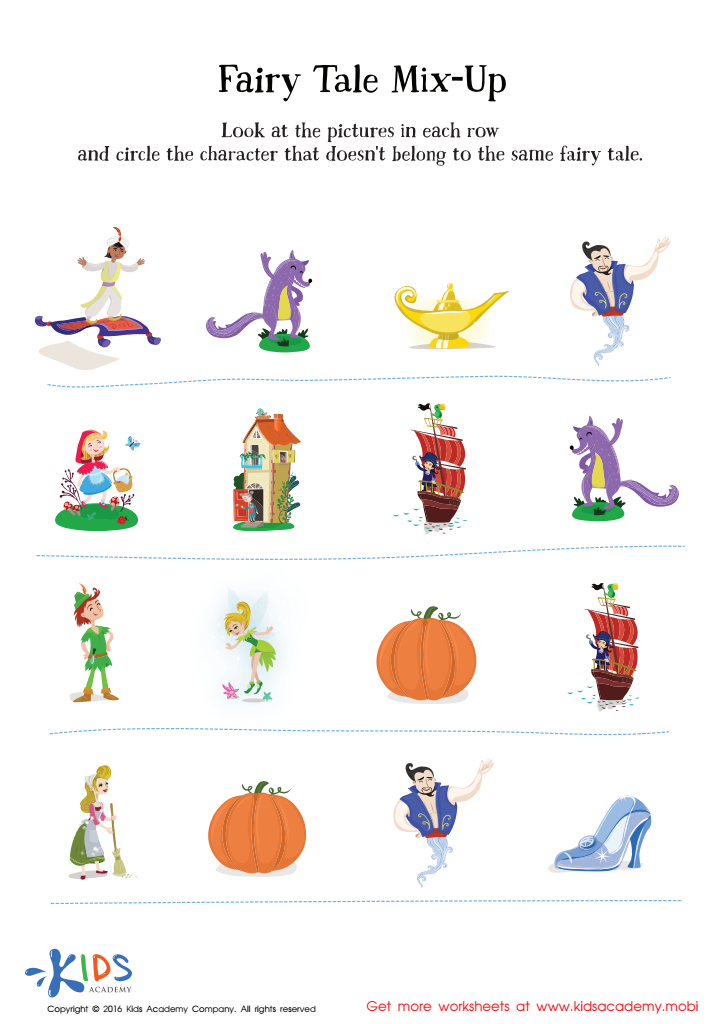
Fairy Tale Worksheet: Story Mix Up








Story sequencing is an essential skill in reading comprehension, particularly for children aged 5-6, making it crucial for both parents and teachers. At this developmental stage, children are beginning to grasp the structure of narratives, including the beginning, middle, and end. By engaging in story sequencing activities, children learn to identify key events and understand how they connect, which enhances their ability to retell stories accurately.
Promoting story sequencing skills fosters critical thinking and organizational abilities. As children rearrange story elements logically, they practice cognitive skills that are pivotal in other areas of learning. Furthermore, mastering this skill encourages a deeper understanding of plot development and character relationships, which are key aspects of literacy.
For teachers, incorporating story sequencing into lesson plans aligns with curricular goals, promoting a holistic approach to reading. For parents, engaging in these activities at home can strengthen the parent-child bond through shared learning experiences. By caring about story sequencing comprehension, both parents and teachers invest in creating a foundation for effective reading skills, thus nurturing lifelong learners. In summary, fostering story sequencing not only advances literacy but also shapes young minds to be thoughtful and articulate in their understanding of stories.