Understanding graphs Extra Challenge Worksheets for Ages 5-8
3 filtered results
-
From - To
Unlock the world of data with our "Understanding Graphs Extra Challenge Worksheets" designed for children ages 5-8! These engaging worksheets provide fun and thought-provoking activities that help young learners develop their graph comprehension skills. Packed with colorful visuals and age-appropriate exercises, students will explore different types of graphs and learn how to interpret and create their own. Perfect for reinforcing classroom learning or supporting homework, these worksheets cater to various learning styles. Whether it’s bar graphs, pictographs, or other formats, your child will gain confidence in understanding data while enhancing their critical thinking skills. Download these extra challenges today!
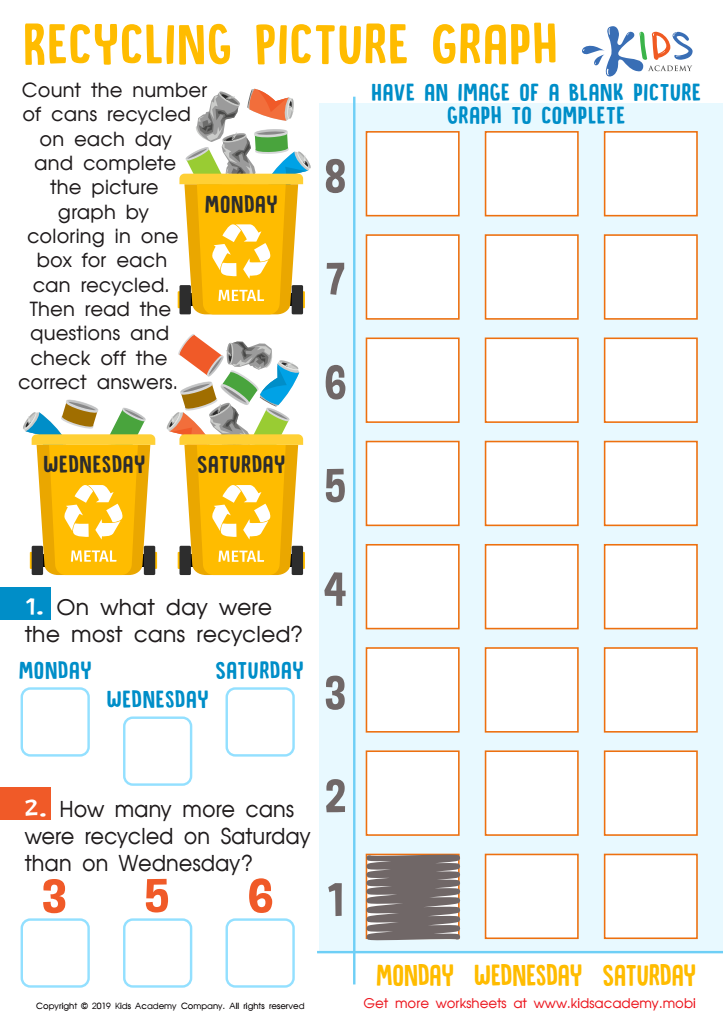
Recycling Picture Graph Worksheet
 Assign to My Students
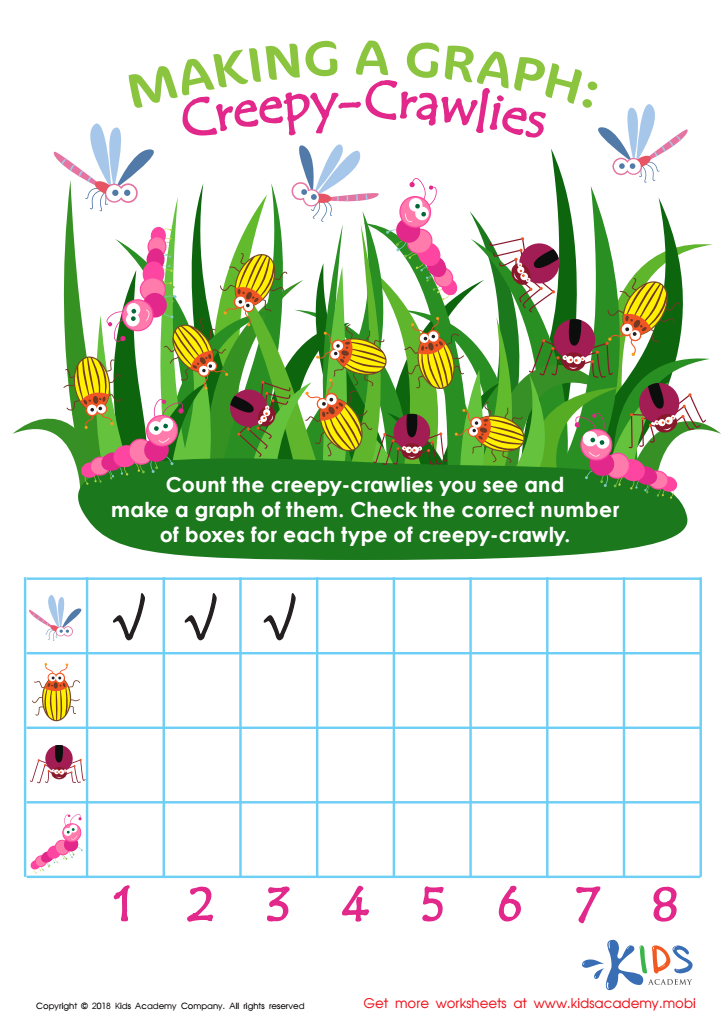
Making a Graph: Creepy Crawlies Worksheet
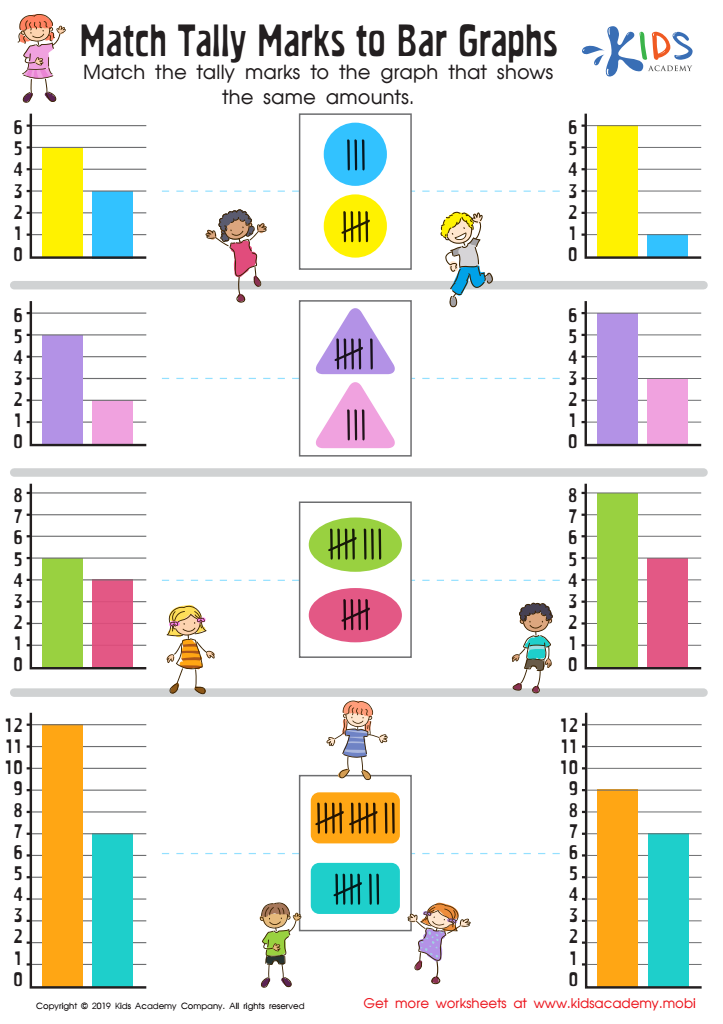
Match Tally Marks to Bar Graphs Worksheet








Understanding graphs is crucial for children aged 5-8, as it lays the foundation for critical thinking and data interpretation skills. At this developmental stage, children are naturally curious and begin to make sense of their world through visuals. Graphs are accessible tools that help children grasp complex information in a straightforward way.
Parents and teachers should care about engaging children with graphs because it enhances numeracy skills in a fun and interactive manner. Learning how to read and create graphs encourages children to analyze relationships and trends, fostering their analytical skills. It also enhances their ability to communicate information effectively, a key skill in both academic and everyday contexts.
Moreover, graphs encourage cooperative learning when children work together to collect data, draw conclusions, and present their findings. This collaborative process builds social skills and teamwork. By introducing graph understanding early on, adults can instill a love for math and science, setting the stage for lifelong learning. Ultimately, graphs help young learners become informed decision-makers, capable of navigating a world increasingly driven by data. For these reasons, investing time in graph literacy is essential for the holistic development of children.








