Money recognition Extra Challenge Money Worksheets for Ages 5-8
4 filtered results
-
From - To
Discover our "Money Recognition Extra Challenge Money Worksheets" for children aged 5-8! These engaging worksheets are designed to enhance your child's money recognition skills, helping them to identify coins and bills with ease. Featuring a variety of interactive activities, each worksheet fosters essential counting and mathematical abilities while keeping learning fun. Perfect for home or classroom use, these challenges encourage critical thinking and improve financial literacy early on. With colorful illustrations and child-friendly layouts, your young learners will enjoy mastering money concepts and building their confidence. Dive into this enriching resource and watch your child's skills flourish!
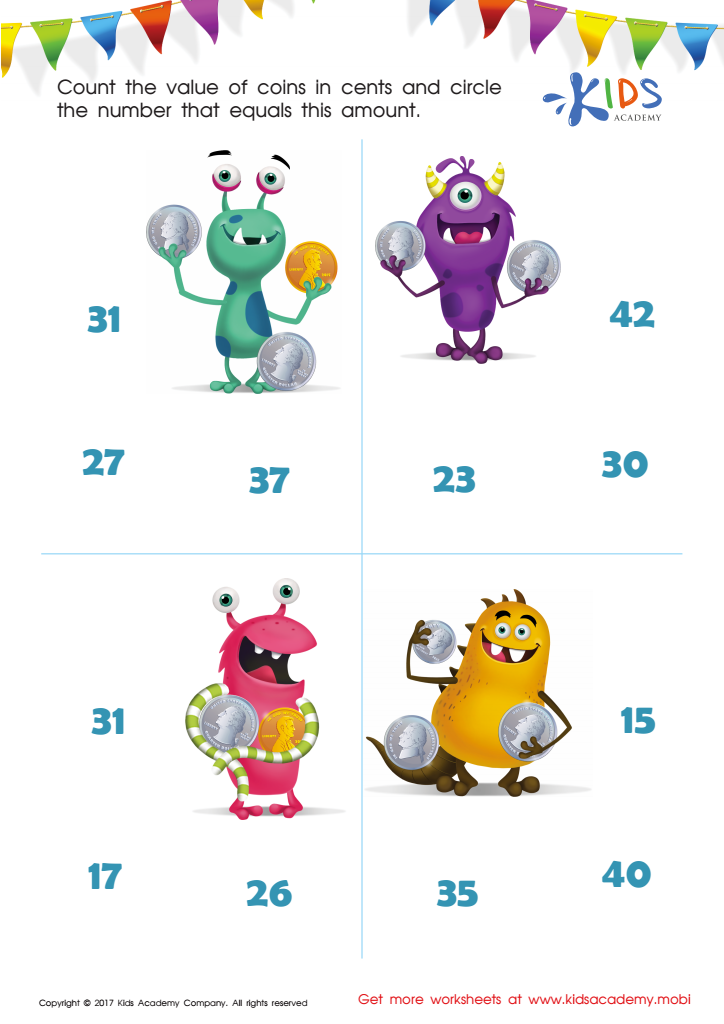
How Many Coins Money Worksheet
 Assign to My Students
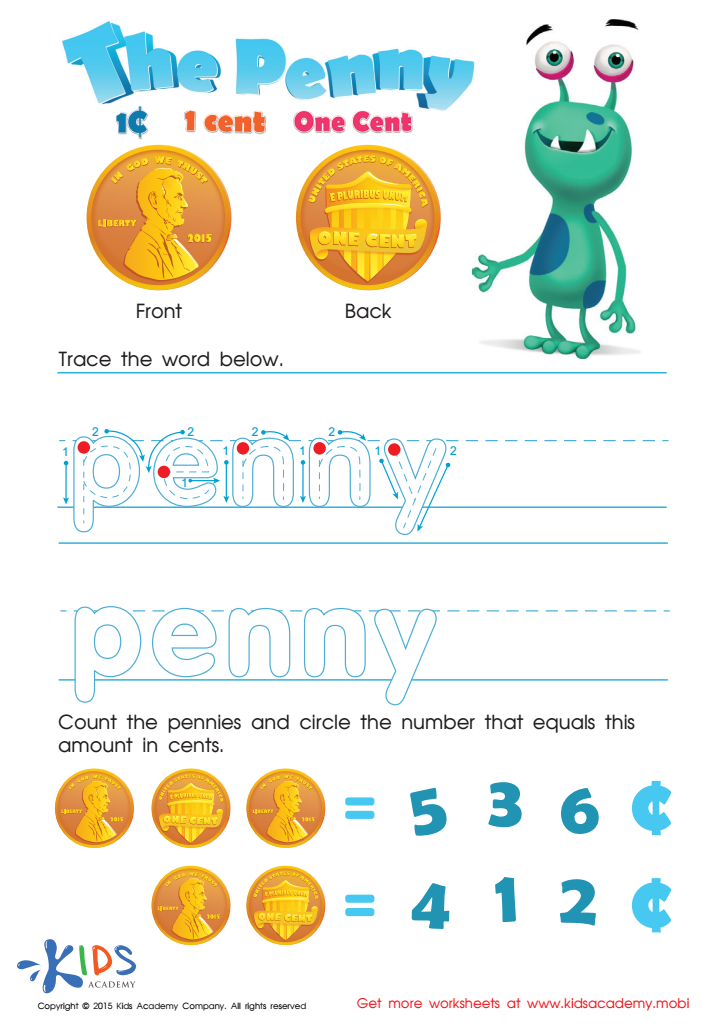
One Cent or the Penny Money Worksheet
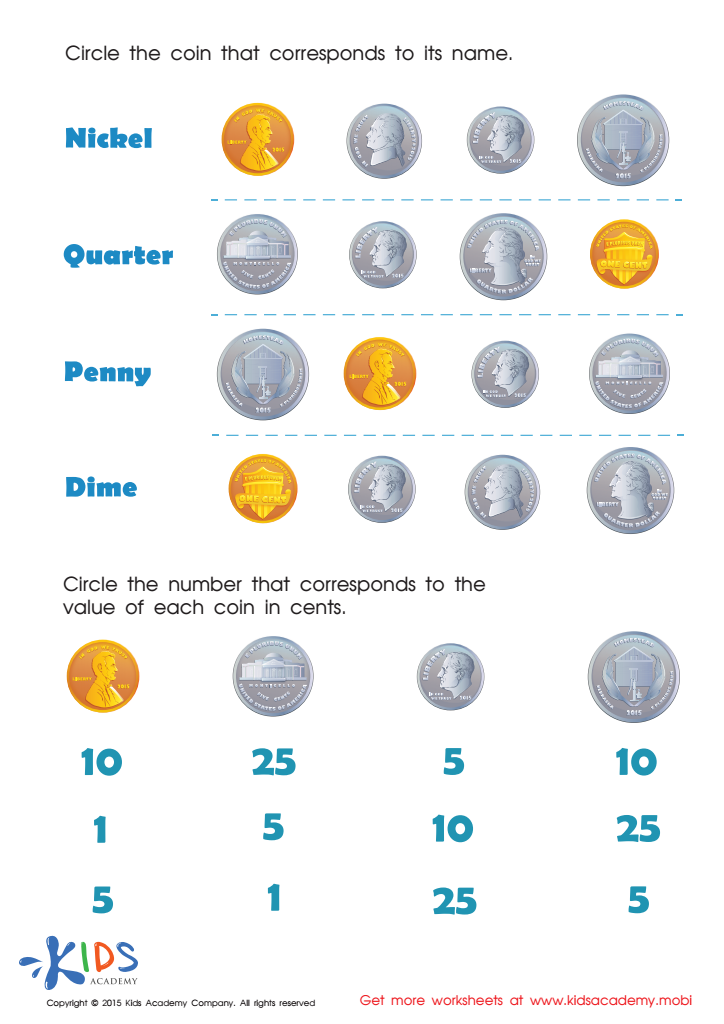
Coin Names and Values Money Worksheet
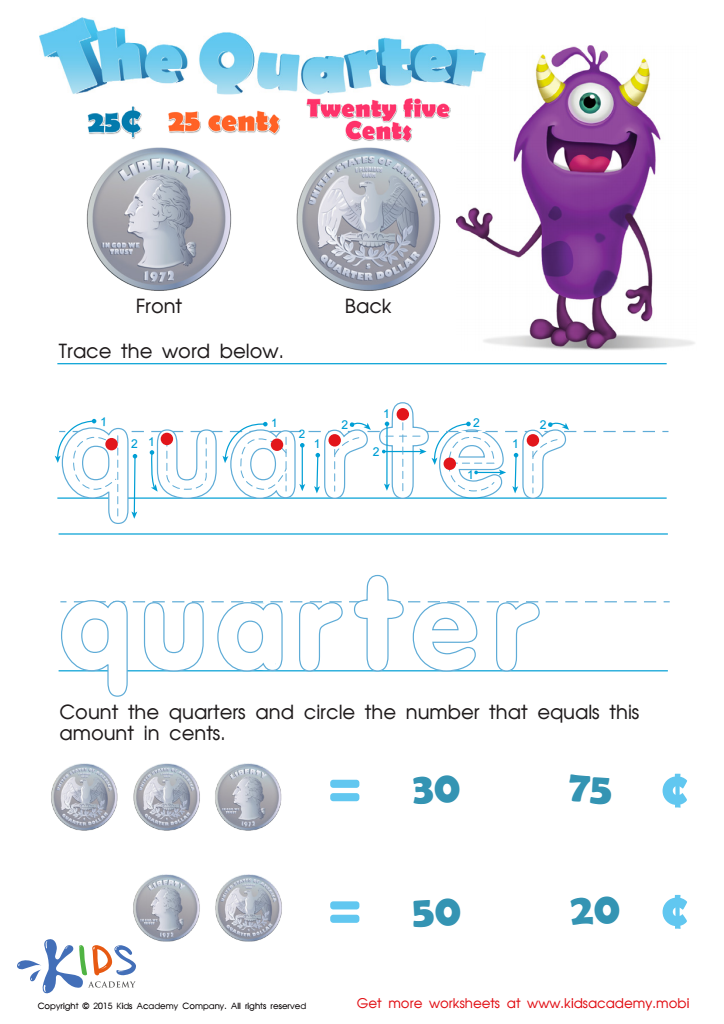
Twenty Five Cents or the Quarter Money Worksheet






.jpg)

Money recognition is a crucial foundational skill for children aged 5-8, and it greatly impacts their mathematical understanding and everyday decision-making. Parents and teachers should prioritize this learning because recognizing different denominations of money prepares children for real-world scenarios—such as shopping, saving, and budgeting—essential life skills they will carry into adulthood.
By integrating "Extra Challenge Money" activities into lessons or home practice, children develop not just recognition, but also comprehension of value differences, allowing them to calculate and make informed choices regarding their spending. Engaging with money games can spark interest and motivation, fostering a hands-on approach to learning.
Additionally, emphasizing money recognition cultivates early mathematical skills, such as addition, subtraction, and multiplication, all while reinforcing cognitive and problem-solving abilities. Developing these financial literacy skills at an early age equips children with the confidence and knowledge to navigate future financial responsibilities.
Furthermore, instilling good money habits early on can have a lasting impact, encouraging children to become responsible consumers and savers. Therefore, the importance of money recognition for young learners extends far beyond the classroom—it lays the groundwork for a financially literate and empowered generation.