Recognizing shapes Extra Challenge Geometry Worksheets for Ages 5-8
3 filtered results
-
From - To
Unlock your child's potential with our "Recognizing Shapes Extra Challenge Geometry Worksheets" designed for ages 5-8. These engaging worksheets offer a fun and educational way to enhance geometric skills and shape recognition. Perfect for young learners, the worksheets blend creatively crafted exercises with everyday examples, ensuring kids grasp essential concepts while enjoying the process. From identifying circles and squares to more complex shapes, each activity builds confidence and critical thinking. Our downloadable and printable resources provide an excellent supplement for classroom learning or at-home practice. Empower your child’s math journey today with our expertly created geometry worksheets!
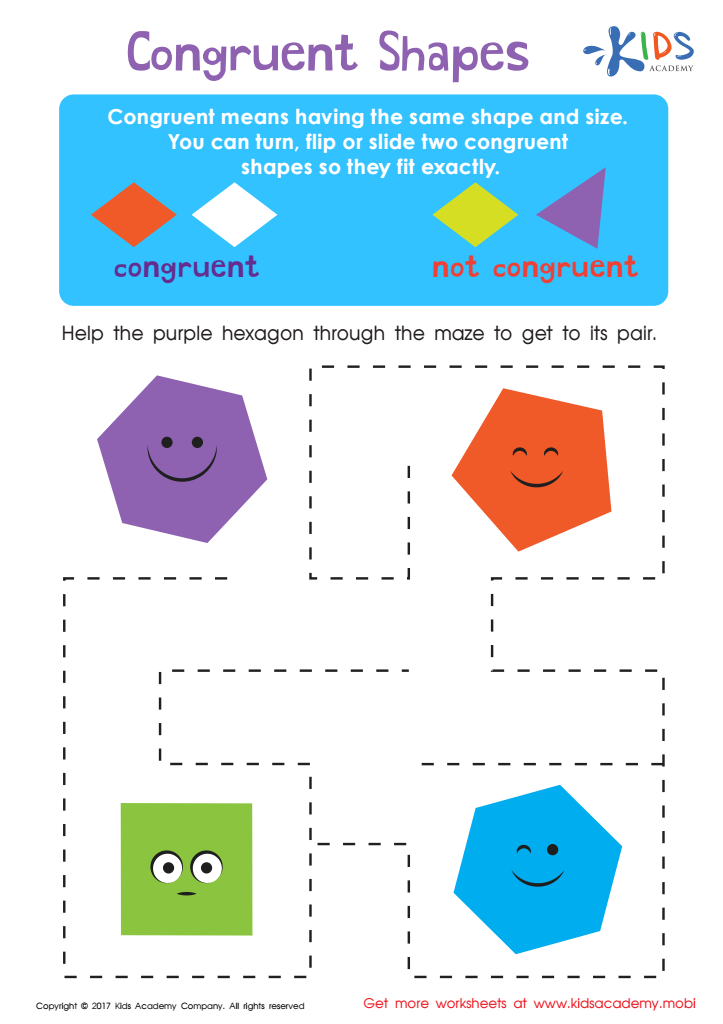
Congruent Shapes Worksheet
 Assign to My Students











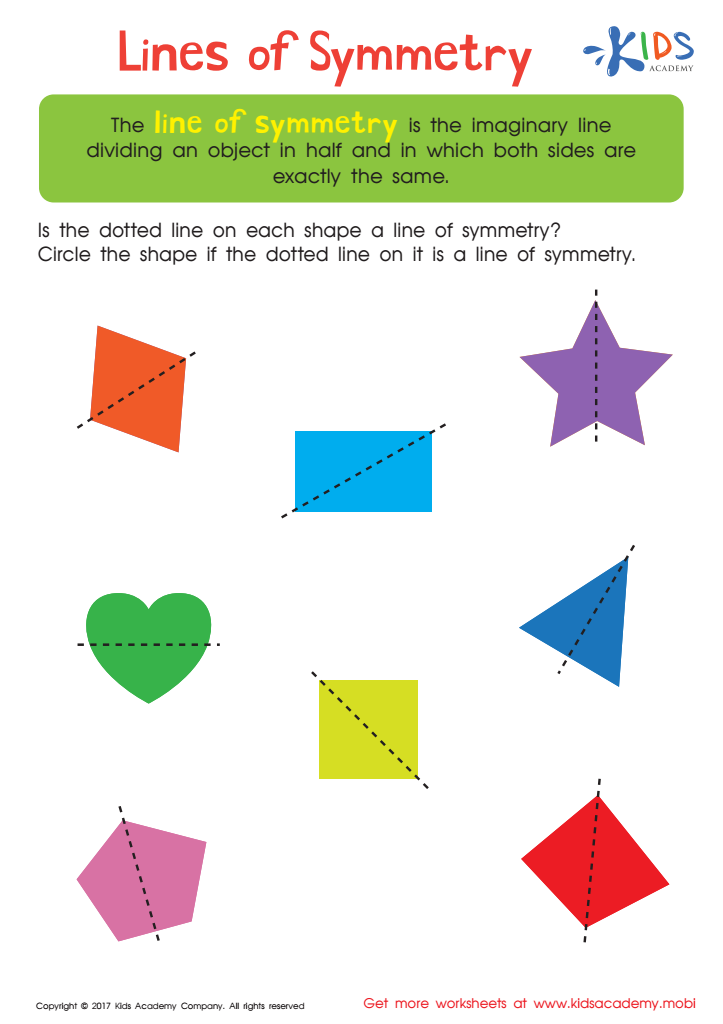
Lines of Symmetry Printable
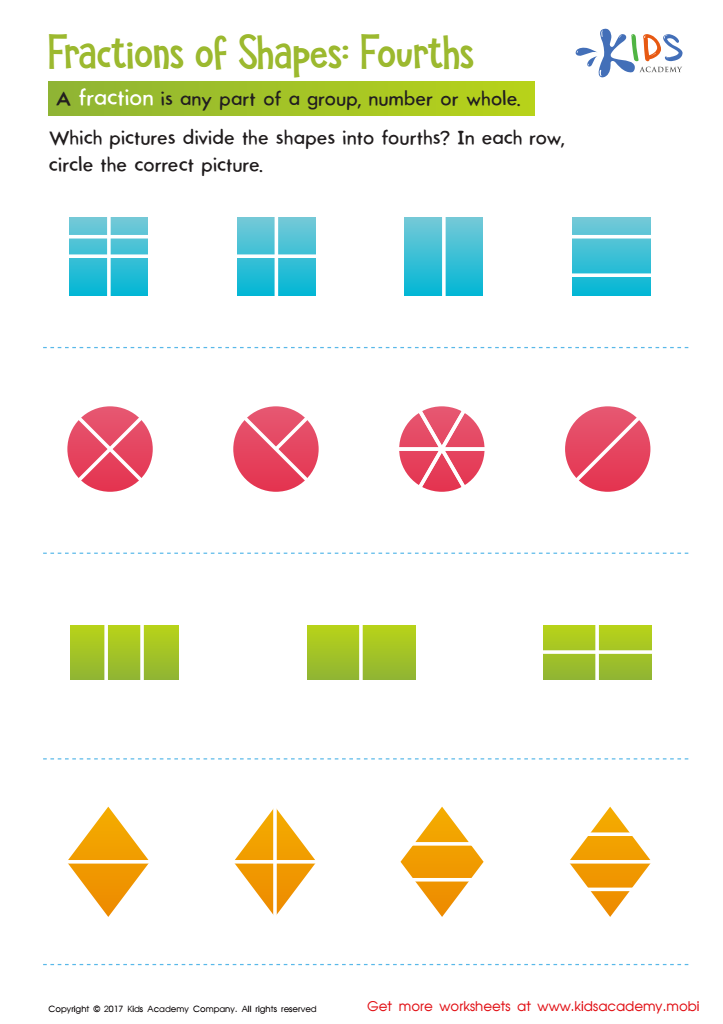
Fractions of Shapes Worksheet








Recognizing shapes is an essential skill for young children, laying a foundation for more advanced math concepts. For children aged 5-8, understanding basic geometric shapes not only sharpens their visual-spatial skills but also enhances their cognitive development. Kids in this age group are at a critical stage of brain development, where identifying and distinguishing shapes helps with the neural wiring associated with problem-solving and logical thinking.
Moreover, shape recognition is tightly linked to early reading and writing skills. For instance, recognizing the circularity in the letter 'O' or the triangular top of 'A' enhances their literacy. It aids in developing fine motor skills necessary for drawing, modeling, and other hands-on activities, which are crucial for motor coordination.
Parents and teachers now have additional reasons to focus on an Extra Challenge Geometry. Taking on challenges beyond the basic level keeps children engaged, stimulates curiosity, and helps in cultivating a growth mindset. This broadens their capacity to embrace differences, taking on more complexity with incremental learning paces.
Overall, nurturing an interest in shapes goes beyond simple academics. It builds critical thinking, attention to detail, and perseverance, traits that benefit children immensely as they advance to higher educational pursuits and everyday problem-solving.








