
Understanding measurements Extra Challenge Math Worksheets for Ages 5-8
6 filtered results
Difficulty Level
Grade
Age
-
From - To
Subject
Activity
Standards
Our "Understanding Measurements Extra Challenge Math Worksheets" for ages 5-8 are designed to inspire curiosity and boost skills in young learners. These worksheets introduce fundamental measurement concepts, including length, weight, and volume, using engaging visual aids and diverse activities. Perfect for early learners, the exercises challenge children to compare, estimate, and measure objects, fostering critical thinking and problem-solving abilities. Each worksheet is crafted to make learning measurements enjoyable and interactive. Ideal for classroom use or at-home practice, these worksheets help build a strong foundation in math by making calculations and comparisons fun and easy to understand.
Favorites
With answer key
Interactive
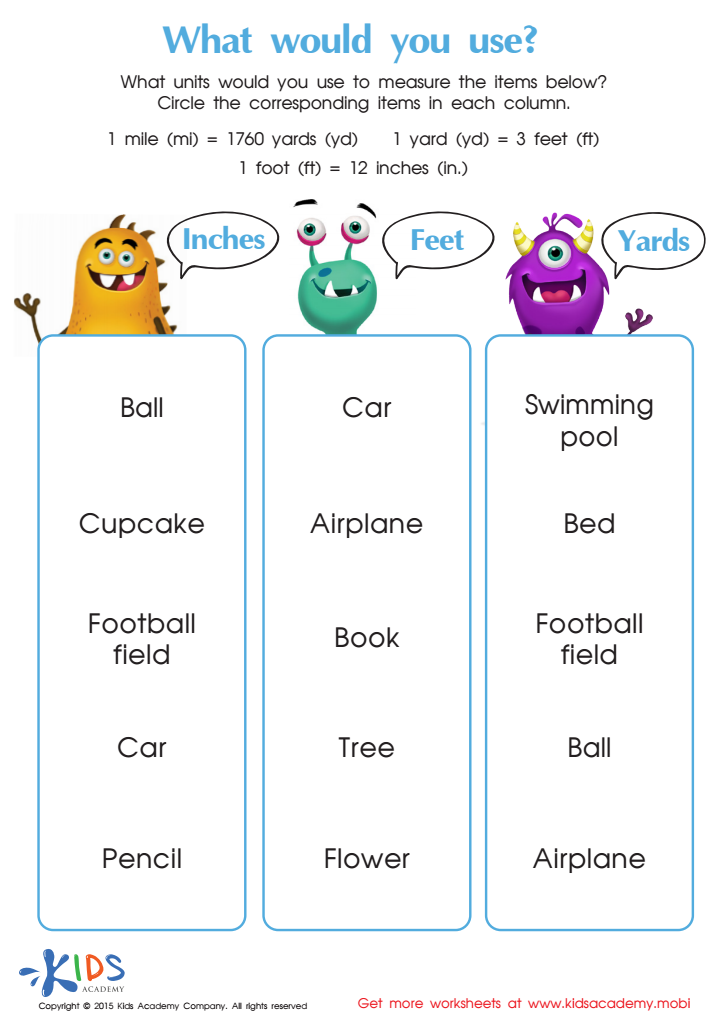
Learning about measuring objects in inches, feet and yards Worksheet
Download, cut and let your preschoolers learn and have fun estimating objects like pencils, airplanes and swimming pools in inches, feet and yards!
 Assign to My Students
Learning about measuring objects in inches, feet and yards Worksheet
Worksheet
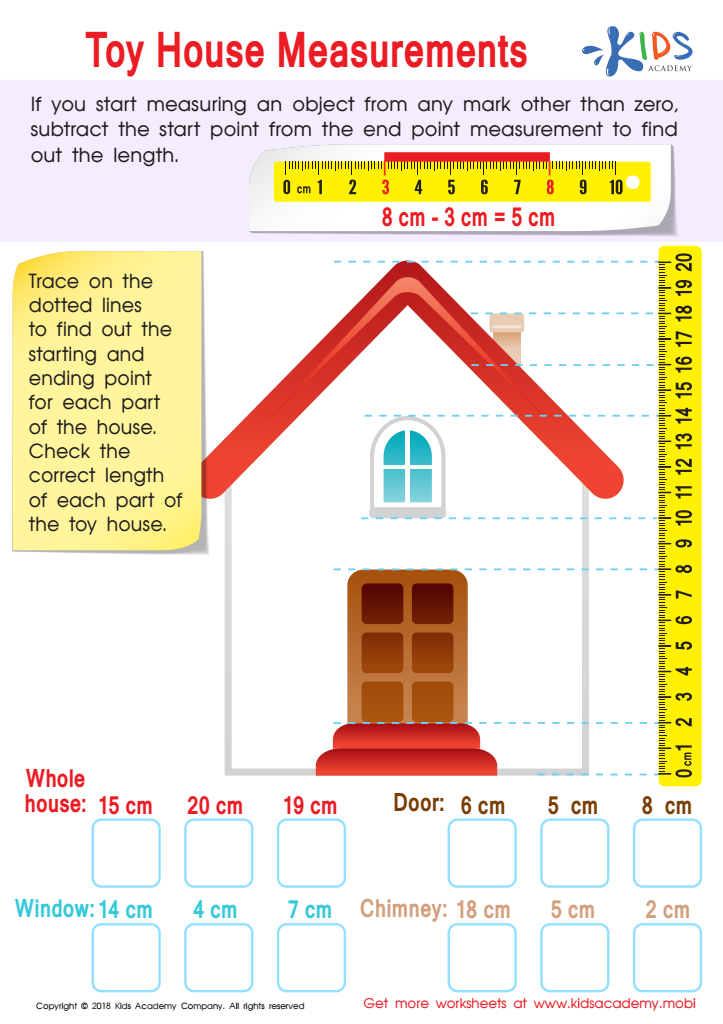
Toy House Measurements Worksheet
This worksheet requires math and measuring skills. When measuring an object from a non-zero starting point, subtract the start point from the end point to get the correct length. Kids must trace the dotted lines to get the right length for each part of the house.
Toy House Measurements Worksheet
Worksheet
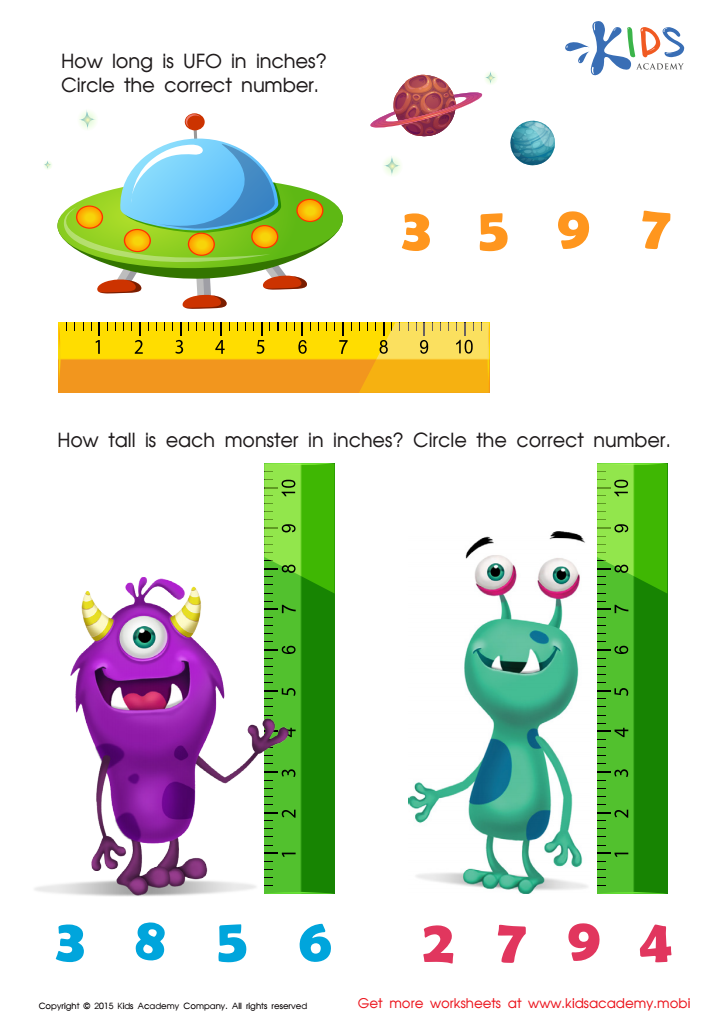
Measuring in Inches Worksheet
Look at the picture, can you measure the UFO & monsters? Write down how long each is. Which is tallest? Circle it. Get more free printable math worksheets for kindergarten at our website.
Measuring in Inches Worksheet
Worksheet
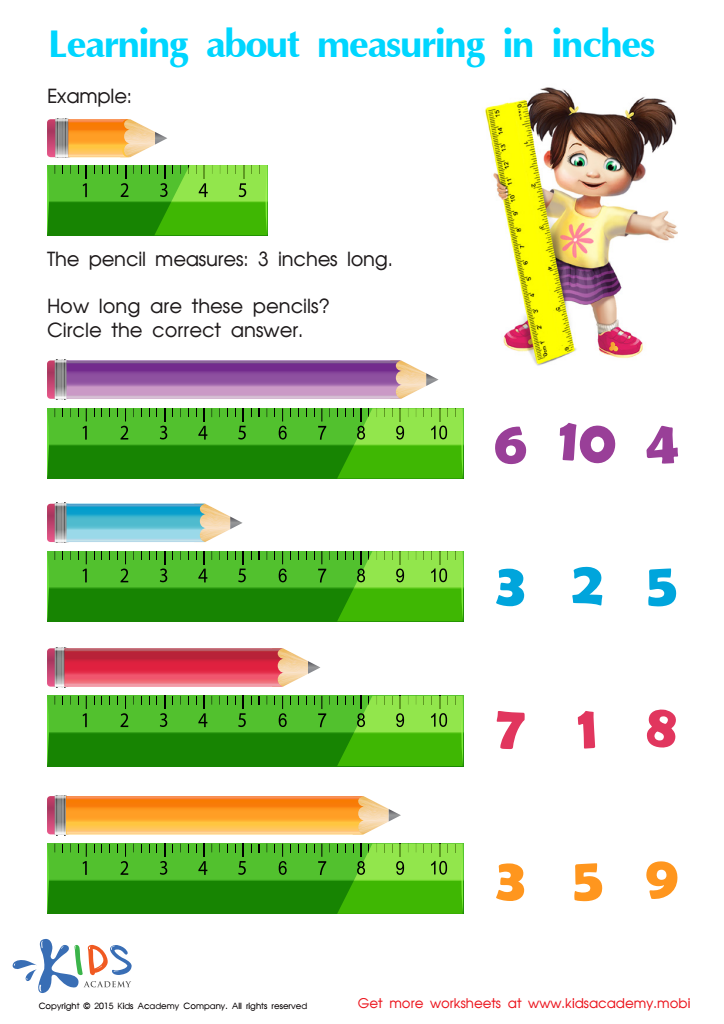
Learning About Measuring In Inches Printable
Print this free worksheet and measure pencils together with kids. See who finds the longest and the shortest! Enjoy learning math with your kids.
Learning About Measuring In Inches Printable
Worksheet
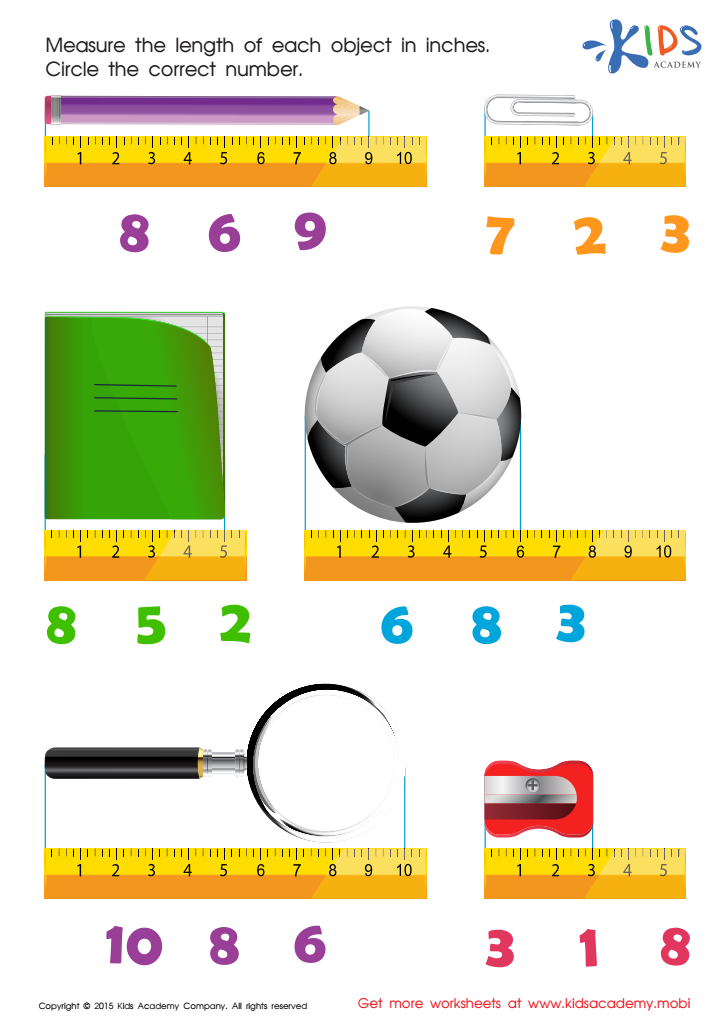
Learning measuring objects in inches Worksheet
Help your little learners gain confidence in using a ruler! Print out our free worksheet, cut out the inch ruler, and let them measure and record objects' width and length. Kids Academy has a variety of math worksheets to make learning math fun! Check out our website for more free printables!
Learning measuring objects in inches Worksheet
Worksheet
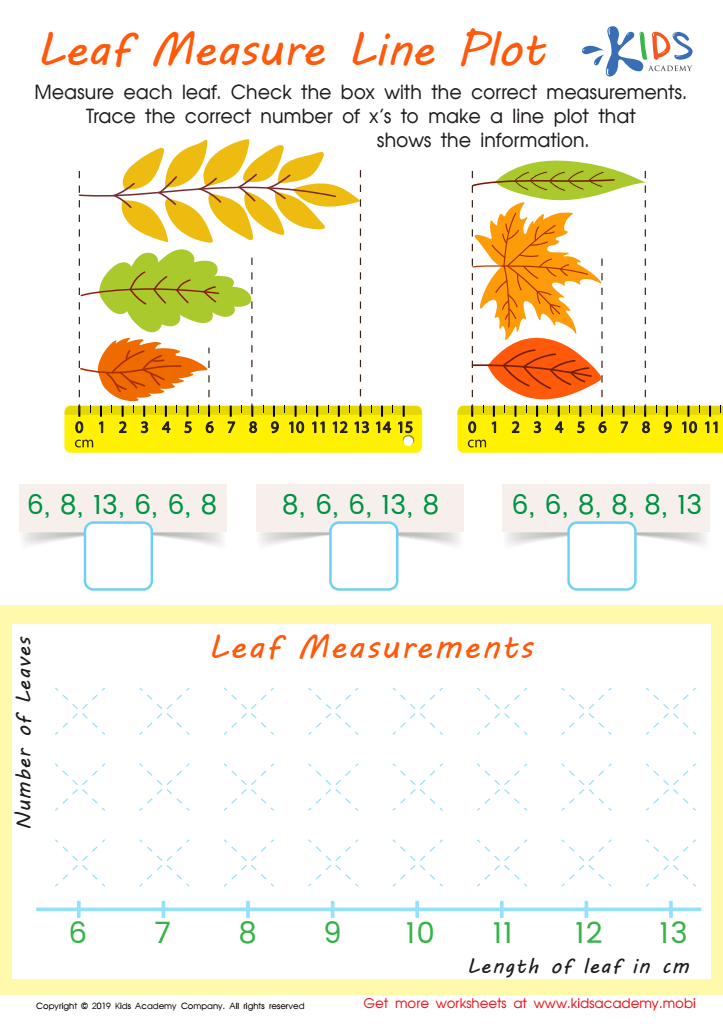
Leaf Measure Line Plot Worksheet
Help your third grader measure each of the four leaves, and check the box with the correct measurements. Then, trace the right number of x's to make a line plot showing the data. This exercise will engage your students and make it easier for them to grasp the concept of line plots.
Leaf Measure Line Plot Worksheet
Worksheet
Join Kids Academy for Free
Who is primarily going to use this learning content?



.jpg)

Understanding measurements is foundational for young children aged 5-8, and parents and teachers should pay attention to this area for several key reasons:
First, measurement connects math to the real world, making abstract concepts tangible. Children learn to quantify the world around them through height, weight, length, and volume. This tangibility helps cement mathematical understanding and promotes engagement.
Second, early measurement skills are linked to future success in mathematics and science. Mastery of these concepts lays the groundwork for more complex topics like fractions, geometry, and data analysis, fostering a stronger aptitude in STEM subjects.
Additionally, understanding measurements develops problem-solving and critical thinking. Children learn to make comparisons, organize data, and approach problems systematically. These cognitive skills benefit other academic areas and everyday situations.
Engaging in measurement activities also supports language development. Descriptive language—like longer, shorter, heavier—is used, expanding vocabulary and enhancing communication skills.
Lastly, teaching measurements through hands-on activities, such as cooking or nature walks, increases curiosity and enthusiasm for learning. It helps children see learning as fun and relevant, promoting a lifelong love of discovery.
Consequently, by prioritizing measurement concepts, parents and teachers build a strong mathematical foundation, enrich cognitive and language development, and inspire an enduring interest in learning.








