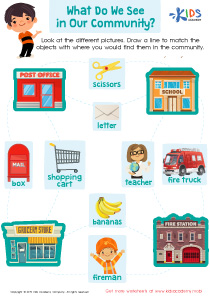
Comparing sizes Extra Challenge Measurement Worksheets for Ages 5-8
5 filtered results
-
From - To
Explore our "Comparing Sizes Extra Challenge Measurement Worksheets" designed for children aged 5-8! These engaging worksheets provide young learners with the opportunity to hone their measurement skills through fun and interactive activities. Your child will compare and contrast different objects, helping them understand concepts of size and measurement in a hands-on way. Each worksheet encourages critical thinking and problem-solving while reinforcing essential math skills, ensuring a comprehensive learning experience. Perfect for home, school, or supplemental learning, these worksheets make mastering measurements enjoyable. Download today and watch your child's confidence and understanding grow as they tackle size comparisons!
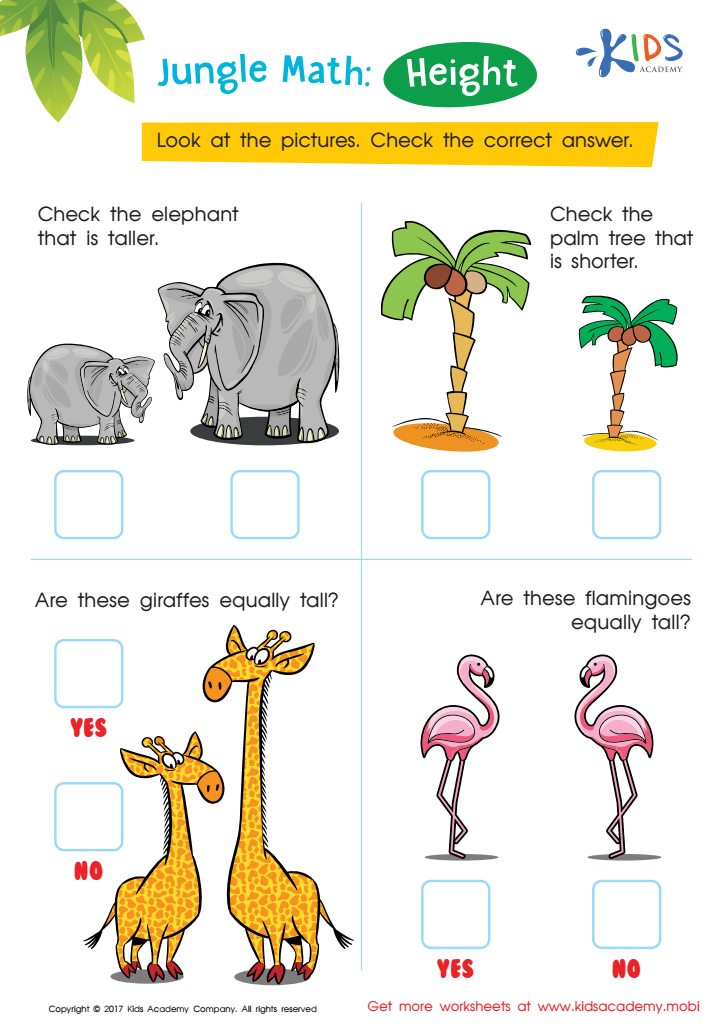
Which Is Taller Worksheet
 Assign to My Students
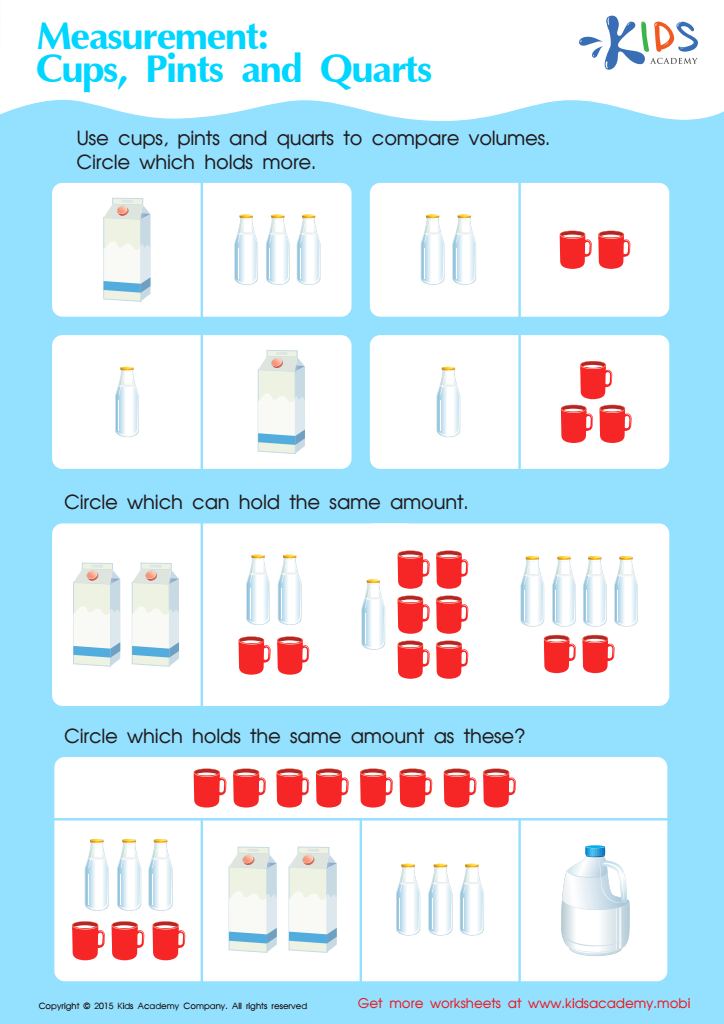
Measurement: Compare Volumes Worksheet
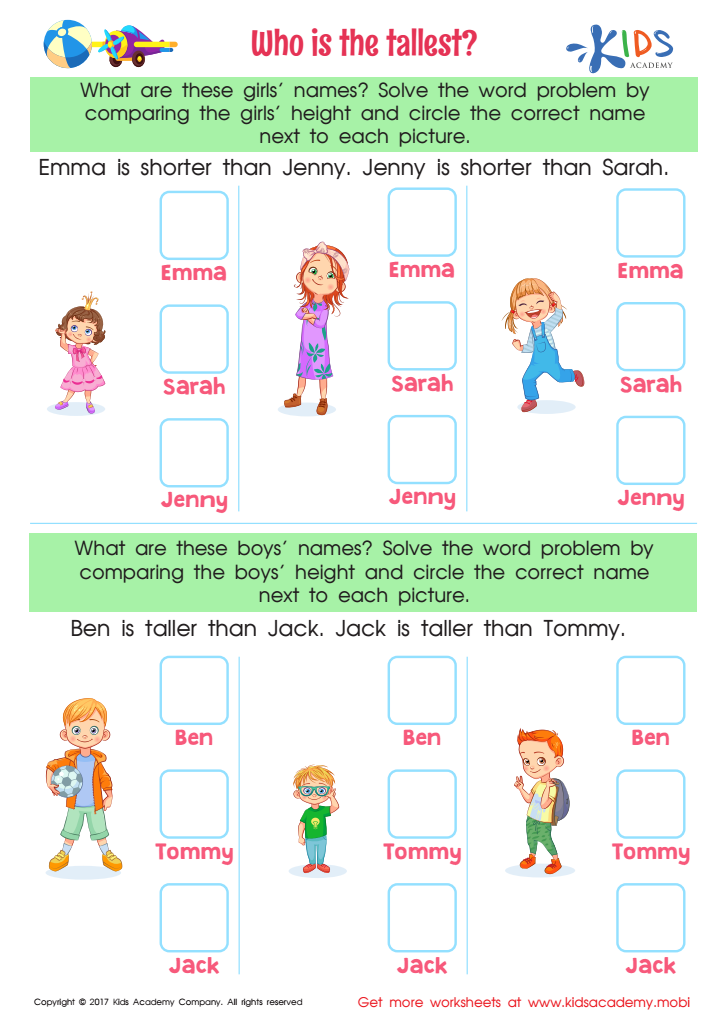
Who Tallest Printable
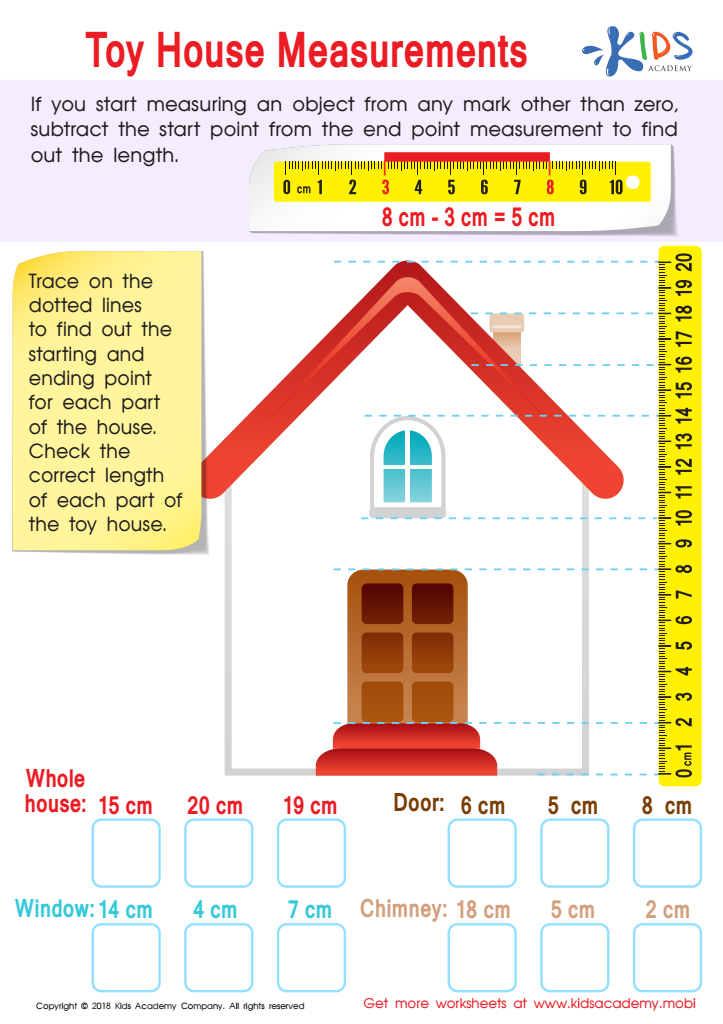
Toy House Measurements Worksheet
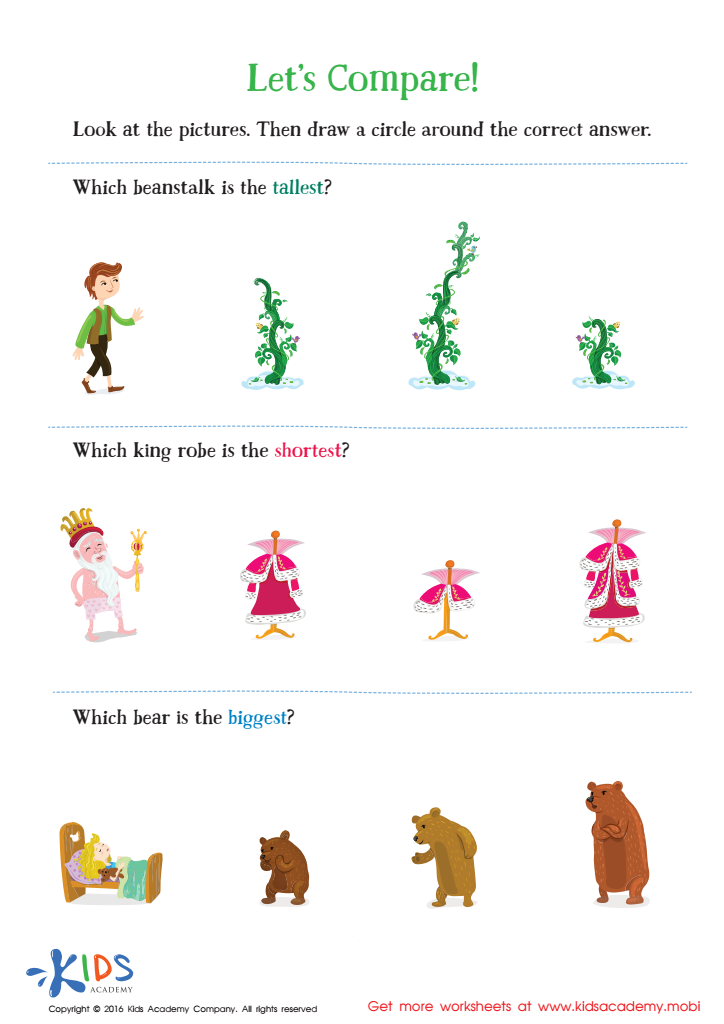
Fairy Tale Worksheet: Let's Compare








Comparing sizes through extra challenge measurement activities is a vital component of early childhood education for children ages 5 to 8. It promotes critical thinking and problem-solving skills as children learn to discriminate between different sizes and understand concepts like length, width, height, and volume. Engaging in these activities fosters a sense of curiosity and exploration, driving kids to ask questions and seek answers.
For parents and teachers, supporting this learning goes beyond mere measurements; it lays the foundation for mathematical concepts that children will use throughout their educational journey. By comparing sizes, children learn to categorize objects, recognize patterns, and develop spatial awareness. These skills are not only essential in mathematics but also in everyday situations, enabling children to make informed decisions based on their observations.
Moreover, incorporating fun challenges into measurement activities can enhance engagement, allowing children to collaborate and communicate their findings effectively. This interactive learning environment also nurtures social skills and builds confidence.? Overall, investing time in comparing sizes through measurement helps children develop a robust skill set that will serve them well in academics and real-world experiences. Thus, both parents and teachers should prioritize and support this aspect of early learning.