Mental math skills Extra Challenge Mixed Times Tables Worksheets for Ages 5-8
3 filtered results
-
From - To
Unlock your child's potential with our "Mental Math Skills Extra Challenge: Mixed Times Tables Worksheets for Ages 5-8." Designed for early learners, these engaging worksheets focus on enhancing mental math abilities through fun and interactive mixed times tables exercises. Each activity fosters numerical fluency, boosts confidence, and promotes problem-solving skills, all while keeping kids entertained. Perfect for reinforcing classroom learning or as extra practice at home, these worksheets cater to various learning styles, making math accessible for everyone. Help your young mathematicians excel and develop a strong foundation for future math success with our thoughtfully crafted resources!
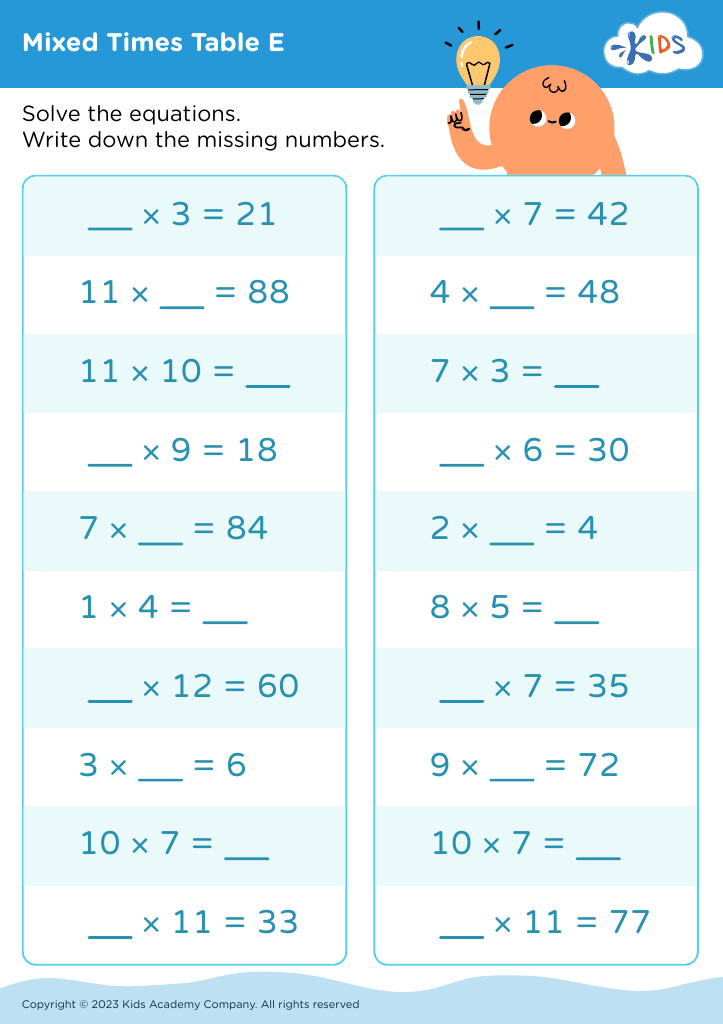
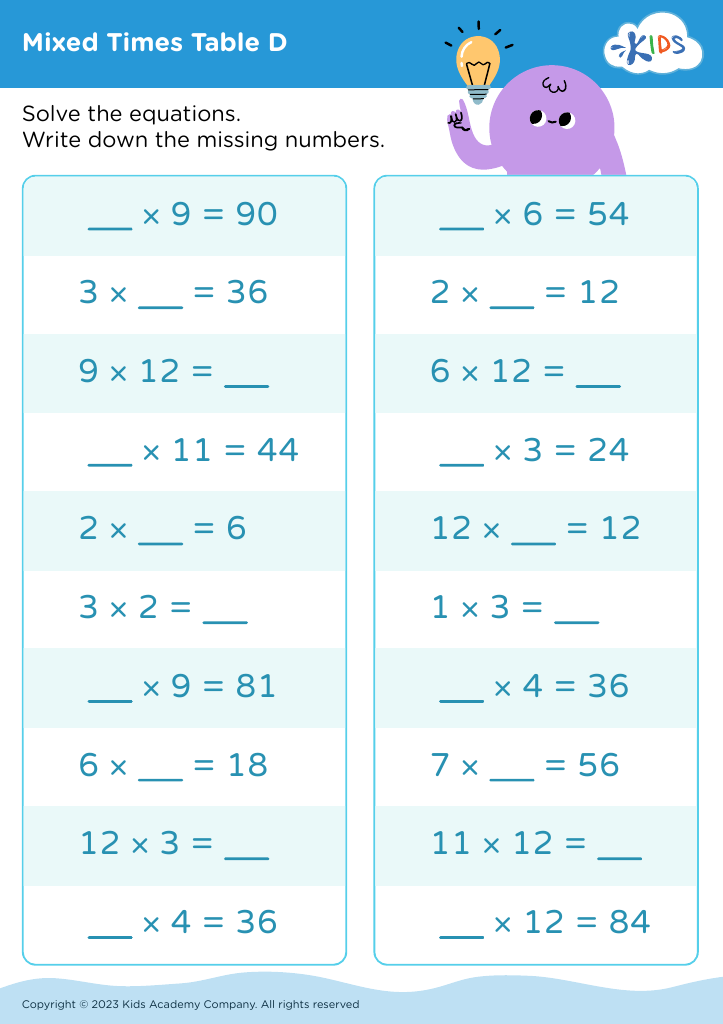
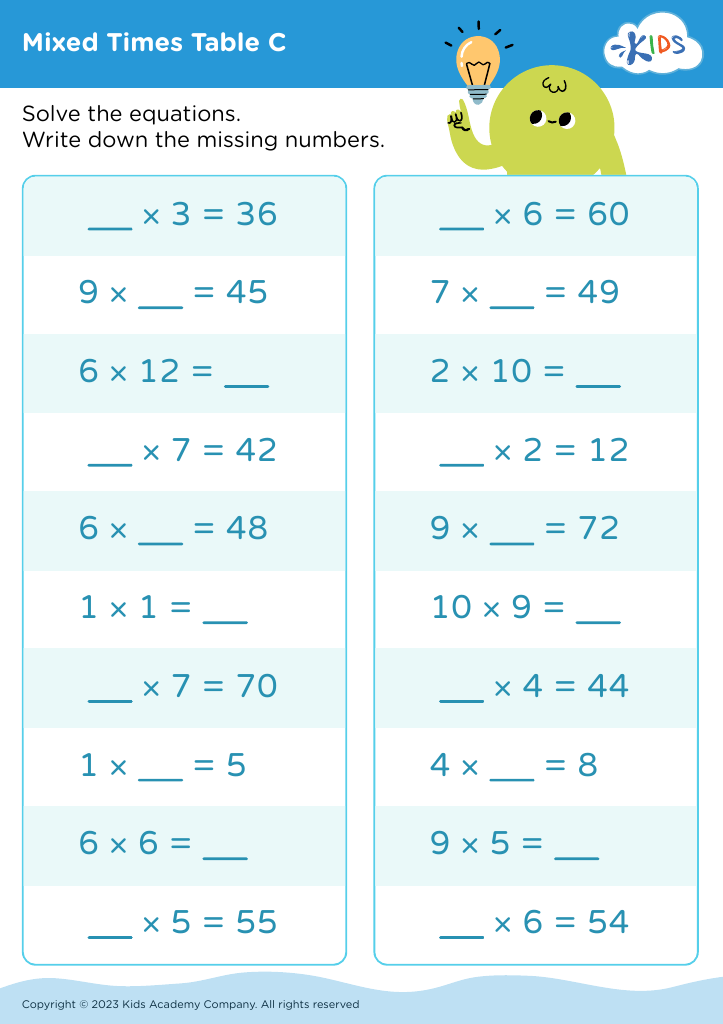


Parents and teachers should prioritize mental math skills, particularly the Extra Challenge Mixed Times Tables, for children aged 5-8 for several compelling reasons. First, mental math fosters a strong mathematical foundation. Mastering multiplication tables not only enhances arithmetic fluency but also builds confidence in problem-solving. When kids can quickly recall their times tables, they begin to see patterns and relationships between numbers, laying the groundwork for more complex mathematical concepts later on.
Furthermore, strong mental math skills have real-world applications, helping children in everyday situations such as shopping or cooking. By making math relevant and engaging, children develop a more positive attitude towards mathematics. The Extra Challenge aspect introduces an element of fun and competition, encouraging children to push their boundaries and improve their skills.
In addition, mental math strengthens cognitive abilities like memory and critical thinking. As children practice, they learn to focus and think on their feet, skills that are applicable across all subjects. Ultimately, fostering these skills creates a solid, self-assured learner equipped to tackle future academic challenges with ease and enthusiasm. Parents and teachers working together to nurture mental math will ensure children not only excel in mathematics but also develop resilient, logical thinking skills valuable throughout life.








