Problem-Solving Skills Extra Challenge Multiplication Worksheets for Ages 5-8
4 filtered results
-
From - To
Empower young learners with our "Problem-Solving Skills Extra Challenge Multiplication Worksheets for Ages 5-8"! These engaging, printable worksheets are designed to hone critical thinking and mathematical skills in young minds. Each sheet offers compelling challenges, blending multiplication exercises with real-world problem-solving scenarios, making learning fun. Perfect for classroom or home use, these worksheets help children develop confidence and proficiency in their multiplication abilities by solving complex problems step-by-step. Dive into our rich learning resource to foster a deeper understanding of math concepts while igniting a passion for problem-solving in your child.
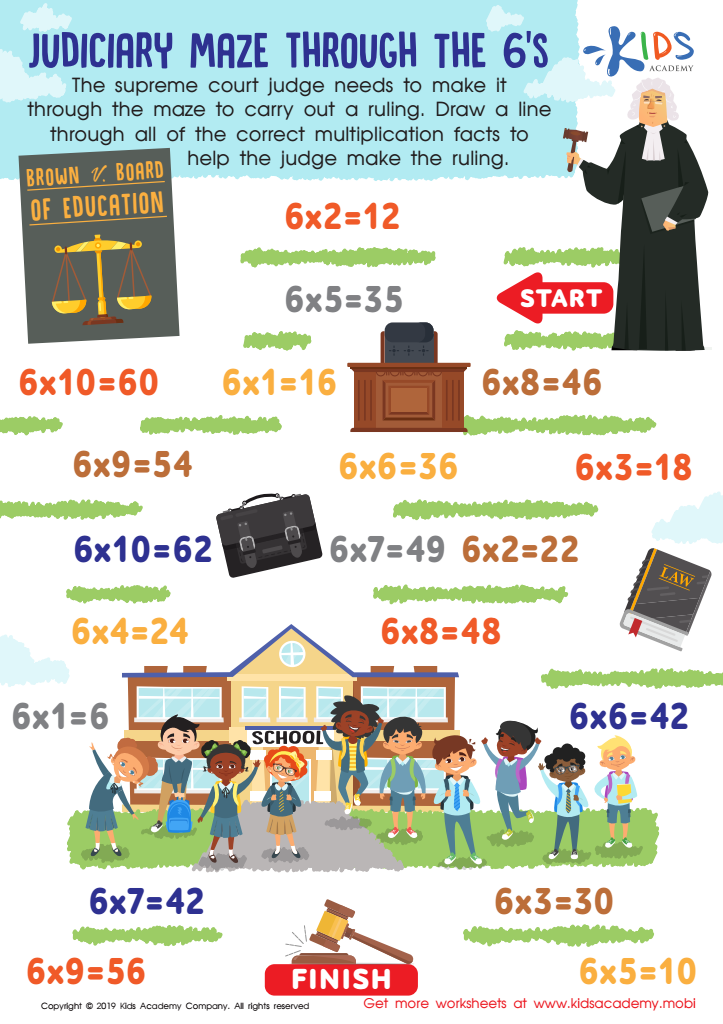
Judiciary Maze Through The 6’s Worksheet
 Assign to My Students
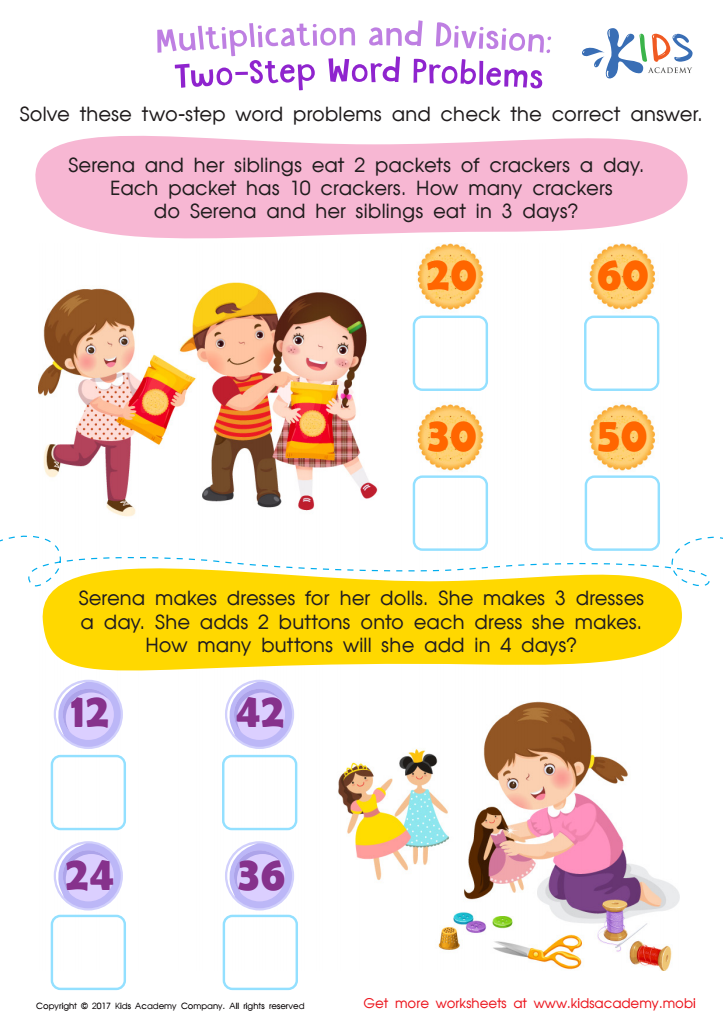
Two Step Word Problems Worksheet
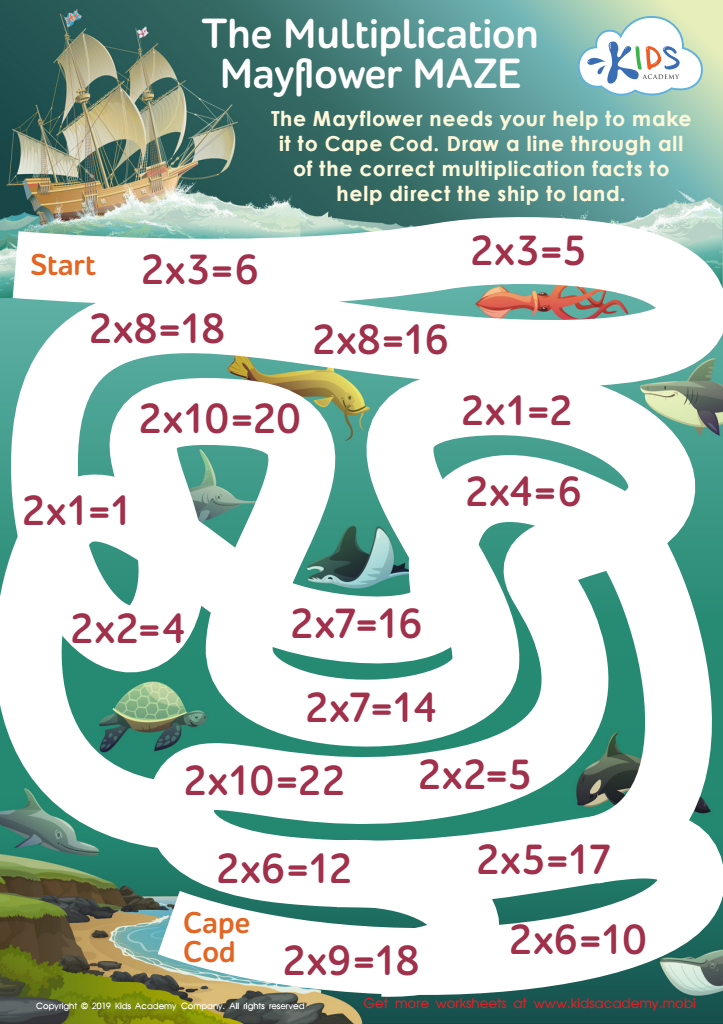
The Multiplication Mayflower Maze Worksheet








Parents and teachers should care about introducing Problem-Solving Skills Extra Challenge Multiplication to children aged 5-8 because it fosters essential cognitive development and lays a strong foundation for future learning. At this critical period, young minds are highly receptive to new concepts and ways of thinking. Engaging in challenging multiplication tasks can enhance a child's numerical understanding and teach them how to approach problems methodically.
Problem-solving in mathematics encourages critical thinking, logic, and the ability to see patterns, all of which are vital skills beyond the classroom. These skills are essential for success in other academic areas and in real-world situations. Multiplication is a fundamental mathematical operation that, when mastered early, simplifies the understanding of more complex topics, such as division, fractions, and algebra, later on.
Moreover, tackling challenging problems boosts children's confidence. It teaches persistence, patience, and resilience—traits that are valuable lifelong lessons. For teachers, these activities provide insights into a child's strengths and areas that may need improvement, allowing for more tailored and effective teaching approaches.
Lastly, early exposure to fun and engaging multiplication challenges can spark a love for math. When children enjoy what they’re learning, they are more likely to retain information and develop a positive attitude towards academics, contributing to a healthy and proactive learning environment.








