Mental math skills Extra Challenge Times Tables Worksheets for Ages 5-8
3 filtered results
-
From - To
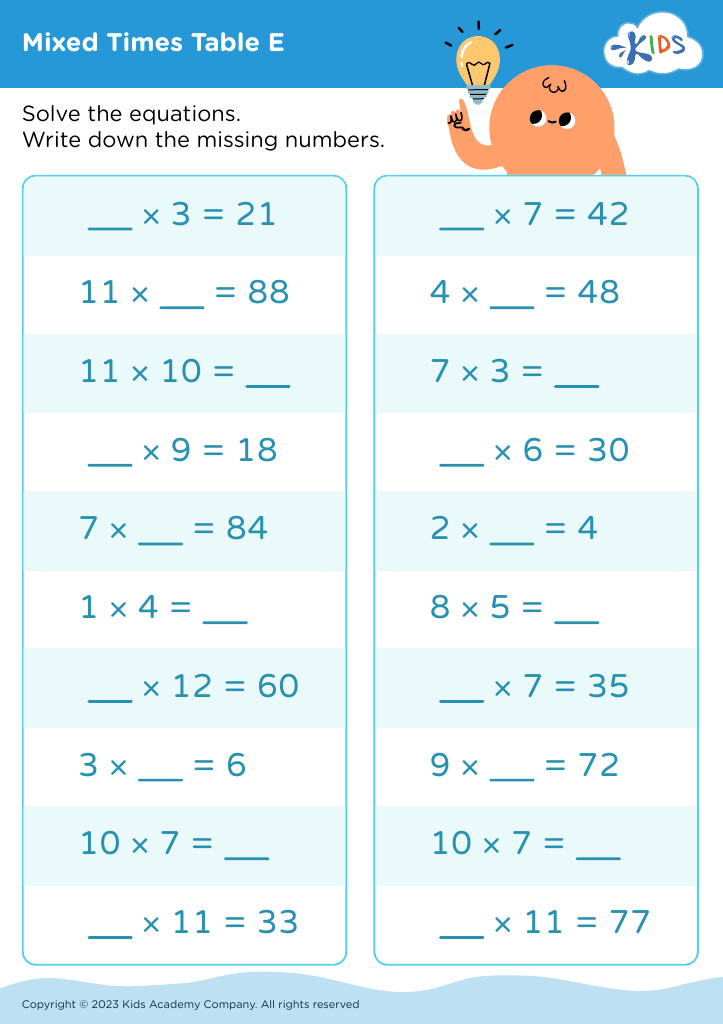
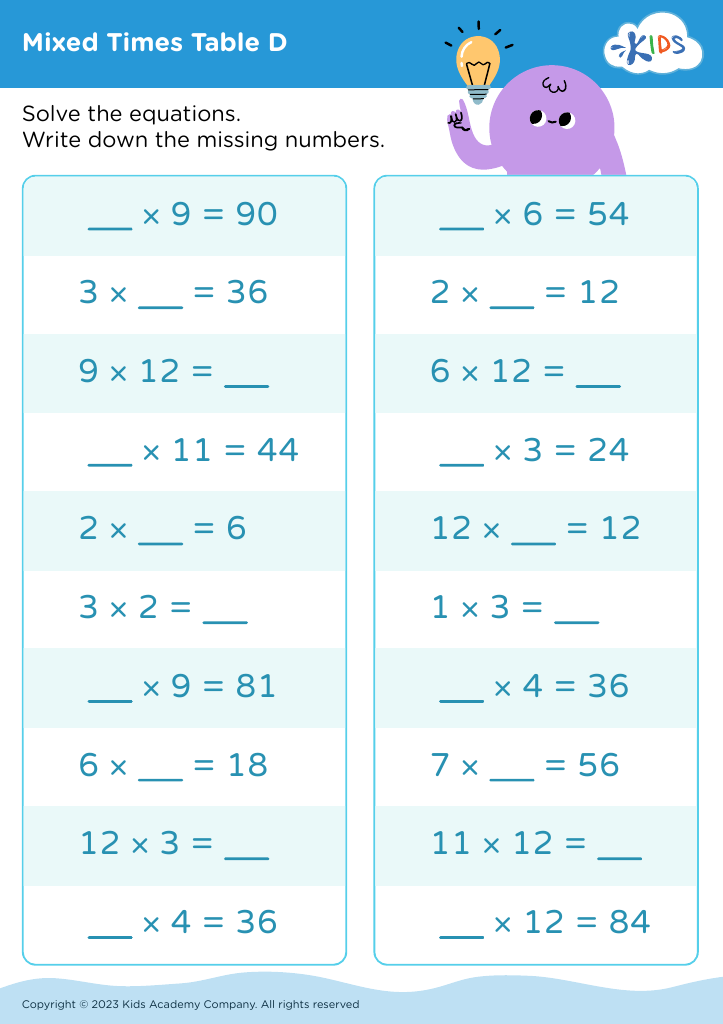
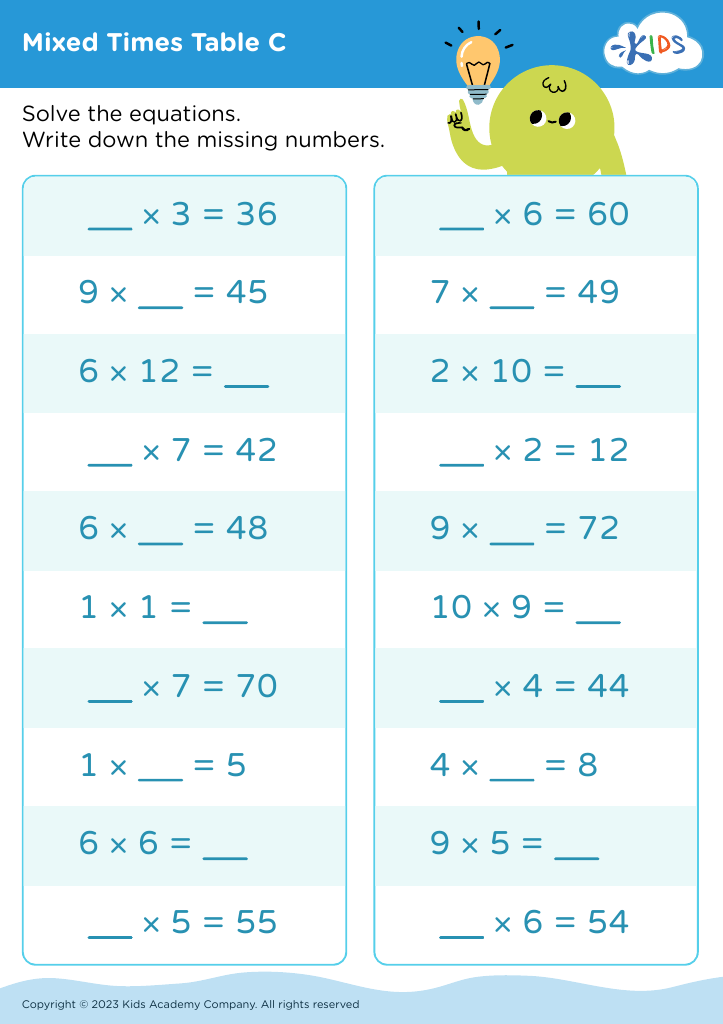
Boost your child's arithmetic prowess with our "Mental Math Skills Extra Challenge Times Tables Worksheets for Ages 5-8"! Tailored for young learners, these engaging worksheets help solidify fundamental math concepts while enhancing mental calculation abilities. Each problem is carefully crafted, transforming learning times tables into an exciting challenge that promotes confidence in math skills. Perfect for kindergarten to 2nd grade, these worksheets not only support classroom learning but also foster a love for math through fun and interactive practices. Give your child the extra edge they need in mathematics with these expertly designed printable worksheets from Kids Academy.





Parents and teachers should care about fostering mental math skills, particularly times tables, in children aged 5-8, as these formative years are crucial for lifelong numeracy competence. Building a strong arithmetic foundation lays the groundwork for more advanced mathematical concepts and problem-solving abilities, fostering confidence and proficiency in math. Mental math encourages quick thinking and enhances cognitive abilities like memory, concentration, and logical reasoning.
When children master times tables early, it not only streamlines their calculations but also boosts their self-esteem, giving them the confidence to tackle more complex math challenges. This makes classroom learning more enjoyable and less stressful, paving the way for academic success across subjects. Additionally, these skills are invaluable in everyday life scenarios such as budgeting or time management, forming the backbone of practical mathematical applications.
For parents and teachers alike, integrating fun and engaging ways to practice mental math—through games, activities, or challenges—makes learning an enjoyable experience rather than a chore. This positive association with math can inspire a lasting appreciation for the subject, shaping well-rounded individuals who see mathematics as an integral, approachable part of their daily lives. The early mastery of mental math and multiplication tables is, therefore, an investment in a child’s educational journey and personal development.








