
Critical thinking skills Extra Challenge Worksheets for Ages 5-9
5 filtered results
Difficulty Level
Grade
Age
-
From - To
Subject
Activity
Standards
Boost your child's cognitive development with our "Critical Thinking Skills Extra Challenge Worksheets" specifically designed for ages 5-9. These engaging and challenging exercises aim to enhance problem-solving abilities, logical reasoning, and creative thinking in young learners. Our diverse range of activities, from puzzles to brainteasers, fosters intellectual curiosity and helps build a solid foundation for future learning. Ideal for both classroom settings and at-home enrichment, these worksheets are crafted to be both educational and fun, ensuring your child remains interested and motivated. Empower your child with essential life skills through interactive and purposeful practice.
Favorites
With answer key
Interactive
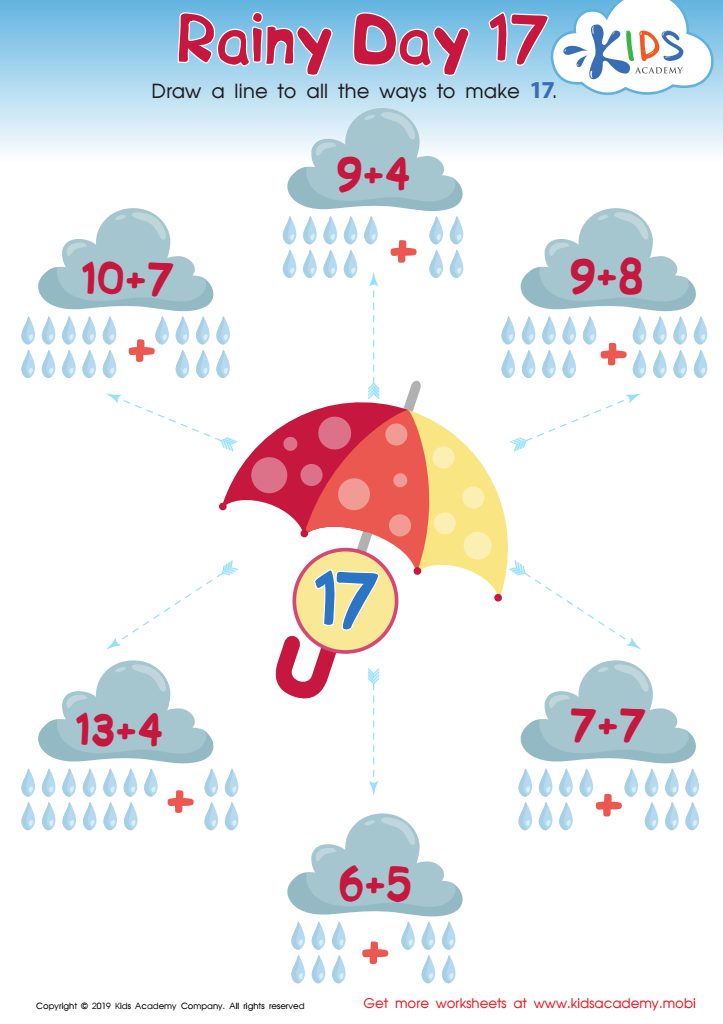
Rainy Day 17 Worksheet
Assist your kids with the 6 equations given. Each cloud displays the sum of two numbers, some of which make 17. Guide them to figure out the total of both numbers when added and draw a line to the umbrella in the center to illustrate the different ways to make 17. This activity will sharpen their addition skills.
 Assign to My Students
Rainy Day 17 Worksheet
Worksheet
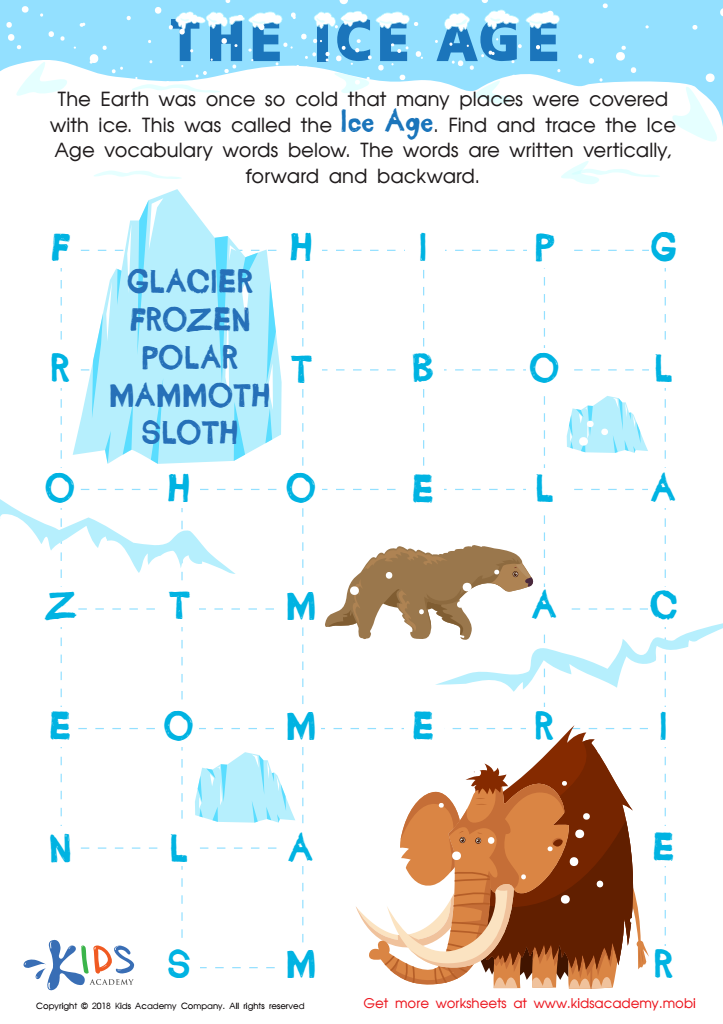
The Ice Age Worksheet
Let your child explore the Ice Age with this fun word search from Kids Academy! They can find words like glacier, frozen, polar, mammoth, and sloth. After finding each, discuss the meaning to help them build a better vocabulary and understanding of ancient history.
The Ice Age Worksheet
Worksheet
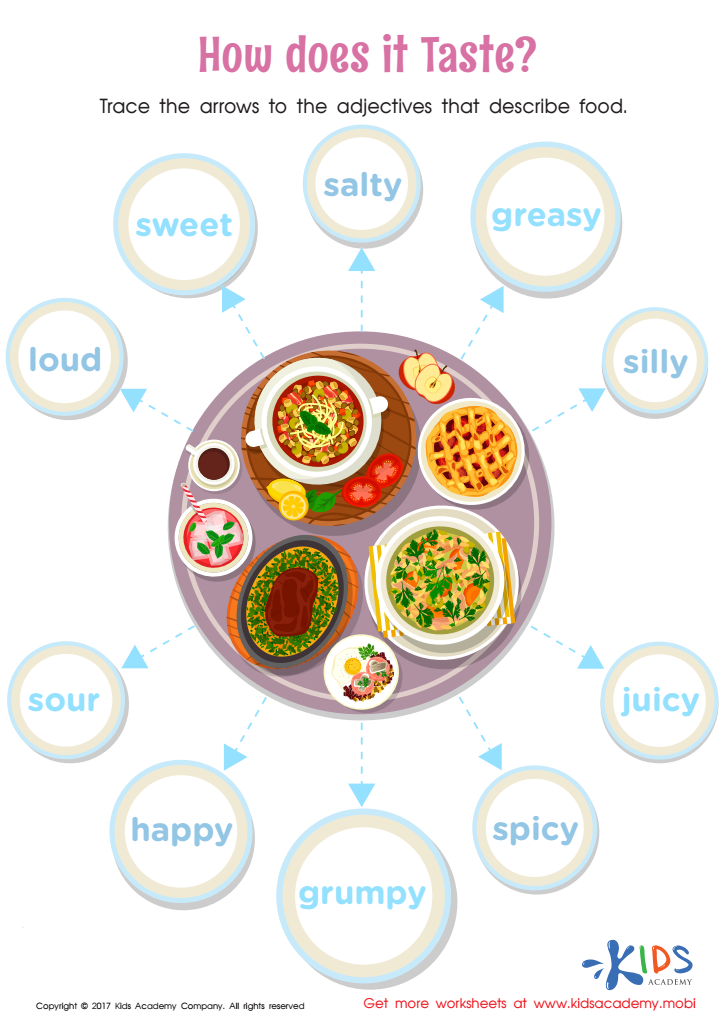
Food Adjectives Worksheet
Here’s a fun PDF worksheet to get your child’s taste buds tingling and help build descriptive language skills!
Food Adjectives Worksheet
Worksheet
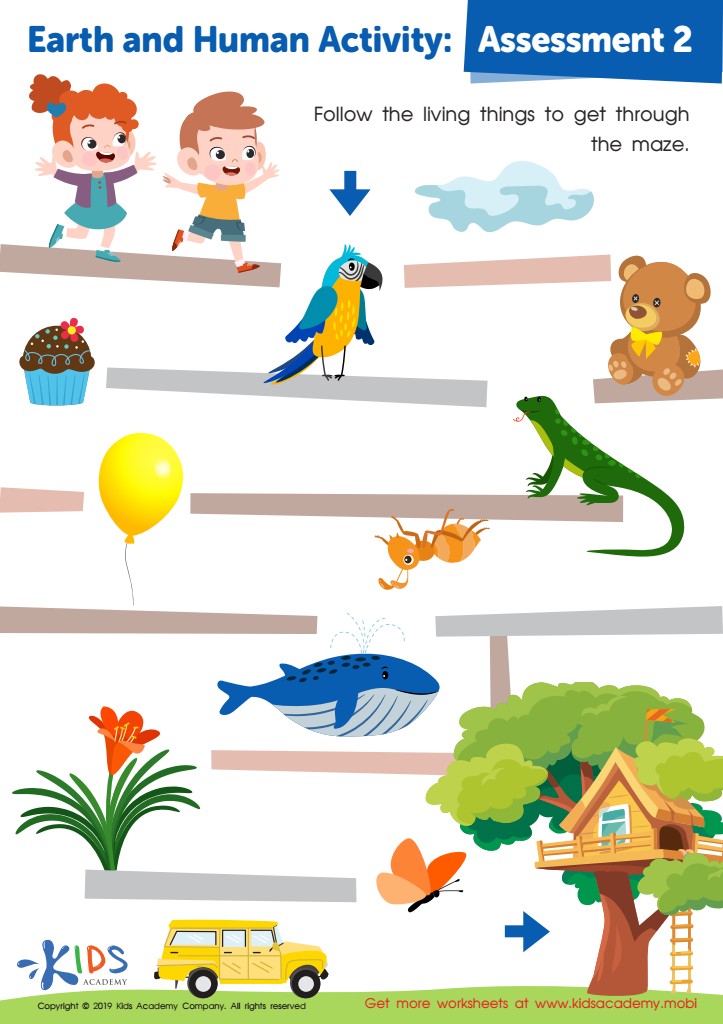
Earth and Human Activity: Assessment 2 Worksheet
Earth is alive with birds, trees, insects, and animals. Explain to your kids that the environment on Earth supports life. Ask for examples, then use the worksheet pictures to help them identify living things and complete the maze.
Earth and Human Activity: Assessment 2 Worksheet
Worksheet
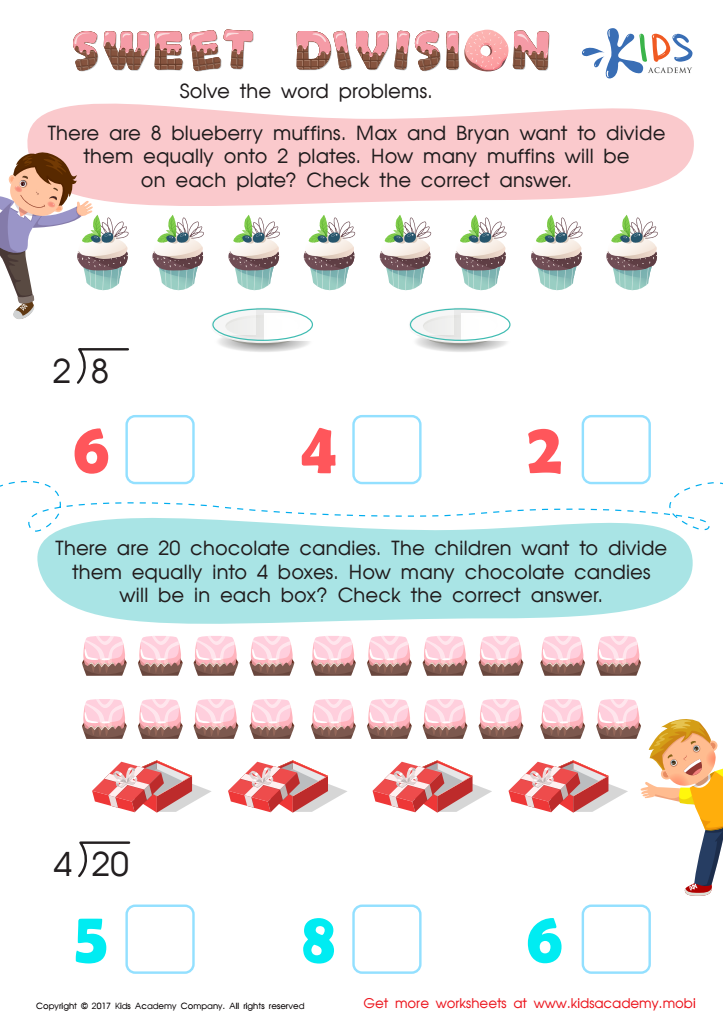
Division Word Problems Worksheet
This division worksheet helps kids understand how long division problems appear as word problems. Perfect for 3rd graders, it'll boost their confidence in solving division problems.
Division Word Problems Worksheet
Worksheet
Join Kids Academy for Free
Who is primarily going to use this learning content?








Parents and teachers should prioritize critical thinking skills for children aged 5-9 to foster their cognitive growth and prepare them for future challenges. At these early stages, children are highly impressionable and capable of developing foundational skills that will serve them throughout life. Critical thinking encourages kids to analyze information, solve problems creatively, and make reasoned decisions rather than relying on rote memorization. This lays a strong foundation for deeper understanding and academic success.
Moreover, nurturing these skills helps children become more independent and capable of critical assessment. This is especially important in a world overflowing with information and misinformation. Equipping young minds with the ability to discern fact from fiction and biases early on will serve as a vital life skill. In addition, critical thinking enhances social and emotional learning. When children learn to view problems from multiple perspectives, they become more empathetic and effective communicators.
For teachers, integrating these challenges in lessons enhances engagement and sustains curiosity, which is essential for a positive learning environment. For parents, it means opportunities for cultivating inquisitive and resilient children. Ultimately, developing critical thinking skills in young learners sets the stage for lifelong curiosity, problem-solving ability, and the confidence to navigate complex situations.








