
Noun identification Extra Challenge Worksheets for Ages 5-9
4 filtered results
Difficulty Level
Grade
Age
-
From - To
Subject
Activity
Standards
Introduce your young learners to the engaging world of nouns with our "Noun Identification Extra Challenge Worksheets for Ages 5-9!" These expertly crafted worksheets are designed to strengthen your child's grammar skills by enhancing their ability to identify nouns in a variety of sentences. Ideal for both classroom and home use, these extra challenge exercises provide the perfect balance of fun and education. Captivate the growing minds of kids ages 5-9 with vibrant illustrations and interactive activities that make learning about nouns an enjoyable adventure. Get ready to watch your students' linguistic abilities flourish with our comprehensive worksheets!
Favorites
With answer key
Interactive
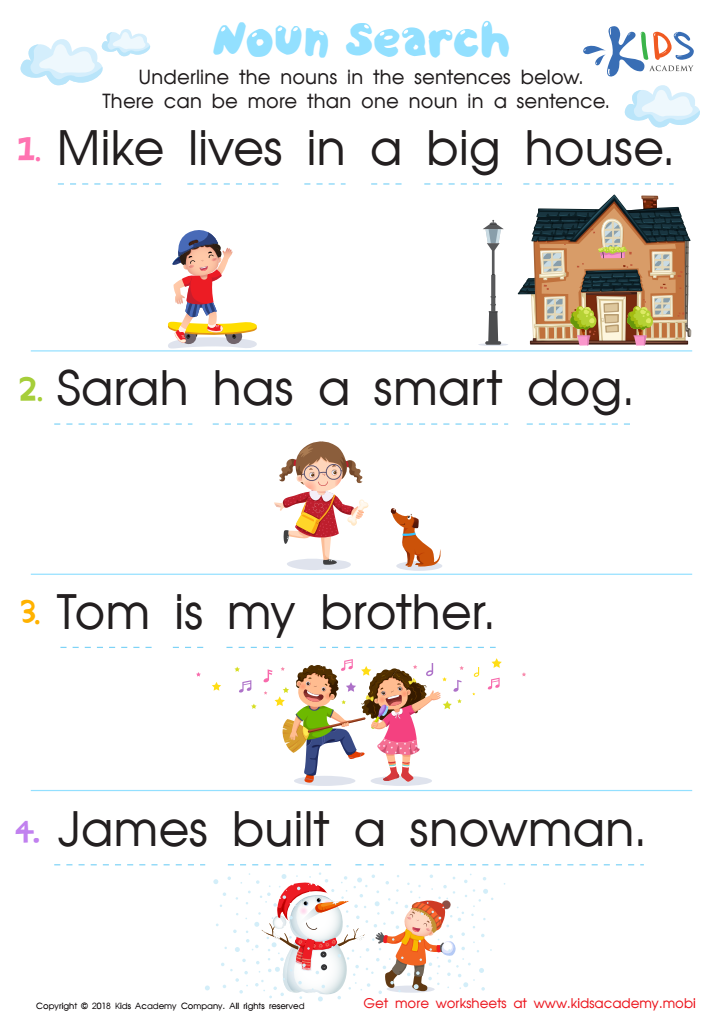
Noun Search Worksheet
To help your children learn the basics of grammar, start with nouns, verbs, adverbs and adjectives. This noun search worksheet will help your child understand the most common part of speech - the noun. Ask them to underline the nouns in each sentence. This is a great way to start learning proper grammar.
 Assign to My Students
Noun Search Worksheet
Worksheet
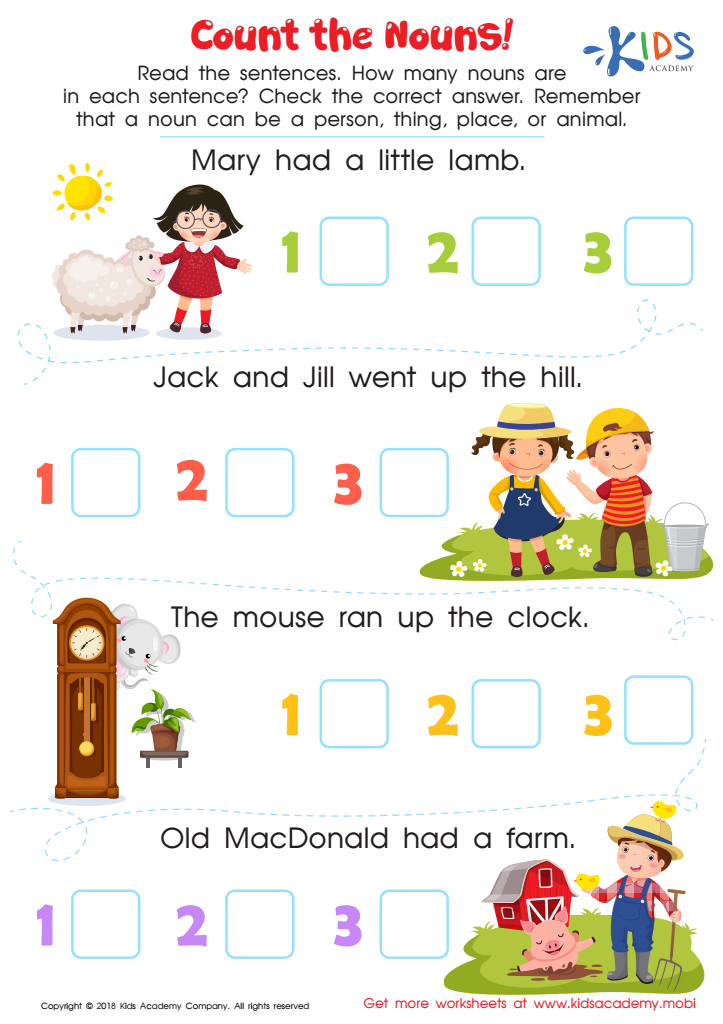
Count the Nouns Worksheet
Read the sentences with your children and ask them to find the nouns. Explain that nouns are names of people, animals, places or things. Point out the boxes with the answers to check.
Count the Nouns Worksheet
Worksheet
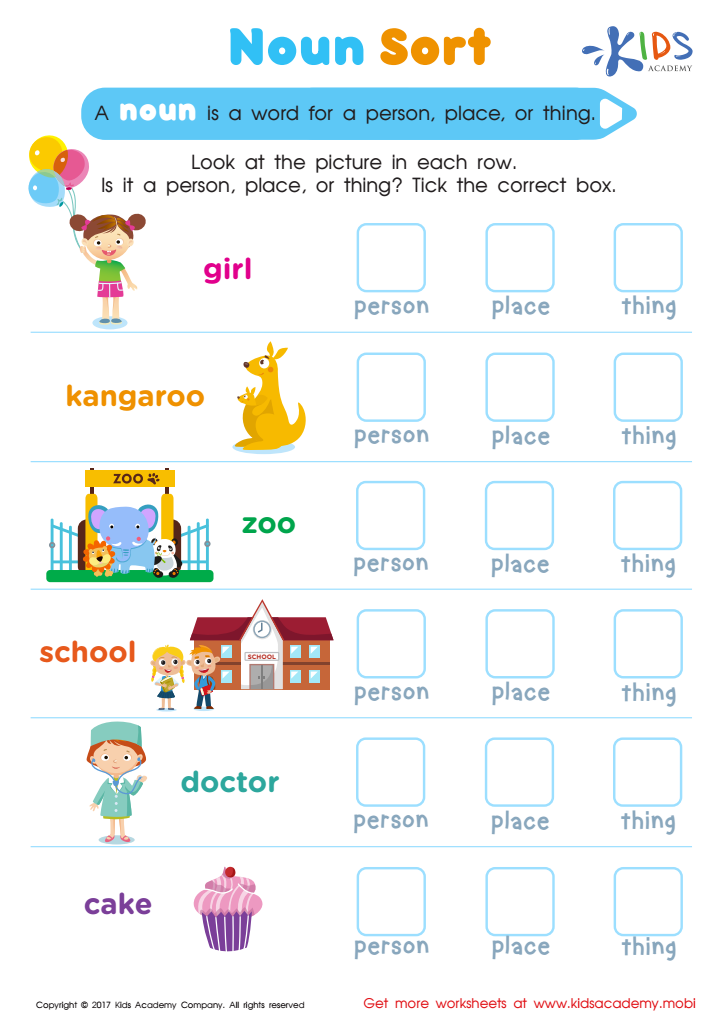
Noun Sort Printable
This printable worksheet helps kids sort nouns into person, place, or thing categories. Perfect for learning the basics of grammar!
This printable worksheet helps kids learn parts of speech by sorting nouns into person, place, or thing categories using familiar images. Perfect for mastering basic grammar!
Noun Sort Printable
Worksheet
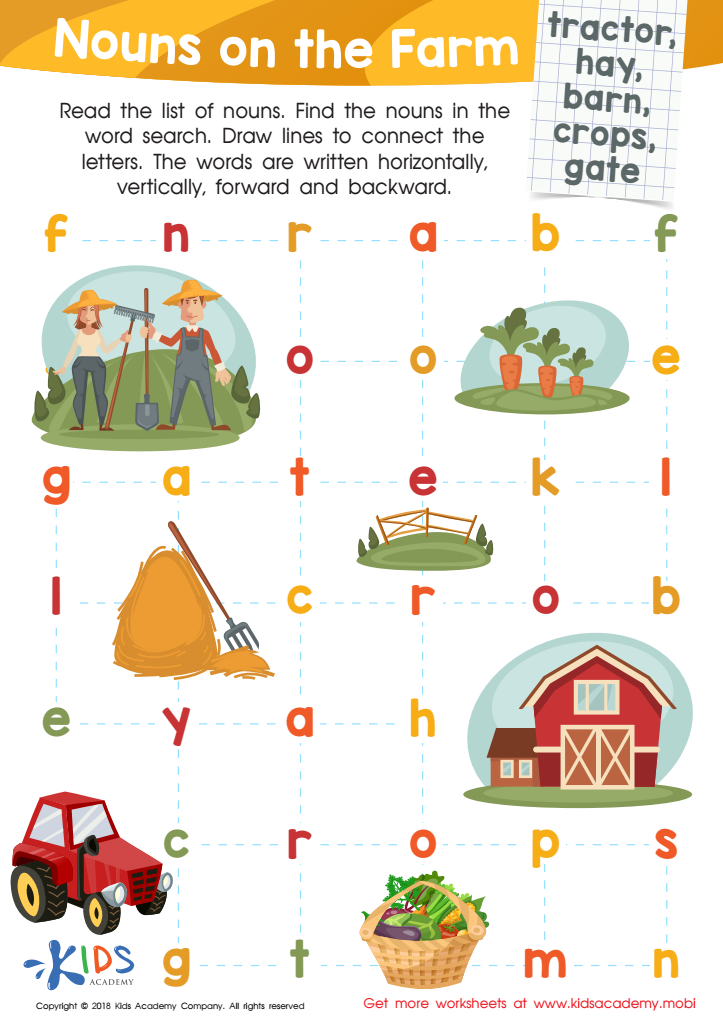
Nouns on the Farm Worksheet
Help your child learn nouns with this worksheet: Read the list to them and have them find the nouns in the word search. Draw lines to connect the letters, and explain the words can be found horizontally, vertically, forward, and backward.
Nouns on the Farm Worksheet
Worksheet
Join Kids Academy for Free
Who is primarily going to use this learning content?







Parents and teachers should place importance on Noun Identification Extra Challenges for children aged 5-9 because foundational language skills are crucial at this stage of development. Nouns are the building blocks of language, representing people, places, things, and ideas. By ensuring children can identify and understand nouns, they lay the groundwork for effective communication and literacy skills.
This age period is ideal for language acquisition; cognitive development is highly receptive to new information. Confronting children with extra challenges in noun identification promotes critical thinking and cognitive flexibility. Kids begin recognizing the differences between concrete nouns (e.g., "dog," "apple") and abstract nouns (e.g., "freedom," "happiness"), providing a better grasp of their usage in sentences.
Engaging in these activities enhances vocabulary, which directly impacts reading comprehension and writing skills. A richer vocabulary allows children to express their thoughts more clearly and accurately. Furthermore, these exercises make learning interactive and enjoyable, fostering a love for language and learning in general.
Finally, mastering noun identification early can prevent future learning difficulties, helping children remain confident and proficient as they progress through increasingly complex language and grammar concepts. Investing in such fundamental exercises ensures children build a solid linguistic foundation essential for academic success and everyday communication.








