Math problem-solving Extra Challenge Addition & Subtraction Worksheets for Ages 5-9
4 filtered results
-
From - To
Introduce your child to a fun and engaging way to master addition and subtraction with our "Math Problem-Solving Extra Challenge" worksheets for ages 5-9. Designed to bolster arithmetic skills, these worksheets offer a variety of challenging problems that stimulate critical thinking and problem-solving abilities. Your child will tackle real-world scenarios and complex puzzles, helping them to develop a deep understanding of mathematical concepts. Perfect for enhancing classroom learning or providing additional practice at home, our worksheets are a must-have resource for any young learner eager to excel in math. Download now and watch your child's confidence soar!
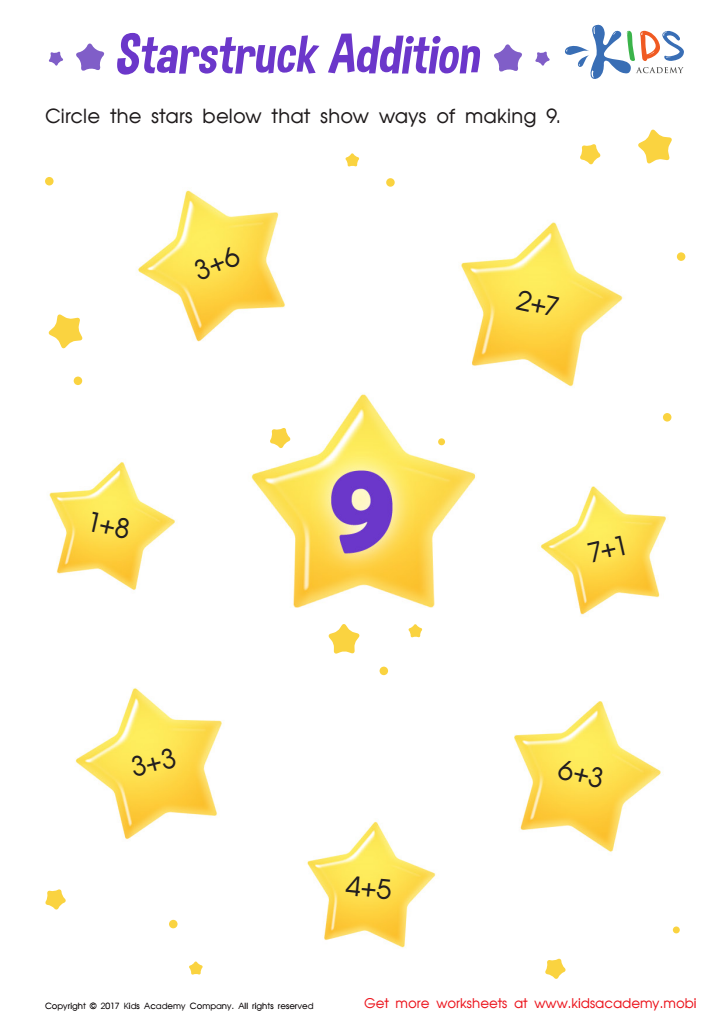
Starstruck Addition Printable
 Assign to My Students
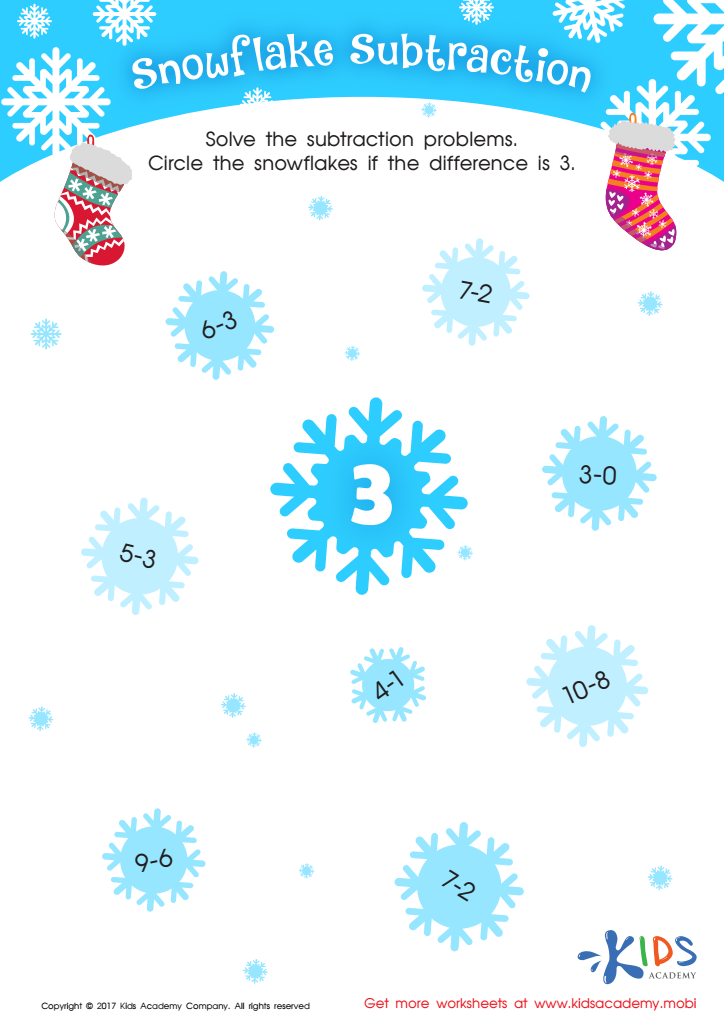
Snowflake Subtraction Worksheet
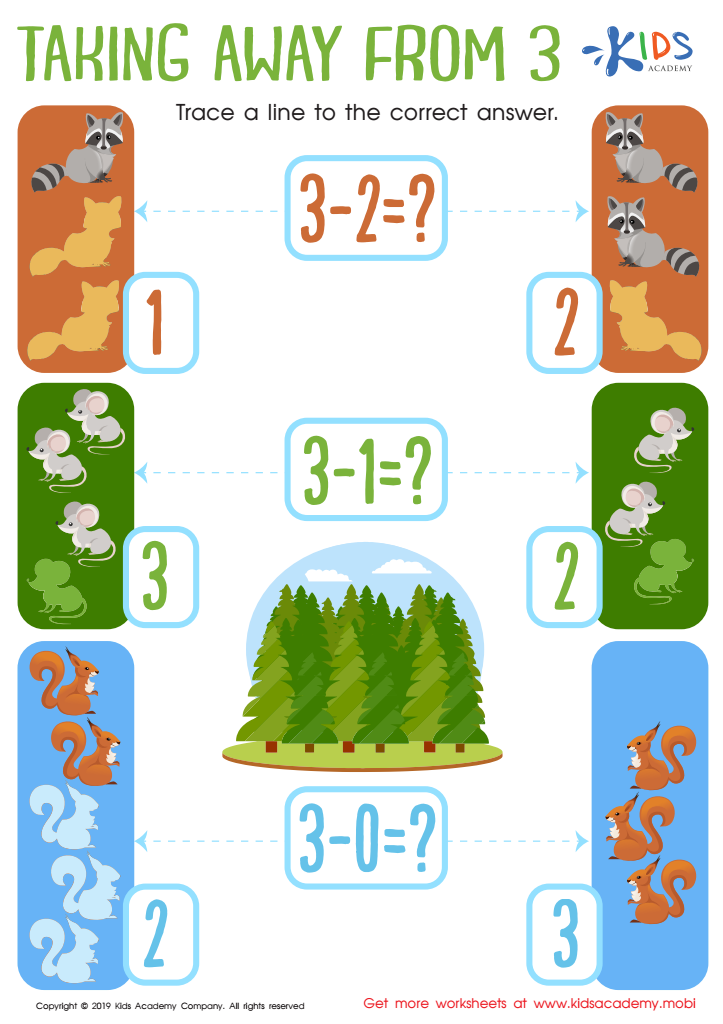
Taking Away From 3 Worksheet








Parents and teachers should care about Math problem-solving Extra Challenge Addition & Subtraction for ages 5-9 because these formative years are critical for developing foundational math skills that shape future academic success. Engaging young learners with challenging problems boosts their critical thinking and encourages a deeper understanding of concepts. When children tackle addition and subtraction challenges, they don't just memorize facts; they learn strategies, develop perseverance, and build confidence in handling more complex problems later.
Emphasizing problem-solving helps children see math as more than rote learning; it becomes a way to approach and solve real-world situations. Additionally, introducing Extra Challenge problems nurtures an enthusiasm for learning and prevents early math anxiety. It stimulates curiosity and makes learning fun, which is vital for young brains.
This kind of engagement in math also fosters better cognitive development. Enhanced problem-solving skills are closely linked to improved logical reasoning and pattern recognition. These benefits extend beyond math, influencing other areas of learning, including reading and science. For parents, this translates into future academic success; for teachers, it means smoother progression in higher grades with a cohort of students who are well-prepared and confident in their math abilities. Thus, these extra challenges are not mere academic exercises but critical to holistic child development.