Interpreting data Extra Challenge Graphs Worksheets for Ages 5-9
3 filtered results
-
From - To
Unlock the world of data interpretation with our Interpreting Data Extra Challenge Graphs Worksheets for Ages 5-9! Designed to engage young learners, these worksheets provide exciting activities that boost critical thinking and analytical skills. Children will explore various graph types through interactive exercises, learning to extract meaningful insights from data. Perfect for classrooms or at-home learning, our worksheets cultivate curiosity and foster a love for math through fun challenges that promote problem-solving abilities. With clear instructions and colorful visuals, your child will enjoy analyzing data like a pro! Download now and watch them thrive in their understanding of graphs and data interpretation.
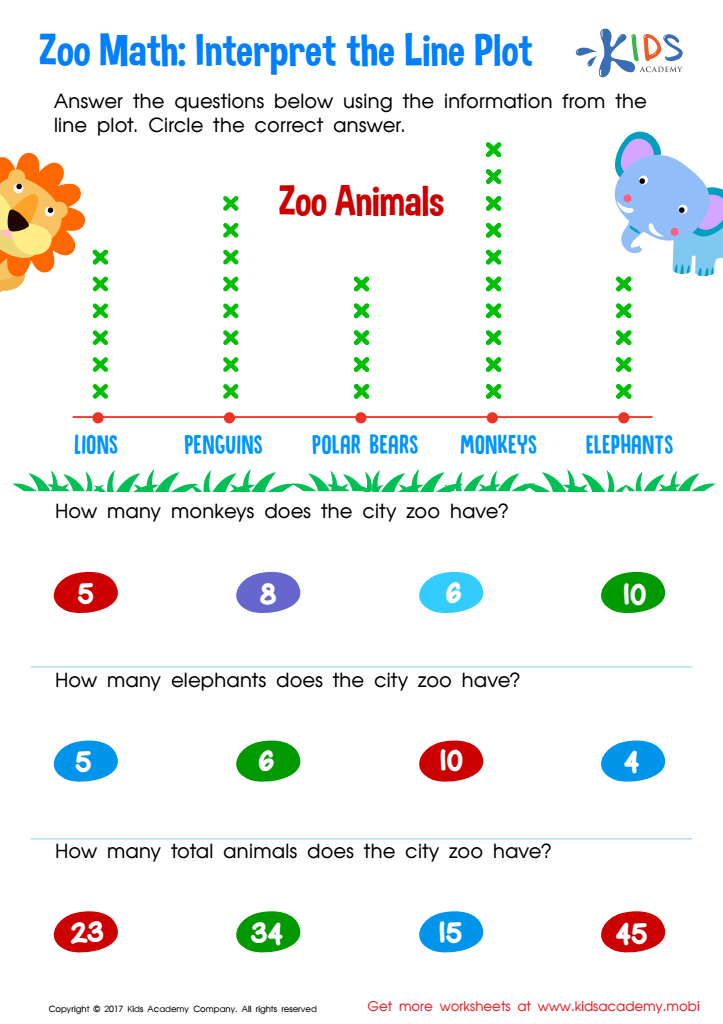
Interpret Line Plot Worksheet
 Assign to My Students
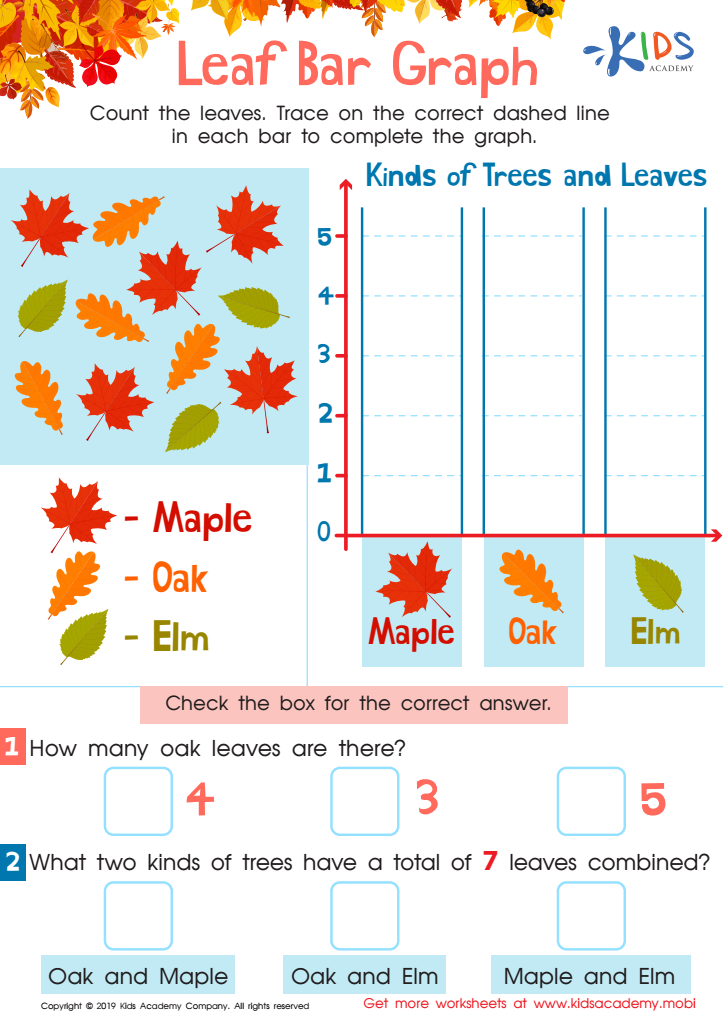
Leaf Bar Graph Worksheet
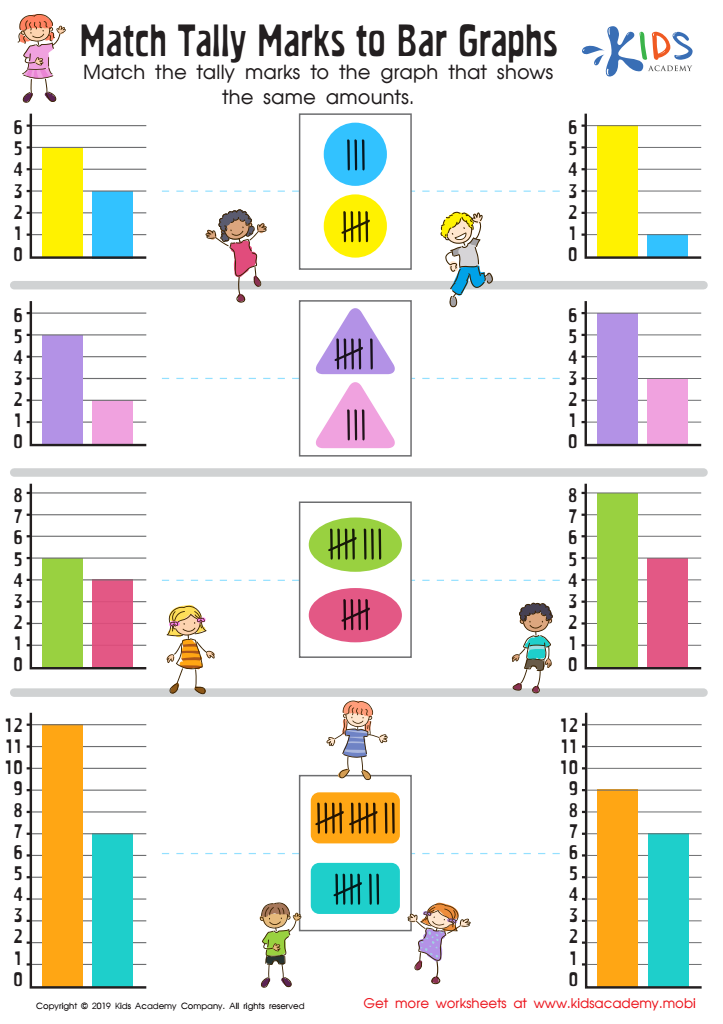
Match Tally Marks to Bar Graphs Worksheet








Interpreting data through Extra Challenge Graphs is crucial for both parents and teachers of children aged 5-9, as it builds foundational skills in critical thinking and data literacy. At this early stage, children are beginning to understand their environment and the information it contains. By engaging with graphs, children learn to visualize and interpret data, enabling them to draw conclusions based on presented information.
For parents, supporting their child's engagement with graphs can foster a love for math and science, encouraging inquisitiveness and analytical thinking. It also provides parents with a valuable opportunity to participate in their child's learning journey, reinforcing the importance of educational activities outside the classroom.
Teachers benefit immensely from incorporating Extra Challenge Graphs into their curriculum as they offer a unique method to assess student progress. Graph activities can identify areas where a student excels or requires additional support, informing personalized teaching strategies. Moreover, dealing with real-world data through these graphs helps cement concepts of mathematics and statistics in an engaging manner.
In summary, by understanding and valuing the role of Extra Challenge Graphs, both parents and teachers can cultivate important skills in children, preparing them for more complex academic tasks in the future.