Vowel Recognition Extra Challenge Missing Vowels Worksheets for 5-Year-Olds
4 filtered results
-
From - To
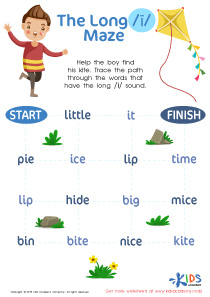
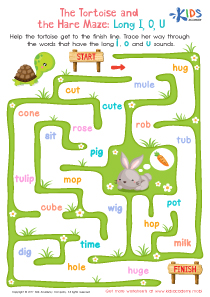
Enhance your child's literacy skills with our "Vowel Recognition Extra Challenge Missing Vowels Worksheets" designed specifically for 5-year-olds! These engaging worksheets guide young learners in identifying and filling in missing vowels in words, reinforcing their understanding of vowel sounds and their importance in reading. Each activity is crafted to foster critical thinking and improve phonetic awareness while making learning fun and interactive. Ideal for at-home learning or classroom activities, these worksheets support essential reading readiness. Set your little ones up for success in their early educational journey with our thoughtfully designed vowel recognition challenges!
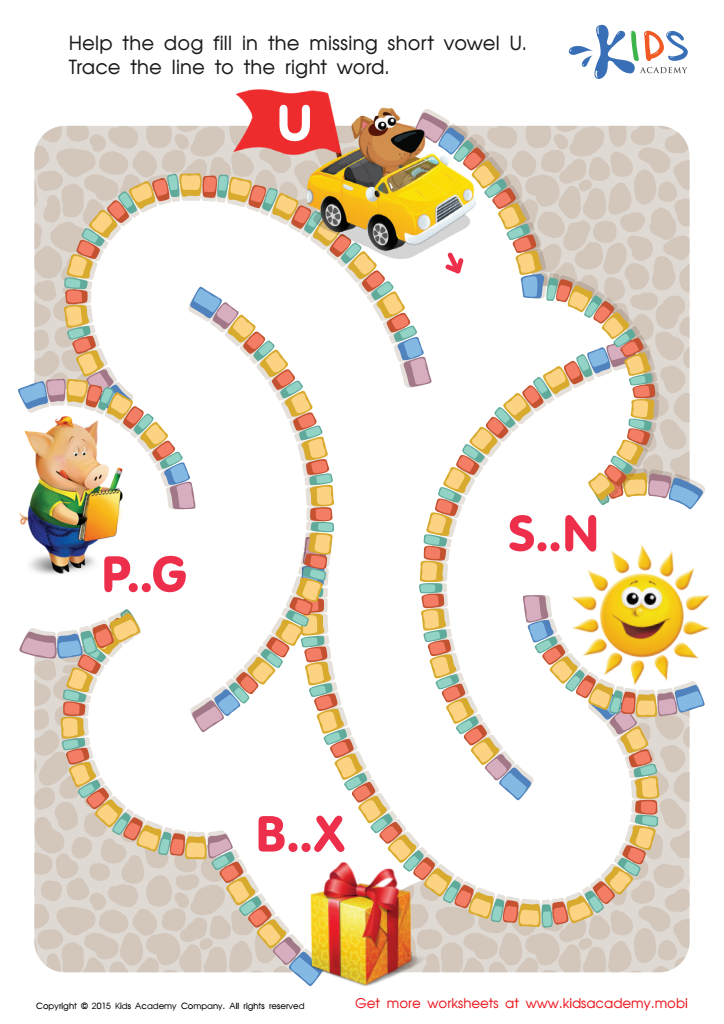
Short Vowel Sound U Worksheet
 Assign to My Students
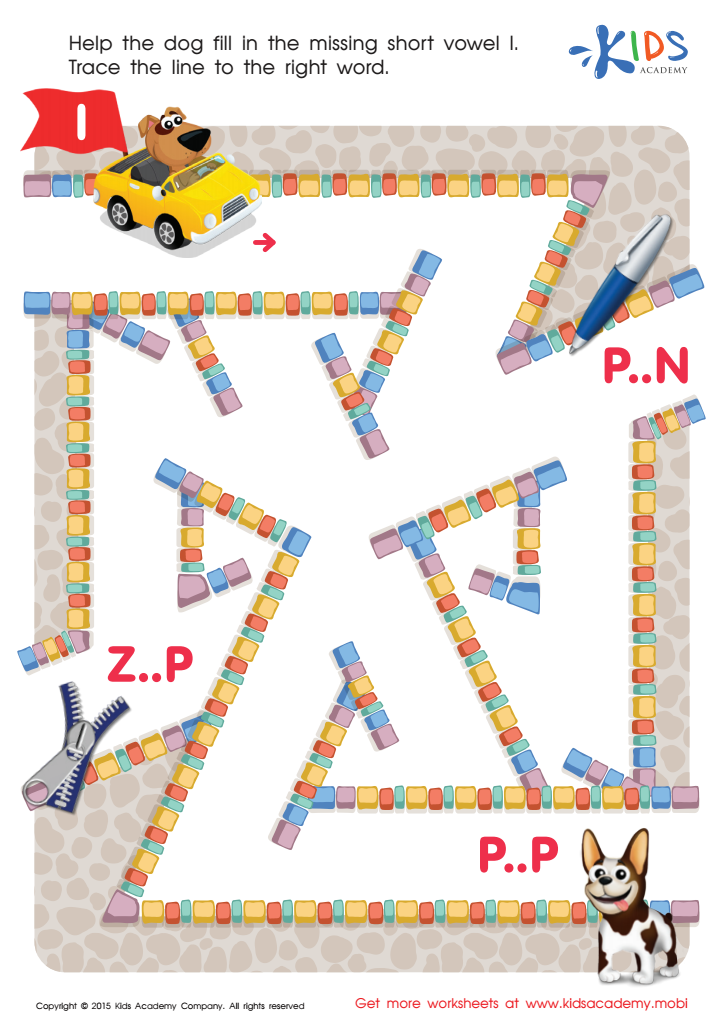
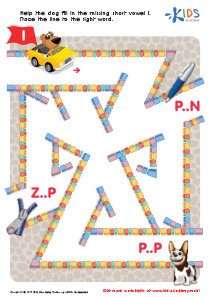
Short Vowel Sound I Worksheet
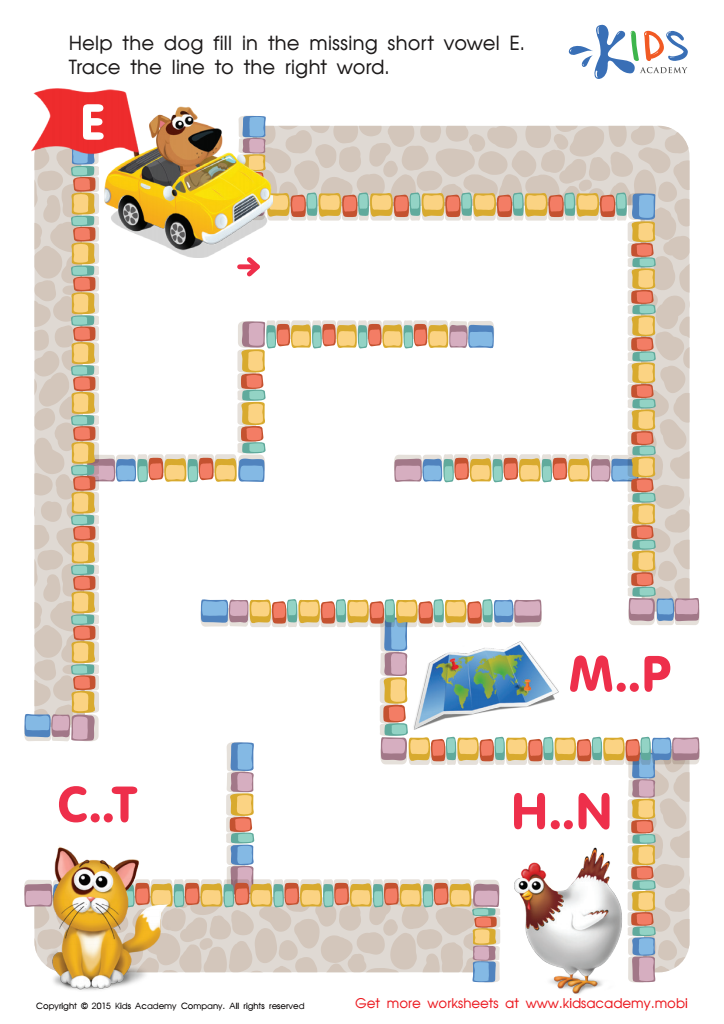
Short Vowel Sound E Worksheet
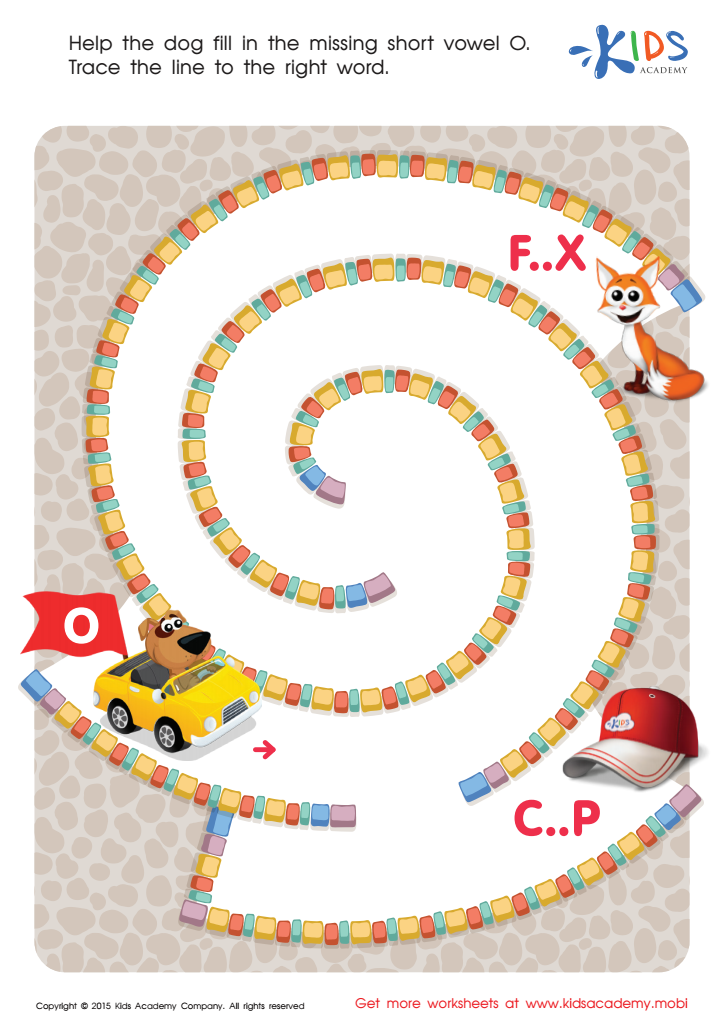
Short Vowel Sound O Worksheet


Vowel recognition is a foundational skill in early literacy development, and integrating games like "Missing Vowels" provides an additional challenge that can significantly enhance it for 5-year-olds. Learning to identify and differentiate vowels not only supports children's phonetic awareness but also builds their confidence in decoding words, leading to improved reading skills. When children engage in this interactive activity, they develop critical thinking as they solve the puzzle of figuring out missing vowels in words.
For parents and teachers, fostering these skills early on helps lay the groundwork for successful reading and writing. It encourages a playful approach to learning, promoting a positive attitude towards literacy challenges. Moreover, recognizing vowels helps children to spell and understand grammatical structures, which are essential for future academic success.
Additionally, participating in vowel recognition games nurtures social skills when children play and learn together. It invites opportunities for discussion, teamwork, and cooperative learning. Thus, "Missing Vowels" serves as more than a mere game; it is an engaging tool that parents and teachers can utilize to create a rich learning environment, emphasizing the importance of mastering vowels in the broader context of language acquisition. This extra challenge can yield lasting benefits in a child’s educational journey.