
Comparing sizes Extra Challenge Worksheets for 5-Year-Olds
4 filtered results
Difficulty Level
Grade
Age
-
From - To
Subject
Activity
Standards
Unlock your 5-year-old's potential with our Comparing Sizes Extra Challenge Worksheets! Crafted to elevate spatial awareness and comparative skills, these engaging worksheets provide a fun, interactive way for young learners to practice distinguishing between different sizes. Ideal for kids ready to move beyond basics, our expertly designed activities help develop critical thinking and problem-solving abilities. With vibrant illustrations and easy-to-follow tasks, children gain confidence while mastering early math concepts. Perfect for at-home learning or supplementing classroom lessons, our worksheets ensure that learning is both enriching and enjoyable. Inspire your child's growth—explore our extra challenge worksheets today!
Favorites
With answer key
Interactive
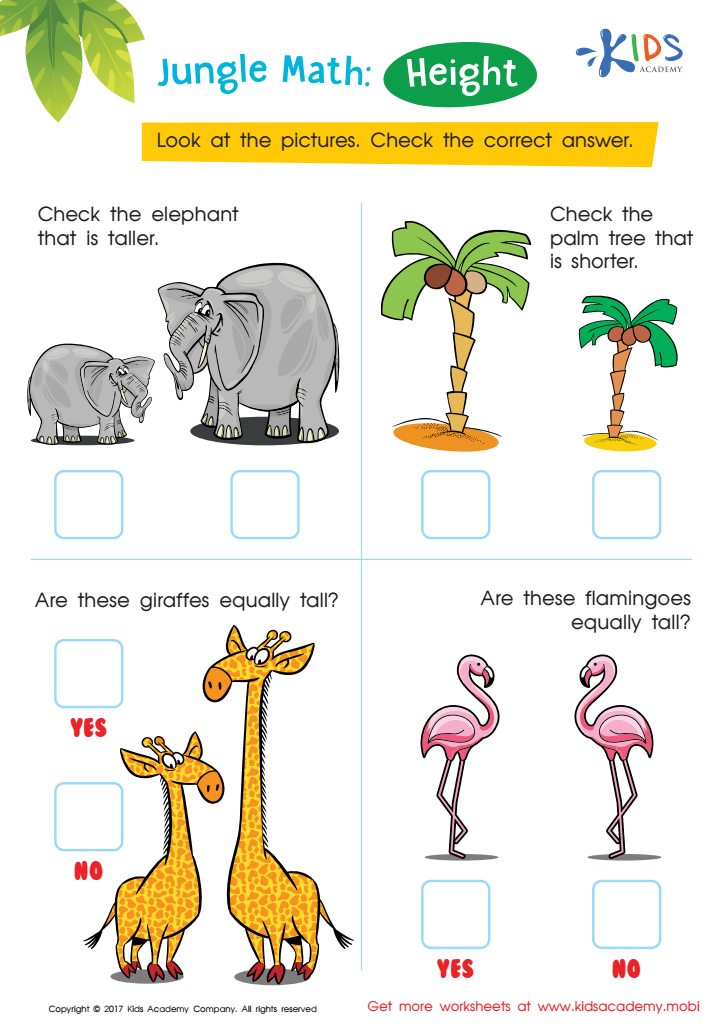
Which Is Taller Worksheet
Help your kindergartner learn about height with this fun worksheet! They'll love comparing zoo animals and deciding which are taller, shorter, or equal. It's a great way to practice math and have fun!
 Assign to My Students
Which Is Taller Worksheet
Worksheet
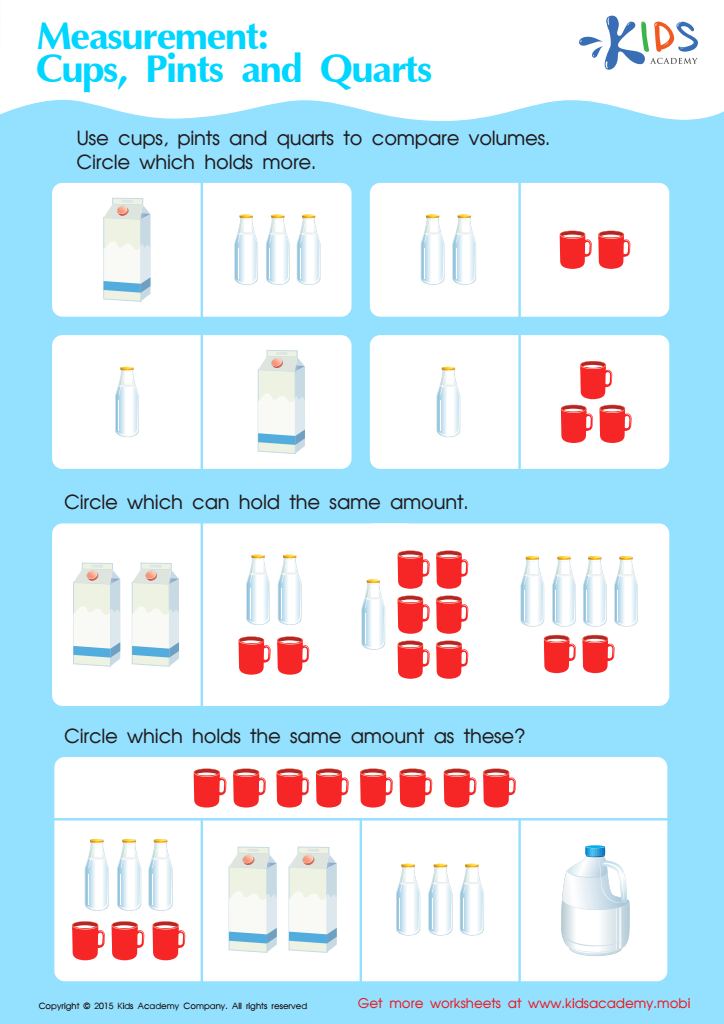
Measurement: Compare Volumes Worksheet
Compare volumes with Kids Academy and have fun! (80 words)
Practice measuring with Kids Academy and have fun! Compare volumes in pictures and circle which holds more. Keep learning with free math worksheets available on our website. Enjoy the process and have fun!
Measurement: Compare Volumes Worksheet
Worksheet
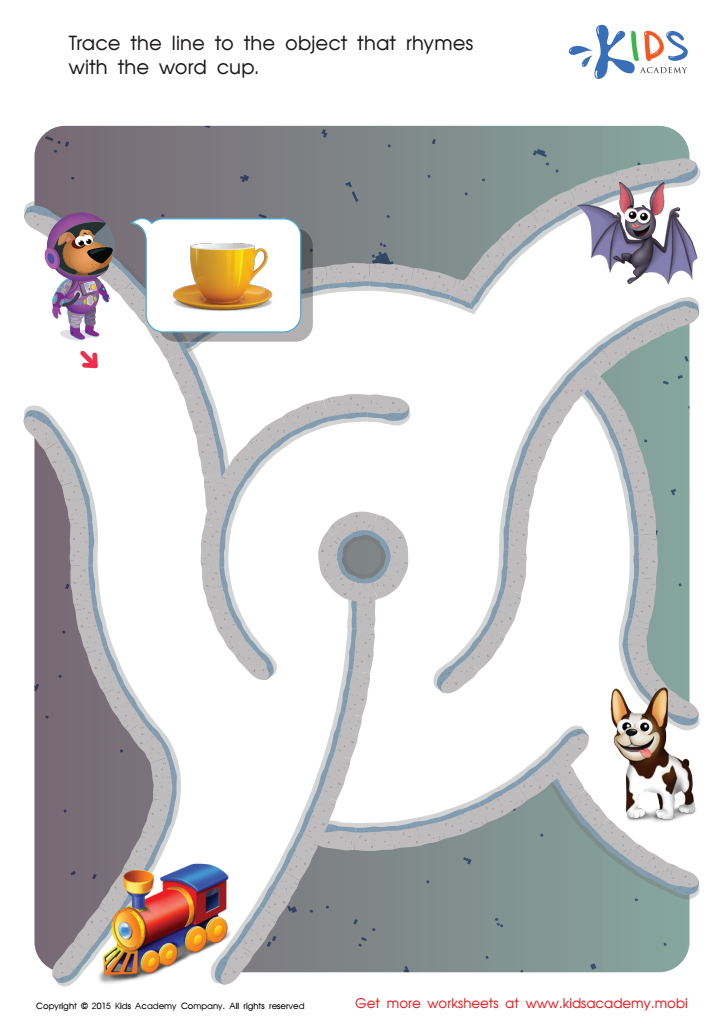
Cup Rhyming Words Worksheet
Kids Academy offers funny worksheets to help kids practice their vocabulary. Try the new one with the dog, matching objects to their rhyming words! Explore more activities and worksheets to learn English Language words and phrases.
Cup Rhyming Words Worksheet
Worksheet
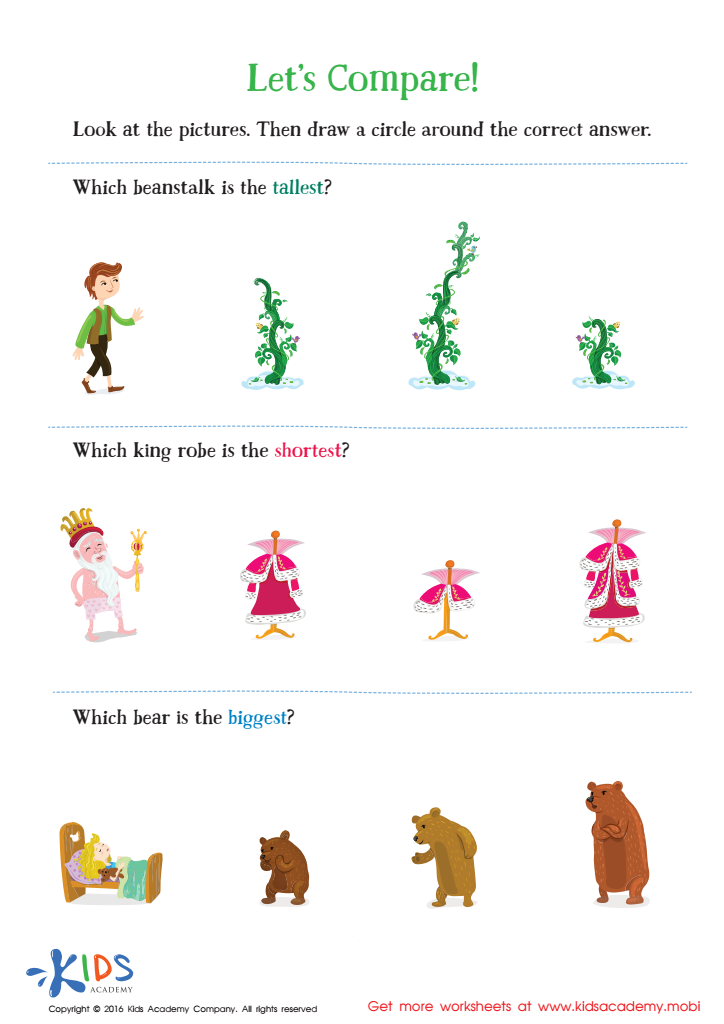
Fairy Tale Worksheet: Let's Compare
Preschoolers need to recognize different sizes of objects. This worksheet combines fun fairy tales with size practice, helping them read, problem solve, and sort through pictures. Your child will love the images and be eager to complete it. Enhance their learning by talking about the tales to build comprehension.
Fairy Tale Worksheet: Let's Compare
Worksheet
Join Kids Academy for Free
Who is primarily going to use this learning content?






Caring about comparing sizes for 5-year-olds is essential as it lays the foundation for critical mathematical concepts and cognitive development. At this age, children are beginning to understand and interpret the world around them, developing basic skills that will support their future learning. Comparing sizes—like identifying which object is bigger, smaller, longer, or shorter—involves fundamental concepts of measurement and spatial awareness.
Engaging in size comparison exercises enhances a child's ability to observe, reason, and draw conclusions based on their observations. These skills translate to everyday tasks as well as more complex academic subjects. For example, understanding sizes helps with organizing objects, following instructions, and even early literacy skills, such as recognizing the difference between letters and numbers that look similar but differ in size and shape.
Moreover, comparing sizes promotes language development as children learn and use comparative terms like "big", "small", "taller", and "shorter". This enriches their vocabulary and communication skills. Teachers and parents who emphasize these activities also foster a supportive learning environment that encourages curiosity, problem-solving, and academic confidence. By focusing on such foundational skills early on, adults set the stage for children’s overall growth and success in more advanced mathematical concepts in the future.








