Time reading skills Extra Challenge Worksheets for 5-Year-Olds
3 filtered results
-
From - To
Boost your child's time-reading skills with our Time Reading Skills Extra Challenge Worksheets for 5-Year-Olds! Tailored for young learners, these engaging worksheets provide challenging activities designed to help kids master telling time through fun, interactive exercises. Each worksheet encourages hands-on practice with both analog and digital clocks, fostering essential time literacy in a captivating and supportive environment. Perfect for classroom use or at-home enrichment, these expertly crafted worksheets will challenge and motivate your child to confidently read the clock and understand the concept of time. Discover a world of learning fun today!
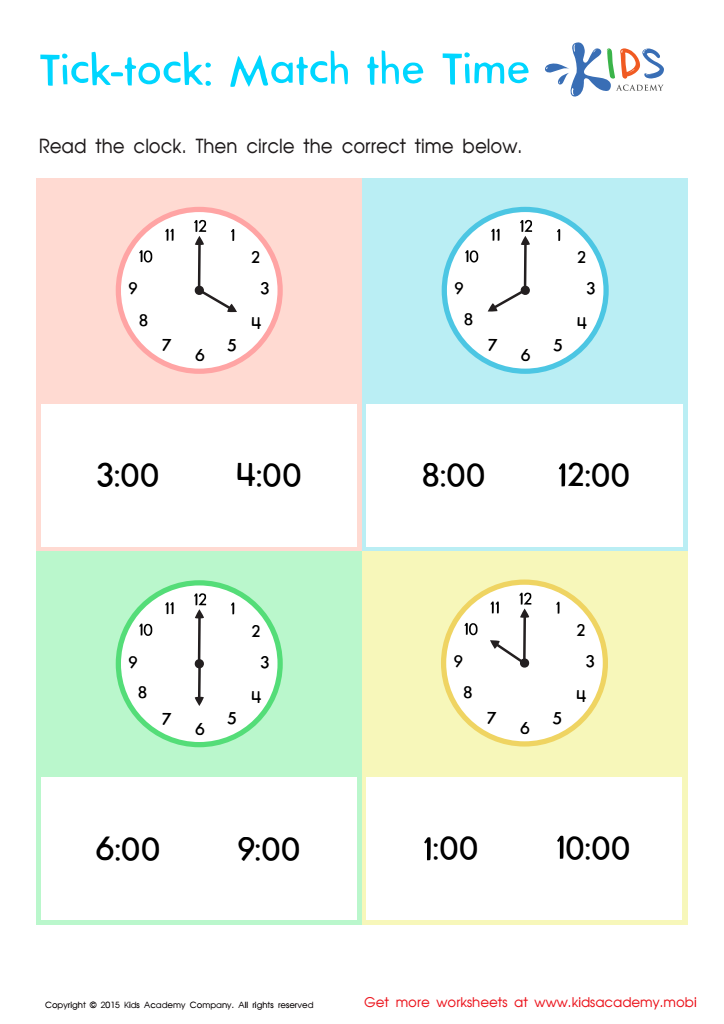
Telling The Time Worksheet: Part 4
 Assign to My Students
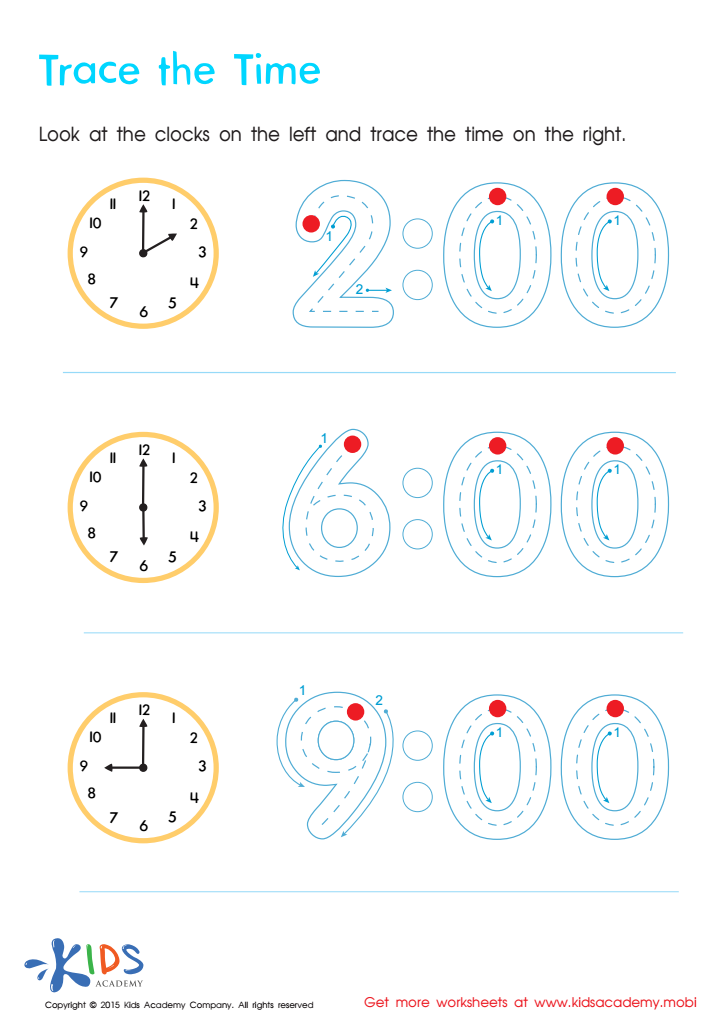
Telling The Time Worksheet: Part 2
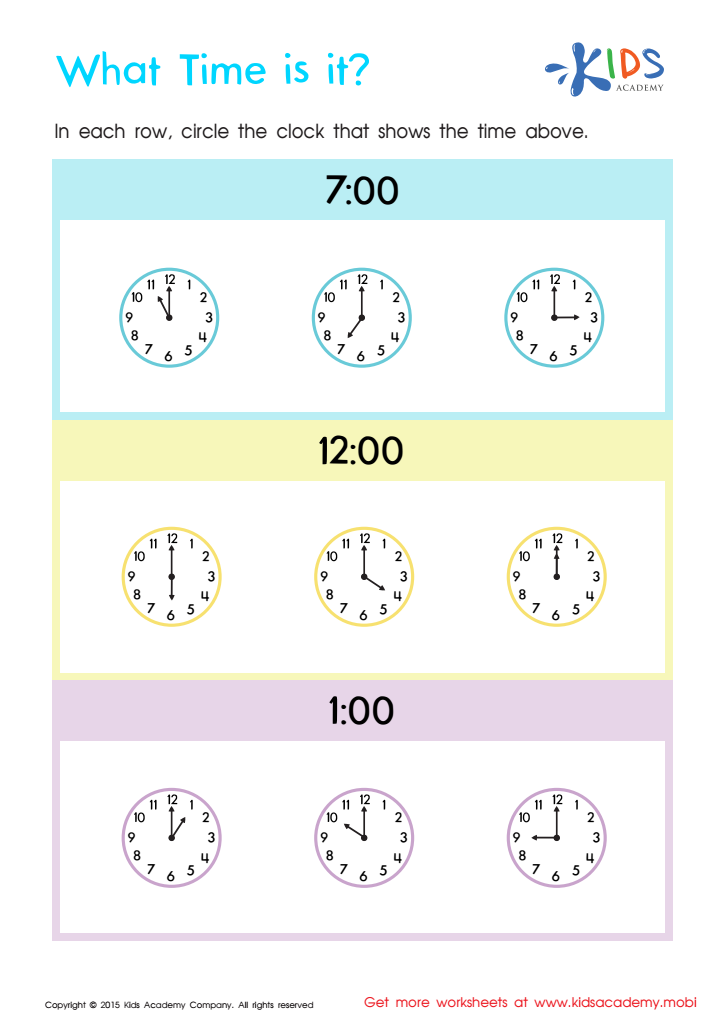
Telling The Time Worksheet: Part 3





.jpg)
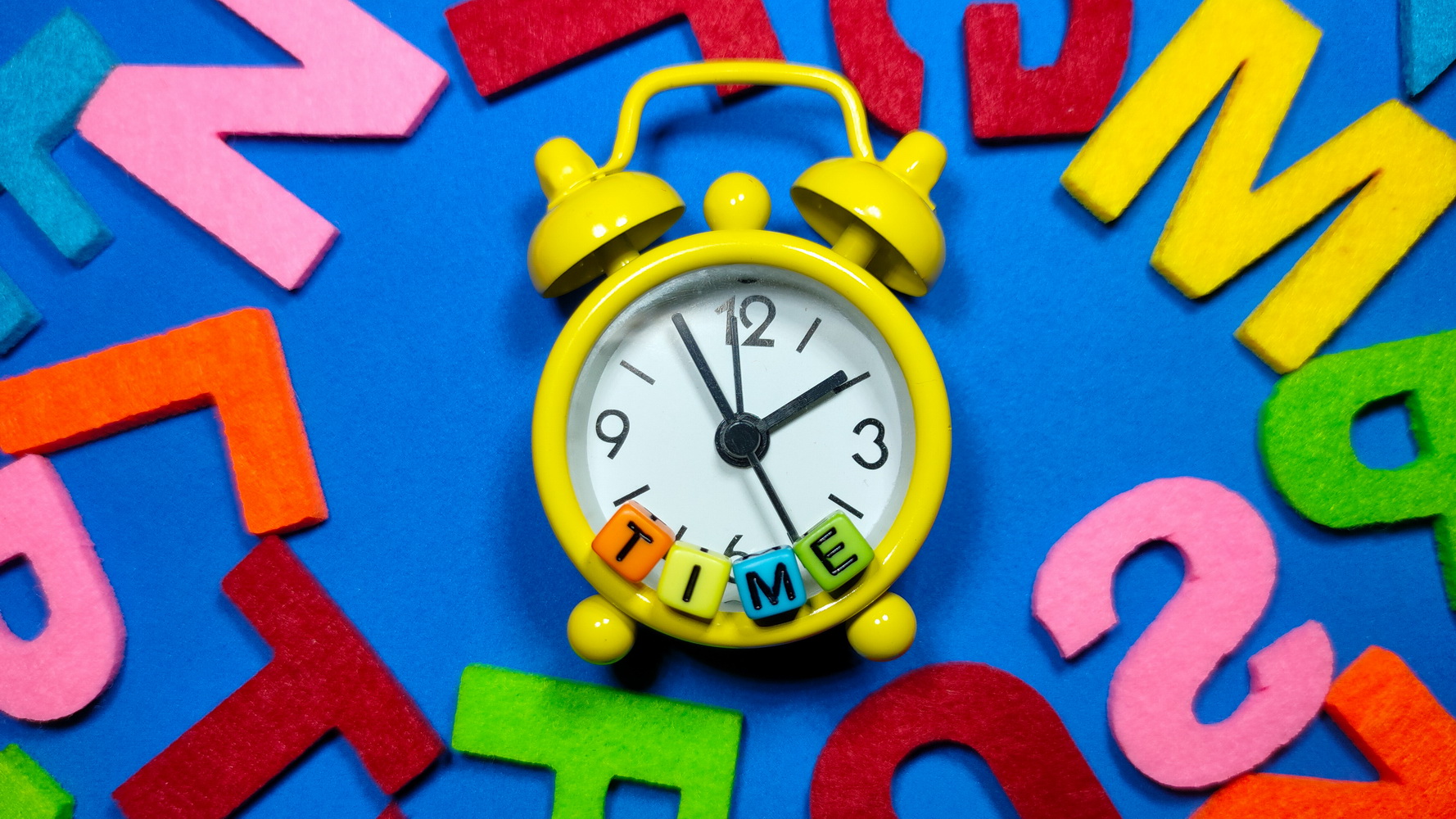
Parents and teachers should care about elevating time reading skills in 5-year-olds because it paves the way for critical cognitive development and practical life skills. Early exposure to time concepts fosters strong numeracy skills, aiding in later math achievements. Understanding time helps children grasp the nature of sequences, durations, and routine, supporting better organization and time management habits.
Moreover, knowing how to read time can boost a child's confidence and independence. It empowers them to manage daily activities like knowing when it's lunchtime, bedtime, or playtime. This awareness enhances their ability to follow classroom schedules and family routines, improving overall behavioral discipline.
Additionally, developing this skill at a young age taps into higher-level cognitive functions such as memory, attention, and analytical thinking. Time comprehension also intersects with literacy, as children learn new vocabulary and contextual cues.
Finally, time-telling can be more engaging when introduced as a challenge, sparking curiosity and a love for learning. Interactive activities involving clocks, stories about time, or games can make the learning process fun and meaningful. Thus, early mastery of time reading sets a strong foundation for both academic prowess and everyday competency.








